
Food deserts are both an urban and rural problem, but rural communities are disproportionately affected by a lack of access to food. Food deserts and their effects have been discussed before on this blog, but food deserts and food insecurity remain a persistent problem. Food insecurity affects millions of people in the United States. As of July 2023, the U.S. Census Bureau estimates that a staggering 27 million Americans are affected by food insecurity or a lack of access to food. In many instances, food insecurity comes from persistent poverty, but other times, food insecurity is caused by a lack of access to grocery stores. The latter disproportionately affects rural areas.
Food deserts are a form of food insecurity. Put succinctly, a food desert is an area where people do not have immediate access to a grocery store to purchase food. The United States Department of Agriculture has defined an urban food desert as one where 33% of the population is further than one mile from a supermarket and a rural food desert as one where 33% of people are more than 10 miles from a supermarket.
People in food deserts are faced with a lack of options as well. A local grocery store or supermarket may not have the variety or options that a large grocery store can provide. This limits people's access to fresh produce as well, which is a crucial part of a healthy diet. Instead, the few grocery stores located within a food desert may only have shelf-stable, processed foods. This further compounds the health issues that many communities, particularly rural communities, already face.
Rural areas are disproportionately affected by food deserts. A CoBank Study found that “rural communities comprise 63% of all U.S. counties but 87% of counties with the highest food insecurity rates.” Another study by Verwell Health found that “over one-fifth of people living in urban areas and one-third of people in rural areas are in food deserts.” The numbers show that food deserts disproportionately affect rural communities. Food insecurity in rural areas is due in part to food deserts.
A lack of access to grocery stores or supermarkets plays a major role in the formation and perpetuation of food deserts in rural America. Many rural individuals have to travel long distances to get to grocery stores. This travel can become even more difficult and dangerous during winter months when weather can impact travel. Furthermore, when people in rural communities get to their local grocery stores, they find themselves faced with a lack of options. Many rural grocery stores do not provide people with “access to a wide range of food and beverage options.”
As mentioned above, many local grocery stores or supermarkets in rural areas only have processed foods available to customers. Processed foods are cheaper and easier to transport compared to fresh produce. Typically, processed foods are higher in sodium, fat, and sugar. This leads to an unhealthy diet which has further health consequences outside of food insecurity.
There is a direct correlation between food deserts, unhealthy diets, and health issues related to poor nutrition. Diets that are high in sodium, fat, and sugar lead to an increased risk of obesity, diabetes, hypertension, and other health issues. Furthermore, a diet that lacks proper nutrition can also lead to complications during pregnancy.
Solving the food desert crisis is a complicated issue as well. One suggestion is that food delivery services may be able to fill the void of food deserts. A study from the Brookings Institute found that 90% of people living in food deserts could potentially have access to food delivery services such as Amazon, Instacart, Uber Eats, or Walmart. The study also acknowledges that a lack of internet access could make it difficult for rural areas to access food delivery services. Lack of internet access in rural areas, which has been discussed here, is not only a technological limitation but can also limit rural area's access to food.
Food deserts and food insecurity affect many millions of people in the United States but disproportionately affect rural communities. While there is no readily apparent solution to the food desert problem, hopefully, more people will be aware of how prevalent food insecurity is in the United States, particularly in rural areas.
Showing posts with label poverty. Show all posts
Showing posts with label poverty. Show all posts
Monday, March 17, 2025

Tuesday, February 11, 2025
As domestic water wells run dry in California, many rural individuals cannot afford to drill another one
Access to water is becoming more of a challenge in California, especially for rural communities in the Central Valley. Many rural families across California get water from domestic wells that tap into groundwater, but some of these wells are drying up due in part to climate change and the overconsumption of groundwater resources. This sets the stage for many political and legal battles across California.
Many households across California are not connected or do not have access to municipal water or sewer services. My family was one of them.
When my family and I lived in Mount Shasta, California, we had a domestic water well that sat about ten yards from the house. When my parents began to have problems with the well, a pump company we paid to investigate the problem told us the well was dry. The only solution was to hire a drilling company to drill a new domestic water well.
My parents soon discovered that there were only nine drillers licensed to drill domestic water wells in all of Siskiyou County. All were booked out for months due to the high demand for water wells in Siskiyou County. In the meantime, my parents bought a 1,000-gallon water tank and would have potable water trucked in every two weeks.
After two months, the well-drilling company called with an opening for the next week. My parents promptly said yes, but the cost was beyond what anyone anticipated. While this was four years ago, the price of drilling a domestic well has only increased. Today, drilling a well costs an average of $5,500 in the United States, but the price “can range between $1,800 and $24,500, or around $25 to $65 per foot.”
My family was fortunate enough to be able to afford the hefty price tag for the new 360-foot well, but many California families cannot.
The past two years have been relatively wet, reducing the number of domestic wells going dry. As as result, press coverage of the issue has also fallen. Before that, California was experiencing a major drought, and thousands of wells went dry. Climate change and overconsumption of groundwater mean that policy makers and politicians cannot ignore this problem.
With so many domestic water wells going dry, non-profit organizations, like Self Help Enterprises have stepped in to help people in the Central Valley. Self Help Enterprises owns 1500 water storage tanks that they loan out to people whose wells have gone dry. While these tanks are not a permanent solution, they help those who cannot afford immediately to drill a new domestic well. Self Help Enterprises also offers domestic well drilling services to those who qualify for the program.
While the past two years have provided more rainfall to California than prior years, many people's wells are still drying up. Many of these wells are dated and were drilled before the effects of climate change and overconsumption of groundwater were fully recognized. Rural communities and families will be hit the hardest as many will not be able to afford the massive price tag for a new domestic well.
This is a very complicated issue, and many stakeholders are implicated. All Californians will continue to fight for access to dependable sources of water. Future policy decisions regarding groundwater usage need to consider potential impacts on rural communities as domestic water wells in rural areas will continue to be at risk.
Many households across California are not connected or do not have access to municipal water or sewer services. My family was one of them.
When my family and I lived in Mount Shasta, California, we had a domestic water well that sat about ten yards from the house. When my parents began to have problems with the well, a pump company we paid to investigate the problem told us the well was dry. The only solution was to hire a drilling company to drill a new domestic water well.
My parents soon discovered that there were only nine drillers licensed to drill domestic water wells in all of Siskiyou County. All were booked out for months due to the high demand for water wells in Siskiyou County. In the meantime, my parents bought a 1,000-gallon water tank and would have potable water trucked in every two weeks.
After two months, the well-drilling company called with an opening for the next week. My parents promptly said yes, but the cost was beyond what anyone anticipated. While this was four years ago, the price of drilling a domestic well has only increased. Today, drilling a well costs an average of $5,500 in the United States, but the price “can range between $1,800 and $24,500, or around $25 to $65 per foot.”
 |
| Well Drilling. Credit: Paul Hamann |
 |
| Well Drilling and Pipe Welding. Credit: Paul Hamann |
The past two years have been relatively wet, reducing the number of domestic wells going dry. As as result, press coverage of the issue has also fallen. Before that, California was experiencing a major drought, and thousands of wells went dry. Climate change and overconsumption of groundwater mean that policy makers and politicians cannot ignore this problem.
In 2023 the Rural Community Assistance Corp. published a study analyzing water supply issues in California’s Central Valley. The study found that “32% of the 29,567 domestic wells analyzed are at risk” and that this creates a “burden that’s likely to fall disproportionately on rural disadvantaged communities.”
In numerous instances, the California State Government has stepped in. The Sustainable Groundwater Management Act (SGMA) was implemented in 2014 to help tackle groundwater management issues in California. The Rural Community Assistance Corp. study also identified the overpumping of groundwater as a major concern for those in rural communities. Large farming operations often have more resources and can afford to drill deeper wells than the surrounding residential homes and communities, but agricultural overpumping of groundwater lowers the water table, which raises the risk of domestic wells going dry.
In numerous instances, the California State Government has stepped in. The Sustainable Groundwater Management Act (SGMA) was implemented in 2014 to help tackle groundwater management issues in California. The Rural Community Assistance Corp. study also identified the overpumping of groundwater as a major concern for those in rural communities. Large farming operations often have more resources and can afford to drill deeper wells than the surrounding residential homes and communities, but agricultural overpumping of groundwater lowers the water table, which raises the risk of domestic wells going dry.
With so many domestic water wells going dry, non-profit organizations, like Self Help Enterprises have stepped in to help people in the Central Valley. Self Help Enterprises owns 1500 water storage tanks that they loan out to people whose wells have gone dry. While these tanks are not a permanent solution, they help those who cannot afford immediately to drill a new domestic well. Self Help Enterprises also offers domestic well drilling services to those who qualify for the program.
While the past two years have provided more rainfall to California than prior years, many people's wells are still drying up. Many of these wells are dated and were drilled before the effects of climate change and overconsumption of groundwater were fully recognized. Rural communities and families will be hit the hardest as many will not be able to afford the massive price tag for a new domestic well.
This is a very complicated issue, and many stakeholders are implicated. All Californians will continue to fight for access to dependable sources of water. Future policy decisions regarding groundwater usage need to consider potential impacts on rural communities as domestic water wells in rural areas will continue to be at risk.
Friday, January 31, 2025
When will women in rural Missouri have true abortion access?
On November 5, 2024, as much of the country watched Donald Trump regain the presidency, abortion advocates in Missouri celebrated. Amendment 3, a ballot proposition to repeal Missouri's total abortion ban, had passed. Missouri was one of seven states that enacted amendments to protect abortion rights on November 5. And in a state that Donald Trump won by over 18 points, voters had somehow simultaneously restored the right to abortion by a narrow margin of 52 to 48 percent. For abortion advocates, passing Amendment 3 was a hard-fought but undeniable victory.
Then, the question became: "What's next?"
For rural Missourians, the answer is complicated. Over the past few decades, Missouri has severely limited abortion access. Hit hardest were women in rural communities. For years, there were only three abortion clinics in Missouri, which has a population of over 6 million. By 2017, a Planned Parenthood in St. Louis was the only place in the entire state you could get a medical abortion. And in 2022, Missouri passed the "Right to Life of the Unborn Child Act," a trigger ban that months later became the first in the nation to go into effect when Dobbs v. Jackson overturned the constitutional right to an abortion.
This was the landscape framing desperate efforts to restore medical access to abortion in Missouri. But celebrations fell quiet in weeks after the election as anti-abortion advocates began to respond. Elected officials in Missouri pledged to "vigorously defend" abortion bans in the state. On January 16, 2025, U.S. Senator Josh Hawley (R-MO) introduced federal legislation to defund Planned Parenthood. I felt my own stomach churn when my little sister, a veterinary student at the University of Missouri, texted me: "I'm getting anxious. About living [here]."
One-third of Missourians live in rural areas. But even those in urban counties have felt the effects of the decades-long effort to restrict access to abortion. Columbia, Missouri, where my sister lives, has a population of 130,000. But it's over a two hour drive to St. Louis, where the sole abortion provider in Missouri is located. Rural Ozark County — which has a 29.6 percent poverty rate, the highest in the state — is a four hour drive from St. Louis. Not to mention travel costs, medical expenses, and scraping together time off work — all challenges exacerbated by rurality.
While Amendment 3 granted abortion access until the point of fetal viability, the St. Louis Planned Parenthood cannot legally resume providing abortions. This is, in part, due to a December ruling by Jackson County Judge Jerri Zhang which upheld licensure requirements for abortion clinics — meaning that though Missourians have a renewed right to abortion, there is no place for them to obtain one. This leaves rural women in Missouri vulnerable, particularly those in the southern half, where the nearest abortion clinic might be several states away.
However, progress was made: In the same opinion, Judge Zhang struck down other restrictive laws, including a 72-hour waiting period and a requirement that physicians who perform abortions have admitting privileges in all hospitals that provide obstetric or gynaecological care within "30 minutes or a 15-minute drive." Judge Zhang considered rural Missourians in the decision, writing that:
[A] person who travels three hours to get a medication abortion and then returns home, would not benefit from [these restrictions]. If complications arise after taking the medication, the individual would need to seek emergency care at the nearest hospital emergency room, as with any other medical emergency.
Aside from the judiciary, what else can be done? In a state like Missouri, where only 28.9 percent of statewide legislators are women, many will turn to grassroots organizing. "What's Next?," an organization dedicated to improving abortion access in Missouri, has advocated for Know-Your-Rights Trainings and other local initiatives. In a 2024 study by the Kaiser Family Foundation, over 35 percent of rural women reported they wouldn't know where to go or where to find abortion information. This post by Rooney Debutts details other statewide legislative efforts to improve abortion access.
One thing is clear: The fight for abortion access in rural Missouri is far from over.
Selma deserves our attention more than one day a year
On March 7, 1965, 600 activists began peacefully marching in Alabama from Selma to Montgomery to protest the rampant voter suppression of Black Americans.
Activists chose Selma as the starting point for their march due to its infamous voter suppression, with the Alabama Governor George Wallace opposing desegregation and the local county sheriff opposing Black voter registration drives. As such, only one percent of voting-age Black citizens were registered to vote, and those who tried to vote often faced violence, like police brutality.As marchers crossed the Edmund Pettus Bridge in Selma in 1965, 150 Alabama state troopers descended with little to no warning, violently and maliciously attacking and injuring the peaceful marchers with tear gas and clubs.
The event became known as Bloody Sunday. The attack sparked national outrage that led to the passage of the Voting Rights Act later that year. The city of Selma, and the Edmund Pettus Bridge in particular, became an enduring symbol for the Civil Rights movement. In the 2020 Democratic primaries, for example, nearly every presidential candidate on the ticket visited Selma to commemorate the anniversary of Bloody Sunday.
As we approach the 60th anniversary of Bloody Sunday this year, politicians will surely flock to the city to walk across the bridge, take photos, and declare the importance of voting rights. However, Selma’s voter suppression and lack of resources, the very reason activists chose it as the location for the march nearly 60 years ago, has not been magically resolved.
Instead, Selma remains a deeply rural area with residents who feel abandoned by their government. Selma is located in the Black Belt region of south central Alabama and has a population of around 17,971 people. About 80 percent of that population is Black.
Ryan Zickgraf describes in his article “Politicians Come to Selma Every Year to Commemorate the Civil Rights Struggle, But Nothing Changes” how the downtown is largely made up of empty and crumbling stores and homes. He talks to Selma native, Owen Peak, who warns:
This is a do-or-die time here – we really need help.
Selma has been left behind, and folks are certainly not working together.In 2020, Selma and the surrounding Dallas County had voter turnout of under 57 percent, among the worst in the state. In Jay Reeves’ article “Despite its civil rights history, Selma, Alabama sees steady voter turnout decline,” Resident Tyrone Clarke explains why, despite the extreme effort and bodily harm endured to pass the Voting Rights Act of 1965, residents remain hesitant to visit the polls:
You have a whole lot of people who look at the conditions and don’t see what good it’s going to do for them. You know, ‘How is this guy or that guy being in office going to affect me in this little, rotten town here?’
The numbers tell a similar somber, distressing tale as Selma’s residents. As discussed in a previous blog post, Selma is Alabama’s poorest town. In 2022, the poverty rate in Selma was 29.5 percent. That same year, the median household income was $31,084, less than half the 2022 national average of $74,580. With a high poverty rate and without any prospect of a job, many people turn to using or dealing drugs.
Yet Selma, like the rest of Alabama, has some of the strictest policies concerning drugs, coupled with the second highest incarceration rate in the country; policies that disproportionately affect Black residents. One man from Selma, recently released from prison, commented:
Once I got my felony, I became the walking dead. I couldn’t do nothing. I couldn’t vote, I couldn’t drive, and I sure as hell couldn’t work, so I sat around doing nothing, until I started selling again.A terrible cycle exists in Selma in which people cannot find a job, turn to drugs, get arrested, and then receive a felony on their record that disqualifies them from more work and the right to vote for politicians who will make the town better.
Country roads, I’m coming back home
After almost a decade of losing population, rural America has seen renewed population growth. Between 2010 and 2020, the article “Rural America Lost Population Over the Past Decade for the First Time in History” describes how rural areas lost population compared to previous decades. The decline did not occur only in remote rural areas but also in rural areas adjacent to metropolitan counties. John Cromartie, a geographer from USDA in the Rural Economy Branch, Resource and Rural Economics Division, found a negative rural net migration rate between 2010 to 2016 and a near-zero rate between 2017 and 2020.
However, since 2020, rural net migration rates have increased. The 2023 USDA Economic Research Report, “Rural America at a Glance,” discusses how more than 480 rural counties saw a growth rate of two percent or more. Typically, these counties were near large metropolitan areas such as the southern Appalachians and Ozarks, the northern Great Lakes, and the Rocky Mountains. Population migration to these recreation and retirement destinations is often referred to as “amenity migration.”
One reason for the major shift in migration patterns was fear of exposure to COVID-19. Early in the pandemic, the USDA Economic Research Service reported that the presence of COVID-19 cases was higher in metropolitan areas until October 2021. This likely caused urban residents to seek shelter in rural places. However, soon after, nonmetropolitan areas started to experience a greater prevalence of cumulative COVID-19 cases than metropolitan areas.
Another reason for the big shift in migration patterns was an increase in remote job opportunities. The U.S. Bureau of Labor Statistics indicates that telework increased among all industries between 2019 and 2021. When social distancing policies were removed in 2022, remote work participation fell slightly but was still higher in most industries compared to participation in 2019. “Rural America at a Glance describes how remote jobs have provided the working-age population with more flexibility and locational freedom. In addition to attracting new residents, employment opportunities have encouraged people to stay within these rural areas. In 2022, rural America reached record-low unemployment rates. Federal legislation, notably the Inflation Reduction Act of 2022, provided new jobs for rural Americans in the clean energy industry.
Although rural America has been slowly growing its population, both current and future rural Americans are still facing problems. For example, “Rural America at a Glance” reports that housing insecurity remains a persistent issue for low-income nonmetropolitan renters, particularly among Hispanic and American Indian or Alaska Natives. Also, high poverty rates have been an ongoing problem for particular rural counties. Generally, though, poverty has been on a downward trend over the past fifteen years.
Rural America has seen an increase in population after losing a decade of negative and near-zero rural net migration rate. Despite this growth, there are still issues persisting in these areas. If rural America hopes to accommodate these future populations, there needs to be an emphasis on helping to increase resources and opportunities.
For more articles on rural population loss and its consequences, see Aging and population loss in small-town Pennsylvania and California rural schools facing teacher shortages.
Thursday, January 11, 2024
Structural issues threaten California's rural hospitals
Scott Wilson writing in the Washington Post last fall provided a deep dive into why California's rural hospitals are faltering. The dateline is Madera, California, and the headline is, "A hospital’s abrupt closure means, for many, help is distant."
Here's some detail about the Madera closure (topic of this earlier post) and what it portends for other hospitals in rural California:
The shuttering of the 106-bed hospital here, which has disrupted health-care services across this region of vast almond groves and grape orchards, is the first of what state lawmakers say could be more shuttered rural hospitals.
And here's some structural analysis about why this is happening, which I've not yet seen elsewhere.
California’s rural health-care system is teetering, a consequence of the pandemic’s long legacy, a broadly unhealthy patient pool due to higher poverty rates, and the imbalances in the way a rich state focuses its public health resources.
The dilemma exposes California’s widening east-west divide, a rural-urban split that helps define how the state government distributes resources for public health programs, education and other basic services. The eastern valleys and Sierra foothills, less populous and generally more conservative in their politics, have often been neglected by liberals from the coastal West.
In this case, the inequality comes in the form of often-inadequate government insurance reimbursements for rural hospitals, especially community hospitals unaffiliated with large health networks, and in medical education opportunities, which are scant to nonexistent across much of the Sierra Nevada and Central Valley.
* * *
Across a state with the highest proportion of millionaires in the nation, 1 in 5 hospitals are now at risk of closing, according to a study released earlier this year by the California Hospital Association. Many serve the state’s rural redoubts, whose populations are often disproportionately poor and underinsured, and inner-city neighborhoods such as south-central Los Angeles.Wilson quotes Carmela Coyle, chief executive of the California Hospital Association, a lobbying group that represents some 400 hospitals:
We find ourselves at a time in health care, and for hospitals in particular, where finances are very fragile. Like a family living paycheck to paycheck, that works until there is a financial shock. That’s what our hospitals face today — and the pandemic was that shock. They spent everything and now have nothing to fall back on.
Tuesday, October 17, 2023
Banking deserts and the reliance on costly capital in rural America
As online banking has steadily increased, many banks have decided to permanently close a number of their branches. Given that banks are choosing to close their less profitable branches, it is unsurprising that rural communities are amongst the hardest hit by the closures. (The tendency for rural banks to make less profit is partly due to the government crackdown on costly overdraft fees.)
The lack of banking access more keenly affects rural residents than those in urban and suburban areas. First, rural residents are more likely to visit a physical bank. According to the Federal Deposit Insurance Corporation, more than 40% of rural customers visited a bank at least ten times in 2019. Banks are also more likely to close their branches in rural areas, forcing residents to travel further, often to the next town, to access a bank. Lastly, rural residents may not have access to spectrum or broadband which then limits their access or use of internet banking.
Banks serve not only as financial institutions in rural communities but as social ones as well. Darrin Williams, CEO of Southern Bancorp, told NPR, "In a lot of the rural communities we serve, the bank branch is a part of the social fabric. If you go to Truman, Arkansas, on a payday Friday, there are going to be 10 people deep in line. People want to come to that bank branch because it's social."
With the exodus of in-person banking services, rural communities have essentially become located in banking deserts which are defined as census tracks in which there are no bank branches located within a 10-mile radius of the tracts' centers. In a study conducted by the Federal Reserve, 1,500 of 2,100 existing and potential banking deserts are located in rural areas, and the counties most affected are those with a greater proportion of African-American residents.
Living in a banking desert perpetuates the number of unbanked rural residents. People who are unbanked, meaning that they do not have a checking or savings account at a bank or credit union, reported the lack of branch access as one of the major hurdles to them becoming banked.
Communities in banking deserts also become vulnerable to predatory lenders. When rural consumers do not have access to traditional sources of credit during times of financial distress, they may turn to pawnshops and payday lenders. Loans from such places tend to have much higher interest rates and it can be a gateway to a cycle of debt.
In fact, rural residents are more likely to not have any credit established at all. Rural areas have the highest rates of people without a credit history from the top three consumer reporting agencies: Equifax, Experian, and Transunion. This is due to the inaccessibility of banks, the inability to meet the minimum balance requirements, and the mistrust in banks. The lack of usable credit history makes it more difficult to receive an extension of credit during financial hardship and this increases dependency on costly nontraditional sources of credit.
Another factor affecting access to traditional credit is unpaid medical bills. Almost one in five households in the U.S. have past-due medical bills and these numbers are greater in rural areas. (Read more about the rural healthcare crisis here.) This has a negative impact on credit reports and ultimately limits access to credit, housing, and employment. Unpaid medical bills also fuel costly borrowing.
Rural areas have the highest utilization of non-bank credit. These loans can have devastating consequences such as the risk of eviction or foreclosure. The reality is that payday loans are not quickly paid off and tend to result in several additional loans within a short timeframe. The typical payday loan borrower takes out eight loans in a year and is in debt for more than six months. Interest rates are also astronomically high. In the end, borrowers pay an average of $520 in interest on a $375 loan.
The rising financial crisis in rural communities led to the development of the Rural Initiative under the Consumer Financial Protection Bureau (CFPB) in 2022. The goals of the Rural Initiative are to conduct research to increase access to credit, develop effective ways for residents to file complaints with the CFPB, conduct roundtables with rural stakeholders, and work with federal agencies to ensure adequate financial resources.
The Rural Initiative is a step in the right direction, but it is clear there needs to be a drastic shift in how financial institutions operate in rural communities and the resources available there. Steven Jackson, a parish commissioner in Shreveport, Louisiana, told NPR, "When you have young boys and girls riding by and seeing empty buildings, or that building which was once a bank is turned over to a payday lender, what message are we sending? Is my neighborhood not a priority?"
Friday, October 6, 2023
California struggles to provide its rural residents with safe drinking water
Last week, a Los Angeles Times story detailed how rural California residents often consume contaminated drinking water, with 400 (or about 25%) of the state's water systems failing to provide safe drinking water to residents.
The article explained how California cannot provide clean water to residents in California's Central Valley. In particular, the article found Kern County's water systems do not function effectively. Almost 80% of the county's water supply (65 systems) have been categorized as failing for three years.
Kern County is home to around 900,00 residents, of whom 18.5% live in poverty. The county's economy is primarily based on agriculture and petroleum extraction industries and its median household income is $58,000 is significantly less than California's median household income of $86,000.
The Central Valley, a vast agricultural region of California and ranks among the United State's most polluted areas, due to heavy vehicle traffic, diesel-burning locomotives, tractors and irrigation pumps, and wood-burning stoves and fireplaces.
Despite its booming agricultural industry, Central Valley residents are among California's poorest. About 24% of the Valley's population lives below the poverty line. While suburbs like Elk Grove and cities like Fresno sprawl out of the region, the Central Valley's agricultural communities are classified as rural according to CivicWell, a Sacramento-based nonprofit.
Overall, the region covers more than 20,000 square miles and is home to around 2 million people. For comparison, Los Angeles County covers 4,084 square miles and is home to almost 10 million residents.
According to the American Bar Association, water supplies in farming areas (like the Central Valley) often contain high nitrate levels because the nitrates seep into the groundwater from fertilizer and manure.
Ingesting too much nitrate can affect how the blood moves oxygen through the bloodstream and can cause methemoglobinemia (also known as blue baby syndrome), which can result in serious injury or death. In adults, high nitrate exposure can potentially lead to an increased risk of cancers like gastric cancer, although there is yet to be a scientific consensus on causation.
Despite these data, 85% of the communities with nitrate-contaminated drinking water have no treatment systems in place to remove the chemical.
Madison Condon of Boston University School of Law wrote a piece for the American Bar Association and further explained that rural residents are those most likely to face poor water quality and unsafe drinking water:
All across rural America, small community water systems are failing to protect public health due to a perfect storm of forces. Poor regulation of agricultural waste and other pollutants, shrinking populations, and aging infrastructure all contribute to the increasing incidents of water quality violations dotting the rural landscape.
It is troubling that the Central Valley experiences a lack of clean and safe drinking water, especially because the water used produces 25% of the U.S.'s food and 40% of American fruits and nuts. The region is a major agricultural output not just for California, but for the entire county.
Water contamination in farming and industrial communities is unfortunately typical.
In 2017, environmental lawyer Rob Billot reached a $631 million settlement with chemical corporation DuPont for releasing 7,100 sludge tons of perfluorooctanoic acid (also known as PFOAs or C-8) into a landfill in Parkersburg, West Virginia. The chemicals ended up in the town's waterways, leading to deleterious health effects in the Parkersburg community. Many residents suffered cancers, thyroid disease, high cholesterol, pre-eclampsia and ulcerative colitis–– all verified scientific effects from exposure to PFOA. A few years after the settlement, Focus Features made a film about the Billot's story called Dark Waters, starring actor and environmental activist Mark Ruffalo.
Having access to reliable and safe drinking water is not merely a rural phenomenon, and happens in urban settings as well.
In 2014, Flint, Michigan switched its water supply from Detroit’s system to the Flint River to save costs without the proper testing. Flint residents complained of a foul-smelling odor and suffered numerous health effects, but they were ignored for years. The Michigan Civil Rights Commission deemed the poor governmental response to the Flint crisis a “result of systemic racism.”
Having access to safe drinking water is essential for our health and wellbeing, according to The Centers for Disease Control and Prevention. While EPA regulations require federal and state agencies to regulate public water systems, those regulations do not apply to privately owned wells. This can be a problem in rural communities like those in the Central Valley, where most private wells are the source of many landowners' water.
In a 2019 paper posted in Environmental Health, Schaider et al. studied the link between low-income communities and drinking water contamination. They found that:
Low-income and minority communities often face disproportionately high pollutant exposures. [...] Small water supplies, particularly those that serve low-income and minority communities, may have poorer source water quality due to closer proximity to pollution sources.
Rural residents suffer higher rates of poverty than their urban counterparts. According to Circle of Blue, a nonprofit aimed to educate and inform about the problems plagued by climate change, found that many rural towns have neglected their drinking water systems for decades:
As some rural towns lose population and government funds shrink, some drinking water systems are one failure away from crisis.
With the lack of affordable housing and the rise in housing prices in the Bay Area and Southern California, the Central Valley's population is expected to increase by five million people by the year 2060. Lawmakers, politicians, and policymakers should ensure safe access to drinking water in rural communities, despite the region's low population density.
Regardless of the size of a population cluster in an area, where one's water comes from, and what a town's primary industry is should not impact safe and reliable access to drinking water.
You read more about water contamination on the blog here and here. You can read more about California's Central Valley here and here.Saturday, April 15, 2023
Covid-19 and the rise and fall of workers' rights in the meatpacking industry
A few weeks ago, our class discussed the immigrant experience in rural America--more specifically the exploitation of immigrant communities in rural America by the agricultural industry. Pulitzier-prize winning journalist Art Cullen wrote for the New York Times, In My Iowa Town, We Need Immigrants about the importance of immigrant communities in small towns like Storm Lake, Iowa, population: 11,269.
The article reminded me of a reading my torts professor, Sarkar, assigned to our class 1L year. We were nearly a year removed from the initial statewide Covid-19 lockdown and still attending class via Zoom. My whole life was confined to my apartment and zoom classes. I was miserable.
Professor Sarkar assigned The Battle for Waterloo by Michael Grabell and Bernice Yeung. He instructed us to skim the article so that we could briefly discuss possible tort liabilities arising from Covid-19 exposure in the workplace.
As I began reading the article, I was drawn in and could not stop. It was the most powerful and important assignment I read that whole year. It tells a tragic story of the meat butchering industry in Waterloo, Iowa--from what it once was to what it has unfortunately became.
It also made me realize how lucky I was to be stuck inside my apartment while so many other people died because they did not have that option. Those other people, often designated "essential workers," had to work.
The Battle for Waterloo explores the complicated, intertwined story of race and labor in Waterloo, Iowa, population: 67,314. This story began when Black workers were recruited to come work as strikebreakers over 100 years ago.
Before Tyson took over, the meatpacking industry was a pathway to financial stability for Black families in Waterloo. It also became an avenue for working class coalition and historic civil rights victories. Rath Packing Company was a family-owned pork processor where heavily unionized workers challenged management for better conditions and wages.
The article tells a beautiful story of Rath's union, "Unlike most unions, it welcomed Black workers, and while Rath wasn't a racial utopia, the union's logo of a white hand clasping a Black one symbolized its belief that worked solidarity wouldn't exist without racial solidarity."
Moreover, Black workers' assignment to the particularly gruesome "kill floor" gave them the unexpected benefit of immense power over production and profits. The authors note that once upon a time, Black workers would simply wave a flag to halt production completely until their demands were met. Wages reached $24 to $32 an hour in today's dollars by the mid-1960s.
Black and white workers used these same heroic strategies to tackle the discrimination Black citizens faced throughout the rest of the town, using their combined economic power to force change.
This all began to change in the late 1960s when a new company, Iowa Beef Packers (IBP), which was later bought by Tyson, moved into the town and transformed the industry to automated factories that required less skilled labor. Rath tried to compete through layoffs and wage reductions but eventually closed its doors in 1985.
Grabell and Yeung note that the story of Rath is not unlike those told across the country within this industry. Many meatpacking plants went through a similar transfer of power between workers and employers.
The story of IBP and Waterloo began when they came to the town promising 1,500 jobs, but these jobs were unlike the positions of empowerment found at Rath. IBP was known for working its employees hard and not worrying about turnover. They purposefully, "...tried to take the skill out of every step," stated IBP's co-founder. Once they had run through all the local employees of Waterloo, "...the industry turned to immigrants and refugees from some of the most vulnerable parts of the world."
Over the years, Tyson realized that refugee immigrant communities were their best bet because they had papers, so they were safe from immigration raids. Most importantly, "It was a population for whom exploitation was also an opportunity, and desperation silenced complaints."
By the time Covid came around, refugees from Myanmar, Congo, Marshall Islands, Micronesia, Liberia, Bosnia, Haiti, and more countries, worked in communities where they faced language barriers, health disparities, and cramped work environments that made them even more vulnerable to Covid.
The details of just how badly this whole health crisis was dealt with are horrific--from managers betting on how many employees would be infected and directing interpreters to downplay the severity of the pandemic, to OSHA relaxing its safety requirements at the instruction of the government, to workers vomiting from illness mid-shift and being told to continue working.
At the time of the article, 1,500-1,800 of the workers at the Waterloo plant had contracted Covid. Researchers estimate that 236,000-310,000 Covid cases and 4,300-5,200 deaths can be linked back to community spread from meatpacking plant outbreaks.
One of these deaths is thought to be Terry Mabry. A Waterloo resident and father whose family came to the area from Mississippi to work at Rath in the '60s. Terry's twin brother, Jerry, blames his death on the mishandling of the Tyson outbreak, stating, "'If it wasn't for Tyson's lying, the community would be a lot better off. I'd have a few more friends that are still living, and my best friend, my twin brother, still living. Somebody from Tyson should have went to jail."
As we discussed potential tort liability my 1L year I couldn't help but to think of Jerry Mabry's words. To me, this ordeal goes so far past negligence. These refugee communities escaped wars, violence, corruption, famine, etc. and came to America to be killed at a Tyson plant because decision makers couldn't prioritize workers' safety over their high-hundred-million-dollar profits. And the government officials who were supposed to help them turned a blind eye. Even their own union representative, Steven Stokes, is quoted defending the plant for doing all it can and blaming employees for not cooperating.
So many people died--sick, scared, and isolated--because they were put in the impossibly desperate position to go to work and risk their lives or not be able to provide for their families. The article was a huge wake up call for myself, as I sat at home sad because I was overwhelmed and lonely, reading casebooks all day. What a privilege it was to be bored in the pandemic, while so many others' lives had to dangerously continue as if there wasn't a national health crisis.
As of today, it looks like no one has faced any criminal charges for the deaths of those lost at Tyson. The lawsuit appears to be ongoing, with the US Supreme Court refusing to hear arguments on why it should be moved from state court to federal court. I'm not sure if this refusal is a big deal, but I hope it is a good sign for all the families that suffered so much because of Tyson's exploitation. I hope they win so much money they never have to pack meat again. Unfortunately, Tyson will just find more vulnerable people to exploit in their absence.
This blog by Professor Pruitt explores more stories dealing with Covid-19 outbreaks at meatpacking plants throughout the country.
Friday, April 7, 2023
"How Rural America Steals Girls' Futures"
That's the headline for Monica Potts' essay in The Atlantic. It's based on her forthcoming memoir, The Forgotten Girls, which was scheduled to be released on April 14 but has been delayed until May 30.
Potts writes from Clinton, Arkansas, population 2,602 and the county seat of Van Buren County. It's where she grew up, on the southern edge of the Ozark mountains, a place with a median household income of about $46,000 in 2021. Potts describes the culture this way:
Almost everyone goes to an evangelical church, and in the halls of the town’s only high school, everyone knows everything about everyone else, or seems to: whom you dated, where you bought your clothes, how you acted on weekends, and even your destiny, inherited from the generations that came before you.
Here's part of her story:
Growing up in the ’90s in Clinton, Arkansas, all that my best friend, Darci Brawner, and I dreamed about was getting out. “I want to see new people and new places,” I wrote in my journal when I was 12. I wanted to move to California but would take “any state besides Oklahoma or Mississippi.” We wanted careers; we wanted to be rich and famous; we wanted to be far away. Boys and sex would only stop us, catch us, or so my mother had warned.
* * *
I moved away for college when I was 18. While I was gone, I heard updates: who was getting married, having children, getting divorced. I heard worse stories, about who was on drugs, who’d been arrested and sent to prison, who was in rehab, who was in rehab again. Who had died. By the time I was a journalist writing about rural poverty in my mid-30s, I’d seen studies and data that helped me put the stories from home in context. One of the most alarming trends emerged about a decade ago.
That trend was the shrinking life expectancy of women like those who'd raised her, those she had grown up with. Potts got curious about why these women were being lost not only to deaths of despair but to cancer, heart disease and other chronic conditions. The essay continues:
I returned to Arkansas more and more, trying to reconnect to my hometown, looking for answers. In 2015, on a visit home, Darci contacted me out of the blue. We’d once been as close as sisters, but that spring was only the second time I’d heard from her in the nearly two decades since high school. We visited, and as we caught up and reminisced, I began to realize that I could pinpoint the time when our lives had first begun to diverge. It started during those boy-crazy middle-school years, when we were at the cusp of growing up, when our futures had not yet been written.
Some of us—because our parents were strict or wealthier and more educated, or because we were “good girls” too nervous to break the rules, or because we were just plain lucky—got out. Others got pregnant.
And as a fellow rural Arkansas female like Potts, here's the paragraph from the essay that most resonated with me:
When it came to liquor, there were two modes in Clinton: alcoholism or abstinence. This paralleled the bifurcated morality I saw everywhere: Girls were either virgins or whores; students were either geniuses or failures; you could go to church or you could be a sinner. The town seemed to operate in two modes—the buttoned-up propriety of the churchgoers, who held power in the county, versus the rowdy hillbillies in families like my dad’s. The rigid divide allowed no room for subtleties or missteps.
Even children were sorted into the binary: the upstanding citizens and the ne’er-do-wells.
I recommend it in its entirety and am looking forward to the book's release next month.
Sunday, March 19, 2023
Hollywood stereotypes of rural America
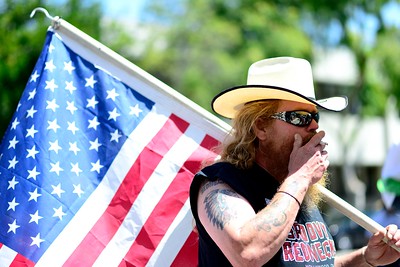
When I was a kid, I loved day trips to Chicago. I remember my grandmother having to sign a clearance contract because I "accidentally" stumbled onto the “Transformers 3” set and got picked up by a camera. Movies about Chicago, or even just ones filmed there, have always been my favorite because I get to see a little slice of my childhood on the screen. But when it comes to movies from my real childhood, tucked away in the rural Midwest, I often find myself cringing at the media stereotypes.
I was recently encouraged to watch the movie, “Hillbilly Elegy”, for a class about whiteness in Rural America. However, I fail to see how this movie was anything more than a jaundiced example of media tactics. Stories of underdogs overcoming poverty, abuse, and addiction can be found on any street in America, not just the rural backroads. Yet, Hollywood only uses this type of plot-line as a heartstring blockbuster for people of color, such as “The Blind Side”, or to further depreciate the image of rural whiteness.
Rural America is shown by the media to be either "hicks and hayseeds" or "criminal kingpins and murderers." Dramatic television shows such as Ozark and Sons of Anarchy depict a rural lifestyle of crime, whereas "reality" shows such as Here Comes Honey Boo Boo and Duck Dynasty uphold the hillbilly tropes. This is seen across Hollywood and has been around since the early 1900s. A 1904 film, "The Moonshiner", depicts rural Americans breaking the law in order to drink. The behavior shown in media such as this culminates and fosters these rural cliches to the point where Rosann Kent, Appalachian studies professor at the University of North Georgia, asks, "Why are we the last acceptable stereotype?"
This cliche becomes particularly harmful when the political climate of America is considered. The US is increasingly politically polarized and this difference in opinion has been leading to violence. From the January 6 insurrection to protests that turned violent against speakers on college campuses, politics have become a method of assuming one’s moral character and can even determine one's safety and social acceptance. Rural Americans get portrayed as being alt-right and are even being credited as the reason Trump won in 2016.
Rurality is painted by the media as being predominantly white, with a culture of poverty and addiction. Although there is some truth to both poverty and addiction rates in rural communities, many rural areas thrive culturally. A previous article can be found here describing how music is an integral part of Appalachian culture. By whitewashing rurality, Hollywood loses any appreciation for minority groups who inspire and elevate rural livelihoods.
Furthermore, there are many parallels exist in how rural Americans and people of color are depicted. Unwhite: Appalachia, Race, and Film examines this further and argues:
Appalachian people in cinema have been portrayed as phenotypically white, but using the same tropes that have long been used to portray non-whites in film . . . The similarity in the way these groups are portrayed draws a connection between the treatment of non-whites and the treatment of Appalachians, both of which maintain and protect a particular image of whiteness.I have personally experienced the negative impact of this "white trash" stereotype. When I moved to California, I experienced a culture shock so large I felt like I was in a different country. Being thrust into high-level academia with a background that matched these stereotypes, I was set up to be looked down upon. After the intro week of law school, I began to state that I was instead from Chicago, hoping that people would think I belonged there. I recategorized my uncle's hand-me-down tees into "vintage thrift finds" and made an aesthetic out of never owning clothes nice enough to ruin. However, I can't blame the people around me for making those assumptions. Most of my classmates are from urban areas and likely gathered their understanding of rurality through their media consumption. Even though many of the Hollywood portrayals are hyperbolic, the cumulation of negative stereotypes is othering rural people, and the misunderstood cliches need to be retired.
Saturday, March 4, 2023
How Tyler, the Creator got me into college
When I was fifteen years old, I had an indescribable, all-consuming obsession with an up-and-coming rapper named Tyler, the Creator. I listened to every song, had notifications turned on for every one of his tweets, and watched every interview and vlog of his I could find.
In October of that year, I waited in a six-hour line at the grand opening of his Odd Future store on Fairfax Avenue in Los Angeles, CA. When I finally reached the front of the line, I met Tyler. We took a picture, he told me I had pretty teeth, and I bought a photography book and tank top. For years, I never washed the shirt I was wearing while I met him. It was literally the best day of my life up until that point.

I saw a bunch of street banners advertising UCLA while waiting in line. I assumed the campus was close by, not knowing anything about LA's geography or traffic. That day changed the trajectory of my life and was the birth of my "dream school." My goal was clear: I would gain acceptance to UCLA, putting me in clear proximity to Tyler's store which would allow me to be around him often enough for us to fall in love and get married.
The second part of the goal never came to fruition; I very rarely went back to his store. The first part of the goal, however, did come true on March 21, 2014. This became the new best day of my life. Little had I known, my unhealthy obsession with a rapper would lead to my acceptance to UCLA.
Once I got to UCLA, I realized my journey there was unlike the rest of my peers. In the words of Claire Vaye Watkins, "All educations, [I] realized then, are not created equal." In The Ivy League was Another Planet, Vaye Watkins tells her college admission story. Growing up in rural Pahrump, Nevada, population 44,738, she explains, "By the time they're ready to apply to colleges, most kids from families like mine--poor, rural, no college grads in sight--know of and apply to only those few universities to which they've incidentally been exposed."
This blog by Professor Pruitt explores Vaye Watkins article in more detail.
Growing up in Merced, California, was similar in a lot of ways to Vaye Watkins in Pahrump but also very different. Merced is a mid-sized, agricultural city in the middle of the central valley, but it also the home of the University of California's newest campus, UC Merced and Merced Community College. Moreover, twenty minutes north is California State University (CSU), Stanislaus and fifty minutes south is CSU Fresno. It is a great privilege to grow up surrounded by so many options for higher education, one that many rural students don't enjoy.
For the most part, however, I learned of these schools because of proximity or incidental exposure, not because they put any effort into recruiting my classmates or me. Like Watkins' high school, the only recruiters that came to Merced High were military recruiters. And their efforts were rewarded. We loved the college-aged men coming to our school, getting us out of history class to go into the quad and engage in pushup and pull up challenges. They bragged to us about seeing the world, buying brand new Mustangs and Camaros, and making double the money for simply being married. Sarina Mugino discusses military recruitment, and military marriages, in more detail in this blog. At my high school graduation, a small group of us were going off to a university, but plenty of others stood to be honored for enlisting in the military.
Ivy League schools were truly another planet. I couldn't even name any outside of Harvard and Yale. I often got Stanford confused with CSU Stanislaus. I knew absolutely nothing about the vast range of prestigious universities throughout the country.
I applied to eight schools because I qualified for a fee waiver that granted me four free CSU applications and four free UC applications. At seventeen, my choices were based on location. I knew practically nothing about any of the schools, but I knew UC Santa Barbara, UC San Diego, and San Diego State University were by the beach. I knew CSU Chico was known for parties. I knew UC Irvine, CSU Humboldt, and CSU Northridge were far enough away from my hometown that I could distance myself and begin healing from the difficult environment I grew up in.
Outside of Tyler, the Creator, UCLA also had one thing no other school had. It had prestige. The day I proudly announced to my geometry class that I planned to go to UCLA I had no clue of its prestige or small acceptance rate. After my announcement, two of my classmates burst out laughing, telling me that "like 5% of people accepted there are Black" and I wouldn't qualify to join that small number. I will always remember my geometry teacher, Mr. Aguayo, for adamantly and immediately sticking up for me by saying his brother, "who was a lot less smart than me," graduated from there and Riki could, too.
Unfortunately, Mr. Aguayo was an exception to the norm. It became a pattern for people to doubt my dream. Repeatedly, I was told I would not be admitted. These messages came from classmates, teachers, an assistant principal, and probably many more people behind my back. Eventually, I allowed the doubts to erode my enthusiasm until I stopped telling people my dream. In fact, by UCLA's decision day, I told all my classmates I wasn't going to check because I would never go to UCLA anyways. I will always regret waiting to read my acceptance until I was at home and all alone. I wish I had trusted myself more.
In hindsight, the people who doubted me knew something I, very thankfully, had no clue of--the resources of the students I was up against.
I took my SATs twice, with no studying beforehand. I had straight As, but from a low-funded, low-performing high school. Most shocking of it all, to me, is that little seventeen-year-old me submitted every part of my college applications through my iPhone because my family had no computer. I wrote my personal statement and scholarship essays in my notes app, copy and pasting straight from there to admissions portals.
I've worked in college admissions since I was nineteen and I've seen over and over how unequal educations are. With my current company, students start their college preparation as early as middle school. They are assigned a tutor for every subject they can't get an A in. They begin our rigorous, years-long SAT/ACT prep. They are assigned a college counselor who studies their transcripts, extracurricular activities, interests, etc. and curates a perfect college list for them that ranges across the country. And, before the applications even open, essay coaches, like me, fine comb through every word on each and every one of their applications, using our CEO's essay writing formula, until each is polished to perfection.
I look back at my own college application efforts and I truly marvel that I ever stood a chance.
In some ways, I think there is a privilege in growing up a world away from the Ivy Leagues. I still remember the unexplainable joy I got reading I was accepted into my first college, San Diego State. I ran to my mom's room and we both cried, repeating over and over, "we're going to college." She immediately asked me to send her a screenshot so she could brag on Facebook. For us, honestly, any college was a dream.
But I was lucky enough to grow up in California. Even my "safety" schools were great schools. There are many students for whom UCs and CSUs are on another planet, and many for whom even community college is in another universe. Watkins ends her article with a very powerful question, "...is it any wonder that students in Pahrump and throughout rural America are more likely to end up in Afghanistan than N.Y.U.?" From my experience, there is no wonder in this at all.
This post, by Geovanna, goes into detail about other risks that hold rural students back from receiving college educations.
Saturday, February 25, 2023
The need to exempt poverty and financial instability from neglect in child welfare statutes is greatest in rural states: Montana as a case study.
The federal Child Abuse Prevention and Treatment Act (“CAPTA”) defines abuse and neglect as an act, or omission, on the part of the caregiver which results in any of the following: death; serious physical or emotional harm; sexual abuse or exploitation; or which presents an imminent risk of serious harm. However, states have variations in their laws, especially when it comes to child welfare. As to neglect specifically:
· 27 states include a failure to educate a child per the legal standard as neglect.
· 12 states define medical neglect as failing to provide any special or mental health treatment for the child.
· 8 states include the withholding of medical treatment or nutrition of severely disabled children under that definition.
· 38 states include a failure to adequately supervise as neglect.
· Only 4 states do not include allowing children to do appropriate independent activities (such as walking to the bus stop alone) as neglect.
In 2020, the majority of child maltreatment cases (76%) and family separations due to entry into foster care (64%) were related to neglect. Unfortunately, families living in poverty are more likely to have CPS cases opened on them, specifically regarding neglect. The National Incidence Study of Child Abuse and Neglect found that, from 2004-2009, children coming from families of low economic status (“Low-SES”) experienced seven times higher rates of reports of neglect. Low-SES is defined as having an income below $15,000/yr, a parent whose highest level of education was below high school or having a family member receiving poverty-related assistance.
2019 data from the USDA showed that, for each racial and ethnic group, poverty rates were higher in rural areas than they were in urban areas. The differential, on average, was 4%. This inevitably means that rates of child neglect reports are higher in rural areas. The difference between rural and urban lives does not end there, however. Firstly, (counterintuitively) higher-income children in rural areas are substantially more likely to have substantiated reports than those in urban areas. Secondly, reports regarding older children are substantiated 35% of the time in rural areas and only 23% of the time in urban areas. Thirdly, children living in rural areas with parents who have experienced domestic violence or who have cognitive impairments are also more likely to have reports substantiated than their urban counterparts.
Poverty and neglect are not the same thing (for another post on the difference, look here), and some states have specified this in their child welfare laws. However, less than half of all U.S. states have noted this difference. The majority of states that have not articulated this distinction could be considered “rural.” These states are ignoring the fact that impoverished parents are oftentimes doing everything they can to ensure that their children have the basic necessities – while neglectful parents are not.
The conflation of the poverty and neglect leads to serious consequences for children. For instance, while 77% of children who received food assistance graduated high school by age 20, only 63% and 59% of their counterparts whose parents were investigated for neglect or abuse and neglect, respectively, did. Plus, children whose parents were investigated for neglect were three times more likely to end up in jail by age 20 than were those children who had received food stamps.
One of the rural states that has elected not to enumerate a difference between poverty and neglect is Montana. Montana has a poverty rate that is roughly average, 12.6% compared to the national average of 11.6%. The state is better than average regarding child neglect, the average nationally is 1 in 7, while in Montana, it is 15.4 in 1,000.
Montana’s definition of neglect includes: failing to provide basic necessities; failing to provide cleanliness and supervision; exposing (or allowing exposure of) the child to unreasonable risk; acts which cause malnutrition or failure to thrive. This same code section requires only knowledge, not intent, as it regards child maltreatment (which is inherently connected to allegations and substantiations of neglect).
It is easy to see how poverty could be confused with some of the definitions of neglect stated above, particularly the failure to provide basic necessities. Between the years 2016 and 2017, the monthly average number of individuals receiving Temporary Assistance for Needy Families (TANF) in Montana rose 30%, and the number for families grew by 25%. Meanwhile, in the same period, there was an 89% increase in substantiated child neglect and abuse allegations. It should be noted that TANF caseloads fell while poverty rose, so the number of families which should have received assistance, but who did not, is likely higher.
Considering the information above regarding the correlation between poverty and neglect, it seems likely that the changes in these Montana statistics are connected. So, what should be done? First, and most obviously, the legislature should work to amend the relevant statutes in order to differentiate between poverty and neglect. California has attempted to do something of the sort: while their child welfare statutes regarding neglect have similar definitions, such as failure to provide adequate clothing, food, or shelter, their criminal statutes regarding maltreatment and neglect require intent. This shifts the burden from the impoverished parent, because when poverty is the “cause” of the neglect, the parent is not “willfully” neglecting the child. Instead, what is happening is simply a matter of circumstance.
Second, considering that many rural areas are deserts when it comes to services and supports, the state should work to create more housing, monetary assistance, and childcare resources for the impoverished. Third, and finally, the state legislature should raise the minimum wage, as about 44% of all workers in the United States qualify as “low-wage” workers (those earning two-thirds or less of the average hourly rate for full-time year-round work). Despite common arguments, this raise in minimum wage will not affect inflation.
For more information on the history of CPS and its workings in rural places, as a supplement to this post, look here.
Subscribe to:
Posts (Atom)