Showing posts with label sustainability. Show all posts

Thursday, May 29, 2025

A sustainable transition (Part V): How and why?

If you’ve read the preceding blog posts in this series, thank you for sifting through my life as I try to sift through these issues. Here is the crux of it all: 

I offer three main reasons by which localized renewable infrastructure situated on brownfield sites is a legitimate—and possibly necessary—component of the green transition.

First, giving local control of renewable sites to rural communities would allow these communities the financial wiggle room to transition. There is no payment plan directed only directed at the individuals affected, which may prove problematic if it incentivizes individuals to merely stockpile that money as they search for other employment. The primary benefit of this program, if properly enacted by the local government, would serve as a form of Universal Basic Income to the entire community. This mirrors the Alaska Oil surplus payment program, which has been well-received by the community and has been compared to a “Universal Basic Dividend.” Such a scheme would also not require an application process and a congressionally allocated stockpile of dollars, which has doomed the other federal transition policies. 

Furthermore, now that this community has a bit of a financial windfall, it could stock its own coffers and be more protected from fiscal spin. It could also use that excess energy to improve the quality of life of the area by subsidizing air conditioning and heating or alternatively diversify its economy into more energy-dependent fields like coding, telecommunication, and business. Finally, the community could even sell the excess energy as a source of local revenue. 

Second, by benefiting cities, any city initiatives in funding nearby rural areas will be seen as investments in a collective future, not a bailout of “the other.” Not only would a decentralized grid lower costs for cities, but it would also reduce the strain on the grid for times of emergency. While an isolated power grid can be disastrous, one that is independent but still connected could provide necessary power in times of strife but cut back on the possibility of overextension. This is further bolstered by the fact that many fossil fuel communities are located where things have died, not where there live. While humans tend to settle along water, arable land, and protection, fossil fuel communities spring up around and because of a resource, including Death Valley

Third, by harmonizing rural-urban relations, communication is fostered between rural and urban areas, instead of a game of telephone between corporations who have every interest in disrupting this transparency for their benefit. By eliminating the corporate middleman, we can start to have an honest conversation of what we both need, and what we can both provide. Yes, rural areas provide the majority of food, energy, and natural resources, to urban areas. But they do so through corporations. In this proposed solution, cities and rural areas would be able to negotiate with each other and see each other. And yes, the conversation may not always be fully amicable, but I believe that to be necessary to establishing a more proper relationship between these social units. 


What I advocate is not necessarily a just transition. I do not have a plan to introduce similarly lucrative jobs into a community. What I advocate is not necessarily environmental justice, as pure environmental justice would balk at neutering brownfields that might otherwise be more fully remediated, and argues for some degree of infrastructure in places that have been heavily damaged by industry. But what I advocate is some consideration that as we transition, we need a safety net, and as we pursue environmental justice, we cannot paternalistically deny a community’s decision to take on the costs of such a project. What I advocate is a fully transparent, remedial, and voluntary middle ground between just transitions and environmental justice, and a way to harmonize the Economy and Environment components of the sustainable development triangle. A transition can’t happen overnight, and justice forced on an unwilling participant is rarely just. So, there it is, and there I’ll let it lie.

Monday, May 26, 2025

A sustainable transition (Part IV): Extraction and investment

I grew up in Salt Lake City, Utah, which is surrounded by mountains. In my time there I occasionally drove south, out of the valley, into the midlands of the state. It gets so flat out there that every nub and knot on the horizon feels like a wrinkle on your eyeball. And if you’re driving in the afternoon, the sun skims in so bright down in front of you that even with sunglasses, you find yourself blinking away blindness every few minutes. At other points, it feels like traversing an alien landscape. It’s a wonder that anything lives out there. Luckily for us, a lot of things have died there too. 

My dad started running rivers for Holiday Expeditions when he was a teenager. One of their main hubs is the town of Vernal, also known as “Dinosaurland.” Dinosaur National Monument is located 20 minutes away and contains over 800 paleontological sites. My twin brother and I learned to drive in Vernal on the runway of an airport under what I still consider impossibly bright stars. We would refuel at the Sinclair gas station, whose mascot is a green dinosaur. 

South of Vernal is the Uinta basin, which the Green River bisects. The Uintah basin is where most of the oil reservoirs in Utah are located. Every trip we took down there, we saw great ranges of oil derricks grazing on the simmering hardpan of the land. On the way back, we would pass by Dinosaur, Utah, occasionally stopping to check out the fossils. 

Before coming to law school, I worked a number of service jobs. I like talking to people, and getting paid to do it felt like I was committing a heist. My favorite place where I worked was the Grand America Hotel, an alabaster mass of angles and glass among the uneven skyline of downtown Salt Lake City . The building is worth one billion dollars. It has marble sourced from a specific quarry in Italy. Chandeliers cut from the same set of natural glass. It is the eighth tallest building in Salt Lake, with 775 rooms and 75,000 square feet of conference space. I met James Harden, Frank Abegnale, and Rick Steves when I was there, let alone the other unspoken millionaires who politely complied with the awkward mating dance of a clerk performing highly specialized check-ins as the hotel sought its fifth star. 

The Grand America is owned and operated by the Sinclair Oil Company. The same one that operates the gas station in Vernal that we used to refuel at. Last time I was there, I think it had a plywood sheet as a bathroom door. It's been a long time since I've been there. 

Uintah County has a population of 35,620 people and  a median income of $69,821. Its poverty rate is just 11.1%, which is pretty incredible—there are plenty of rural places which have lower income and higher populations. But Uintah County is large, clocking in at 4,500 square miles. This is nearly the size of the Diablo mountain range at 5,400 square miles. As a Utahn, I’ve been staggered by the fact that California’s top 100 cities (by population), as listed by population, tapers out with Livermore with 85,000. Delving deeper, Oildale California has a population of approximately 35,324 and a poverty rate of 26.9%.  It is 8 square miles, and its median income is $50,000. So, Uintah County has a lot going for it, even considering the transportation costs of just getting around. 

Uintah County has an economy partially driven by mining, quarrying, and oil and gas extraction. Within that sector, the median wage is around $121,000. Taken in a vacuum, this sounds amazing. But fossil fuel salaries don’t often represent the full picture. 

To get a sense of what it’s like to chase oil as a worker, rather than an investor, I could not more highly recommend Michael Flanagan Patrick Smith’s article detailing his experience joining the oil rush in Bakken, North Dakota. He is now a folksinger, and while he’s likely bled his fingers into the strings of a guitar, he’s also bled his experiences into a book called The Good Hand. While it is not a simple issue, I took away the sense that the two most serious problems with these hyper-competitive extractive economies are as follows.  First, a significant increase in income in an area like this leads to a significant increase in cost of living expenses, wiping out what we presume to be a windfall for the risk and demands of these kind of jobs. Second, these economies are not aberrations, but serve oil company interests far more than they do their workers, and oil companies are incentivized to keep the damaging components of these economies (such as scarcity, competition, high hours, and local strain on infrastructure) in place. 

Because here’s the kicker—even with that high income and low poverty rate, if you multiply Uintah County's population by its median income, you can estimate an annual income is $2.4 billion. Sinclair Oil’s 2024 revenue is reportedly $28.58 billion. That does not include other income from the hotels and resorts which the Holding family was able to invest in due to their oil profits. 

Vernal, Utah, is both a fossil town and a fossil fuel town, but it could end up a fossil of its own. 

The billions of dollars pumped out of town translate more to corporate profits than they do to community benefit. These resources don’t replenish, meaning that while the town’s economy is maintained, even healthy, due to this extraction, when the last drop of oil is squeezed out of the stone, there might be no Vernal left. 

Extraction is not limited to the extraction of material. It can also be thought of as extracting value from a community in a disproportionate degree to that which it contributes. Utility-scale renewables projects echo many of the predatory practices and extractive effects of the fossil fuel economy. 

Ann Eisenberg’s forthcoming paper, due to be published in Volume 59 of the UC Davis Law Review, applies internal colony theory to the current practice of siting utility-scale renewable energy projects (which require thousands of acres of land) in rural areas. Some 99.8% of utility-scale renewable energies are sited in rural areas. While this does create some jobs, the benefits of those jobs disproportionately go to the cities that receive that power. While not physically extracting the resource, it is still forcing the majority of costs on a community while benefitting another area. That is the same mode in which fossil fuel extraction has operated. 

Nearly six percent of the land area of the United States has to be dedicated to renewable infrastructure for our nation to be truly climate neutral. The United States has about 2.27 billion acres, and six percent of that is 136 million acres. There are more than 450,000 brownfields in the United States. In fact, the EPA already funds Land Revitalization Projects to encourage communities and land owners to reuse and redevelop land that was previously contaminated and turn it into public parks, restored wetlands, and new businesses. Why not invest in a community’s ability to use that land for solar farms or other renewable projects, instead of prioritizing corporate profits and interests while damaging great swathes of otherwise usable land? 

This is yet another component of the green transitions that should be managed wisely; while just transitions should shift to incorporate community transitions, environmental justice should be refined to incentivize voluntary development. If a fossil fuel community is going to lose its jobs, it should be the first one offered to host renewable infrastructure. Therein lies the beauty of the brownfield. By seizing a brownfield, the government ensures that a landowner is compensated but cannot further profit from their poisoning of the land.

At the same time, installing renewable infrastructure in these communities helps to decarbonize the community. I think that we often overlook the fact that decarbonizing America doesn’t mean that we just have to decarbonize cities; we have to decarbonize rural areas, too.  If it is so important to decarbonize, this should represent sufficient justification to seize, transfer, and repurpose land. If that is not an acceptable solution, then maybe the problem isn’t as serious as we think. But you, and I, and everyone else, know that it is.

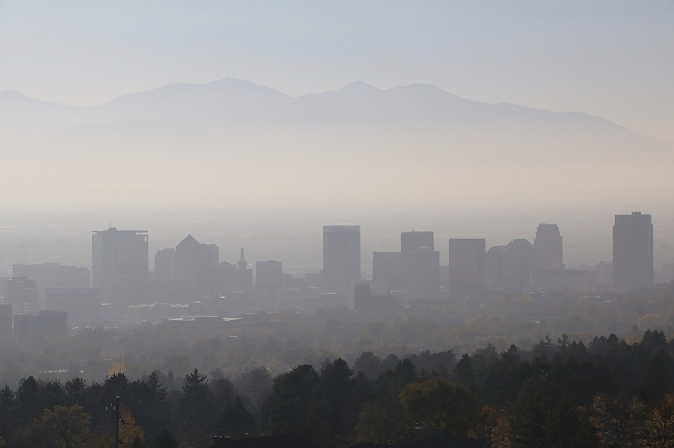
This is not fog, or snow, but engine exhaust and other emissions, caught between the warmed-up valley floor and a layer of cold atmosphere. 


Original picture by Eltiempo10, and posted under the Creative Commons Attribution-Sharealike 4.0 International License. Unfortunately unaltered. This is how my home looks every winter. 

Tuesday, May 20, 2025

A Sustained Transition (Part II): Place, Personality, and Progress


Leo Tolstoy’s novel Anna Karenina opens with “All happy families are alike; every unhappy family is unhappy in its own way.” This beautiful opening, once mulled over and mulched through by a stable of intellectuals and thinkers, birthed the “Anna Karenina Principle,” which dictates that a deficiency in any one of a number of factors results in failure, while success requires that every possible deficiency has been avoided. That is, while the avoidance of failure is not sufficient for a successful condition, it is necessary. This does not deal with personal or metaphysical concepts of success, but rather individual iterations of success. In plain language, a successful outcome requires an absence of failure, as explained below. 

My favorite example of this principle is in examining why so few species have been domesticated. Six groups of reasons have been advanced, and for a species to be domesticated, all six must be satisfied. Garbage-disposal type eaters have a diet that allows fluctuations in feed;  a quick growth rate allows for slaughter or servitude; complicated mating rituals requiring privacy or protracted time will rule out a species from the day-to-day speed of human transaction; hale beasts cannot also have a hard-headed temperament; an animal that is prone to fighting or flighting with vigor will prove difficult to control; and a herd-mentality makes for a good herd—independence goes against the grain. 


As stated in Part I of this series, the current literature about a green transition fails to consider how we keep fossil fuel communities alive. “Just transitions” protect individuals from the loss of their livelihood. “Environmental justice” protects places from the intrusion of pollution and other environmental costs. But there is no meaningful discussion about how to protect the communities, once the fossil fuel aspect is removed. Just transitions could easily incentivize a worker to leave their community to find work elsewhere. Environmental justice could easily incentivize urban siting of renewable industry and infrastructure. While this reduces pollution in rural areas, it could also remove much-needed economic infrastructure in these areas. 

Furthermore, a fossil fuel town is not comprised of barracks of derrickhands. It is a community with retail workers, teachers, retirees, and so on. The concept of just transitions is insufficient in that while it compensates workers, it does not compensate the community that will also be affected by the loss of these jobs. It is one thing to ask a person to give up their livelihood. It is another to ask them to give up their life. 

I don’t mean a true death, but the death of a person’s routine, community, friendships, proximity to family, and even their home. This transition is arguably not “just” if it simply compensates workers and does nothing to preserve the community in which they live. 

Therein lies the Anna Karenina principle, as applied to the green transition:  failing to incorporate a plan to maintain these communities represents a deficiency that is simply unacceptable to rural people. Even if people are willing to accept new jobs, they aren’t as willing to accept lives that are altogether new. 

The rural concept of “place” is not wholly urban, but land use and a strong relationship between existing buildings and the landscape can be helpful in discussions surrounding what it means to be rural. Furthermore, Paul Cloke advocates, in his handbook of rural studies, that “scholars are continuing to recognize and study community as both an important social scale of analysis and a cultural unit in the discourses and social relations that shape people’s experiences.” 

This is echoed by a brilliant quip I heard earlier in the semester, that “you aren’t from a town until your great-great-grandfather is buried there.”

 On the other side of the coin is the notion of work. In academic circles, two groups of “low-status whites” are separated by the idea of work—generally speaking, “the settled working class” work consistently while the “hard living” do not. Staying on the right side of the ledger is paramount to staying in the good graces of the community. If you’re not working, you’re draining a bit of that that little we have. Back in my bartending days, I had a friend laid off. I asked him if he was pursuing welfare and he said, “No. Not only am I taking welfare, I will have had taken welfare. I don’t want that following me around. You think a wife wants a husband who has scraped by on somebody else’s dime when they still have poverty? It'm struggling, but I'm not poor.” 

I think, in some way, the social safety net is thought about as something that you grab as your falling, not as your stumbling. If you’re still vertical, your compatriots expect you to grab it and deny it, as you stay upright. The safety net is for those who have fallen, not those who are falling; and they should be the one who lands ok. If enough of us stretch out the net, landing on it is going to feel like concrete instead of cool water. 

Past transition attempts have been insufficient in mono-economic communities. For the sake of simplicity, here is what I will give as the definition: Mono-economies refer to economic systems that rely heavily on the production and export of a single crop or resource, limiting economic diversity and often leading to vulnerability. These economies are typically characterized by their dependence on external markets for a single commodity, which can create significant risks when market prices fluctuate. It is best to think of a fossil fuel economy, and other extractive communities, as a subset of a mono-economy. Detroit was the car manufacturing capital of the world, and when this industry collapsed so did the economy of the surrounding area. IBM Endicott employed the majority of the Endicott, New York in producing computers, and the decline of the manufacturing economy took its toll quickly and ruthlessly on the area, as the company transferred these operations to larger U.S. cities and overseas

Much in the same way, an economy predicated primarily on fossil fuel extraction will leave itself open to collapse if that resource collapses. While there are numerous examples, the “boomtown” model represents the stark dangers of a mono-economy, where a massive influx of workers to extract a natural resource of an area can lead to the wholesale collapse of a town when such extraction is no longer feasible, Analyzing these examples together reveals the same patterns of transitional insecurity. Pardon my French, but how do you pull piglets off a sour tit? I think in our calculations of what to do, we miss that there are fathers on the foot of beds, stinking of coal and oil and gas, and telling their sons that they have the same opportunity to keep the family afloat if they just start working in these industries. 

I will be as brief as I can here, because if you really want to get a masterful analysis of these policies, you should read Ann Eisenberg’s Just Transitions article. Within it, she analyzes four federal transitional policies— (1) The Trade Act of 1974, (2) The President’s Northwest Forest Plan, (3) The Tobacco Transition Payment Program, and (4) the POWER initiative. There were common problems with all of these programs, but there are four that I want to highlight. 

First, the Trade Act did not meaningfully combat the increased competition for displaced workers, resulting in nearly forty percent of those workers unable to find new jobs within one to two years after job loss.  Second, the President’s Northwest Plan did not create any meaningful jobs—it paid out money to individuals but did little to “provide long-term economic growth and security” for former timber counties. 

Third, the Tobacco Transition Payment Program paid out compensation to those engaged in the trade but ended up compensating large tobacco corporations (the same ones that invested aggressively in science-denial) far more than they did individual farmers. Fourth, the POWER initiative, though focused on direct payments to workers affected by the coal and power industry, has failed to make its way out of congress.  Even when there is a way to compensate workers, other warring interests can prevent that compensation. 

Further complicating this relationship is a deep shame inherent in some rural communities associated with engaging in social safety nets like welfare. This is described in depth in Arlie Hochschild’s “Stolen Pride” as well as J.D. Vance’s “Hillbilly Elegy.”  There is also Jennifer Sherman’s book, Those Who Work, Those Who Don’t. In these highly proud communities, it is not enough to tell a breadwinner that “those who work, just can’t anymore.” By providing a payment, you are injecting much-needed money into a family unit. But that is a spitball of gauze aimed nicely into a mortal wound. A lot of these people consider work their worth, and a government payout is not only insufficient, but can even be insulting.

So, a transitionary process that merely pays out money to individuals (especially any payment plan which has to be sought out instead of merely given) will not be sufficient. 

Finally, there is also the problem of “fiscal spin,” wherein communities that hemorrhage people are stuck in a tailspin. As people leave, there are less taxes to support local infrastructure and improvement. With less taxes, these projects are abandoned or delayed. As these projects are abandoned or delayed, the quality of life in the area deteriorates. As the quality of life deteriorates, more people leave. As more people leave, the cycle continues. Similarly, when jobs evaporate, so too can labor unions. As labor unions evaporate, so too does their connection to the Democratic party. Furthermore, governmental regulations can disallow local governments from retaining revenue from new wind and solar projects, while exempting oil and natural gas revenue, thus incentivizing both profits and dependency


People cling to what they have and viciously defend what they once had. Thus, any just transition has to incorporate employment but also livelihood. How do you approach this problem fairly when the green transition is not only taking away jobs, but the primary jobs associated with a community? All this rigmarole dictates the following simple premise: the green transition must compensate communities as much as it aims to compensate individuals.

Monday, May 12, 2025

A sustainable transition (Part 1): Sustainable development and the green transition


Up until mid-twentieth century, miners would carry bright yellow canaries down into coal-blackened tunnels to carve out a meager living from the walls. Canaries are particularly sensitive to carbon monoxide, an odorless gas which can cause drowsiness, weakness, loss of consciousness, and death. Mining is hard, physical work, and miners would often fail to recognize the symptoms of carbon monoxide poisoning. The common canary exhibits distress in the presence of carbon monoxide poisoning and will die well before a human would begin to feel the effects of carbon monoxide poisoning. Thus, miners began to bring canaries down to warn them of the presence of the gas and thus escape its effects.

Although canaries helped save the lives of miners, the miners’ livelihoods are not threatened. Climate change and the pursuant public pivot away from fossil fuels, market volatility, the inconsistent distribution of mineable materials, and an increasingly globalized economy, can all contribute to significant job loss amongst miners. Furthermore, a miner's livelihood is tied to the amount of material present in the mine


A mine exists to extract a metal or mineral, and when the supply is exhausted, the mine is worthless supply, it is worthless. In addition, global politics and shifting market demand can lead to sudden and premature closure of otherwise stable mines, with with the workers the first to feel the impact of these shifts.  While whole swaths of miners lose their jobs, the owners of the mines feel relatively little impact. Ironically, coal workers can function as the “canary in the coal mine” for the coal industry itself. This is true for many extractive industries such as timber, oil, and natural gas

Furthermore, there are entire communities that depend on fossil fuel production to sustain their existence. But the world is facing a climate crisis that will require an energy transition on an unprecedented scale. We are left with a predicament: while we need to transition away from the fossil fuel industry, doing so requires the communities of workers that rely on that industry to sacrifice their way of life and their economies. Corporations have also perpetuated these extractive industries and have a strong interest in delaying this transition. 

So, here’s the trillion dollar question I will take up in this series of five posts: how do we transition a national urban-centric economy away from fossil fuels without destroying the rural communities that produce them? 

There is substantial literature on two aspects of the transition from fossil fuels to renewable energies, widely known as the “green transition.” First, the idea of “environmental justice,” and second, the idea of a "just transition."

Environmental Justice

As we all heard growing up, “the needs of the many outweigh the needs of the few.” But that is a maxim that should be invoked in times of disaster and crisis, not in city planning.


“Environmental justice” asks that the environmental costs associated with renewable energies be borne fairly instead of concentrated within low-income or majority-minority areas. Environmental justice is not a concept limited to the green transition; it has become increasingly relevant in discussions about where to site renewable energy industry and infrastructure.

I first came across the concept while working for the Department of Toxic Substances Control in Sacramento. Consider the car battery recycling process, which can infinitely recycle the lead component of the battery, melt and reform a substantial amount of the plastic casing, and neutralize the sulfuric acid or convert it to sodium sulfate, a product used in laundry detergent. Ninety-nine percent of car batteries are recycled. However, the recycling plant produces air emissions and a risk of lead contamination in air, soil, and groundwater. Battery recycling is an industry that benefits the community as a whole, but the smaller community near the plant suffers. For example, Exide Technologies shut its plant in May 2015, after years of fines and citations by the Department of Toxic Substances Control, leaving a five-square-mile brownfield site with elevated lead levels, near predominantly working-class and Latino neighborhoods. The cleanup in Vernon is ongoing. 

Another example of this conundrum is found in solar panel production. While the energy created by renewable energies is “clean,” the production of solar panels requires silicon, which must be mined, refined, and disposed of if the panel fails or is irreparably damaged. This both threatens health and safety due to emissions and environmental contamination and impacts the quality of life in an area through habitat destruction and a loss of natural beauty. 

Just Transitions 

A “just transition,” as articulated by Ann Eisenberg in a phenomenal law review article with that title, is a labor-driven principle of easing the burden that decarbonization poses to those who depend on high-carbon industries. It emphasizes a fair distribution of the risks and rewards of the green transition. Privately and publicly driven transition attempts have met varying degrees of success. 


In 2017, a nonprofit called Mined Minds came to West Virginia with promises to teach West Virginians how to write computer code, and then get them well-paying jobs. Many West Virginians quit their jobs or dropped out of school to participate, but almost none who signed up for the program are working in programming now. 

Alternatively, there are retraining programs that exist to train wind and solar installation technicians, and workers involved in zero-emission vehicle construction. However, these programs are not widespread and presently are neither widely targeted nor made free to fossil fuel workers. This may hamper their use as a transitional tool. 

In the past, the United States has provided some form of financial benefit to workers displaced by federal policy, such as compensating workers displaced by the Trade Act, the President’s Northwest Forest Plan, the Tobacco Transition Payment Program, and the POWER program. These payment programs have their own problems, which are discussed later in the series. 

Even successful non-fossil fuel climate transition projects, such as the USDA’s Rural Energy for America Program (which uses grants and loans to pay for clean energy projects for farmers and small business owners) and Climate Smart Commodities Program (which helps participating farmers implement production practices that help build soil health, sequester carbon, and enhance productivity) have been shut down or delayed by Trump’s USDA, casting some doubt on the integrity of long-term federal transition programs. 

California is “committed to achieving a just and equitable transition to carbon neutrality by 2045.” Although this will create a significant amount of jobs, only 56% of current fossil fuel workers will have “promising employment opportunities outside fossil fuel industries.” This number is likely to rise as renewable energy industry increases, but not enough to provide for all workers.

So, What’s Missing?

Nestled within the concepts of “environmental justice” and “just transitions” is the sustainable development triangle, a nexus between competing issues and interests like environmental stewardship, economic growth, and human well-being, to meet the needs of the present without compromising the ability of future generations to meet their own needs. Equity, Economy, and Environment lie at the three corners of the triangle. For example, “sustainably developed” housing can be pursued in a way that minimizes environmental impact in the surrounding area, drives improvements in Human Development Index and Multidimensional Poverty Index outcomes, and multiplies community jobs while improving household stability and providing opportunities for home-base. In this example, the issues considered can range from “good health and well-being” and “climate action” to “industry, innovation, and infrastructure” and “responsible consumption and production.”

Eisenberg explains that the existing policies of “environmental justice” and “just transitions” can be seen as lying on the sides of the triangle between ‘Equity and Environment’ and ‘Equity and Economy,’ respectively. 

What, then, lies between ‘Economy and Environment’? 

Extractive economies are unique in the fact that their economy is inextricable from their environment—these communities are ‘stapled’ to the resources they extract. In the late 19th and early 20th centuries, mill towns sprouted as forests were clearcut for the burgeoning timber industry. Mining towns cut into the rock to extract coal. Oil towns drilled down to start drawing up crude oil. However, the fate of many extractive economies is the same—once the resource has been fully extracted, the town fades away.

And What Comes Next? 

While environmental justice asks to distribute the costs of industry equitably, it may also take away the benefits from communities that find the costs acceptable. While just transitions aims to compensate individuals who will lose their employment in the green transition, that same person may be forced to relocate to find employment. 

This series of blog posts aims to discuss complex issues such as place, pride, and progress, and home in on a crucial aspect of the transition—how do we keep these communities intact? 

Here is a quick view of what’s to come: 

Part II of this series will cover the rural concept of “place” and how it factors into the identity of fossil fuel towns, even when there has been a past exploitative relationship with fossil fuel corporations, as well as how past transitions away from rural mono-economies have failed to adequately acknowledge this concept. 

Part III will examine Ann Eisenberg’s concept of rural America as a “commons,” and how this can help drive governmental investment in local communities instead of corporate investment in utility-scale renewable energy projects. 

Part IV will expose how the current renewable energy industry echoes past extractive economies like fossil fuels, and how localized renewable energy production could help decentralize the United States energy grid. 

Part V will examine several ways in which localized renewable energy siting could provide long-term stability for fossil fuel towns.

Thursday, October 26, 2023

Whose land is it anyway? Why South Australian farmland has no protection against mining.

As it currently stands within the 1971 Mining Act of South Australia, farmers have no right to veto mining activities over their land. When extractive minerals are found, or believed to be located, on farmland, the land owners are required to hand their land over to the government, where it is sold on to mining corporations. Why? Because section 16 of the Mining Act specifies that all minerals rights are held by the Crown (the governing authority of Australian law at both a State and Federal level). 

All decision making power with relation to mineral lies with the Minister for Energy and Mining, meaning they have the ability to grant mining related licences over private land without needing to seek permission from the land owner. This inequitable balance powered by statute has, and will, continue to inflict harm upon the farming industry throughout South Australia. 

A lack of power to prevent corporate destruction to farmland is the sort of nightmare fuel that breeds a lack of trust between the government and its people. I guess the most appropriate question to ask in this situation is, if you can't say no to someone ripping up your land, then is it really your land at all?

I have very few bad things to say about South Australia. It has been my home for almost all of my 24 years of life. It is host to incredible wine regions, farm and river land, outback spectacles and the second biggest annual arts festival in the world. However, when it comes to the South Australian government and its undying love for mining, there is no possibility of coming in between them, regardless of what harm may ensue. This is something that makes my blood boil to a level I simply cannot put into words. 

To try and give you an idea of how highly valued mining is within South Australia, in the March quarter of 2023 alone, the government spent AUD$64.2 million on mineral exploration (scouting and searching areas for extractive minerals). This broke an 11-year long Australian record of $61 million, which was also set by South Australia in the December quarter of 2012. 

While $64.2 million sounds like an obscene amount of government money to spend on just the exploration purpose, South Australia is a treasure trove of undiscovered minerals and highly valued finite resources. Evidence for the presence of such resources is Olympic Dam: one of the most significant mineral deposits in the world.

Olympic Dam (owned and operated by BHP) is located around 350 miles from the state's capital, Adelaide, it has roughly 435 miles of underground roads that run throughout the mine and is estimated to be worth anywhere between AUD$4.9 - $5.4 billion according to the Australian Financial Review. Olympic Dam is such a significant site that the town of Roxby Downs was purposefully established and built to support the mine. 

At its most successful, the South Australian mining industry generated AUD$7.3 billion in a single financial year, meaning it holds an undeniably significant value to South Australia's economy. With revenue like this, it is easy to understand why the government would hold such a destructive industry close to its heart.

It's hard to imagine that another single industry could provide a more influential value to a State than mining does. After all, mining's where the money is, right? To a certain extent yes, but South Australian farmers would argue otherwise.

In the 2021/22 financial year, South Australia's agribusiness and primary industries^ generated $10 billion MORE than the mining industry did at its peak. Coming in at a whopping AUD$17.3 billion in revenue, South Australia's agricultural industry increased its revenue by almost $2 billion in a single year (after the previous all time high of $15.4 billion in the 2020/21 financial year). Within this enormous figure, field crops came in as the biggest contributor with $5.6 billion, followed by livestock with $4.1 billion and wine with $2.4 billion. 

An absolute necessity for the agricultural industry is arable farmland. Healthy top-layer soil and everything below is the key to successful crop growth. Crop growth is not just used for harvesting food, but also animal feeding, grazing land and vineyards. Without healthy soil, there is no possibility for the land to be used for agricultural purposes. 

When privately owned farmland is purchased by mining corporations, there is a statutory requirement that mining corporations are required to have an approved Program for Environmental Protection and Rehabilitation ('PEPR') prior to the commencement of any extractive project. These programs are designed to promote a greater level of environmental responsibility, by requiring corporations to restore land after an extraction project has completed. 

While there are legislative mechanisms for enforcement of these programs, the penalties in place for non-compliance are shockingly insignificant compared to the revenue mining corporations generate. Failure to comply with a PEPR will result in a maximum civil penalty of AUD$250,000. Using Olympic Dam as an example (but note they are governed by their own statute), it would take BHP just under 2.5 minutes to generate the $250,000 needed to cover the penalty (calculations below). 

So why does the government impose such pathetic penalties? Why does the government place a higher value on land use for mining over agriculture? It's simple: the government is entitled to royalties from all extracted minerals due to Crown ownership. 

In the 2019/20 financial year, the South Australian government received AUD$311 million in mining royalties. While I understand the government needs all the financial support they can receive, this also showcases an absolute inability for sustainable, long term economic consideration. Profits now, will lead to detriment for the future of South Australia's economy if farmland continues to be surrendered for mining practices.

In my humble opinion, Western Australia is operating decades ahead of everyone else. Section 29 of the Western Australian Mining Act affords land owners the power to veto any form of mining activity proposed to affect the surface of their land. This statutory protection not only protects Western Australia's agricultural industry and economy, it also protects the wellbeing of its farmers. This is a legislative provision that while being small, hands over significant power to farmers and more importantly, demonstrates to them that their government cares. 

So where should South Australia go from here? Allowing farmers the power to veto mining activity over their land is the bare minimum that can be enforced to protect South Australia's agricultural industry. Once farmland has been contaminated by mining practices, it is near impossible to recover the land to its original condition. The practice of mining transforms farmland into a finite resource - once it has been used for mining, it will never be useable for agricultural purposes again. 

These farmers need a safeguard. They need their government to listen to them and support them. The South Australian government needs to walk away from their money hungry attitudes and begin to look after the agricultural powerhouse they are privileged to have at their finger tips. 

What I would say to the government if they could hear me - shame on you and your ignorance. Your lack of awareness on the destructive nature of mining is simply embarrassing. Farming matters. The sooner you wake up and realise this, the better off our State will be. 

If you wish to read more about the importance of Australia's agricultural industry, I explored live animal exports in Western Australia, in previously published posts available here and here

*******

^'Primary industries' is the collective term used for South Australia's field crops & grains, livestock, wine, horticulture, forestry, dairy, seafood, wool and animal feed industries. 

*******

Calculations:

For the 2021/22 financial year, BHP reported earnings of AUD$57 billion.  

The mine operates 24 hours a day, 365 days of the year.

This generates approximately $156 million per day, $6.5 million per hour and $108,00 per minute.

108,000 x 2.5 = 270,00 

Therefore, just under 2.5 minutes to earn enough to cover a $250,000 penalty. 


Friday, October 6, 2023

California struggles to provide its rural residents with safe drinking water

Last week, a Los Angeles Times story detailed how rural California residents often consume contaminated drinking water, with 400 (or about 25%) of the state's water systems failing to provide safe drinking water to residents.

The article explained how California cannot provide clean water to residents in California's Central Valley. In particular, the article found Kern County's water systems do not function effectively. Almost 80% of the county's water supply (65 systems) have been categorized as failing for three years

Kern County is home to around 900,00 residents, of whom 18.5% live in poverty.  The county's economy is primarily based on agriculture and petroleum extraction industries and its median household income is $58,000 is significantly less than California's median household income of $86,000

The Central Valley, a vast agricultural region of California and ranks among the United State's most polluted areas, due to heavy vehicle trafficdiesel-burning locomotivestractors and irrigation pumps, and wood-burning stoves and fireplaces. 

Despite its booming agricultural industry, Central Valley residents are among California's poorest. About 24% of the Valley's population lives below the poverty line. While suburbs like Elk Grove and cities like Fresno sprawl out of the region, the Central Valley's agricultural communities are classified as rural according to CivicWell, a Sacramento-based nonprofit. 

Overall, the region covers more than 20,000 square miles and is home to around 2 million people. For comparison, Los Angeles County covers 4,084 square miles and is home to almost 10 million residents.

According to the American Bar Association, water supplies in farming areas (like the Central Valley) often contain high nitrate levels because the nitrates seep into the groundwater from fertilizer and manure. 

Ingesting too much nitrate can affect how the blood moves oxygen through the bloodstream and can cause methemoglobinemia (also known as blue baby syndrome), which can result in serious injury or death. In adults, high nitrate exposure can potentially lead to an increased risk of cancers like gastric cancer, although there is yet to be a scientific consensus on causation. 

Despite these data, 85% of the communities with nitrate-contaminated drinking water have no treatment systems in place to remove the chemical.

Madison Condon of Boston University School of Law wrote a piece for the American Bar Association and further explained that rural residents are those most likely to face poor water quality and unsafe drinking water: 

All across rural America, small community water systems are failing to protect public health due to a perfect storm of forces. Poor regulation of agricultural waste and other pollutants, shrinking populations, and aging infrastructure all contribute to the increasing incidents of water quality violations dotting the rural landscape.

It is troubling that the Central Valley experiences a lack of clean and safe drinking water, especially because the water used produces 25% of the U.S.'s food and 40% of American fruits and nuts. The region is a major agricultural output not just for California, but for the entire county.  

Water contamination in farming and industrial communities is unfortunately typical. 

In 2017,  environmental lawyer Rob Billot reached a $631 million settlement with chemical corporation DuPont for releasing 7,100 sludge tons of perfluorooctanoic acid (also known as PFOAs or C-8) into a landfill in Parkersburg, West Virginia. The chemicals ended up in the town's waterways, leading to deleterious health effects in the Parkersburg community.  Many residents suffered cancers, thyroid disease, high cholesterol, pre-eclampsia and ulcerative colitis–– all verified scientific effects from exposure to PFOA. A few years after the settlement, Focus Features made a film about the Billot's story called Dark Waters, starring actor and environmental activist Mark Ruffalo

Having access to reliable and safe drinking water is not merely a rural phenomenon, and happens in urban settings as well.   

In 2014, Flint, Michigan switched its water supply from Detroit’s system to the Flint River to save costs without the proper testing. Flint residents complained of a foul-smelling odor and suffered numerous health effects, but they were ignored for years. The Michigan Civil Rights Commission deemed the poor governmental response to the Flint crisis a “result of systemic racism.”

Having access to safe drinking water is essential for our health and wellbeing, according to The Centers for Disease Control and Prevention. While EPA regulations require federal and state agencies to regulate public water systems, those regulations do not apply to privately owned wells. This can be a problem in rural communities like those in the Central Valley, where most private wells are the source of many landowners' water.

In a 2019 paper posted in Environmental Health, Schaider et al. studied the link between low-income communities and drinking water contamination. They found that

Low-income and minority communities often face disproportionately high pollutant exposures. [...] Small water supplies, particularly those that serve low-income and minority communities, may have poorer source water quality due to closer proximity to pollution sources.

Rural residents suffer higher rates of poverty than their urban counterparts. According to Circle of Blue, a nonprofit aimed to educate and inform about the problems plagued by climate change, found that many rural towns have neglected their drinking water systems for decades:

As some rural towns lose population and government funds shrink, some drinking water systems are one failure away from crisis.

With the lack of affordable housing and the rise in housing prices in the Bay Area and Southern California, the Central Valley's population is expected to increase by five million people by the year 2060. Lawmakers, politicians, and policymakers should ensure safe access to drinking water in rural communities, despite the region's low population density.

Regardless of the size of a population cluster in an area, where one's water comes from, and what a town's primary industry is should not impact safe and reliable access to drinking water. 

You read more about water contamination on the blog here and here. You can read more about California's Central Valley here and here.


Tuesday, September 12, 2023

Can the Green Mountain State stay green?

It's an old lesson we never seem to learn . . . You can't save the environment by destroying it. -Kit Ausschnitt, current Vermont resident. 

Oftentimes, people think of oil, gas, coal, and other extractive industries being synonymous with rurality. West Virginia has the mines, Kansas has fracking, Alaska drills, and so on and so forth. Despite these stereotypes, there has been a recent boom in clean energy jobs in rural communities (you can read more about clean energy in rural communities here and here). 

Clean energy jobs in rural counties outnumbered fossil fuel jobs by 1.5 to 1 in 2019. In rural parts of the Northeast and Pacific West this rises significantly as clean energy jobs outnumber fossil fuel and power jobs 9 to 1Rural classification for this purpose was developed by the USDA Economic Research Service which distinguishes between metropolitan counties and non-metropolitan counties by rating them on a scale of 1-9. You can read more about the rural/ urban classifications here.

According to the World Resources Institute, jobs in renewable energy, energy efficiency, advanced electric grid development, clean fuels, and other clean energy jobs employed around 360,000 workers in rural counties in 2019. These jobs accounted for as much as 10% of total employment in these places. In fact, clean energy jobs make up 3% of total rural employment in Nevada and Wyoming, 3.2% of total rural employment in Indiana, and 3.6% of rural employment in Hawaii. Vermont leads the pack, however, with 5.7% of total rural employment being comprised of clean energy jobs. 

According to the most recent Census, Vermont is the most rural state in the union with 65% of Vermont's population residing in rural areas. Despite its small size (Vermont is the second least populated state after Wyoming), Vermont's share of in-state electricity from renewable resources is the highest in the nation (reaching just shy of 100% in 2020 and 2021) and has the lowest carbon dioxide emissions of any state. 

Since the end of 2014, when the Vermont Yankee Nuclear Power Station was permanently shut down, Vermont has gotten almost all of its in-state electricity from renewable resources. Most of Vermont's electricity comes from a combination of hydroelectric plants (46% of total electricity), wood and wood waste (23%), solar energy (16%), and wind farms (14%).

That said, Vermont's commitment to renewable resource electricity has not been met with universal approval.

Recently, tensions have risen regarding a renewable energy project in Shaftsbury, Vermont. Shaftsbury is located about 2 hours and 45 minutes from Burlington, Vermont, and is located on the southern end of the state. Shaftsbury boosts “the beauty and quiet of rural living with city convenience within easy reach.” 

The renewable energy project in Shaftsbury has been met with local pushback as "the project would build one of the largest solar panel farms in Vermont. This aversion to large-scale change in rural Vermont is not new. An earlier blog post explores how people want Vermont to "stay Vermont."

Local aversion to large-scale environmental projects is not limited to Shaftsbury. A new bill, H.320, if passed would require Vermont utilities to purchase double the amount of clean, in-state energy by 2030 and triple the requirement by 2035

Opponents of H.320 question the efficiency of solar panels in northern climates and worry that their country roads won't be able to handle the incoming construction traffic. They also worry about increased pressure on their farms, an adverse effect on property values, and an overall threat to rural living

Additionally, residents raise the concern that large solar farms, like the one proposed to be built in Shaftsbury, threaten Vermont's picturesque appearance (parts of the solar array would be visible to neighbors and those traveling on Route 7). One Vermont resident remarked, "The main attraction of Vermont is its appearance. That's all it's got going for it."

Vocal opponents of large-scale renewable energy investments are not against making Vermont more energy-conscious. Instead, they bring attention to the fact that current efforts are "driven by developers trying to make money instead of communities and utilities with incentives to find the most effective way to clean up the grid."

Given the opposition to solar, one might think wind farms would be an easier sell. But, this is likely a nonstarter since the possibility of investing in additional wind power development in Vermont is essentially dead. In fact, there have been no industrial-scale wind turbines built in Vermont in the last decade. And the ones built back then were also met with an outcry at the time. 

So, if Vermont can't build large-scale solar or wind farms, how will they get their energy? One Vermont resident thinks the need will be met by importing more Canadian hydropower from Quebec. In fact, a transmission line that will run under Lake Champlain to provide energy from Canada was approved in April 2022

The push and pull happening between locals and clean energy advocates is not new in Vermont. If Vermont wants to stay green, however, the lawmakers will need to introduce a bill that balances the interests of the locals and the clean energy advocates. 

Tuesday, February 28, 2023

The aftermath of the toxic spill in East Palestine, Ohio.

On February 3, 2023, a Norfolk Southern train carrying a toxic chemical derailed in a small Ohio town of 4,718 called East Palestine. The chemical, namely vinyl chloride, was released into the immediate vicinity of the small town. To prevent a potentially deadly explosion, officials decided a few days later to burn off the rest of the vinyl chloride, causing a huge plume of black smoke that case a pall over area.

The Environmental Protection Agency (EPA) identified four other chemicals (so far) that leaked into the air, water, and soil: butyl acrylate, ethylhexyl acrylate, ethylene glycol monobutyl ether, and isobutylene. If it isn't apparent from their names, all these chemicals are also toxic.

Despite all this, Ohio EPA and Ohio officials claim that the water in East Palestine is safe. Specifically, preliminary studies found that there was "no evidence of contamination." (If you want to look at the water samplings yourself, click here.) The federal EPA similarly claims that the air in East Palestine is safe, although an article published by the Yale School of Medicine warns more data still needs to be collected.

Residents are unconvinced about the safety of the water and air. Videos on TikTok show that the local waterways have a very concerning rainbow sheen. One refers to it as a "chemical shine." Some residents are nervous about adverse health effects, reporting new symptoms of rashes, sore throats, nausea, and headaches. Small farmers in the area are similarly concerned about the effects of the chemicals on their farms and livelihoods.

Fears of contamination have spread across the nation. Giant Eagle, a grocery chain, pulled bottled water off its shelves in five states including Ohio and Pennsylvania because the water was bottled 25 miles from the train derailment. Two Ohio high school basketball teams forfeited games rather than enter the region to play. The wastewater from firefighting efforts in East Palestine are being shipped to the Houston area in Texas, causing concern and uproar among Texas residents and politicians.

Humans aren't the only ones that have been harmed. USA Today reported that more than 43,000 fish and animals have been killed. (Officials say that none of the species were threatened or endangered if that makes you feel any better.) A lawsuit against Norfolk Southern claims that fish and animals are dying up to 20 miles from the derailment site.

So what is being done to remedy this environmental disaster or ensure it doesn't happen again? The short answer: not enough.

The EPA ordered Norfolk Southern to clean up the toxic spill and announced that it will fine the company $70,000 a day for everyday that it doesn't comply. It did so under its authority granted by the Comprehensive Environmental Response, Compensation, and Liability Act (CERCLA).

If you're asking yourself: how in the world do you clean up liquid chemicals that have seeped into water supplies? Or, can they even clean it up before it causes more damage? Or even, who decides when the spill is cleaned up "enough?" These are great questions with depressingly unclear answers. The fact is that a massive amount of damage has been done, and a massive of damage is still to come.

Not to mention, what legal recourse is there for people who have already been exposed to the toxic chemicals? Unfortunately, toxic tort injury law is thorny and rarely results in compensation to individual victims. This is only exacerbated by the fact that we still don't know all the health effects of these toxic chemicals which could make it even more difficult to link them back to the East Palestine spill. While it's great that the EPA is attempting to hold Norfolk Southern accountable, it is unlikely that any benefits or remedies will make their way to residents most impacted by the spill.

In the bigger picture, it is highly problematic that almost all environmental laws in this country provide legal bases to stop destruction retroactively rather than enforce measures to prospectively prevent environmental catastrophe. As with the East Palestine spill, by the time an environmental disaster has started, it is usually too late.

I want to suggest legal reforms that prioritize forward-thinking stewardship and sustainability. We cannot continue glorifying profits and endless economic growth at the expense of our environment. We need to accept that some environmental risks are not worth it, and some freedoms need to be restricted. This toxic spill in East Palestine should be a wake up call for everyone, everywhere—not only in a relatively rural place.

Sunday, February 26, 2023

Reconciling rural aversion to environmental policy with reverence for the environment

American political polarization on the issue of climate change, specifically the predominant notion that environmental protection is a left-wing cause, has never felt intuitive to me. The people in my life who were most integrated with, knowledgable about, and invested in caring for the natural world – hunters, fishers, and farmers – were all also life-long conservatives. Knowing first-hand the extent to which these individuals revered the natural landscape that surrounded us in rural Virginia, I reconciled this perceived disconnect by presuming their commitment to the environment, which I witnessed as implicit in their rural ways of life, took a back seat to other political preferences and agendas. I had never considered, however, that rural existence and identity could, in-and-of-itself, be constructive of an ideology opposed to climate change policy.

A December 2022 Associated Press news report, "Rural voters 'in the trenches on climate, leery of Biden," complicated my understanding of rural Americans' relationship to climate policy. The story focuses on Raquel Krach, a rice farmer in a rural area of the Sacramento Valley, who has been unable to grow full crop yields due to ongoing drought. Despite confidently attributing the increasing prevalence of such adverse natural phenomena to the effects of climate change, Krach feels she cannot even discuss the issue of climate change policy with her rural neighbors given its deeply divisive nature within her community. The report contextualizes Krach's rural neighbors' antagonistic relationship to climate policy within a broader trend by which rural communities are less supportive of federal climate change mitigation action relative to their urban counterparts, even when analyzed internally within political parties. 

The existence of an urban-rural divide with regards to attitudes towards climate policy is particularly surprising given the ways in which rural communities are on the forefront of many climate issues. As the U.S. Global Change Research Program's Third National Climate Assessment highlights: 

Warming, climate volatility, extreme weather events, and environmental change are already affecting the economies and cultures of rural areas.

More specifically, because rural socioeconomic ways of life are heavily dependent on natural resources that are being impacted by climate change and less diversified in terms of sources of socioeconomic stability, the livelihoods, infrastructure, and quality of life of many rural communities across the country are being jeopardized by climate shifts we are already seeing.  

Drought and lack of available water, such as that posing challenges to Krach's farm, provide just one illustration of climate change's many iterations and corresponding implications for rural communities. Other ways in which climate change-influenced disasters continue to have an outsized impact on Rural America include increasingly frequent wildfires (previously discussed on this blog here, here, here, and here), flooding (here and here), and coastal erosion

A 2020 study, "Understanding Rural Attitudes Towards the Environment and Conservation in America," produced by the Nicholas Institute for Environmental Policy Solutions, confirmed both the existence of an urban-rural divide with regards to attitudes towards climate policy, as well as what I knew from personal interactions: this divide was not the product of rural Americans caring less for the environment. To the contrary, the study found that rural Americans definitively do value environmental protection and have strong place-oriented values embodied by environmental stewardship and an ongoing connection to nature. 

Instead, the Nicholas Institute study posits the divide is largely the result of rural Americans' negative attitudes towards the government and, particularly, their distrust of federal environmental policy and regulation they feel has not taken into account the needs of rural constituencies and, consequently, led to bad outcomes for their communities. Similarly, the study identifies rural Americans' anti-climate policy disposition as emerging from skepticism of large environmental advocacy groups they see as pushing top-down regulation that serves the agenda of global climate activists, but not necessarily their small towns. Thus, the study demonstrates the ways in which for rural Americans being pro-environment, but anti-environmental policy is not inherently contradictory.  

Understanding rural Americans' aversion to climate change mitigation policy, despite in many ways bearing the brunt of climate change's most tangible impacts, has import beyond just being of theoretical interest. Rural Americans are essential to the success or failure of much environmental policy implementation. More specifically, as spotlighted in a 2021 paper, "Understanding Rural Identities and Environmental Policy Attitudes in America," by Emily Diamond: 

Conservation of ecosystems, water, and wildlife, the production of energy – renewable and non-renewable – and many other environmental issues depend on the actions taken by rural residents; gaining rural buy-in for environmental regulations can lead to greater success in their implementation.

Given the critical importance of rural communities to climate policy implementation, policy-makers and activists should take seriously the recommendations of the Nicholas Institute study to: (1) collaborate with local constituents, particularly trusted community leaders, such that rural stakeholders are positioned to have an active voice in local resource management and the broader solution, (2) build state and local government partnerships into policy to mitigate federal distrust and bolster overall efficacy, and (3) leverage rural Americans' existing environmental values both by honing in on the importance of environmental stewardship for the purposes of acting on behalf of future generations, and by focusing on specific local issues, such as protecting clean water sources, rather than on climate change and global emission reduction more universally.

Saturday, March 6, 2021

What can rural America offer clean energy?

A recent op-ed in The Hill argues that public policy should reflect the fact that rural Americans are an integral part of the nation’s clean energy economy. The author of the piece is Chitra Kumar, a Senior Fellow for the Aspen Institute Community Strategies Group, a nonprofit aimed at improving the social, health and economic wellbeing of rural America. Kumar contends that the political reaction to the recent wave of outages in Texas is evidence that public policy views rural Americans as an afterthought on issues like environmental sustainability. Texan politicians are currently blaming renewable energy for the energy disaster as a way to resonate with Texas residents “who prize their state’s culture of rugged self-reliance.” This predisposition of self-reliance and independence are seemingly emblematic of rural culture. However, as the op-ed points out, many rural leaders are open to energy alternatives, as current practices are fraught with high energy, internet, and water costs.

In light of this political tension surrounding renewable energy, it is promising to see what the new Administration is doing for rural Americans regarding energy and the climate crisis. Recently, President Biden signed an Executive Order on Tackling the Climate Crisis at Home and Abroad. The order includes goals to create new energy jobs in rural communities, while also revitalizing the energy sector by “reducing methane emissions, oil and brine leaks, and other environmental harms.” I support these goals in the Executive Order and think the federal government should focus on local projects that create jobs if they are to both revitalize the energy sector and reconnect with rural Americans.

In addition to the federal government’s response to renewable energy in rural America, The Hill op-ed discusses interesting innovations for expanding clean energy in rural communities. One idea focuses on “small-scale renewable energy microgrid technology,” which allows users to control their energy supply and reduce overall operating costs. Not only can microgrid technology help with climate mitigation, it also is fairly resilient. Unlike large electrical grids failures—which is what happened in Texas—if a microgrid in a rural community failed, “lives could be saved because communities would have the option to maintain their own backups.” Thus, if public policy shifts to focus on similar innovative projects, rural communities could better cope with changing weather patterns and help the country move toward a carbon-neutral future.

Interestingly, another op-ed in Business Insider this week discussed the need for Democrats to invest in local clean energy projects in order to connect with rural voters. The authors are optimistic that Democrats can better prioritize rural counties through renewable energy because of its potential to create new jobs, increase economic activity, and lower health costs. One example of how renewable energy can help rural communities is the Samson Solar Energy Center. Located in Franklin, Red River, and Lamar counties in east Texas, the Center will create 600 jobs during its construction, “promises more than $250 million in payments to local landowners,” and will contribute more than $200 million in taxes to the surrounding local communities. The authors point out that scaling this massive rural clean energy project down to make similar smaller projects across rural America is a viable clean energy investment that has a lot of potential for success. They end the op-ed by stating:
Energy, like politics, is local. To best succeed, and reestablish a long lost connection with rural voters, lawmakers must harness the work and innovation in America’s rural communities, and empower them to lead the way.
This particular statement exhibits some of the authors’ hesitation regarding the Biden Administration’s pledge to “Build Back Better,” a plan that includes a 2 trillion-dollar clean energy roadmap. The plan would use the money to reach a carbon pollution-free energy sector by the year 2035 through projects such as upgrading the structure of millions of buildings, weatherizing millions of homes, and pushing for more public transportation. This plan is very different than the localized and job-focused goals in the Executive Order on Tackling Climate Change at Home and Abroad - rather than making long-term investments in communities and their energy sectors, the plan invests money in short-term projects. 

Thus, I can’t help but agree with the authors’ hesitation toward the Build Better Back plan. In reading these op-eds, I am drawn to investment in localized energy projects that can both improve economies and provide clean, reliable energy to rural communities. Thus, I find the Executive Order more appealing, as it is the type of political response that is necessary to connect with rural America. The plan focuses more on weaving these rural communities into clean energy by creating jobs and opportunities, and less on pouring money into quick energy-efficient fixes like weatherized homes.

Rural America has the manpower to support energy projects like microgrid technology and small-scale solar energy. Even better, these kinds of projects can create jobs, reduce energy costs, and help the environment. I think rural communities can become a cornerstone for clean energy and help America move toward its carbon reduction goals. However, in order to do so, there needs to be a shift in public policy reflecting rural America’s clean energy potential. I look forward to following this development.