Showing posts with label drug abuse. Show all posts

Thursday, February 20, 2025

The inadequacy of urban criminal justice reform when applied to the rural

The criminal justice system implicates the rights of those swept up by it in numerous ways. If you have every watched a crime tv show you know defendants in the criminal system have the right to an attorney and the right to a speedy trial. These are important and are supposed to operate as safeguards against unfair treatment of defendants in our system. 

A problem arises when there are too few attorneys or legal resources to adequately handle the demand of defendants in a community. This problem is prevalent in rural areas, which are often in "legal deserts". The problem is often compounded by state legal ethic rules which require public defenders to limit their caseloads in order to provide high quality services and diligent representation to their clients.

There have been efforts to solve attorney shortages in rural areas. For example, a program in South Dakota offered stipends to attorneys who agreed to work in rural areas for a set amount of time. The program was able to place 32 attorneys in rural areas over the course of a decade by providing those attorneys with a stipend that allowed them to pay off student loans. But such programs are not necessarily viable in states like California where the cost of law school tuition is significantly higher, meaning stipends would put a far greater strain on the state budget. 

In the context of the criminal justice system, it is also apparent that attempting to offer prospective public defenders and assistant district attorneys more competitive pay does not completely solve the problem either

In an effort to ensure indigent clients receive better representation, King County in Washington has attempted to implement public defender case caps, limiting the amount of work a single attorney can take on. The decisions was based on the National Public Defense Workload Study which was published recently and offers some astounding findings about the amount of work public defenders take on.  For example: 
"In one widely reported instance, for example, attorneys assigned to a misdemeanor caseload at a metropolitan office providing public defense were each appointed to an average of 2,225 cases per year. Assuming that 40 hours each week of the year were devoted to nothing but client representation, this caseload would allow an attorney to spend an average of about 56 minutes on each client’s case. In that same office, attorneys assigned to a felony caseload were appointed to an annual average of more than 436 noncapital felonies, effectively allowing for only 4 hours and 47 minutes, on average, to defend clients facing decades in prison."

The report also briefly cites the experience of Rhonda Covington, the sole public defender of two rural Louisiana counties, who had 265 open cases to handle by herself.  

Case caps are certainly one way to improve the quality of service indigent defendants receive from their appointed defenders. It also aims to solve the shortage of attorneys in indigent defense roles by making the career more sustainable. However, this reform doesn't appear to be a solution tailored to the situation rural communities find themselves in. Case caps may work in an urban setting where the effect would presumably be attracting more of the already existing attorney population to the public defender role, but rural areas there is no preexisting adequate population of attorneys to attract.  

Even movements like progressive prosecution place an emphasis on diversion which requires rehabilitation facilities, programs, and resources that rural places may not have. Non-enforcement, policies adopted by prosecutorial offices to not pursue lower level charges, also present a problem for rural areas. While not wasting resources on lower level crimes may result in better service for some defendants, rural areas are constantly battling the opioid crisis and other drug problems. Crimes involving drugs, like simple possession, are usually considered "lower level." Without bringing people struggling with addiction to court, it becomes hard to mandate treatment for them. (It also demands we ask why courts have had to be so active in addressing an issue that is better handled by healthcare professionals).

These issues demand solutions rooted in programs that revolve around health care and highlights how the justice system is attempting to fill a role it was never meant to, and failing to do so. The system, which continues to evolve to meet the demands of justice of large urban areas, has not contemplated the unique needs of the rural community. We need to reevaluate the way the criminal justice system is structured and operates in rural America and make some radical changes. 

Tuesday, July 16, 2024

J.D. Vance's rise prompts hillbilly musings from Latino columnist

Columnis Gustavo Arellano writes in today's Los Angeles Times under the headline, "I know what a true hillbilly is, and it's not J.D. Vance."  Here's an excerpt, which at least nods to the rural connotation of hillbilly:  
From the moment I learned about hillbillies as a child, I was entranced.

Good ol’ boys and girls born high up in the mountains? That’s my parents. People who moved from rural towns to metro areas in search of a better life? Story of both sides of my family. Working class? My upbringing. Lovers of things — food, fashion, music, diction, parties — that polite society ridiculed? Yee-haw! Stubbornly clinging to their ancestral lands and ways? ¡Ajúa!

I learned to love bourbon, bluegrass, “Hee Haw” reruns and Jeff Foxworthy’s “You Might Be a Redneck If ...” series. As an adult, I drove through the small towns of central and eastern Kentucky and Tennessee, feeling at home in areas even my white friends warned wouldn’t take kindly to “my type.” I might not have outwardly resembled the ’billies I met — I’m a cholo nerd, after all — but we got along just fine, because they were my brothers and sisters from another madre.

That’s why I was intrigued when J.D. Vance’s memoir, “Hillbilly Elegy,” was released in 2016. From what I heard about it, the familial dysfunction, generational poverty and inherent fatalism that Vance overcame were similar to the pathologies of my own extended clan. The up-from-bootstraps message he preached in interviews was what my parents had always preached, and what I still subscribe to. Vance’s critique of conspicuous consumption among the poor is something everyone should consider.

But the parallels between the clean-cut Vance and me only went so far. He was a Yale graduate and venture capitalist, while I’m a community college kid who chose a dying profession. He was far removed from his roots, while I experience mine nearly every other weekend at family parties. More importantly, Vance cast himself as an extraordinary exception to his fellow Appalachians, describing ’billies as encased in a toxic amber that kept them from improving their lot and left them embittered with a country that has moved on without them.

My Mexican hillbilly family never had time to whine and mope.
And that's where I'm more like Arellano than Vance, even though I'm non-Hispanic white.  I wasn't raised to talk about how the deck was stacked against me.  I was raised to reach for what I wanted, for what would empower me.  No one ever suggested any shame at the public university route to that success.  

But we live in a different time.  Now, everyone is encouraged to play up their disadvantages and to downplay their agency.  And that is as big a difference b/w Arellano and Vance as their different ethnicities--indeed, I'd say it is a greater difference.  

Cross-posted to Working Class Whites and the Law. 

Monday, April 29, 2024

Gluesenkamp Perez invokes rural and working-class folks in relation to stance on a secure border

A. Martinez of NPR's Morning Edition interviewed Congresswoman Marie Gluesenkamp Perez today regarding "centrist Democrats" stance on border security.  That is, they want the Biden administration to tighten it, partly because of the scourge of fentanyl and its consequences in districts like hers.  Twice during the interview she came across the phrase, "rural and working-class" communities.  In the latter mention she adds, "and the trades."   

This quote provides further context: 
GLUESENKAMP PEREZ:  You know, these policies like Title 42, I mean, I think it's been one of the fundamental mistakes around immigration, is to debate whether or not an immigration policy is, you know, motivated by racial animus. By the way, I think a lot of them are, but a lot of people in rural and working-class communities like mine, we come from communities that have been hollowed out by fentanyl, and so we're watching our cousins, our neighbors, our coworkers overdose and die, and we are demanding operational control of the southern border. That can't wait for a perfect immigration policy to come along.  (emphasis added)

MARTÍNEZ: Did you think that the way Donald Trump's administration used Title 42 was an effective way to stem immigration?

GLUESENKAMP PEREZ: I don't think it's a question of stemming immigration. I mean, immigration itself is not the problem. The problem is that the U.S. does not have operational control of the southern border, and so a lot of Americans, a lot of American politicians have had this real focus on the very visceral images of the humanitarian crisis of the southern border, but what they're not seeing is what it's like to live in a country that is being run by a cartel. And so Biden needs to exercise his existing authority under Remain in Mexico, and Congress needs to give him back the presidential expulsion authority under Title 42.

One of the interesting things about the first long quote is how she suggests that immigration policy is influenced by racial animus--but also that there are other considerations, like the devastation being wrought by fentanyl, which Gluesenkamp Perez suggests is coming across the Southern border.  In other words, we can hold both of these notions--perhaps both of these truths--simultaneously:  some people advocating greater control at the Southern border are acting on racial animus, but they also have legitimate concerns about what is happening at the border, including fentanyl that may be coming through that border.  

This duality is something I suggested in this recent publication regarding why many rural residents support Trump:  they may both experience economic distress and racist impulses.  It does not have to be an "either or."  Also, as I have suggested elsewhere, if we are going to use terms like "racial animus," we should define them--that is, we should develop a shared definition.  That has not happened.  In fact, I have not seen any media outlet--or any academic--take that task seriously.  (The closest would be John McWhorter, who has at least identified the challenge)

Prior posts featuring Congresswoman Gluesenkamp Perez are here, here, herehere, here and here.   More still are here (including those on right-to-repair).  

Meanwhile, here's a report on Americans' broad support for enforcement of the nation's immigration laws

Cross-posted to Working-Class Whites and the Law.   

Tuesday, February 20, 2024

Humboldt County, California judge under fire for ethics violations as election looms

The headline from The Press Democrat (of Sonoma County, California but covering the north coast up through Humboldt), is "Humboldt County Judge Greg Kreis accused of sexual harassment, drunken bullying, throwing curveball into his reelection bid." Here's an excerpt from the deeply reported story by Andrew Graham and Marisa Endicott: 
The commission that oversees California’s judiciary has served presiding Humboldt County Superior Court Judge Gregory Kreis a 35-page notice charging him with 19 ethical violations including drunken bullying of attorneys, lewd behavior toward women, poor courtroom behavior, cronyism and abuse of power.

The allegations outlined by the commission on Feb. 2 stretch back years and have thrown his reelection campaign into turmoil just weeks before the March 5 election.

In one case, in May 2019, he is accused of using an antisemitic slur against a deputy public defender, insulting his manliness and then pushing him fully clothed off a pontoon boat into Lake Shasta.

A 2015 allegation from before he became a judge states that he took two attorneys with him to buy cocaine, then used the drug in the car as he drove back from the purchase.

Another accusation alleges he sneaked into a sleeping woman’s bedroom, exposed his genitals and tried to wake her.
Here are more posts about Humboldt County, which is metropolitan, but sparsely populated.  I'm just thinking about the presumably helpful role of this state commission in providing oversight of a sensitive matter like this one.  It seems far preferable to local oversight--and, to my mind, is even preferable to letting the voters decide in a couple of weeks. 

Thursday, December 21, 2023

Colorado gets US DOJ money aimed at alleviating legal deserts

 Colorado Public Radio reports: 

A statewide organization that helps rural Coloradans find legal solutions received a grant of over a half-million dollars this fall to figure out the legal needs of people living in legal deserts, and this month, hired a new staffer to manage it.

The Colorado Access to Justice Commission received a two-year Rural Legal Deserts Grant [from the Department of Justice, Bureau of Justice Assistance] in October to bring legal solutions, in the absence of lawyers, to parts of Colorado where there aren’t enough.

The $627,000 grant comes from a Congressionally Directed Spending Award supported by Colorado U.S. Sens. Michael Bennet and John Hickenlooper. After the first two years, the grant will expire; the commission can then reapply for additional funding, according to Elisa Overall, executive director of the commission.

She said that outside metropolitan areas like Denver, Colorado Springs and Fort Collins, most parts of Colorado have too few lawyers to serve their communities.

“Right now, 45 percent of the state's counties have 10 or less attorneys,” she said. “And that's certainly considered a legal desert.”

The American Bar Association defines a legal desert as a county with fewer than one lawyer per 1,000 people, according to Legal Evolution – an online publication that focuses on the legal industry.

The graphic in that article shows Colorado and seven other states (North and South Dakota, Utah, Montana, Tennessee, Mississippi and Georgia) are identified as “moderate/high legal deserts.” Only five states (Idaho, Arizona, New Mexico, Arkansas and Wisconsin) fall into the category of “high legal deserts.”
Overall said that each rural area has different needs for legal services, and the grant will help them figure out those needs based on where the county is located.
Then there's this quote from Overall about Alamosa, in the southwestern part of the state: 
In Alamosa, we tend to see a lot of drug addiction, substance abuse, and so custody tends to be something that the communities have a greater need for, or potentially expungements of drug-related offenses ... There are areas with high numbers of immigrants and that's where immigration needs are very great and interpretation and translation.

Friday, September 15, 2023

Los Angles Times' poignant feature on rural youth in California's far north state

Hailey Branson-Potts, a terrific story teller who works as a metro reporter for the Los Angeles Times, filed her second big story this season out of Modoc County, in the state's far northeast corner.  The digital headline is "There's a hidden crisis among California's rural kids. Would this teen make it?"  

"This teen" is Linda Plumlee, a recent high school graduate from Modoc who has been an emancipated minor for several years.  This fall, she's off to UC Berkeley--against all odds.  

Plumlee, it turns out, is just one of the more extraordinary stories among rural California teens facing uphill battles to stay in school, keep roofs over their heads, and eat.  Here's the part of Branson-Potts feature that provides critical context:  
About eight years ago, educators in Modoc County realized they had a serious problem.

Students kept melting down, becoming so angry or disruptive that they had to be pulled from classrooms. The county’s suspension rate was about three times higher than the state average, and students were twice as likely as those statewide to be chronically absent.

“We realized we were dealing with something bigger than behavior,” said Misti Norby, deputy superintendent of the Modoc County Office of Education. “We were like, what’s going on with our kids?”

Teachers across Modoc County assessed their students, relying on a fact of small-town life that can be both a blessing and a curse: everyone knows everyone’s business. They did an informal, anonymous tally of what are called adverse childhood experiences, or ACEs, which include abuse or neglect; a parent’s death, incarceration or divorce; and mental illness or substance abuse in the home.

About 58% of kids in Modoc County, Norby said, were believed to have four or more ACEs, putting them at significantly higher risk later in life of suicide, substance abuse, chronic health problems and unemployment.

“It was very eye opening,” Norby said. “We now function on: We know they have trauma. Somewhere. Somehow.”

Models consistently show the state’s highest rates of childhood trauma are in rural Northern California, where there is a dire shortage of both primary care and mental-health care providers.

The gun violence and poverty experienced by young people in some urban neighborhoods is well-documented in the media and popular culture. But these issues are as present, if not even more common, in rural areas. While homicide rates are lower, suicide rates are generally much higher in rural than urban counties.

Home to just 8,500 people, Modoc County is one of California’s poorest, with a fifth of the population living in poverty.

* * * 

Now, when social workers or other county officials learn that a child has experienced a major trauma, they email Norby, who then emails the child’s school district.

She provides no details about the incident. Just a name and the words: “Handle with care.”

Also, here's an interesting vignette of life for teens in rural Modoc: 

Alturas was where [Plumlee] and her friends cruised Main Street, cracking jokes and dreaming about the future. It was where teachers and school counselors spent countless hours keeping her spirits up through the emancipation process.

Most stores and restaurants close by 8 p.m. There’s the single-screen Niles movie theater on Main Street — but it only screens once a day on weekends.

Teenagers go hiking, hunting or fishing in the nearby mountains. They party and drink. Or they drive 100 miles to shop in Klamath Falls, Ore. — where the nearest Walmart is.

Their lives revolve around school: sports, band, Future Farmers of America, drama club.

Don't miss this entire feature, which appeared on the front page of the Los Angeles Times print edition on Sept. 16. 

Monday, July 3, 2023

Rural legal scholarship: "'Things have changed around here': Perceptions of crime and safety in rural Southeastern Kentucky"

L. Cait Kanewske's doctoral dissertation (George Mason University) is titled "'Things have changed around here':  Perceptions of crime and safety in rural Southeastern Kentucky"

Although a sizable portion of the United States population resides in rural areas, until recently the state of scholarship concerning rural crime as a whole was scant, poorly developed, and dated (Donnermeyer et al., 2006; Donnermeyer, 2007; Weisheit & Donnermeyer, 2000). However, the last several years have seen a reawakening of interest in issues of rural crime and safety. Contrary to common misconceptions of rural areas as relatively crime-free, research indicates these areas likely experience higher rates than urban areas of certain crimes, including substance use/misuse and substance use-related crime, domestic abuse and intimate partner violence, and certain types of juvenile delinquency (Kuhns et al., 2007; Weisheit et al., 2006). Given the sparse but evolving state of rural crime scholarship, there is great value in conducting a nuanced investigation into the crime- and safety-related concerns of rural residents, and their thoughts on how these problems are best addressed. Using qualitative analysis of 54 interviews conducted with residents of three southeastern Kentucky counties (Bell, Clay, and Harlan), this dissertation investigates four research questions: 1) What are the primary crime and safety concerns of residents in this rural area? 2) What are residents’ specific concerns pertaining to substance use and substance use-related crime in this rural area? 3) According to residents, why do individuals (including juveniles/youth) become involved in substance use and other risky/criminal behavior? And 4) What do residents identify as the primary protective factors insulating individuals (including juveniles/youth) from involvement in substance use and other risky/criminal behavior?

Analysis shows that residents are exceptionally concerned with substance use (particularly methamphetamine use and opioid misuse), drug-related theft, domestic violence, and child abuse. Regarding risk for criminal involvement, residents describe an interlocking constellation of factors: hopelessness, apathy, and boredom engendered by community decline, ready availability of the substances in neighborhoods, cultural attitudes permissive towards substance use, pervasive substance use among family members, friends, and neighbors, few opportunities for gainful employment, chemical dependency, and absence of accessible substance use intervention services. Conversely, when speaking about protective factors, residents describe a corresponding constellation of factors insulating individuals from criminal behaviors: engagement in prosocial recreational activities, strong prosocial peer, neighbor, and family relationships, participation in the legal economy, commitment to and success in education, and personal resilience. These risk and protective factors rarely occur in isolation; rather, they are component parts of entire sprawling webs of factors operating in and across community- level, group-level, and individual-level domains. A particularly important finding of this dissertation is that collective efficacy and social disorganization appear to operate in dual ways in this rural community as strong social ties among friends, families, and neighbors are both primary risk and protective factors for substance use and criminal involvement.

Tuesday, June 27, 2023

Literary ruralism (Part XXXVII): An interview with Barbara Kingsolver

The Guardian interviewed Barbara Kingsolver, winner of this year's Pulitzer Prize for her 2022 novel Demon Copperhead, on the occasion of the author also being awarded the Women's Prize for literature (previously the Orange Prize).  (I've featured excerpts from the Demon Copperhead in prior Legal Ruralism posts here and here).

Writer Lisa Allardice characterizes Kingsolver as "angry" and then provides this quote from the author as Exhibit A: 

I understand why rural people are so mad they want to blow up the system. That contempt of urban culture for half the country. I feel like I’m an ambassador between these worlds, trying to explain that if you want to have a conversation you don’t start it with the words, "You idiot."
Then there's this background on Kingsolver and the project:, which is set in Appalachia amidst the opioid epidemic: 
With its deep-rooted evocation of place, epic scope and powerful moral purpose, Demon Copperhead is undoubtedly the defining novel of an already distinguished career.

* * * 

“Now that it’s finished, I understand that my whole life I’ve been wanting to write the great Appalachian novel,” she says. For years she had been thinking of this big story she wanted to write “but that nobody wanted to hear”, not just about the prescription drugs crisis, but the generations of exploitation and institutional poverty, the plundering of the region for timber, coal and tobacco leading up to it. “Then Purdue Pharma targeting us saying, ‘OK, the last thing that we can make money off is the pain and the disability of the people who were injured in the previous industries’”, she says. 

 And this, which is about a part of the novel I excerpted in a prior post: 

Part of the block in writing her Appalachian novel, she realises, is that she had “internalised the shame” of her rural upbringing. Now she feels she has not “just the right but the duty” to represent her community. “The news, the movies, TV, it’s all manufactured in cities about city people. We’re nothing. We don’t see ourselves at all. And if we do show up, it’s as a joke, the hillbillies. We are the last demographic that progressive people still mock with impunity.”

In one memorable passage, Demon lists off all the insults thrown at them: “Hillbilly, rednecks, moonshiners, ridge runners, hicks. Deplorables.” The last alludes to a comment by Hillary Clinton, referring to Trump supporters as “a basket of deplorables”. Now Kingsolver often spots bumper stickers proudly declaring “I’m a deplorable” in her neighbourhood. But her agent and editor, both based in New York, questioned whether she should include it. “I decided, yes, I’m leaving it in because I want this to make the reader uncomfortable.”

One of my earliest blog posts, from 2008, is about Kingsolver's Animal, Vegetable, Miracle (2007), and this one from earlier that year references the book.  This post from 2014 is about her novel Flight Behavior.

Friday, June 9, 2023

Deason Criminal Justice Series presents "Rethinking Rural Recidivism"

Here's an excerpt from SMU Law School's Deason Center for Criminal Justice Reform announcement of a webinar/talk by Drs. Jennifer Schwartz and Jennifer Sherman of Washington State University:  

Mass incarceration has increasingly become a rural phenomenon. Join us on Wednesday, June 21, as our guests discuss their research about jails in rural Washington State.

Dr. Jennifer Schwartz and Dr. Jennifer Sherman challenge the popular perception of jails as "revolving doors" for people who are addicted to drugs or convicted of violent felonies. Their research shows that a large proportion of people are in rural jails for missing court dates, noncompliance with release conditions, unpaid fines, driving with a suspended license, and other minor offenses.

Mass incarceration has increasingly become a rural phenomenon. To learn more about the causes and consequences of rural incarceration, the authors conducted a mixed methods study across six counties in rural Washington State. Contrary to local perceptions that jails acted as “revolving doors” for drug addicts and serious felons, quantitative analyses of jail data (2015-2019) showed that a large proportion of jail stays were due to minor offenses like missed court dates, noncompliance with release conditions, unpaid fines, and/or offenses related to driving with a suspended license. The authors dub this constellation of charges system navigation problems (SNPs), which were responsible for a plurality of pretrial incarcerations and jail re-entries. The authors argue that SNP charges work to criminalize rural poverty and marginality through both financial and non-financial means. This study highlights the importance of place-based dimensions of social inequalities, illustrating how rurality intersects with net-widening legal practices to contribute to jail use and mass incarceration.

Register for the event here

You can see here more of these sociologists' work on rural criminal justice issues in Washington State, completed as part of the Vera Institute's Rural Jails Research and Policy Network.  

Tuesday, April 25, 2023

A drug ravaged rural America: Bracing for the battle against Tranq

The opioid epidemic has, indiscriminately, ravaged both urban and rural communities in the United States. However, there is a new drug taking over the country, and concern over how this may impact rural America is at the forefront of many heath service providers. As they brace for the inevitable impact, the question remains how rural communities can combat pervasive drug use while battling the systemic issues that made them vulnerable to this drug crisis in the first place. Fortunately, there may be some legislative relief on the horizon.

Until a few months ago, fentanyl was thought to be the most lethal drug on the streets of America. According to the California Department of Public Health, “fentanyl is a synthetic opioid that is up to 50 times stronger than heroin and 100 times stronger than morphine.” The Center for Disease Control and Prevention (CDC) reported that in 2021,synthetic opioid-related drug use accounted for over 100,000 deaths. Of that number, fentanyl-related deaths account for over half of all opioid related deaths. This number is consistently rising every year.

The CDC also noted that in five states, "California, Connecticut, North Carolina, Vermont, and Virginia, the rate of drug-overdose deaths in rural counties were higher than those in urban counties." The entire country is marred by the effects of the drug epidemic, however, rural Americans face particular challenges for several reasons discussed in class. These include restricted access to health care, treatment facilities, and doctors. Other more structural issues include, special isolation, poverty, housing insecurity, transportation, and even lack of internet access which impacts rural American’s ability to see online health providers.

In fact, in 2021,"rural children and adults under 65 were more likely than their urban peers to be uninsured." This data is significant because it shows that rural America is already suffering from health care disparities that will limit their response to the latest drug emerging in already decimated communities: Tranq.

Tranq is a street name for the animal tranquilizer, Xylazine, and is typically an additive to already lethal opioid drugs like heroin, cocaine, and fentanyl. While, the origins of this concoction are thought to have emerged from Puerto Rico, the New York Times recently reported its rising prevalence in the United States. It is currently unregulated and not criminalized.

One of the most alarming symptoms of Tranq is that persistent use causes open, gapping wounds in or around the injection sites of people struggling with addiction. While this symptom is not seen when the drug is used as intended, namely for animals, it is leading to an alarming rise in infections. This sometimes necessitates amputations after tissue becomes necrotic and, in some case, completely dies off.

Other side effect of this deadly drug include amnesia, drowsiness, slow breathing, and dangerously low heart rate and blood pressure. It has been dubbed a “zombie” maker for the way in which it causes those consuming it to immediately enter a deep stupor.

Ironically, rural America needs Xylazine. The drug is commonly used to treat cattle and other commercial live stock. While the White House designated Xylazine as a national drug threat, there are other considerations for animal caregivers that need the drug to do their jobs. For example, veterinarians fear that if the drug were regulated, the medicine and their access would be heavily policed. Another consideration is that “[p]roduction of a classified drug would require additional quality control and security measures so costly that a manufacturer could raise the drug’s price or just stop making it altogether.”

However, if Xylazine were regulated by the FDA, police would be able to criminalize distribution for human use. Significantly, the police can’t arrest a person for sales or distribution of xylazine. Therefore, there is virtually no law enforcement ability to effectively curtail sales.

In an effort to appease both those who want to criminalize Xylazine and those who do not want to, Sen. Catherine Cortez Masto, a Nevada Democrat, Sen. Chuck Grassley, an Iowa Republican, and Sen. Maggie Hassan, a New Hampshire Democrat introduced a bipartisan bill that would make anybody purchasing the drug pay the same fines as if it were classified as a Schedule III drug. Their hope is to keep the drug accessible to those who would suffer from its regulation but punish those profiting from its illegal uses.

Unfortunately, paying fines does little to stop the harm already underway. In March, the DEA reported that it 2022, it had found Tranq in confiscated fentanyl mixtures in 48 out of 50 states. In a separate report, the DEA noted it had found Xylazine in all four regions of the United States: Northeast, South, Midwest, and West. The South experienced the worst increase over a two-year period with Xylazine-related drug incidents up by 193%.

All the data suggests Tranq is taking over and while the full scope of the problem is not yet known, it is clear that trouble is brewing.

Ironically, Republican legislators may offer some hope. In an uncharacteristically timely move, a bill led by Iowans Sen. Chuck Grassley and Rep. Randy Feenstra to prevent opioid addiction, overdoses and deaths in rural communities was signed into law in December of 2022. The Rural Opioid Abuse Prevention Act, allows grants to be used for pilot programs for rural areas to implement community response programs that focus on reducing opioid overdose deaths, which may include presenting alternatives to incarceration.

The Rural Opioid Abuse Prevention Act is a step in the right direction, and as rural America prepares for another battle, it is a measure of assistance in a dessert of need.

Thursday, April 20, 2023

Three stories of loss out of rural northern New Mexico

Several national media outlets have recently reported out of the rural reaches of northern New Mexico.  I collect these stories, all of some sort of loss, in this post.  

Jeffrey Fleishman of the Los Angeles Times reported last month out of Espanola, New Mexico, population 10,526.  The headline is "Can this town save itself from fentanyl addiction? The race to turn around a threatened community."  Excerpts follow, with the first about the place: 

Sitting amid tribal lands straddling the Rio Grande, Española appears stranded between better known Santa Fe and Taos. More than a century ago, long before cartels trafficking fentanyl with nicknames like China White and Dance Fever crisscrossed New Mexico on Interstate 40 and Interstate 25, ranchers and farmers here loaded their wares on trains bound north and south in what was known as the Chili Line. That route ended decades ago; other small businesses and industries disappeared as well.  

Then there's this about the current crisis:  

Shoppers and workers drove past addicts roaming Riverside Drive, the main drag in this town of 10,500. Kids played in trailer parks. Contractors loaded pickups. Cars came and went from a methadone clinic. Men wearing hoodies and expectant gazes drifted toward a house with barred windows. They rustled pockets for cash. Others headed toward the marshes on the city’s fringes, where, as the morning frost lifted, Cristian Madrid-Estrada, a bearded man of 23, sat with a gun holstered on his hip at the Española Pathways Shelter [where he is the chief executive officer].
* * * 
Rallying voices are trying to fix this community under siege. But it’s unclear if the story of Española, where a quarter of the population is poor and the murals of the dead are painted on junction boxes, will be a narrative about how to save a town from addiction — or lose it. In a one-year period ending in June 2022, Rio Arriba County reported 50 fatal overdoses, giving it the highest rate in New Mexico. It was about four times the national rate of approximately 33 per 100,000.

Here's another quote from Madrid-Estrada: 

It’s insane how much has changed in the last year. It’s scary. We have generational drug use. Generational trauma. Half the kids I went to school with didn’t have parents. They were dead or in jail or gone. [But fentanyl] is a completely different animal. A whole new epidemic no one was prepared for.

The LA Times story also covers familiar rural issues, including lack of resources such as detox and addiction treatment.   

Then, a few weeks ago, Simon Romero reported for the New York Times on another loss--that region's dying Spanish dialect, one centuries old and linking back to the era of the Conquistadors.  The dateline is Questa, population 1742, and an excerpt follows: 

Even just a few decades ago, the New Mexican dialect remained at the forefront of Spanish-language media in the United States, featured on television programs like the nationally syndicated 1960s Val de la O variety show. Balladeers like Al Hurricane nurtured the dialect in their songs. But such fixtures, along with the dazzling array of Spanish-language newspapers that once flourished in northern New Mexico, have largely faded. 

Romero quotes Cynthia Rael-Vigil, 68, who runs a coffee shop in Questa and who traces her ancestry to a member of the "1598 expedition that claimed New Mexico as one of the Spanish Empire’s most remote domains."  

Our unique Spanish is at real risk of dying out... Once a treasure like this is lost, I don’t think we realize, it’s lost forever.

Referring to her 11-year-old grandson who speaks almost no Spanish of any dialect: 

He has no interest. Kids his age master the internet; that’s all in English. I sometimes wonder, did my generation not do our part to keep the language alive?

Romero links the language loss to the decline of places like Questa: 

[T]here are questions about whether the rural communities that nurtured New Mexican Spanish for centuries can themselves last much longer in the face of myriad economic, cultural and climate challenges.

* * * 

Economic forces have fueled an exodus from the aging northern villages made up of crumbling adobe homes. Other threats — such as the largest wildfire in New Mexico’s recorded history, which tore through the state’s Hispanic heartland a year ago.
And that's a great segue to the last of the three stories of loss, Alice Fordham's report for NPR about victims of last spring's Hermit's Peak Fire who have yet to see the compensation they've been promised.  That fire was started by a federal government controlled burn that, well, got out of control.  Here, Fordham interviews Antonia Roybal-Mack, a local attorney who is trying to help residents negotiate with the federal government:   
FORDHAM:  Because the fire began as escaped prescribed burns by a federal agency, the U.S. Forest Service, the federal government took responsibility, and Congress passed a law promising compensation. It appropriated nearly $4 billion. Roybal-Mack says she's been hired by hundreds of households and other entities like municipalities to put a number on their loss. But the claims process is complicated.

ROYBAL-MACK: We can't give our clients any certainty on this is what it is. This is how it looks. This is your path. This is what we expect to see happen.

FORDHAM: That's because the rules aren't finalized. The Federal Emergency Management Agency, or FEMA, is running this compensation program. It issued interim regulations last year. But after hundreds of public comments raising concerns about things like a cap of 25% on the value of trees, the agency has no date for a final version.

ROYBAL-MACK: FEMA is saying trust us that we are going to do right by you, but we're not going to give you a rule, and we're not going to have a guidebook as to how we're all going to play this game.

So, there's talk of a possible lawsuit against the federal government, and the story closes with an implicit reference to rural lack of anonymity.  

ROYBAL-MACK: In the event we sue the federal government, we will have the evidence necessary to do that.

FORDHAM: She's from the county of Mora, which was hit hard by the fire. Her father's ranch burned. And as we ride around, she says there's some social pressure.

ROYBAL-MACK: If I screw this up, I can't go to church here anymore. And I really like to go to church in Mora [County].

Wednesday, April 19, 2023

The culture of alcoholism in Wisconsin and its effect on rural Wisconsinites


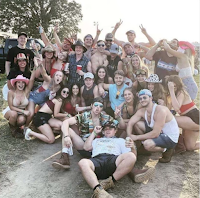
This is a typical summer day for my friend group. This picture was taken at Country Thunder, an annual music and camping festival in Twin Lakes, Wisconsin. This behavior is, at minimum, a weekly occurrence.

I was never embarrassed by my upbringing until I began to share it with others who were not raised in my Illinois hometown. My home county borders Walworth County, Wisconsin (population density of 191.7 per square mile), and I spent a lot of time in Wisconsin growing up. My house, much like my friends’ homes, was filled with clutter, empty bottles, and cigarette butts. All too often, dinner was meager leftovers disguised as a salad or stew; other times it was eaten with my mom in a bar. Either way, my mom and I washed the meal down with a bottle of room-temperature Coors Light and a breath of fresh smoke from the cigarette burning in my mother’s hand.

For a long time, my relationship with my mother consisted of nothing more than sharing a beer in my room while I did homework and listened to her complain about work. “Smoking kills,” I’d say as the air became hazy. “Work will kill me first,” she’d reply, “or hunger will get us both if I quit my job.”

Before I continue, I’d like to state that I adore my mother and greatly appreciate the sacrifices she has made for me. As a working, single parent who has lived a traumatic life, she was doing the best she could. I wouldn’t be where I am today, or probably even alive, without my mother and her selfless parenting.

Now that I am in a California law school, studying rural livelihoods, I realize my classmates’ judgment of my past is fitting. Although alcoholism is in no way exclusive to rural areas, I have learned that rural residents are much more likely to struggle with it, particularly those in the Midwest.

Recently, I stumbled upon this map, compiled by Ph.D student Nicholas Pierson at the University of Chicago from data gathered by County Health Rankings by the University of Wisconsin:


At first glance, I laughed and was proud that Wisconsin dominated the map. (For those not familiar with Wisconsin, the tiny white area in the middle-right is a lake, not a county).

Then, I began to ponder how Wisconsin got so drunk.

Numerous studies have shown that children mirror habits from their parents, as observational learning is one of the fundamental ways developing minds develop their behavior. This led me to wonder, does the time-old adage about “monkey see, monkey do” perpetuate alcoholism in Wisconsin?

From a young age, Wisconsinites are surrounded by drinking. Children often take trips to see the Clydesdale horses at the headquarters of the Miller Brewing Company in Milwaukee or cheer on their MLB team, the Milwaukee Brewers

This pride surrounding beer (and drinking it) is evident in the legislation, too. In Wisconsin, underage persons are legally allowed to be served alcoholic beverages in public, so long as they are accompanied by a parent, legal guardian, or spouse of legal drinking age. Further, many bars interpret this loosely. At age 12, I sat with my mom and legally drink in bars. As I got older, my friends and I would go with people of age and claim they were our guardians or spouses, which allowed us to be served just as easily. When doing so, we knew to stay out of urban centers like Milwaukee, where the laws tended to be more strictly enforced. We opted instead for small, corner bars in less populous areas that rarely check IDs at all.

However, allowing those under 21 to legally drink in public is not the only legislative loophole that allows minors to partake in addictive habits. Wisconsin law allows adults to escape liability for facilitating underage drinking. Their code specifies the elements of “knowingly permitting or failing to take action,” yet this only applies to adults physically occupying the property when underage drinking occurs. For lodging establishments, liability can be avoided if the establishment does not have hired security and if minors pay for the rented space themselves. (Although not strictly related to alcohol, Wisconsin also allows the sale of tobacco products to those 18 and over, even though federal law mandates an age of 21 to purchase.) 

As children grow to become adults, access to alcohol increases substantially. Wisconsin law allows adults to begin buying alcohol as early as 6 am. Tax on alcohol is also low in Wisconsin. Instead of using a percentage of cost sold, Wisconsin taxes alcohol by volume, at the following rates: all beer and cider is taxed at around 6.5 cents per gallon; wine is taxed at 25 cents per gallon; and liquor is taxed at $3.25 per gallon. These are among the lowest rates of taxation for alcohol in the nation. For comparison, consider that Washington state taxes beer at 26 cents per gallon, wine at 87 cents per gallon, and liquor at $35.22 per gallon. 

Wisconsin even provides a legislative loophole for the enforcement of drunk driving. Legislation classifies driving with a BAC over 0.08 as Operating While Intoxicated (OWI) instead of Driving Under the Influence (DUI). The difference between the two is in the enforcement because officers are not required to cite or arrest an adult for an OWI, even though the driver may be legally drunk. The consequences of an OWI are also far less harsh than that of a DUI because jail time is not imposed on first-time offenders unless the drunk driving results in injury, death, or endangerment of a minor (which occurs if a minor is in the vehicle when stopped by an officer). Furthermore, second-time offenders do not have much threat of jail time if their first offense happened ten or more years ago. Since OWI laws are much more lax than other states, many Wisconsin drinkers have the mindset that there is no penalty for drunk driving as long as they’ve never been caught before. 

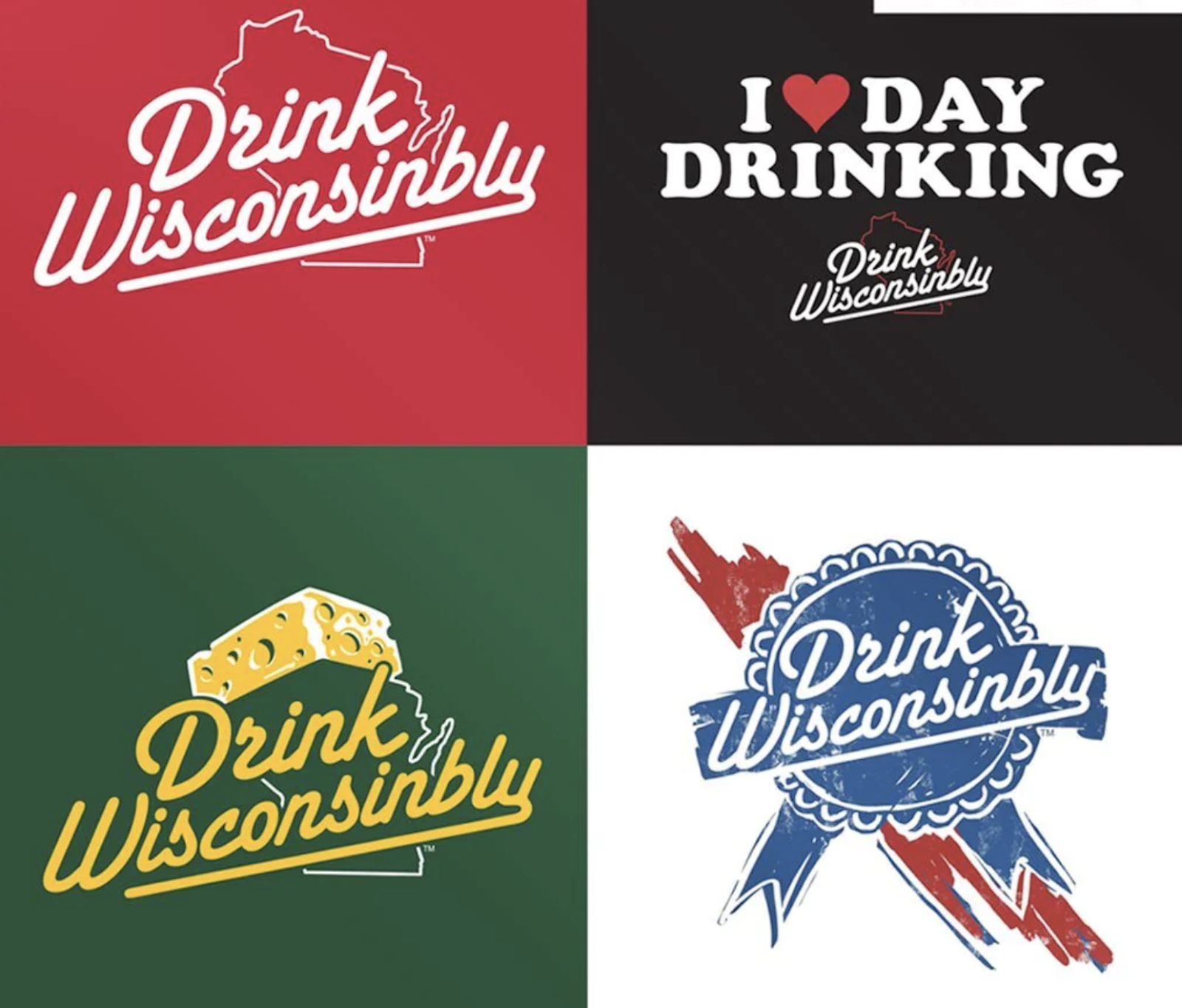
Alcohol use is also greatly accepted in Wisconsin. Although there is no definitive reason as to why drinking is a cultural norm, everybody there agrees that it is. In fact, many Wisconsinites are proud to be known as drinkers, brag about their high-tolerances, wear state-specific drinking merchandise, and are even globally recognized for their spirit for the spirits.


This all seems like a lot of good (yet, irresponsible) fun until you consider this through the rural lens. After looking at the “% Excessive Drinking per County Map” above, I began to wonder why the upper Midwest, namely Wisconsin, Minnesota, Iowa, Illinois, the Dakotas, and Michigan, drink so excessively. A pattern emerged when comparing the map above to the “Classification of Counties” map by the Daily Yonder, which depicts which counties are rural, exurban, and urban:


Many of the Wisconsin counties with the highest percentage of excessive drinking are rural counties. I gave my best attempt at Photoshop to overlay the two, with the darkest green being rural areas with the highest percentages of excessive drinking:


The phenomenon of higher alcoholism rates in rural areas has been studied in length, and rural Wisconsin is no outlier to researchers’ findings. Statistics show that rural Wisconsinites have higher rates of excessive drinking than their urban neighbors. This study cites two main reasons for drinking alcohol: in social scenarios or to cope with mental health issues.
 
These two factors are certainly reflective of what I’ve seen in rural Wisconsinites. I’ll discuss social scenarios later, as I feel the tie between mental health issues and drinking is stronger in rural Wisconsin. One reason for this is the harsh winter climates. Although all of Wisconsin is subject to cold and gloomy weather, rural areas tend to suffer more from the elements. This is due to a lack of concentrations of buildings, pavement, and other surfaces that absorb and retain heat, and a lack of resources to assist those needing refuge from the cold. Additionally, many rural counties in Wisconsin do not receive the warming effect of Lake Michigan in the winter. 
 
Over 3 million people in the U.S. were diagnosed with seasonal depressive disorder (SAD), but many more experience some version of the “winter blues,” although not as severely. SAD and the “winter blues” typically occur during the colder months of the year when the skies are also drearier. Wisconsin experiences these colder months from October to April, making Wisconsinites susceptible to seasonal sadness six months out of the year. This is in addition to the higher depression rates rural citizens already face compared to their urban counterparts. (This 2014 post expands on the mental health crisis facing rural America). More than 2 million Wisconsin residents (almost half of the population) reported living in a community without access to mental health care. This data point does not include those who did not receive the poll and those who did not report, and it does not distinguish between rural and urban respondents.
           
Additionally, treatment for alcohol dependence and addiction is harder to find in rural Wisconsin. Although many areas have access to Alcoholics Anonymous programs, a large number of towns have no meetings within a 30-minute drive. Community substance abuse programs exist in every county, but they are often overcrowded, underfunded, and not available in all rural communities
 
Moving on to the social aspect, it is common for rural Wisconsinites to entertain themselves and rely on get-togethers as the only “fun” thing to do. (These get-togethers largely resemble the many basement scenes in That 70’s Show, which is based on the life of teenagers in rural Wisconsin). As established above, you can find alcohol anywhere in America’s Dairyland. However, urban areas have more alcohol-free activities to keep people entertained. Some rural Wisconsin counties rely on tourism, but the without the population to keep alcohol-free activities open year-round, the off-season only increases alcohol access. For example, Door County (Population 30,369), known as “the Cape Cod of the Midwest,” is a top summer destination for camping, fishing, lake life, and family fun. Yet when summer tourism has reached its end, many of the tourist attractions close. The only things that survive being open during the winter months are the alcohol establishments. For perspective, Door County has one liquor outlet for every nine residents
 
The combination of cultural, legislative, and societal factors, alongside high rates of mental health issues and low access to resources paves the way for generational alcoholism. Children—myself included—start drinking at a young age. This behavior is normalized, accepted, and in some cases legalized in Wisconsin. A quick Google search will pull up article after article on Wisconsin’s drinking culture and almost anyone from there will second it with first-hand accounts. As these children grow up, their drinking habits often become more alarming. Alcohol becomes easier to access and afford, punishments for drinking decline, and reasons to drink increase. Urban centers get to experience different lifestyles and have a better chance of changing their drinking habits. However, those in rural areas may see this drinking culture as normal behavior, because they haven’t experienced any other way of living.
 
As bizarre as it sounds, I am so grateful for the COVID-19 lockdowns because prior to that, I was an alcoholic. I started drinking when I was nine, my mom giving me a shot to calm me down or cure a sick throat. By the time I was 13, I had replaced Mountain Dew with beer. When I went to college, I could outdrink anybody, and I was proud of it. When the lockdown happened, I couldn’t go to bars, the stores were sold out of liquor, and I didn’t have anyone to drink with. I was an essential worker at the time, so I picked up extra shifts and filled my time with four jobs instead of filling my void with alcohol.
 
I will always be grateful for this time because it allowed me to break the cycle, culture, and tradition of alcoholism that was passed on to me. I can’t say the same for my friends and family, but their bootstrap mentality is a post for another time.

Friday, April 7, 2023

"How Rural America Steals Girls' Futures"

That's the headline for Monica Potts' essay in The Atlantic.  It's based on her forthcoming memoir, The Forgotten Girls, which was scheduled to be released on April 14 but has been delayed until May 30.

Potts writes from Clinton, Arkansas, population 2,602 and the county seat of Van Buren County. It's where she grew up, on the southern edge of the Ozark mountains, a place with a median household income of about $46,000 in 2021.  Potts describes the culture this way: 

Almost everyone goes to an evangelical church, and in the halls of the town’s only high school, everyone knows everything about everyone else, or seems to: whom you dated, where you bought your clothes, how you acted on weekends, and even your destiny, inherited from the generations that came before you.

Here's part of her story: 

Growing up in the ’90s in Clinton, Arkansas, all that my best friend, Darci Brawner, and I dreamed about was getting out. “I want to see new people and new places,” I wrote in my journal when I was 12. I wanted to move to California but would take “any state besides Oklahoma or Mississippi.” We wanted careers; we wanted to be rich and famous; we wanted to be far away. Boys and sex would only stop us, catch us, or so my mother had warned.

* * * 

I moved away for college when I was 18. While I was gone, I heard updates: who was getting married, having children, getting divorced. I heard worse stories, about who was on drugs, who’d been arrested and sent to prison, who was in rehab, who was in rehab again. Who had died. By the time I was a journalist writing about rural poverty in my mid-30s, I’d seen studies and data that helped me put the stories from home in context. One of the most alarming trends emerged about a decade ago.

That trend was the shrinking life expectancy of women like those who'd raised her, those she had grown up with.   Potts got curious about why these women were being lost not only to deaths of despair but to cancer, heart disease and other chronic conditions.  The essay continues: 

I returned to Arkansas more and more, trying to reconnect to my hometown, looking for answers. In 2015, on a visit home, Darci contacted me out of the blue. We’d once been as close as sisters, but that spring was only the second time I’d heard from her in the nearly two decades since high school. We visited, and as we caught up and reminisced, I began to realize that I could pinpoint the time when our lives had first begun to diverge. It started during those boy-crazy middle-school years, when we were at the cusp of growing up, when our futures had not yet been written.
Some of us—because our parents were strict or wealthier and more educated, or because we were “good girls” too nervous to break the rules, or because we were just plain lucky—got out. Others got pregnant.

And as a fellow rural Arkansas female like Potts, here's the paragraph from the essay that most resonated with me: 

When it came to liquor, there were two modes in Clinton: alcoholism or abstinence. This paralleled the bifurcated morality I saw everywhere: Girls were either virgins or whores; students were either geniuses or failures; you could go to church or you could be a sinner. The town seemed to operate in two modes—the buttoned-up propriety of the churchgoers, who held power in the county, versus the rowdy hillbillies in families like my dad’s. The rigid divide allowed no room for subtleties or missteps.
Even children were sorted into the binary: the upstanding citizens and the ne’er-do-wells.

I recommend it in its entirety and am looking forward to the book's release next month.

Sunday, March 19, 2023

Hollywood stereotypes of rural America


When I was a kid, I loved day trips to Chicago. I remember my grandmother having to sign a clearance contract because I "accidentally" stumbled onto the “Transformers 3” set and got picked up by a camera. Movies about Chicago, or even just ones filmed there, have always been my favorite because I get to see a little slice of my childhood on the screen. But when it comes to movies from my real childhood, tucked away in the rural Midwest, I often find myself cringing at the media stereotypes.

I was recently encouraged to watch the movie, “Hillbilly Elegy”, for a class about whiteness in Rural America. However, I fail to see how this movie was anything more than a jaundiced example of media tactics. Stories of underdogs overcoming poverty, abuse, and addiction can be found on any street in America, not just the rural backroads. Yet, Hollywood only uses this type of plot-line as a heartstring blockbuster for people of color, such as “The Blind Side”, or to further depreciate the image of rural whiteness.

Rural America is shown by the media to be either "hicks and hayseeds" or "criminal kingpins and murderers." Dramatic television shows such as Ozark and Sons of Anarchy depict a rural lifestyle of crime, whereas "reality" shows such as Here Comes Honey Boo Boo and Duck Dynasty uphold the hillbilly tropes. This is seen across Hollywood and has been around since the early 1900s. A 1904 film, "The Moonshiner", depicts rural Americans breaking the law in order to drink. The behavior shown in media such as this culminates and fosters these rural cliches to the point where Rosann Kent, Appalachian studies professor at the University of North Georgia, asks, "Why are we the last acceptable stereotype?

This cliche becomes particularly harmful when the political climate of America is considered. The US is increasingly politically polarized and this difference in opinion has been leading to violence. From the January 6 insurrection to protests that turned violent against speakers on college campuses, politics have become a method of assuming one’s moral character and can even determine one's safety and social acceptance. Rural Americans get portrayed as being alt-right and are even being credited as the reason Trump won in 2016

Rurality is painted by the media as being predominantly white, with a culture of poverty and addiction. Although there is some truth to both poverty and addiction rates in rural communities, many rural areas thrive culturally. A previous article can be found here describing how music is an integral part of Appalachian culture. By whitewashing rurality, Hollywood loses any appreciation for minority groups who inspire and elevate rural livelihoods.

Furthermore, there are many parallels exist in how rural Americans and people of color are depicted. Unwhite: Appalachia, Race, and Film examines this further and argues:
Appalachian people in cinema have been portrayed as phenotypically white, but using the same tropes that have long been used to portray non-whites in film . . . The similarity in the way these groups are portrayed draws a connection between the treatment of non-whites and the treatment of Appalachians, both of which maintain and protect a particular image of whiteness.
I have personally experienced the negative impact of this "white trash" stereotype. When I moved to California, I experienced a culture shock so large I felt like I was in a different country. Being thrust into high-level academia with a background that matched these stereotypes, I was set up to be looked down upon. After the intro week of law school, I began to state that I was instead from Chicago, hoping that people would think I belonged there. I recategorized my uncle's hand-me-down tees into "vintage thrift finds" and made an aesthetic out of never owning clothes nice enough to ruin. However, I can't blame the people around me for making those assumptions. Most of my classmates are from urban areas and likely gathered their understanding of rurality through their media consumption. Even though many of the Hollywood portrayals are hyperbolic, the cumulation of negative stereotypes is othering rural people, and the misunderstood cliches need to be retired.

Friday, March 17, 2023

Crisis close to home: Nevada's failing mental health services

Over the past three months I've been reflecting on my time here at UC Davis Law as a first generation student with a person history in a flurry of rural towns across Nevada and California. I wound up in law school as the result of what I tend to refer to as a line of "self-sabotaging matriarchs." From my great-grandmother to my mother and eldest sister, my family's intergenerational poverty can be chalked up in large part to the codependency of its women on men who were steeped in drug and alcohol abuse. The chaos and poverty were inflamed by my family confining itself to rural places, where the domestic violence and drug abuse were hidden behind the walls of single or double-wide mobile homes.

For me, the chaos peaked when my mom tried to force me to leave our destitute life in the "Cowboy Capital of the World," Oakdale, California to return with her to Winnemucca. She was running back to what was known: a rural town where she could indulge and conceal her addictions to substances and men. But to preserve my chance at a better life, I knew I couldn't go with her. So, after a turbulent back-and-forth, she told me simply: "you can [sic] stay here then." Those words caused us to be estranged for the past decade. 

But on the brink of graduation, I can't help myself from looking back. Through everything, there is still and will always be a part of me that loves the woman who brought me into this world and raised me as best she could. So, about two weeks ago, I called her on video chat. She was living with her boyfriend in a trailer park on the outskirts of Winnemucca. I wasn't sure which version of her I was going to get. She suffers from schizophrenia and bipolar disorder (the latter being the one I inherited), and when you add substance abuse on that, it forms different personalities that for her varied from the woman I called my mother to the woman who abandoned me. 

But this time it was neither. She could barely look at me, and I knew that meant something was awry. I tried lightening the mood by asking her positive questions: what are some great traits you gave your son? What things you are looking forward to over the next few years? It was the latter question that caused a pause and a tear. I called her again the following week and she told me she was going to check herself in to rehab. I asked what prompted the decision and she said, she couldn't say aloud because her boyfriend was in the trailer. She did say, however, "I couldn't give you an answer to where I want to be in the next few years," and when I asked her want she wanted to be, she cried and held up a note: "free."

My mom's journey to freedom could only begin by taking an Amtrak from Winnemucca to Reno - a 165-mile journey that would otherwise take two and half hours by car. And so I thought: "what mental health resources are available in remote, rural places like northern Nevada?" As it turns out, close to none. Nevada is in the bottom five states with the lowest ratio of licensed psychologists to population, just 12: 100,000. Humboldt County (the county seated in Winnemucca) doesn't have any licensed psychologists. Consequently, Nevada is in the top three U.S. territories with the highest rate of unmet needs for illicit drug use and alcohol disorders (closely behind Colorado and the District of Columbia) that often exacerbate preexisting mental disorders. 

Overall, the state only has 460 licensed psychologists. Each county in Nevada meets the federal definition of a professional mental health provider shortage. As a result, many psychologists in the state have waitlists for assessments for about two months, while the waitlists for treatment are often a year long. The largest medical provider in Humboldt County is the Humboldt General Hospital and where there is only one licensed "clinical social worker" and one psychiatric nurse practitioner. But one nurse practitioner cannot begin to meet the needs of a county with 17,600 people

Another part of the problem is the lack of public transportation. As noted above, people like my mother who live in northern rural counties that are hundreds of miles from Reno where many of the licensed physicians are located face transportation barriers. Because there are no "long range" transportation services in these parts of the state, it is harder for people in those counties to seek proper treatment for their mental health disorders -- or any other services for that matter. 

But there have been movements to address these issues. One solution relates to accessibility of housing for people who suffer from debilitating mental health disorders. A Nevada Senate Bill is trying to increase the real property transfer tax by 20 cents for every $500 of value to build affordable housing for Nevadans with mental health conditions, disabilities, and those who are lower income. The bill seeks to address the problem that one woman characterized as people having no place between "'the hospital and the streets.'" But the bill has been met with resistance by the corporate community in the state. The Nevada Realtors and Vegas Chamber testified against the bill, arguing that a new tax increase would harm first-time homeowners. On the opposite end, Reno + Sparks Chamber of Commerce, Nevada Rural Hospital Partners and other organizations dedicated to serving rural community mental health needs argue that the legislation is critical to support people in the state who already face insurmountable obstacles to getting proper care. 

These issues are only the tip of the iceberg, as insurance companies add fuel to the fire by denying benefits to people for mental health services as well as denying mental and behavioral health specialists into their networks. For people like my mother, who rely on a mix of public health benefits including Medicare and Social Security Disability, getting care for serious mental disorders is almost impossible in rural communities. As a result, millions of people living in rural areas across the country fall into hopelessness. In the wake of the COVID-19 pandemic, the problem of inadequate mental health care has received widespread attention but stakeholders have taken little action to meet the needs of people who suffer from mental and physical isolation. 

As for my mother, when I last spoke to her she hadn't been able to make the trip to Reno because the Amtrak was not running given the recent snowstorms battering northern Nevada. When I reached out to her again to see if she had made it to her intake appointment she didn't answer and hasn't since. I can only hope she made it. And for people in circumstances like mine (higher education students with no income other than financial aid) who have relatives living in rural areas trying to seek treatment for mental disorders, that's about all we can do for them: hope. 

Sunday, January 22, 2023

Mass shooting in rural "island" in California's Central Valley linked to drug trade

Here's an excerpt from the Los Angeles Times most recent coverage of the murders of six, including a teenaged mom, her infant, and a 72-year-old grandmother in Goshen, California, population 3,006.

Rural parts of the San Joaquin Valley have become some of the most violent places in California, with a bustling drug trade and among the highest rates of murder and lowest rates of solving murders.

* * *  

According to a report last year from California Atty. Gen. Rob Bonta, Kern County had the highest homicide rate in the state in 2021, with 13.7 killings per 100,000 people. Merced County came in second, at 9.5, followed by Tulare, where the massacre happened Monday, at 8.8. The homicide rate statewide was 6. In Marin County, it was 0.4.
* * *
Little-known rural enclaves such as Goshen — which many Californians glimpse from the window of car speeding between Los Angeles and Yosemite or Sacramento or Lake Tahoe — have become coveted transit points for methamphetamine, fentanyl and other drugs. Layers of criminal organizations including Mexican cartels, prison syndicates and local street gangs all vie for a piece of the real estate.
* * *
Assemblyman Devon Mathis (R-Visalia), who represented the area until the most recent redistricting, said Goshen is one of many “county islands” in the valley — small unincorporated communities, impoverished, lacking their own police forces. Gangs and drug smugglers dig in there, knowing law enforcement presence is sparse.

“We have a vulnerability, and it is being exposed,” Mathis said.He is dismayed how many of his colleagues in the Assembly are flabbergasted to hear about ferocious gangs in the San Joaquin Valley, viewing it as a problem for cities, not for rural areas.
* * *
The rural areas — with few officers on patrol and located along one of the West Coast’s major north-south transportation corridors — have long been attractive for drug traffickers. Tulare County has, despite its population of less than half a million, historically played a prominent role in the transnational movement of drugs, money and guns.

A prior post about the relative lawlessness of rural areas is here. 

Saturday, October 8, 2022

How rural Arizona students treat a Filipina teacher who came to help

 Eli Saslow reports for the Washington Post out of Bullhead City, Arizona, under the headline, "An American education."  The subhead is, "Amid a historic U.S. teacher shortage, a ‘Most Outstanding Teacher’ from the Philippines tries to help save a struggling school in rural Arizona."  The alternative headline is, "Teachers from Philippines Help Struggling U.S. Schools."  And the essence is that an award-winning teacher in the Philippines came to help a rural school district experiencing a teacher shortage, and then had to endure awful behavior by the students.  Here are some excerpts, first about the teacher, Rose Jean Obreque, who, in order to get to the U.S., took out "$8,000 in high-interest loans to pay for the agency fees, a plane ticket, two new teaching outfits and the first month’s rent on a two-bedroom apartment she planned to share with five other foreign teachers."

Here's how the students in her home country are described: 

Her seventh-grade students there were the children of fishermen and sugar cane farmers. They arrived for school early, even if they had to walk more than a mile to get there. They called her “ma’am.” They brought her homemade lunches. They wrote thank-you notes at the end of each week. They aspired to become engineers or doctors or teachers like her, and they volunteered to stay after school for extra lessons rather than returning home to work in the sugar cane fields. Obreque started an after-school program for struggling readers. She led the school’s innovations club to a regional first-place finish. She recorded daily video lessons during the pandemic and hiked to remote villages to make home visits, until her ambition landed her at the top of the teacher rankings and she began to hear from recruitment agencies around the world.

Then there are her students in America, whose behavioral issues Eli describes in considerable detail, including: 

Another [student] had dropped his paper on the floor and was stabbing his pencil into the side of his desk.

“Is everything all right?” Obreque asked. “Why aren’t you participating?”

“’Cause my pencil’s broken,” he said, banging it harder against the desk until it snapped. He picked up the two broken pieces and held them out to her as proof. “What do you want me to do?” he asked, smiling at her, and Obreque looked at him for a moment and then decided that his behavior was her fault. Maybe she hadn’t communicated the assignment properly. Maybe, instead of beginning the class by making name tags, she should have started with the rules so they knew how to behave. She walked back to the front of the room. “Eyes up here,” she said, as several of the students continued to talk. “Five, four, three …” she said, as the students shouted over her, until finally the PE teacher blew his whistle. “Hey! Try doing that to me and see what happens,” he said. “Be quiet and listen to your teacher.”

Obreque nodded at him and then continued. “I want this class to be systematic,” she said. “We are not animals. We are not in the jungle. We should be guided by rules, or we will not be successful in our learning, right?”

“Yeah, guys. We’re not animals,” one student said, and then a few boys began to make jungle noises until the PE teacher blew his whistle again.

“If you want to be respected, show me respect,” Obreque said. “Human beings are supposed to be able to follow simple instructions. You come to school to learn, right?”

“Nah, I come because my parents make me,” one student said, turning to smile at his seatmate.

“Yeah, and because somehow you haven’t gotten expelled yet,” his seatmate responded, shoving his friend in the shoulder.

“And ’cause the girls here are fine as hell,” the student said, punching his friend back in the arm.

“Enough!” Obreque shouted, using a voice louder than she’d ever used in seven years of teaching in the Philippines. “What is an example of behaving with dignity and respect? Please, answer and raise your hand.”
Then there is the model provided by Ann Cuevas, a teacher who has been in Bullhead City for four years and survived:
She gradually moved beyond her Filipino instinct for classroom formality and began asking her students about their lives, and they introduced her to a version of America much different from what she’d first expected: abusive families, homelessness, surging drug overdose deaths, conspiratorial ideologies, loneliness, suicide, alcoholism and poverty every bit as bad as anything she’d encountered in the Philippines.

Don't miss the rest of the story.  

Monday, July 11, 2022

Literary Ruralism (Part XXXIV): Still more excerpts from Groundskeeping by Lee Cole

I've already shared excerpts from this debut novel in two other blog posts, here and here.  These are my final excerpts from Lee Cole's Groundskeeping with a focus on depictions of rural and working-class white folks and issues. The first vignette involves the promotion of the man (Kelly) who has been supervising the groundskeeping crew on which Owen, the protagonist, works. Owen is a college graduate, but he has never really launched in a career that used his degree.  Rando is an older man on the crew, with more experience but no degree.    

We’d been working in the arboretum for about a week when Kelly announced that he’d taken an administrative job with the university and would be leaving Maintenance and Landscape Services by the end of April. There were only ten of us now at the morning meetings, the rest having been laid off. We all knew that Kelly had been gunning for an administrative position. He wanted an office with his name on the door, where he’d never again get chain grease smeared on his khakis.


Congratulations, Rando said, with more than a hint of sarcasm.


Thank you, Randy. As I hope y’all know, it’s been a great honor serving as your fearless leader. They want to hire a replacement in-house, someone who knows what they’re doing. Undoubtably, some of you will want to apply.


We’d all been drowsily eating our Pop Tarts and granola bars, waiting for our coffee to cool, but this caught our attention.


Anybody’s welcome, but they strongly prefer someone who has a college degree, he said, putting “strongly prefer” in air quotes. That means you two, I guess. He pointed to James and me. Though I’d never thought about it before, we were the only grad students. Everybody else was either contract, like Rando, or in the middle of their undergraduate degree.


A degree in what? Rando said.


Anything, said Kelly. Don’t matter.


I been here ten years longer than these motherfuckers, Rando said. No offense.


None taken, I said.


What difference does a degree make?


Kelly held up his palms. I’m just the messenger, he said. You don’t have a degree, Rando said.


I have military experience.


So what? So that matters to some people. Look, like I said, any of y’all can apply, and I encourage you to. But I wanted to be up front and let James and Owen here know they’d have a pretty good shot.


I questioned the wisdom of announcing this in front of the other men, who were giving us hateful looks. But maybe that was Kelly’s intention.

 Cole, Lee. Groundskeeping (pp. 191-192) (Kindle Edition).  Among other things, we see a shift from valuing military experience to requiring a college degree--a certain degree/credentials inflation that does not serve the working class, who have to go into debt to get that degree.  


In this scene, Owen takes his girlfriend, Alma, to visit his dad and stepmom in tiny Melber, Kentucky:   

The road to Melber carried us past trailer courts and subdivisions, reaching, finally, the bottomlands at the Graves County line. I wished she could’ve seen it in the late summer, when the fields were lush with burley tobacco—velvet-green rosettes, their long leaves curled and yellowed at the edges, sprawling out in rows. Now the same fields were bare, or sown with ryegrass, waist-high and the color of straw. The creeks we crossed on ramshackle bridges were only muddy trickles, and the woods were parched and grayish brown, save only the sycamores, whose stark white branches flashed like ghosts in the passing countryside.


I narrated the scene, partly as a way of distracting myself from the nausea and anxiety I was feeling, and partly because I wanted, on some level, for her to see it the way I saw it—as a terrain imbued with significance and narrative. Here was Dan Foley’s house, where I used to set off bottle rockets. Here was the abandoned Citgo station, where, as I was climbing through a window at age thirteen, a blade of glass sliced my calf. Here was Josh Briggs’s house, where I used to shoot clay pigeons. Here was the trailer where Molly Miller, the first girl I kissed, used to live. I left out, of course, that Dan Foley’s father had committed suicide when we were fifteen by hanging himself from the metal track of their garage door, or that Dan had gone on to join the marines and was now stationed in Texas, where he’d become an alcoholic.

I left out that I’d climbed through the window of the abandoned Citgo station in order to smoke a blunt dipped in cough syrup with Josh Briggs, and that Josh Briggs had never left Melber, that he’d been fired from a good job with the river barge industry and had since done some time in jail. I didn’t mention that post–high school, Molly Miller had spent about five years journeying further and further into opioid addiction, the apotheosis of which was her death by fentanyl overdose in the bathroom of Paducah’s public library. Maybe because I left out these things, Alma did not seem as interested as I’d hoped. Was she thinking of how the place could’ve produced me? I hoped that it did not remain two-dimensional for her—a painted backdrop, seen through a passenger window. What would one see who’d never seen it? Empty fields. Churches with graffitied plywood windows. Shoddy houses and single-wides where people she’d never met once lived. To anyone from the outside, it looked like a country town, so close to vanishing that it was hardly there at all. But I could see its inexpressible privacies.


We reached, finally, the four-way stop and the green sign reading Melber. It was the town’s sole marker, the only thing that let you know you were somewhere instead of on the way to somewhere else. It was here, every Halloween, that the burning hay bale came to rest. Across the street was the post office and the hairdresser’s shop with a barber pole out front and a rusted, antique Pepsi machine that no longer functioned. Next door was the town’s only restaurant—the Kountry Kitchen. A letterboard sign in the lot advertised catfish and hush puppies.


Here we are, I said.


Alma looked around, her expression vaguely troubled. You weren’t kidding, she said. It’s not much.


My dad’s place could be seen from the four-way. I turned right and pointed it out to her. It had been a batten-board house, built in the ’50s, but five years prior, he’d installed this plastic siding that was supposed to make a house look like a log cabin. It looked more like Lincoln Logs to me. 

Cole, Lee. Groundskeeping (pp. 225-226) (Kindle edition). 


They go out to dinner at a nearby restaurant, described thusly: 

 The Rebel Smokehouse was such a perfect distillation of the rural South’s grotesquery that it was almost unfair. It was nestled between a Harley-Davidson dealership and an indoor gun range called Range America. A sun-faded Confederate flag had been raised high on a pole in a nearby yard, so that the restaurant was literally in the shadow of it. Even if I took faithful notes, if I wrote it all down exactly as it was, who would believe me?

Cole, Lee. Groundskeeping (p. 229) (Kindle edition)


In the scene that follows, Owen is asking his father for a loan.  What is revealed here is the less educated parent's judgment of his son's failure to make a living in what the father sees as a conventional way:    

To be honest, I called because I need your help with some money. I wanted to ask you for a loan.


A loan?


Yeah, just till I get my next paycheck.


Several seconds passed. I don’t know, he said. He cleared his throat softly and let another period of silence go by, as if he were giving me a chance to retract my request. I just don’t know if I can keep enabling you to fail, he said finally. This tree-trimming business, this aimlessness—how can I keep supporting that? It hurt me physically to hear him say this. I assumed he thought I was a failure, but assuming it and hearing it were two different things. I tried to come up with some response, but the muscles in my throat tightened...

Cross-posted to Working-Class Whites and the Law.