
Otero recently raised the price of his jewelry by about 10% across the board to account for his rising material costs. He said he can do that because he’s been smithing for over a decade and has curated a loyal following on social media, where he markets his work to wealthy clients all over the country.
“The folks that have the means, they’re not bothered by the increase in price,” Otero said.
Business is moving a bit slower, but Otero said he’s still able to find a home for his pricier work. But not all Indigenous artists have the social media prowess or even internet access that would allow them to follow Otero’s business model. He said those who sell roadside or via middle-men like trading posts and galleries have less pricing flexibility.
“I’m always reminded of what my dad told me that first year when I started making jewelry,” Otero said. “He would say it in Navajo, that my tools and the things I make with my tools are gonna take care of you.”
Today, Otero’s jewelry business takes care of him and his family. It allowed him to leave his career in IT and move from Albuquerque home to Torreon, on the eastern edge of the Navajo Nation, and support his parents as they grow older. But for Indigenous artists just now getting their start, he worries that parh to a rural livelihood could be slipping out of reach.
Showing posts with label the Southwest. Show all posts
Showing posts with label the Southwest. Show all posts
Wednesday, June 25, 2025
A distinctive angle on shifting rural livelihooods
Marketplace (American Public Media) reported this week on the impact of the rising price of silver on the livelihoods of indigenous silversmiths. The story by Savannah Peters features a Navajo and Hopi silversmith, JJ Otero. Here's a key quote that touches (at the end) on the implications for rural livleihoods of the rise in price for raw materials:

Saturday, February 8, 2025
In California’s Inland Empire, a complex battle for groundwater rages: if the wells go dry, there are no winners.
The Indian Wells Valley sprawls across Inyo, Kern, and San Bernardino county lines in the northwestern Mojave Desert. Beneath it lies the Indian Wells Aquifer, a major groundwater deposit upon which the local communities rely. In the dry Mojave, groundwater is the primary source of water for domestic and agricultural purposes; few aquifers in California have been as significantly depleted as Indian Wells.
When former Governor Jerry Brown signed the Sustainable Groundwater Management Act (SGMA) into law, the Department of Water Resources identified Indian Wells Valley as one of many "critically overdrafted" groundwater basins. In response, a Groundwater Sustainability Agency (GSA) was created to manage the basin. That agency is now embroiled in a seven-year fight against some of the basin's largest groundwater pumpers to keep their regulatory authority—and the authority of SGMA—intact.
The GSA operates out of Ridgecrest, the Indian Wells Valley's largest community. With a population of nearly 30,000, the city is built around Naval Air Weapons Station China Lake, the U.S. Navy's largest landholding. Employing more than 5,000 military and civilian personnel and generating $36 million in state and local taxes, it is of vital importance to the Ridgecrest economy.
China Lake's website boasts of its "incredible access to natural resources and recreational activities," and of Ridgecrest's affordable housing, shopping amenities, and small town life. This description sits in stark contrast with nearby towns like Trona, an unincorporated community in San Bernardino county with a population well under 2,000 and a poverty rate roughly twice that of Ridgecrest. Devastated by a 7.1 magnitude earthquake in 2019, Trona is a community in recovery—eyewitnesses describe houses "cracked in half" and residents driven out. Trona native Marilyn McKee refers to it as a "dying town". (You can see photos of Trona on the blog here).
 |
| Trona Gun Club. Credit: Lisa R. Pruitt |
 |
| Mural in Trona. Credit: Lisa R. Pruitt |
Whether dying or recovering, Trona is heavily reliant on the neighboring Searles Mineral Company for jobs and domestic water; “With no Searles, there’s no Trona,” says another Trona resident, Regina Troglin. Perhaps unknowingly, she echoes Ridgecrest city attorney and counsel for the Indian Wells Valley GSA, Kieth Lemieux, who explained to the Los Angeles Times in 2024 that "without [China Lake], there's no Ridgecrest." Without water, of course, there is no China Lake.
 |
| Trona Picnic Area. Credit: Lisa R. Pruitt |
Despite the parallel between these two communities, Searles argues China Lake has received more favorable treatment from the GSA in implementing SGMA. Searles has been required to pay a fee of $2,100+ per acre-foot of groundwater extracted, while China Lake has not; as a federal landholding, China Lake is essentially exempt from such fees. Nonetheless, vice president of operations for Searles, Burchell Blanchard, believes the fee could bankrupt the company, causing hundreds of employees (many of whom are Trona residents) to lose their jobs (see: San Bernardino County Sentinel, "Searles Valley Minerals Contesting Groundwater Authority's H2O use fees" for a full public statement from Searles).
These claims are part of an ongoing legal battle between Searles and the GSA. Joined by the Indian Wells Valley Water District and Mojave Pistachio, one of the largest pistachio-growers in California, Searles has triggered an 'adjudication,' a complex legal proceeding in which a court manually determines the individual groundwater rights of every stakeholder in the basin. The adjudication challenges the GSA's authority to impose fees and seeks to replace their technical plan to achieve groundwater sustainability in Indian Wells Valley—two of the GSA's essential functions.
Alongside several other state agencies, the GSA appealed to the California Supreme Court for an early ruling on the GSA's authority under SGMA. On January 29th, 2025, the court declined to take the appeal, meaning the adjudication will proceed and will be determinative of water rights in the basin.
This is certainly a victory for Searles and Mojave Pistachio. Perhaps it is also a victory for the people of Trona. But many smaller water users have been unable to participate in the adjudication, due to high legal costs. These users generally have much shallower wells than entities like Searles and Mojave, meaning theirs will be the first to fail if the valley cannot figure out a sustainable solution to its water needs. So as the adjudication drags on, and groundwater levels in Indian Wells Valley continue to decline, the question remains: what happens when those wells run dry?
Monday, November 4, 2024
Rural conspiracy theories and the mechanics of the 2024 election
I'm just going to collect some of the salient stories here.
First (most recently), from the Washington Post, "Rural Arizona shows how Trump allies could try to thwart election certification." Yvonne Wingett Sanchez reports from Cochise County, Arizona. Here's a paragraph:
After the 2022 midterm election, two county leaders on a three-member board refused to accept the outcome in a timely matter, citing concerns about voting equipment that were rooted in false theories and real problems in the Phoenix area, 200 miles north. One of the leaders eventually relented, after a judge intervened, and joined the Democratic member to sign off on the results. But the standoff pushed the state past its certification deadline, triggered a legal battle and criminal prosecutions, and set off fears that local leaders around the nation would try the same strategy after November’s presidential election, should former president Donald Trump again lose.
Here's Jim Ruttenberg's report for the New York Times Magazine under the headline, "What to Know about the Looming Election Certification Crisis."
The false narrative of a stolen election that inspired hundreds of Americans to storm the U.S. Capitol in 2021 is now fueling a far more sophisticated movement, one that involves local and state election boards across the country.
What was once the Stop the Steal movement is now the “voter integrity” movement. Its aim is to persuade the people who are responsible for certifying local elections of the false notions that widespread fraud is a threat to democracy and that they have the authority and legal duty to do something about it: Deny certification of their local elections.
Here is Ruttenberg discussing the Nevada slice of his reporting on The Daily podcast.
And here is some Los Angeles Times reporting on election shenanigans from far northern California.
Friday, October 18, 2024
The rural Latina/o vote in New Mexico
Gustavo Arellano of the Los Angeles Times did a road-trip through the American Southwest to talk to Latino/a voters. His dispatch from New Mexico was published under the headline, "Trump or Harris? For these New Mexico farmers, the more pressing question is survival." Here are some key excerpts, leading with the perceptive framing:
Agriculture is an underrated barometer of where a region and its people are heading, since it intersects with so many essential issues: the economy, climate change, immigration.
This quote from a 42-year-old Latina, Michele Atencio who, with her husband, makes a living from growing and selling peppers, is telling. When asked about the upcoming presidential election, Arellano reports, she grew uncharacteristically quiet before commenting:
I don’t want to be mean, but we need immigration control. There are a lot of Venezuelans coming in. They come and they get housing and they get food stamps. And you, who have worked here all your life? You don’t get that. We pay taxes and they get all the benefits.
* * *
Local farmers have offered jobs to the new migrants, Atencio said, “but they don’t like that work. I don’t get it. They need help. But there’s frustration growing here.”
Further Atencio quotes follow:
I’m not against them. I get why they come here. But my dad and your dad, they crossed the river. They took years to better themselves.
* * *
Whoever’s next [as U.S. president], they need to put better border control. I’m not the only one who thinks that.
Arellano next stopped at Rosales Produce, in Escondido, where he chatted with 68-year-old Linda Rosales, whose family works 500 acres, 60 of them devoted to chiles. Rosales commented on the shortage of workers to harvest her crops:
"There’s no one here to work for us. Nobody has done nothing,” to make it easier to legally hire workers, Rosales said, speaking about both the Trump and Biden administrations. “Trump finished the border wall or whatever. Biden did, too. And you get to see who picks. No one.”
The need for immigrant workers is also the key theme of this NYT Magazine story out of Idaho's dairyland.
Tuesday, June 18, 2024
A novel approach to (literally) meeting criminal justice system-involved individuals where they are
NPR reported last week from Aneth, Utah, in the state's southeast corner. That's part of the Dine (Navajo) nation, and the story features a novel program for easing the burden of criminal justice-system involved individuals' engagement with the federal court based hours away in Salt Lake City. The headline is "Utah, hoping for tangible results on recidivism, is looking for possible solutions."
Tilda Wilson reports on the work of U.S Magistrate Judge, Dustin Pead and federal parole officer who are going to where the system-involved individuals are, rather than expecting the individuals to come to them, hours away in other corners of the state:
Aneth, Utah, is a tiny town on the Navajo Nation, surrounded by a beautiful landscape of red rocks and desert. On a chilly winter morning, it was just starting to rain at the Aneth Chapter House, a sort of reservation town hall. Today, U.S. magistrate Judge Dustin Pead is holding court here.
DUSTIN PEAD: The district is quite large. We don't have a probation officer located in the area.
WILSON: Pead drove six hours to be here, about 350 miles from the federal courthouse in Salt Lake City. He comes down once a month to check in on people under court supervision. In Salt Lake, there's a lot more drug and mental health treatment available to help people when they get out of prison. Out here, those things are hard to come by. Pead says it makes sense that it's so much more difficult to get out of bad patterns of crime. So nine years ago, Pead started bringing court to the reservation, traveling with probation officers, a prosecutor and a public defender. It's called Tribal Community Reentry Court.
PEAD: It would be the first reentry court that we had heard of that would actually travel to people instead of having people travel to the court.
WILSON: Pead, the lawyers and probation officers are able to spend face-to-face time building rapport with each supervisee and their loved ones.
PEAD: I want them to have trust that we want them to grow. I'm not waiting to catch them in a violation. So for me, that's frequently calling them by their first name, giving accolades, knowing them, knowing their family, communicating with their family during court.
WILSON: It's working. The federal court says the recidivism rate has dropped to just 6% for people who participate in the Tribal Reentry Court. Cordell Wilson is a parole officer who has been working on the Navajo Nation since 2002. He's based 5 1/2 hours away in St. George. He used to only be able to visit people on the Navajo Nation every three months or so when something went wrong. Now visiting monthly, Wilson says he's able to build trust with the people he works with. He says it works a lot better.
Thursday, May 16, 2024
What you can learn in a small town (according to a Brooklyn hipster)
Sam Kahn recently wrote for Persuasion (and his own Substack) about what he, as a documentary filmmaker living in Brooklyn, learned when he visited small towns/the flyover states. The headline is, "A Reckoning is Coming for the Democrats." Here's an excerpt:
I always felt a lot wiser every time I returned to my Brooklyn coffee shop or neighborhood bookstore; I always felt like I wanted to start getting into arguments with everyone around me. It wasn’t that my politics were so different from my coastal brethren, but after even a few days in Decatur or Lubbock or Clovis or wherever I was, it would be clear to me that there was a great deal about the country that liberals and progressives—however well-intentioned they might be—were just missing.
Politics would almost never come up on these shoots, but it would just be screamingly obvious that the people I talked to would have had no chance of voting Democratic. The cultural markers were all off. People liked to drive and to shoot. People liked their chain stores. People hated the feeling of being scolded, which was above all what they associated with the Dems. On one of the very first shoots I ever did, a rancher in Clovis, New Mexico, told me, “People like to have a real independent lifestyle around here” shortly before he urinated right off of the bed of his truck. But that general attitude could have stood in for just about any of the shoots I did. People were friendly and interesting, they were eager to form cultural bridges—those same ranchers really wanted to let me know that they knew every word of Lynyrd Skynyrd and Rolling Stones songs, maybe thinking that I assumed they listened to Gene Autry or something—but I strongly felt myself having to shed anything “Democratic,” anything “liberal,” in order to fit in.
In the places I was visiting, the Democratic Party meant, above all, taxes. It really wasn’t much more complicated than that.
* * *
In the coastal enclaves where I lived, being an “environmentalist” was something like a candidacy for sainthood, but in the places where I was shooting it was a dirty word—and the environmental advocacy organizations seemed really to not get that.
* * *
And strike three was wokeism.
There's more to the essay, of course, including an expansion on what the author means by wokeism, which references racial issues, among others.
Returning to the theme of the headline, the author concludes that, "at the national level, [Democrats] seemed to have lost all ability to communicate simply and clearly to hinterland voters."
Don't miss the essay in its entirety here.
Tuesday, September 19, 2023
Tribal co-management of U.S. National Parks (Part I): Canyon de Chelly National Monument
The National Park system is often portrayed as the United States’ crown jewel, the one thing that we have that no other country does. Frederick Law Olmstead, the mind behind Central Park (and the Wooded Island near where I grew up), set the stage for the National Park System in 1865 as Chairman of the Board of Commissioners for the development of Yosemite. Though at the time Yosemite was just tract of land gifted by the Federal government to the state of California for the purposes of “public use, resort, and recreation,” Olmstead saw it as a place for ordinary people to contemplate the natural world to maintain perspective on industrialization. Yosemite became a template for the rest of the National Park System.
Today, the United States has 425 National Park sites managed by the National Park Service (NPS). Those 425 parks constitute 3.5% of the land in the United States. Today, only four of those 425 National Park sites are co-managed with Tribal Nations. They are Canyon de Chelly National Monument, Glacier Bay National Park and Preserve, Grand Portage National Monument, and Big Cyprus National Preserve.
Olmstead’s idea of a National Park completely ignored the people already living on the protected land. In managing our National Parks, the NPS has largely done the same. Each blog post in this series will cover the co-management of one of the four parks that works with Tribal entities.
Canyon De Chelly National Monument
N.B. The Diné are the sovereign people of Canyon de Chelly and the surrounding area. The federal designation for the Diné’s government is the Navajo Nation. To avoid confusion, I will use the term Navajo Nation or Navajo Council when referring to the Diné government but will otherwise refer to the people as the Diné.
 |
| Canyon de Chelly (photo courtesy of Professor Lisa Pruitt) |
There are approximately 80 Diné families with the right to live in Canyon de Chelly (pronounced Canyon de-SHAY) National Monument. Traditionally, they grew corn, squash, and had orchards. Rising temperatures and drought conditions have made it harder to farm recently. Today, most families spend only part of the year in the Canyon.
Canyon de Chelly is in Chinle, Arizona, in the Four Corners region of the Southwestern United States. The park encompasses three main canyons as well as approximately one half-mile of land on the edge of each canyon. Canyon de Chelly National Monument is unique because it is situated entirely on land owned by the Navajo Nation. National Parks are typically created on federal land by Presidential proclamation pursuant to authority conferred upon the executive by the Antiquities Act of 1906.
Canyon de Chelly National Monument was established in 1931 by an act of Congress, predicated on a Navajo Council agreement with the Bureau of Indian Affairs. At the turn of the 20th century, non-native peoples were moving west and looting the archaeological and religious sites in Canyon de Chelly, some of the most significant Anasazi and Hopi Pueblo sites in the country. White archeologists were prominent advocates for federal preservation of the Canyon, though the Navajo Nation was reluctant.
In 1925, at a meeting with the Commissioner of Indian Affairs, the Navajo Council agreed to accept the establishment of a national monument in the Canyon, so long as it would not interfere with any Tribal rights, specifically the right to graze, run tourist services, and restrict entry to the Canyon.
In the final agreement, the Navajo Nation would retain all land and mineral rights, including oil and gas, surface use rights, and would be given preferential treatment in furnishing animals for the use of visitors to the monument. The National Park Service would maintain, preserve, and restore cliff dwellings in the canyon, as well as other areas of historical and scientific interest, and would have the right to construct trails, roads and facilities that may be necessary for visitors to the Canyon.
However, none of the new NPS employees appointed to the Canyon de Chelly were Diné, and by 1934 the Navajo Council passed a resolution requesting that the NPS relinquish their rights to the monument. The NPS and the Bureau of Indian Affairs tried to sort it out, but administrative conflicts persisted.
The NPS authorized the Thunderbird Ranch, a property near the Canyon owned by non- Diné people, to house and serve park visitors. The hotel increased traffic to the Canyon, prompting the Diné living there to argue that their right to provide horses for those visiting the park included the right to run businesses, like the hotel, that enabled tourists to access the park. The NPS was not moved.
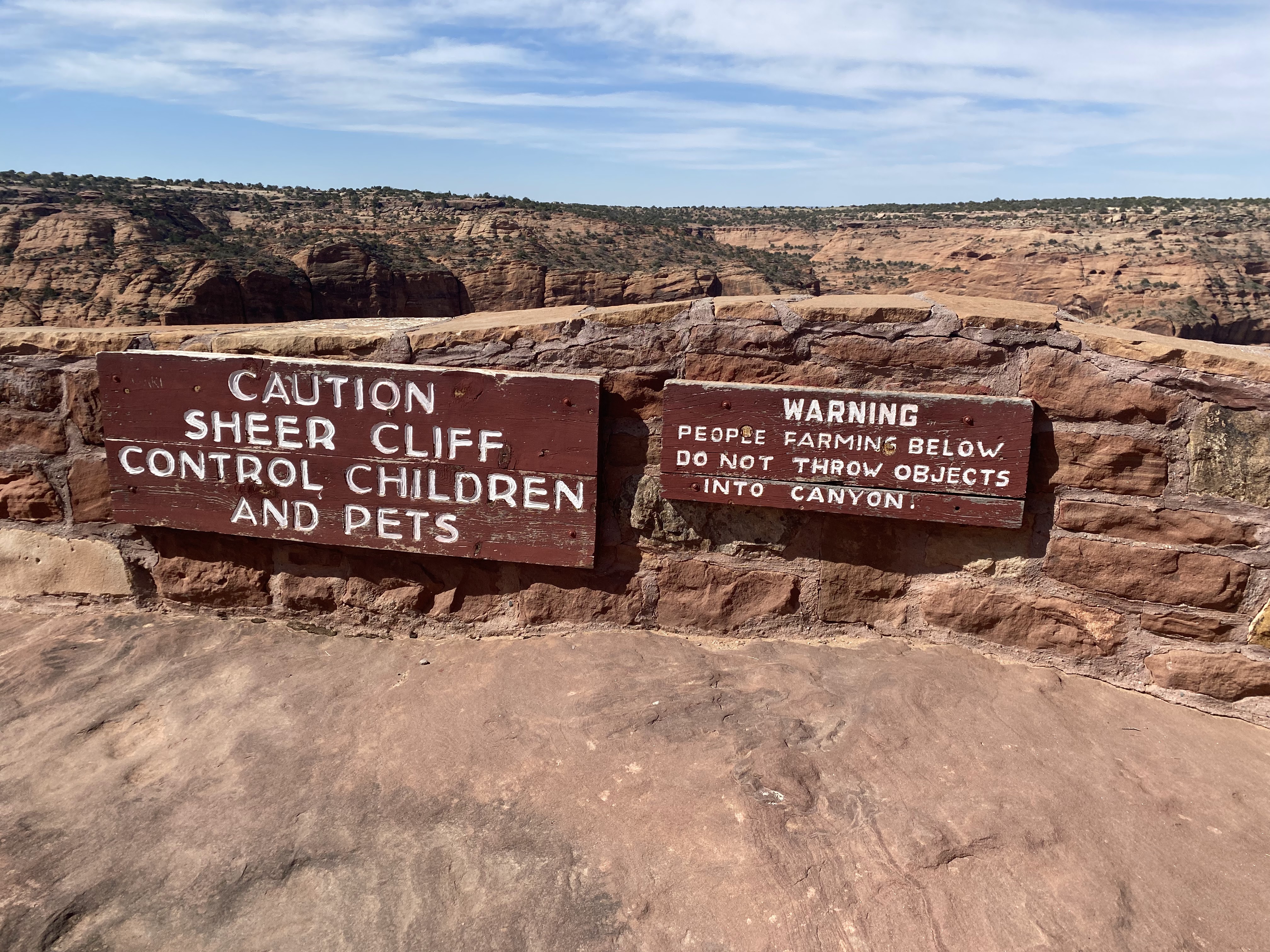 |
| A sign at Canyon de Chelly National Monument (photo courtesy of Professor Lisa Pruitt) |
In the winter of 1951, a Norwegian tourist got lost in the Canyon and ended up breaking into two hogans (traditional Diné houses) belonging to a Diné family who lived in the Canyon in the summer. He stole shoes and an overcoat, which he ended up burning by falling asleep too close to the fire. After he was rescued, the Diné family whose hogans he had broken into were upset and demanded repayment for the overcoat. The issue was resolved when the Catholic mission the Norwegian was staying at paid for the coat.
Minor though that incident may seem, it reflects the kind of discomfort that the families living in the Canyon must have felt as an increasing number of tourists came onto their homelands on roads and trails built by the NPS.
More significantly, in 1951, the NPS opted to plant Russian olive and Chinese elm trees in the park to control erosion, despite suggestions that plants indigenous to the area, like cottonwood, might work better. The plants grew well and quickly, to the point that they threatened the archeological sites in the canyon. In 2005, the NPS and the Navajo Nation began working together on the Cooperative Watershed Restoration Project to remove invasive tamarisk and Russian olive trees. The NPS stated that:
aggressive infestation by tamarisk (Tamarix ramosissima, T. chinensis, and their hybrids) and Russian olive (Elaeaganus angustifolia), in combination with intensive historic grazing and tour operations within the riparian corridors of the canyon floor, have created the need for an integrated and collaborative approach to managing all resources (natural and cultural) within the Canyons and their associated watersheds.The issues identified above are ones that the Diné people living in the canyon have been complaining about since at least the 1950’s and are likely largely because of the NPS actions. The use of tamarisk and Russian olive trees to combat soil erosion was effective. However, the density of the tamarisk root structures made streams cut deeper into the ground. The native plants are less effective at erosion prevention, but allow “braided meandering” that better preserves the characteristics of the canyon.
Relations between the Park Service and the Navajo Nation continue to be rocky. However, as Indigenous land management methods gain greater attention for their ability to help us adapt to and combat climate change, the Park Service is encouraging greater Tribal involvement.
Thursday, September 14, 2023
Democratic lawmakers seek to bolster rural recreation economy
Senators Chuck Schumer (New York) and Michael Bennet (Colorado), along with Congresswoman Melanie Stansbury (New Mexico), recently introduced the Rural Outdoor Investment Act, which Bloomberg describes as authorizing
$50 million annually through fiscal 2028 for rural areas to upgrade outdoor recreation infrastructure such as boat ramps and trails, as well as help communities plan for the increased tourism and larger workforce the industry is expected to bring.
Outdoor recreation in the US, especially on public lands and waters, boomed during the Covid-19 pandemic, as Americans sought alternatives to indoor activities. The industry supported 4.5 million jobs and contributed about 1.9% to the nation’s gross domestic product in 2021, according to the Bureau of Economic Analysis. Outdoor recreation also contributed about $862 billion in sales and revenue in 2021.
One commentator calls this bill the "recreation industry’s 'big play in the farm bill,'" because while "lawmakers introduced the measure as stand-along legislation...they are eyeing attaching it to broader bipartisan bills [including the farm bill] before year's end." Read more here from the New Mexico Political Report here.
The link between outdoor recreation and rural economies is explored in prior posts here, here, and here.
Wednesday, July 19, 2023
Latina Deputy USDA Secretary sworn in
NPR reported yesterday here on Xochitl Torres Small's swearing in as the first Latina Deputy Secretary of the U.S. Department of Agriculture. Torres Small is from New Mexico, where she served one term as a congresswoman from the sparsely populated district that includes Las Cruces and vast portions of the southern part of the Land of Enchantment. Here's an excerpt from the NPR story about Torres Small, with Ximena Bustillo reporting:
The former New Mexico congresswoman was tapped in by President Biden in 2021 to serve as undersecretary for rural development at USDA, the branch of the department that oversees infrastructure, utilities and healthcare across rural communities. Now in a higher ranking position, she takes on the role as the administration and Democrats are looking to strengthen their footprints in rural areas.
* * *
Torres Small has been promoted at a time when the department is undergoing changes to address historical discrimination across its lending and other programs. Late last year the department began making payments on loan cancellations for some farmers and providing $2.2 billion for farmers who experienced discrimination prior to Jan. 2021.
As for new challenges facing Torres Small, they include "looming department staffing shortages. Torres Small has previously raised concerns that nearly half of the employees she oversaw in rural development were eligible to retire, even as demands for the agency have increased."
The story includes several long quotes from Torres Small:
To get to be deputy secretary and in charge of the backend of the shop is really exciting because we impact people's lives in so many ways. I'm the granddaughter of farm workers, and of course, that's a way that it has impacted my life. But my parents were educators. And when it comes to thinking about the kids that they're teaching, making sure that those kids have healthy, nutritious food to help them learn is crucial.
And here's an excerpt where Torres Small highlights the racial and ethnic diversity of rural America, a reality often overlooked (but highlighted in my recent article here and recently on several occasions on this blog):
One of my favorite things about serving as undersecretary at rural development was that rural America is a lot of different things and a lot of different places, and it's incredibly diverse. Yes, it's a farmer on a tractor, and it's also a rural [fishing village] in Alaska and it's also Indian country.
While cast in a negative light here, an aging USDA staff can also be seen as a positive--opening opportunities for younger rural sociologists and economists in government service.
Thursday, April 20, 2023
Three stories of loss out of rural northern New Mexico
Several national media outlets have recently reported out of the rural reaches of northern New Mexico. I collect these stories, all of some sort of loss, in this post.
Jeffrey Fleishman of the Los Angeles Times reported last month out of Espanola, New Mexico, population 10,526. The headline is "Can this town save itself from fentanyl addiction? The race to turn around a threatened community." Excerpts follow, with the first about the place:
Sitting amid tribal lands straddling the Rio Grande, Española appears stranded between better known Santa Fe and Taos. More than a century ago, long before cartels trafficking fentanyl with nicknames like China White and Dance Fever crisscrossed New Mexico on Interstate 40 and Interstate 25, ranchers and farmers here loaded their wares on trains bound north and south in what was known as the Chili Line. That route ended decades ago; other small businesses and industries disappeared as well.
Then there's this about the current crisis:
Shoppers and workers drove past addicts roaming Riverside Drive, the main drag in this town of 10,500. Kids played in trailer parks. Contractors loaded pickups. Cars came and went from a methadone clinic. Men wearing hoodies and expectant gazes drifted toward a house with barred windows. They rustled pockets for cash. Others headed toward the marshes on the city’s fringes, where, as the morning frost lifted, Cristian Madrid-Estrada, a bearded man of 23, sat with a gun holstered on his hip at the Española Pathways Shelter [where he is the chief executive officer].
* * *
Rallying voices are trying to fix this community under siege. But it’s unclear if the story of Española, where a quarter of the population is poor and the murals of the dead are painted on junction boxes, will be a narrative about how to save a town from addiction — or lose it. In a one-year period ending in June 2022, Rio Arriba County reported 50 fatal overdoses, giving it the highest rate in New Mexico. It was about four times the national rate of approximately 33 per 100,000.
Here's another quote from Madrid-Estrada:
It’s insane how much has changed in the last year. It’s scary. We have generational drug use. Generational trauma. Half the kids I went to school with didn’t have parents. They were dead or in jail or gone. [But fentanyl] is a completely different animal. A whole new epidemic no one was prepared for.
The LA Times story also covers familiar rural issues, including lack of resources such as detox and addiction treatment.
Then, a few weeks ago, Simon Romero reported for the New York Times on another loss--that region's dying Spanish dialect, one centuries old and linking back to the era of the Conquistadors. The dateline is Questa, population 1742, and an excerpt follows:
Even just a few decades ago, the New Mexican dialect remained at the forefront of Spanish-language media in the United States, featured on television programs like the nationally syndicated 1960s Val de la O variety show. Balladeers like Al Hurricane nurtured the dialect in their songs. But such fixtures, along with the dazzling array of Spanish-language newspapers that once flourished in northern New Mexico, have largely faded.
Romero quotes Cynthia Rael-Vigil, 68, who runs a coffee shop in Questa and who traces her ancestry to a member of the "1598 expedition that claimed New Mexico as one of the Spanish Empire’s most remote domains."
Our unique Spanish is at real risk of dying out... Once a treasure like this is lost, I don’t think we realize, it’s lost forever.
Referring to her 11-year-old grandson who speaks almost no Spanish of any dialect:
He has no interest. Kids his age master the internet; that’s all in English. I sometimes wonder, did my generation not do our part to keep the language alive?
Romero links the language loss to the decline of places like Questa:
[T]here are questions about whether the rural communities that nurtured New Mexican Spanish for centuries can themselves last much longer in the face of myriad economic, cultural and climate challenges.
* * *
Economic forces have fueled an exodus from the aging northern villages made up of crumbling adobe homes. Other threats — such as the largest wildfire in New Mexico’s recorded history, which tore through the state’s Hispanic heartland a year ago.
And that's a great segue to the last of the three stories of loss, Alice Fordham's report for NPR about victims of last spring's Hermit's Peak Fire who have yet to see the compensation they've been promised. That fire was started by a federal government controlled burn that, well, got out of control. Here, Fordham interviews Antonia Roybal-Mack, a local attorney who is trying to help residents negotiate with the federal government:
FORDHAM: Because the fire began as escaped prescribed burns by a federal agency, the U.S. Forest Service, the federal government took responsibility, and Congress passed a law promising compensation. It appropriated nearly $4 billion. Roybal-Mack says she's been hired by hundreds of households and other entities like municipalities to put a number on their loss. But the claims process is complicated.
ROYBAL-MACK: We can't give our clients any certainty on this is what it is. This is how it looks. This is your path. This is what we expect to see happen.
FORDHAM: That's because the rules aren't finalized. The Federal Emergency Management Agency, or FEMA, is running this compensation program. It issued interim regulations last year. But after hundreds of public comments raising concerns about things like a cap of 25% on the value of trees, the agency has no date for a final version.
ROYBAL-MACK: FEMA is saying trust us that we are going to do right by you, but we're not going to give you a rule, and we're not going to have a guidebook as to how we're all going to play this game.
So, there's talk of a possible lawsuit against the federal government, and the story closes with an implicit reference to rural lack of anonymity.
ROYBAL-MACK: In the event we sue the federal government, we will have the evidence necessary to do that.
FORDHAM: She's from the county of Mora, which was hit hard by the fire. Her father's ranch burned. And as we ride around, she says there's some social pressure.
ROYBAL-MACK: If I screw this up, I can't go to church here anymore. And I really like to go to church in Mora [County].
Monday, February 27, 2023
The digital divide in rural Arizona
Amidst the ongoing COVID-19 pandemic, our relationship with space and buildings has changed. As going outside became dangerous, school and work shifted to at home. Businesses shifted online, court proceedings switched over to Teams, and students were now part of Zoom school, sometimes without a reliable home connection. This work-from-home shift sheds light on an important phenomenon: the digital divide.
The digital divide refers to the growing gap that exists between certain marginalized communities in the U.S. such as low-income, elderly, rural, and differently-abled folks who don't have access to computers or the internet. The gap continues to grow and widens along economic and racial lines. Broadband refers to high-speed internet access and is crucial not only to education in rural areas but to almost every other facet of life- healthcare, civic engagement, and public safety.
One state that lags in broadband access is my home state of Arizona. In 8 out of 15 counties, no more than 32% of households actually have high-speed internet access. It is no coincidence that many of these areas are low-income, rural, and/or indigenous communities. According to Verge's 2021 map of America's broadband problem, only 5% of people in Arizona's Apache County are actually using broadband speed at 25 Mbps. To put this in perspective, Apache County is 11,000 square miles with 65,000 people, 74.5% of who are indigenous. In southern Arizona's Santa Cruz County, with 47,000 people across 600 square miles, only 11% have access to broadband. The internet has been deeply engrained into our daily lives. From accessing telehealth and medical records online to simply being able to do Zoom calls and connect with people who live in different states or countries, the Internet is a basic need.
With special attention on Arizona and broadband federally there has been a new effort to provide high-speed internet in impacted communities. In late 2022, Biden announced commitments from communication companies several of which have been operating in Arizona to limit internet bills to $30 a month for some eligible households. Termed the Affordable Connectivity Program, eligible households will receive a discount, with those on tribal lands receiving up to $75 off. But, how much does this program really do? Arizona, the sixth largest state in the U.S. is served only by seven major internet providers, a majority of which aren't even available in most counties or capable of providing high-speed internet. This leaves only a few actual service providers that people can choose from.
Are discounts enough to provide rural areas with broadband access? Companies with near-monopolies such as Cox which provides service to 69% of the state are not incentivized to build millions of dollars of broadband infrastructure in places like Apache or Santa Cruz County because no profit is to be made due to diseconomies of scale. Removing the profit incentive could ensure equal and efficient access to rural communities.
Other sources of money such as federally funded grants like the Arizona Broadband Development Grant Program has specific allocations for rural communities enabling local communities to build their own or improve broadband infrastructure in rural and urban areas of the state. $75 million for 14 projects will go to 10 rural counties which goes towards "increasing connections for homes, business, public safety agencies, medical facilities, schools, and libraries" Apache County has received $9.7 million in funding to connect homes and businesses to fiber optic infrastructure. What if, instead of putting the onus on individuals or specific colleges and institutions to provide internet to their communities which are nothing more than temporary solutions, the government ensured high-speed access to all? Where you live should not determine whether you have access to basic human rights such as shelter, food, transportation, and good education and this includes the internet. The digital divide disproportionately impacts communities of color, especially those located in rural areas. As the gap widens along economic and racial lines, a reconception of broadband access is crucial to bridging the gap and delivering equity to rural communities.
Friday, February 10, 2023
"Rural state" legislatures are often part-time, poorly paid, limiting who can serve
I'm on the record for asserting (repeatedly) that there is no such thing as a "rural state," but I decided this Marketplace story was important enough to write about, despite its use of the term. The headline for the Savannah Maher story is, "In rural states' citizen legislatures, ordinary citizens can't afford to serve," and the states Maher focuses on are New Mexico and Wyoming. Here's an excerpt mostly about the former:
In some more rural and less populous states, you’ll find what are known as citizen legislatures that meet for just a few weeks of the year, where lawmaker salaries can fall well below the federal poverty line. Arizona’s state legislators make an annual base salary of around $24,000. In New Hampshire, lawmakers are paid just $100 a year for their service.
Many of those “citizen” lawmakers are putting in 40 hours a week or more regardless of their salaries, according to Josalyn Williams, a policy specialist with the National Conference of State Legislatures.
“All people working in legislatures are citizens of their states, and also all are working at a professional level,” Williams said. Differences in lawmaker pay “reflect the culture, values and needs of the state itself.”
Those differences are often enshrined in state constitutions, Williams said — making them difficult to change.
In New Mexico, some lawmakers have put forward a constitutional amendment that — if approved by the legislature and later by New Mexican voters — would task a citizen’s commission with determining legislator salaries.Michael Rocca, a professor of political science at the University of New Mexico, co-authored research finding that a base salary, along with longer sessions and paid staff for lawmakers, could increase diversity and productivity in the legislature. But efforts to professionalize the Roundhouse and other citizen legislatures face an uphill battle.
“It has become a framing problem,” Rocca said. “Politicians have not been able to make this case from their own offices because it seems self-serving.”
Trust in government is approaching historic lows, according to the Pew Research Center. Why would we want to provide more resources to politicians we perceive as elitist, out of touch or even corrupt?
But Rocca said that’s a self-fulfilling cycle, as volunteer and low-paid legislatures attract the kind of candidates who can make financial sacrifices.
“What that means is it’s usually a wealthier individual, and it’s typically those who are retired,” Rocca said. “And as you might imagine, that introduces all sorts of biases into the system.”
This part of the story focuses on a youngish female second-term legislator, Micaela Lara Cardena, from Mesilla, in south central New Mexico, and the latter part focuses on a long-serving male legislator from Cheyenne, Wyoming. Both legislators are parents to young children, and the story discusses the impact of their public service on their families.
Sunday, January 1, 2023
A feel-good, rural-adjacent story for the New Year
Joshua Barone for the New York Times reported a few weeks ago from New River Gorge National Park, West Virginia on YoYo Ma's national parks circuit. Here's the lede:
A hiker’s mouth dropped when she learned why a small group was forming at a rocky overlook here. “Yo-Yo Ma,” she was told, “is going to do a pop-up concert.”
She waited patiently, leaning against a wooden guard rail, beyond which lay a serenely undulating vista of West Virginia’s tree-covered mountains, bisected by a horseshoe curve of the New River and dotted with the shadows of scattered clouds. From this spot, Grandview, the landscape appeared nearly untouched, interrupted only by a railroad track along the water.
Members of the National Park Service set up a tripod to livestream the performance. The poet Crystal Good stood before the crowd of a few dozen passers-by, and before giving a reading, said, “Let me take a moment, because this is so beautiful.” Then Ma, far from any major concert hall and hundreds of miles from his home in Cambridge, Mass., stood with his cello propped up by its endpin and played a Bach Sarabande.
* * *
The audience, so casually assembled, didn’t know that it was taking part in Ma’s latest project, Our Common Nature, an intentionally broad and searching initiative that explores ways in which we can heal, and enrich, our relationship with the world around us. It has taken him to the Grand Canyon and Acadia National Park, to the Great Smoky Mountains and Hawaii; as it expands beyond national parks, he hopes that it will also lead to Antarctica. And, for a few days in September, it brought him to the coal-rich Appalachians of West Virginia.
The photos accompanying this story speak volumes about class and other issues that divide us. I love, in particular, that Ma appeared with Kathy Mattea, one of my favorite "country" singers.
Friday, November 11, 2022
Tight races in congressional districts in the rural West
Two very tight congressional races in the American Southwest include large swaths of rural territory.


The first of these races, New Mexico's 2d, has been called for the Democrat Gabe Vasquez. It stretches from the Albuquerque suburbs west to Arizona, including a bit of Indian Country, then south to the Mexican border and West Texas/El Paso. Here are the results, showing Vasquez won by about 1,300 votes: 


His support was strongest in Indian Country but also good in Las Cruces and the surrounding area, Las Cruces being the state's third largest city.
Here's a New York Times story from several weeks ago mentioning Vasquez and his race in relation to "American dream" rhetoric. Though that story suggested that it is primarily Republicans who invoke the American dream, the story observed that Vasquez also does so. Here's the salient bit:
Gabe Vasquez, a Democrat who is facing Ms. Herrell in New Mexico in the fall, has also embraced the phrase. He tells supporters that his late grandfather — Javier Bañuelos, who taught himself to fix broken televisions with an old manual and eventually opened his own repair shop — made it possible for him to run for Congress. The American dream is not about buying a house, but ensuring that the economic ladder “is there for everybody and that everyone can climb with you,” he said.
Another close race is Colorado's 3d. Here's how that one is looking right now, with Boebert leading by 1,100 votes:


NPR did a segment this morning suggesting an automatic recount in the Boebert-Frisch race because the initial results are expected to put the candidates within half a percentage of each other, as they are now. Here is the Colorado Sun's coverage.
Another close race with swaths of rural territory is Washington's 3rd, in the southwest corner of the state, part of it exurban Portland, Oregon-Vancouver, Washington. Here's the current state of play there now, where Marie Gluesenkamp Perez is leading by about 6,000 votes. That seat was previously held by a moderate Republican, Jamie Herrera-Beutler, who voted to impeach Trump, setting up the battle between Gluesenkamp Perez and Joe Kent. That race was featured in a New York Times story by Michelle Goldberg in late September.


Another exurban district with an exceedingly tight races was Colorado's 8th, which lies along the front range and stretches from Greeley south to Thornton and east of Colorado's 2d, which includes Fort Collins and Boulder. The Democrat, Yadira Caraveo won there, defeating Barbara Kirkmeyer by about 1,600 votes.
Kirkmeyer also used American dream rhetoric in her campaign, albeit with a different connotation than Vasquez's:
Kirkmeyer ...embraces the American dream as the theme of her personal story. Ms. Kirkmeyer grew up on a dairy farm, the sixth of seven children in a family that often struggled. She paid her way through college by raising and selling a herd of eight milk cows, yearlings and heifer calves.
The American dream, Ms. Kirkmeyer said, was not only about economic opportunity but freedom, connecting the words with Republican opposition to Covid-related mask mandates. “I don’t see the mandates as part of the American dream,” she said. “People felt that was an infringement on their rights and personal dreams.”
Caraveo is a Latina pediatrician, and the district she will now serve is 39% Latino/a. Caraveo carried Adams County (where she lives in Thornton)the part of the district closest to Denver, while Kirkmeyer carried Weld County, which includes Greeley and environs (and was also a center in the movement for northern Colorado's succession about a decade ago).
Postscript: Here's Politico's coverage of the Gluesenkamp Perez win over Joe Kent in Washington's 3d.
Saturday, October 8, 2022
How rural Arizona students treat a Filipina teacher who came to help
Eli Saslow reports for the Washington Post out of Bullhead City, Arizona, under the headline, "An American education." The subhead is, "Amid a historic U.S. teacher shortage, a ‘Most Outstanding Teacher’ from the Philippines tries to help save a struggling school in rural Arizona." The alternative headline is, "Teachers from Philippines Help Struggling U.S. Schools." And the essence is that an award-winning teacher in the Philippines came to help a rural school district experiencing a teacher shortage, and then had to endure awful behavior by the students. Here are some excerpts, first about the teacher, Rose Jean Obreque, who, in order to get to the U.S., took out "$8,000 in high-interest loans to pay for the agency fees, a plane ticket, two new teaching outfits and the first month’s rent on a two-bedroom apartment she planned to share with five other foreign teachers."
Here's how the students in her home country are described:
Her seventh-grade students there were the children of fishermen and sugar cane farmers. They arrived for school early, even if they had to walk more than a mile to get there. They called her “ma’am.” They brought her homemade lunches. They wrote thank-you notes at the end of each week. They aspired to become engineers or doctors or teachers like her, and they volunteered to stay after school for extra lessons rather than returning home to work in the sugar cane fields. Obreque started an after-school program for struggling readers. She led the school’s innovations club to a regional first-place finish. She recorded daily video lessons during the pandemic and hiked to remote villages to make home visits, until her ambition landed her at the top of the teacher rankings and she began to hear from recruitment agencies around the world.
Then there are her students in America, whose behavioral issues Eli describes in considerable detail, including:
Another [student] had dropped his paper on the floor and was stabbing his pencil into the side of his desk.Then there is the model provided by Ann Cuevas, a teacher who has been in Bullhead City for four years and survived:
“Is everything all right?” Obreque asked. “Why aren’t you participating?”
“’Cause my pencil’s broken,” he said, banging it harder against the desk until it snapped. He picked up the two broken pieces and held them out to her as proof. “What do you want me to do?” he asked, smiling at her, and Obreque looked at him for a moment and then decided that his behavior was her fault. Maybe she hadn’t communicated the assignment properly. Maybe, instead of beginning the class by making name tags, she should have started with the rules so they knew how to behave. She walked back to the front of the room. “Eyes up here,” she said, as several of the students continued to talk. “Five, four, three …” she said, as the students shouted over her, until finally the PE teacher blew his whistle. “Hey! Try doing that to me and see what happens,” he said. “Be quiet and listen to your teacher.”
Obreque nodded at him and then continued. “I want this class to be systematic,” she said. “We are not animals. We are not in the jungle. We should be guided by rules, or we will not be successful in our learning, right?”
“Yeah, guys. We’re not animals,” one student said, and then a few boys began to make jungle noises until the PE teacher blew his whistle again.
“If you want to be respected, show me respect,” Obreque said. “Human beings are supposed to be able to follow simple instructions. You come to school to learn, right?”
“Nah, I come because my parents make me,” one student said, turning to smile at his seatmate.
“Yeah, and because somehow you haven’t gotten expelled yet,” his seatmate responded, shoving his friend in the shoulder.
“And ’cause the girls here are fine as hell,” the student said, punching his friend back in the arm.
“Enough!” Obreque shouted, using a voice louder than she’d ever used in seven years of teaching in the Philippines. “What is an example of behaving with dignity and respect? Please, answer and raise your hand.”
She gradually moved beyond her Filipino instinct for classroom formality and began asking her students about their lives, and they introduced her to a version of America much different from what she’d first expected: abusive families, homelessness, surging drug overdose deaths, conspiratorial ideologies, loneliness, suicide, alcoholism and poverty every bit as bad as anything she’d encountered in the Philippines.
Don't miss the rest of the story.
Sunday, September 11, 2022
New Mexico court bans county commissioner from holding office based on his participation in January 6 insurrection
Many sources reported this week on the decision by a New Mexico judge to ban Otero County commissioner Couy Griffin because of his participation in the insurrection in Washington, DC, on January 6, 2021. This was the first such decision in U.S. history to invoke this provision of the U.S. Constitution, which is part of the 14th Amendment, one of the so-called Civil War Amendments. Coverage by Citizens for Responsibility and Ethics, which represented some New Mexicans who brought the case, included this:
A New Mexico judge ordered Otero County Commissioner Couy Griffin be removed from office, effective immediately, ruling that the attack on the Capitol was an insurrection and that Griffin’s participation in it disqualified him under Section 3 of the 14th Amendment. This decision marks the first time since 1869 that a court has disqualified a public official under Section 3, and the first time that any court has ruled the events of January 6, 2021 an insurrection.
Section 3 of the 14th Amendment, also known as the Disqualification Clause, bars any person from holding federal or state office who took an “oath…to support the Constitution of the United States” as an “officer of any State” and then “engaged in insurrection or rebellion” or gave “aid or comfort” to insurrectionists. Griffin, as an Otero County Commissioner since January 2019, took an oath to “support and uphold the Constitution and laws of the State of New Mexico, and the Constitution of the United States.”
“This is a historic win for accountability for the January 6th insurrection and the efforts to disrupt the peaceful transfer of power in the United States. Protecting American democracy means ensuring those who violate their oaths to the Constitution are held responsible,” said CREW President Noah Bookbinder. “This decision makes clear that any current or former public officials who took an oath to defend the U.S. Constitution and then participated in the January 6th insurrection can and will be removed and barred from government service for their actions.”
Under New Mexico law, any private citizen of the state may file a lawsuit to remove a disqualified county official from office.
Here's an excerpt from NPR's coverage of the ruling:
According to the judge's ruling, Griffin's group, called Cowboys for Trump, "played a key role in Stop the Steal mobilization efforts" ahead of Jan. 6, 2021. Video from that day shows Griffin "working up" supporters of Trump against then-Vice President Mike Pence, the court says. And there is also footage of Griffin illegally breaching multiple security barriers and egging on violence by rallying rioters with a bullhorn.
Griffin says he was not violent while at the Capitol that day and wasn't aware that he was trespassing at the time. A criminal court convicted Griffin of misdemeanor trespassing on Jan. 6, which he plans to appeal.
"I do regret the actions of many on that day that fought with police officers and destroyed government property," he says. "I regret their actions but I don't regret my actions. My own actions were lawful."
Otero County is a nonmetro county in the southern part of New Mexico, and it was in the news earlier this year when county officials refused to certify the primary election. Those officials ultimately did certify the election results after the New Mexico Supreme Court instructed them to do so, but with Griffin voting no.
Can't help think folks like those in Otero County, where the county seat is Alamagordo, have been influenced by David Clements. Clements has been traveling around New Mexico and other states promulgating lies about election security. Annie Gowen's feature on him was published in the Washington Post a few days ago, and his efforts were also covered in this NPR feature in July. Here's an excerpt from Gowen's story, which is dateline Neligh, Nebraska:
For two hours, Clements — who has the rumpled look of an academic, though he lost his business school professor’s job last fall for refusing to wear a mask in class — spoke of breached voting machines, voter roll manipulation and ballot stuffing that he falsely claims cost former president Donald Trump victory in 2020. The audience, which included a local minister, a bank teller and farmers in their overalls, gasped in horror or whispered “wow” with each new claim.
“We’ve never experienced a national coup,” he told the crowd, standing before red, white and blue signs strung up alongside a bingo board. “And that’s what we had.”
Now, Clements has taken his message nationwide, traveling to small towns in more than a dozen states, with a focus, he said, on places that are “forgotten and abandoned and overlooked.” His crusade to prove that voting systems can’t be trusted has deepened fears among election experts, who say his meritless claims could give Trump allies more fodder to try to disrupt elections in November and beyond.
Tuesday, July 26, 2022
My rural travelogue (Part XXXI): Apache County, Arizona
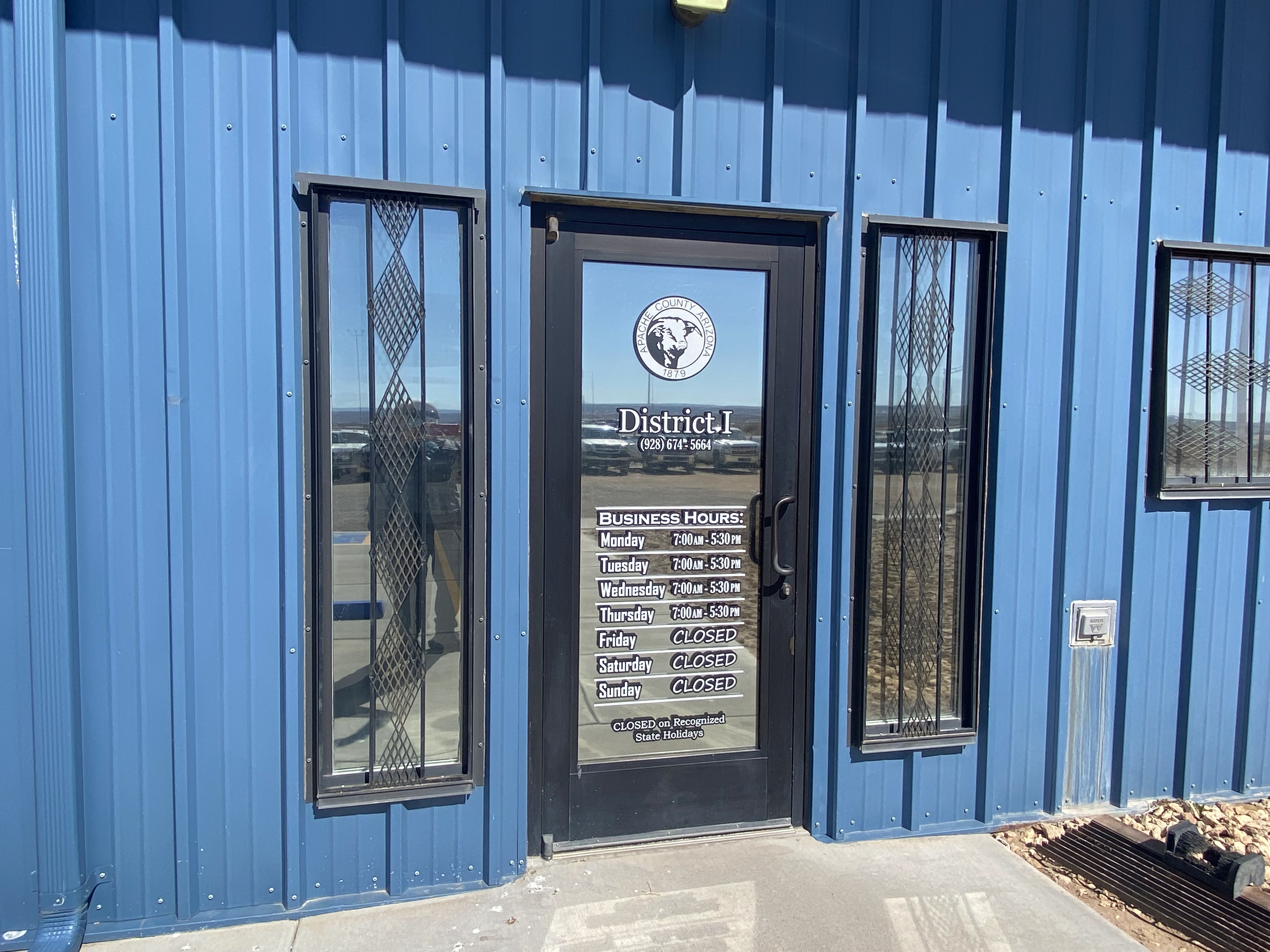 |
| Apache County office in Chinle, Arizona, District 1 |
I have been intrigued with Apache County, Arizona, population 71,518, since 2010, when I started writing a law review article about the delivery of indigent defense services in Arizona. That piece, called "Justice Deserts: Spatial Inequality and Local Funding of Indigent Defense," was published in a symposium issue of the Arizona Law Review on "Funding Justice."
 |
| Navajo Nation Corrections Chinle, Arizona (c) Lisa R. Pruitt 2022 |
 |
| Canyon de Chelly from Junction overlook |
I was excited this spring to have the opportunity to visit parts of Apache County. From several days in Moab, Utah, we headed south for a few nights in Chinle, population 4518, which would be our jumping off point for visiting Canyon de Chelly. We crossed into Apache County from San Juan County, Utah, population 14,746. Like Apache County, AZ, San Juan County, UT has a significant native population, dominated by the Navajo nation and a great deal of the Navajo land. (These are two of the famous four corners, the others in Montezuma County, Colorado and San Juan County, New Mexico.)
 |
| Apache County Offices |
Canyon de Chelly did not disappoint us (see photos), and the Navajo hospitality was terrific. On my last morning in Chinle, I drove around to take photos of the infrastructure--including that related to government and health care. I'm sharing some of those photos here. They are of local government buildings associate with both Apache County and the sovereign Navajo Nation. As the Apache County sign (above) indicates, among the services at the county's District 1 office in Chinle are a Roads Department, Sheriff Joseph Dedman, an "Elections" office, a "Justice of the Peace," and a "Motor Vehicle Division." The Supervisor for the district also keeps and office there. In the same compound (which is behind a chain link fence and locked outside business hours) are several road maintenance vehicles.
A massive school complex dominates the town of Chinle, but sadly I didn't manage to capture any good photos of it. I did capture several photos of the housing for the teachers, which sits across the road from the Navajo/Dine Justice Center. Like the Justice Center, much of the housing is recent construction.
A 2008 trip through some of these parts (including parts of Apache and Navajo County) is here. The Moab, Utah, leg of this 2022 trip is the topic of this post.
All photos are Chinle and environs, (c) Lisa R. Pruitt 2022 (April)
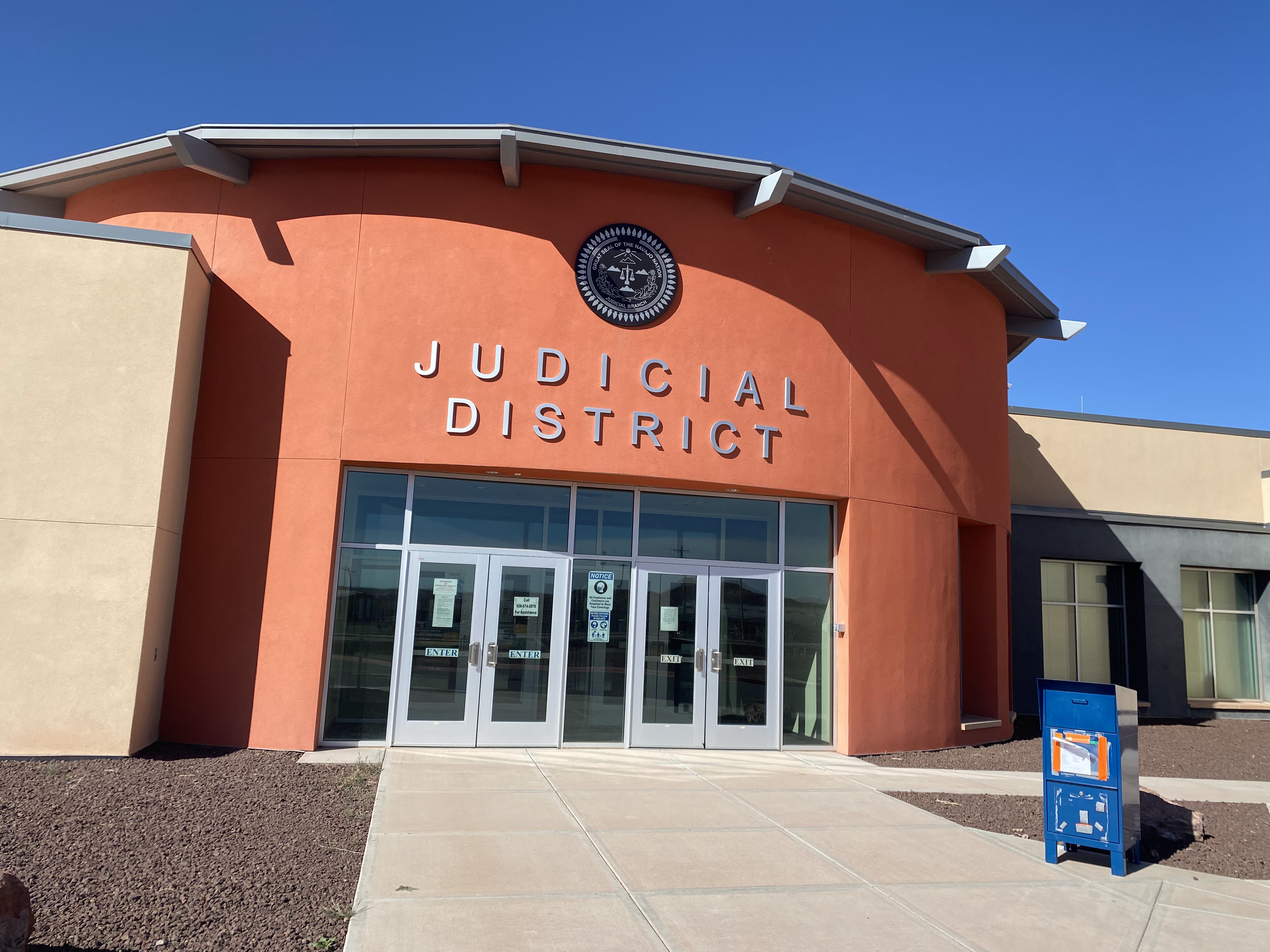

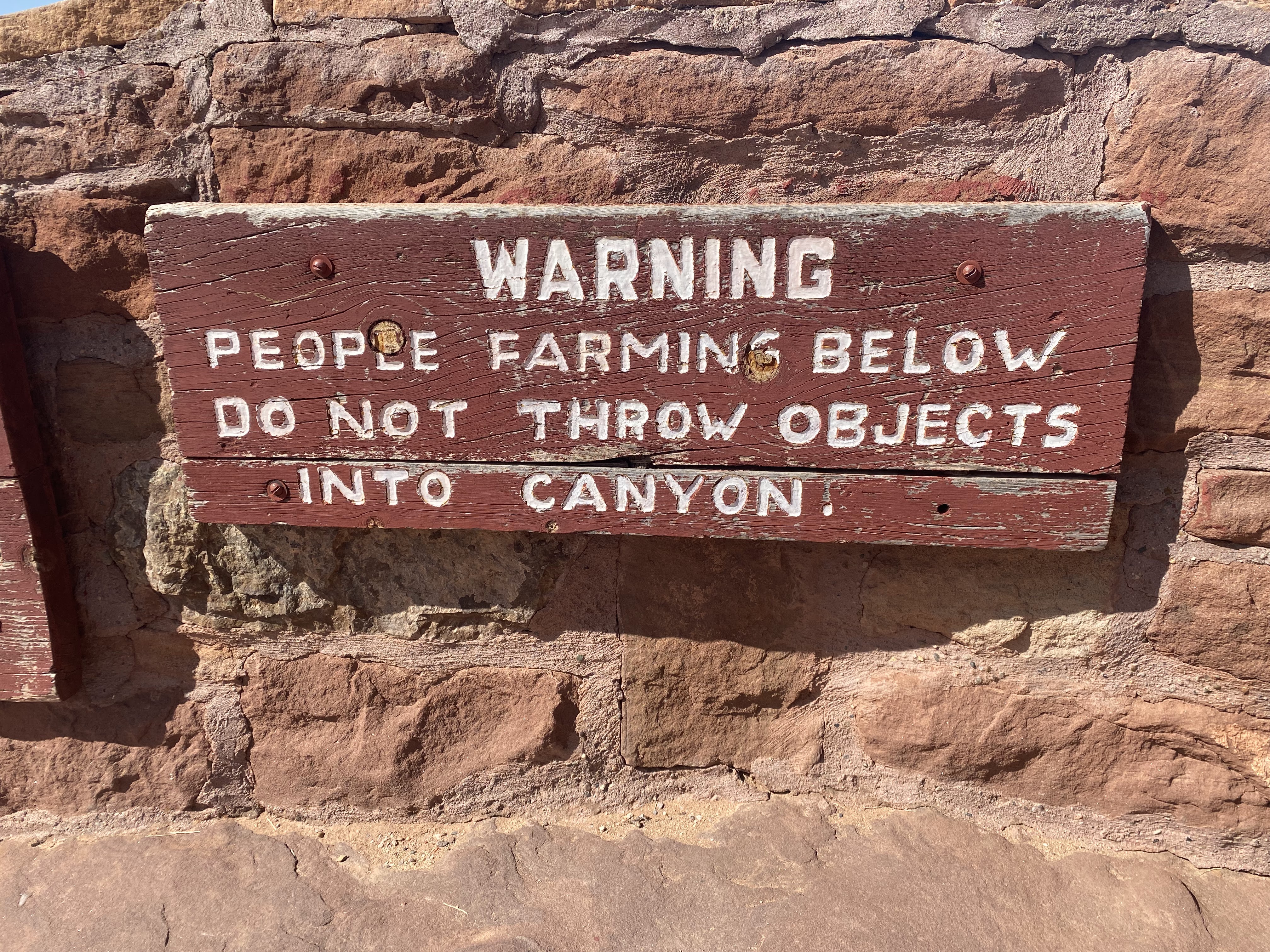 |
| Sign at Canyon de Chelly from North Rim |
 |
| Canyon de Chelly from North Rim; sign above overlooks canyon floor |
 |
| Canyon de Chelly, Chinle |
 |
| Defunct Navajo Nation Courthouse, Chinle |
 |
| Arizona Dept. of Transportation Office, Chinle |
 |
| Apache County Government Office, Chinle |
 |
| Navajo Nation Courts and Justice Center Offices were close due to pandemic, even 2 years on |
Monday, May 23, 2022
Dine (Navajo) woman confirmed as first Native American federal judge in California
Indian Country Today reports on the confirmation of Sunshine Suzanne Sykes as only the 7th Native American ever seated as a federal judge--and the first in California. She will serve in California's Central District, which includes the state's "Inland Empire," east of Los Angeles and San Diego counties. She is a graduate of Stanford University (1997) and Stanford Law School (2001). Sykes previously served on the Riverside County Superior Court, part of the California Judicial System. Before that, she worked for California Indian Legal Services. She is a native of Tuba City, Arizona, and the first Navajo/Dine member to rise to the federal bench.
Thursday, May 5, 2022
Powerful story on attachment to place in the context of the New Mexico fires
NPR reported this morning from near Las Vegas, New Mexico, population 13,000, where wildfires have been raging for weeks. The piece featured a lovely focus on attachment to place, something one rarely sees acknowledged in the media. Here's the excerpt, with Trujillo quotes from "the town's mayor, Louie Trujillo, describing the view from his window at city hall." Those conducting the interview are Leila Fadel and A Martinez:
Some families have started to evacuate their homes. Trujillo says others who live on the surrounding ranches and in canyons have lost everything.
FADEL: Crews don't have an exact tally yet of how many homes have burned. Since winds kicked up on Monday, the fire has been burning too hot and too intensely for anyone to check.
TRUJILLO: There are cattle ranches. They are just little ranch houses, old-style homes, mostly adobe, some stick-built, and of course, some mobile homes in that area.
MARTINEZ: Losing these properties is uniquely heartbreaking, he says. Some have been in the same family for generations.
TRUJILLO: It's a loss of culture. It's a loss of querencia, if you know that word in Spanish.
MARTINEZ: Yeah, there's no direct translation in English. Trujillo says querencia means a feeling people have for the land.
TRUJILLO: To us, it's really more of a spiritual belonging to the land. And it's not just a house that you buy and move on to another one and so forth. So when there's lineage and there's generations that have owned that property, so it means a lot more to people here in northern New Mexico.
FADEL: He says it's a common sentiment in this corner of New Mexico, where longtime families like his trace their ancestry back centuries.
TRUJILLO: The current proprietors of these properties were given to them by their grandpa and their tios and their tias and their, you know, bisabuelos. And their great-grandfather had this house, and now it's mine. And so you can see that it's not just a house; it means so much more.
Post script: The New York Times published this story, with similar themes, on the afternoon of May 5. It's "Burning Down a Way of Life," by Simon Romero.
Further postscript from May 8, 2022, in the Washington Post: "Winds fuel New Mexico wildfire, complicating containment efforts"
Subscribe to:
Posts (Atom)