Showing posts with label social services. Show all posts

Friday, April 3, 2026

Left to burn: how federal cuts are abandoning rural America's wildfire defenses

My memory of leaving Sonoma County for San Francisco includes a period of about four years where California wildfires progressively escalated in severity, oftentimes blanketing the city in smoke. In 2017, that included ducking inside to avoid breathing in the ashes of the town where I went to high school. It culminated in 2020 with the North Complex Fire causing the orange, alien sky that enveloped San Francisco. That fire was caused by a freak "lightning siege" attributable to climate change.  

My friend took this photo outside her apartment in September, 2020.
(c) Rose Barry, 2020
The Palisades Fire early last year should have emphasized the apocalyptic urgency of addressing wildfire dangers in California and beyond. But in the name of limiting "waste and abuse" the Trump administration ignored this urgency and instead proceeded to cut federal funding to fight fires in rural America. 

The Cuts 

Like the rest of the Trump administration's 2025 efforts, these cuts are as chaotic as they are dramatic, attacking wildfire prevention and response from multiple angles. 

First, the administration cut 10% of workers at the Forest Service. The Forest Service manages Federal land, and many of their responsibilities include fire prevention and firefighting. Fewer workers means fewer people clearing the brush and fewer people trained to fight fires. This puts California in a precarious position, with the Federal government managing 57% of forests in the state. Nevada is arguably in even worse shape, with 86% of their land being federally managed. 

Critics of the policy include members of the previous Trump administration. Former Forest Service chief Vickie Christiansen posits that the policies amount to "$40 million saved now for $4 billion in wildfire expense" later. Ryan Zinke, Trump's former Secretary of the Interior, says that the cuts shift the question of hiring from "'are we paying them enough” (to) “are we even going to have the bodies?'"

Firefighters from Stockton, CA putting out a fire off Hidden Valley Road. 
Source: Creative Commons, 2013.

The administration has also merged disparate firefighting groups from the Department of Agriculture and the Department of the Interior into a single U.S. Wildlife Fire Service. While there have been proposals to this effect in the past, they were previously rejected due to a 2008 Congressional report finding this consolidation had significant drawbacks. The consolidation shifts the focus away from fire prevention and towards suppression. The Forest Service ideally fights fire through its land management duties, and separating the two functions increases the risk of catastrophic fires that cannot be adequately suppressed. 

Despite some of the most high stakes firefighting occurring in rural spaces (especially in California), rural firefighters are often volunteers. As a previous post on this blog puts it, "volunteer firefighting is a rural issue." California has 200 volunteer fire departments, with many rural spaces completely lacking professional firefighters. Communities often fund these departments partially through local fundraisers. As people leave these communities, staffing these departments becomes even more difficult. Willow Creek in Humboldt County finds their department shrinking as calls increase.  Cuts to the Forest Service means these towns already lacking in resources have even less ability to serve their community even as the fire season grows ever larger. 

Volunteer Fire Station in Occidental, CA. 
(c) Lisa R. Pruitt 2025.
 States and localities have also suffered from the suspension of FEMA Building Resilient Infrastructure and Communities (BRIC) grants in 2025, with a lawsuit forcing the resumption of grants only last year. A massive backlog has resulted, with two years worth of applicants applying for one year of grant funding. This affects infrastructure for fire prevention as well as other disasters. 

This backlog disproportionately affects rural towns. Larger municipalities frequently have full-time grant-writers, where small towns often rely on a thin secretarial support staff, if that. These towns have no ability to fund their own improvements, with necessary infrastructure often costing several times the town's budget. 

The Response 

California moved relatively swiftly to counter the Forest Service cuts, deploying $72 million in Cal FIRE grants to "rake the forest" and fast track critical fire prevention projects. While certainly helpful, the State can only work with the 3% of forest land it manages directly and must work with private landowners who own the other 40% of the land. With a majority of the land in California under Federal management, this effort is limited. 

Utah also increased their wildfire funding by $150 million and joined the Great Plains Interstate Fire Compact. The compact enables coordination and resource sharing with other western states to fight wildfires and prevent wildfires. While this likely won't make up for the gap left by the federal government, this more coordinated local effort is cause for optimism. 

The Department of the Interior also announced a $20 million grant to equip "small, remote emergency response agencies with practical, deployable tools," i.e. modern water tanker trucks. While not unwelcome, this targeted funding does not make up for the larger structural damage done by the Trump administration. 

Notably, none of these responses make efforts to alleviate the specific burdens on rural communities. They simply attempt to fill in the gaps left by the federal government's retreat, failing to address the prior inequities. 

Conclusion  

On our current trajectory I find it difficult to be optimistic about anything involving climate change. As a Californian, there are few things that seem more immediately pressing than addressing the increasing severity of wildfires. The current administration's efforts harm everyone by failing to address these systemic issues, and rural communities will bear the brunt of the impact. 

Friday, March 27, 2026

Recent reports identify rural public health interventions, some with potential to mitigate Medicaid cuts


U.S. Department of Public Health Building.
Image courtesy of Boston Public Library

Healthcare in rural America finds itself a topic of much discussion lately, with mainstream media coverage of the crisis unfolding after Medicaid cuts by the Trump administration's 2025 budget reconciliation bill, which was signed into law July 2025. By some estimates, the new law will increase the number of uninsured people by 10 million in 2034. Other coverage concerns the fate of a $50 billion rural health slush fund that is yet to pay out in the communities who need it most and the recent slew of hospital closures in rural communities.

While the new restrictions on Medicaid eligibility and reduced federal spending will be felt across the nation, rural communities will be hit especially hard, due to the higher rates of people on Medicaid in nonmetropolitan areas. Sarah Jane Tribble, reporting for KFF Health News, writes: 
People who live in the nation’s rural expanses have more chronic diseases, die younger, and make less money. Those compounding factors have financially pummeled rural health infrastructure, triggering hospital closures and widespread discontinuation of critical health services.
Hospital closures (online tool showing a map of recent closures) exacerbate the present struggle to meet rural healthcare needs, where people are generally more vulnerable and less likely to utilize primary care services due to structural barriers like cost and provider shortages. In 2016, Dr. Julia T. Caldwell et al. published a paper in the American Journal of Public Health, which states that "[r]ural adults are less likely to be insured, less likely to use healthcare, and more likely to delay seeking care than urban residents." To put it plainly, access to acute care is bleak in much of rural America right now, and reductions in Medicaid spending and eligibility are poised to make things worse. 

Rural hospital closures, 2005-2010 (in blue) and 2010-present (in yellow).
Graphic courtesy of Sheps Center for Health Services Research, UNC
There is, however, another dimension of the rural health conversation that is gaining traction in public discourse – rural public health. Where the trends in healthcare are alarming, improvement in public health feels tractable. This post focuses on insights from two recent reports – this one from the Aspen Institute (Feb. 2026) and this one from California's Department of Public Health (Feb. 2026) – to highlight opportunities for high-impact rural public health intervention amid the ongoing healthcare crisis. 

Public Health: Rurality in Focus

In general, the healthcare industry aims to treat people who are sick or injured, whereas public health seeks to keep people from getting sick or injured in the first place. According to the American Public Health Association, healthcare focuses on individualized care; public health focuses on entire populations. Because a key responsibility of public health is to collect, analyze, and interpret health data to inform timely public health interventions, policies, and resource planning, it is more likely to analyze and include the axes of identity and experience that inform vulnerability. In fact, rurality has been an axis of analysis in public health research for decades. "Place," meaning where people live, work, and play, is widely understood by experts in the field as a fundamental social determinant of health.

In February 2026, the Aspen Institute and the California Department of Public Health each published reports that examine, in significant detail, the state of rural public health. The Aspen Institute Report is titled "Meeting the Health Needs of Rural America," and represents the tenth installment in the Aspen Health Strategy Group's mission to tackle a single health issue annually through year-long, in-depth study. The California Department of Public Health Report, the State's second-ever "California State of Public Health Report," ("Cal. DPH Report") carves out tens of pages devoted to risks, trends, and interventions specific to rural children, adolescents, and adults.

All-Cause Mortality Rate by Race and Ethnicity in Urban/Rural
Areas, California 2022-2024 (Cal. DPH Rep., p. 32)

This post focuses on one paper from the Aspen Institute Report titled Population Health in Rural America: Changes, Challenges, and Opportunities, authored by rural demographer Shannon M. Monnat and sociologist Tim Slack. Their paper tees up several useful policy proposals, which provide a path to remedying the so-called "rural mortality penalty" – the name for a widening disparity where rural U.S. residents experience higher age-adjusted mortality rates than urban counterparts. The authors suggest that the relative recency of the rural mortality penalty, which emerged in the data only four decades ago, "provides reason to believe it can be reversed." (Aspen Inst. Rep., p. 5). 

Systemic Risks and Opportunities 

Each report does a thorough inventory of factors driving mortality rates across the lifespan, from infants to working-age adults to the elderly. Unsurprisingly, barriers like lack of access to healthcare, transportation, healthy food, broadband internet, and other social services are central to their findings. But each goes a step further to do some accounting of recent social and economic trends driving the numbers: substance abuse and misuse; growing gaps in educational attainment; and persistent economic disinvestment that has hollowed out local institutions and workforce pipelines. Environmental risks (including climate change) and exposures also explain recent losses in resilience and increases in mortality rates. These overlapping stressors compound, reinforcing cycles of poor health outcomes that are difficult to interrupt through healthcare access alone. 

Adult Mortality Rates in Nonmetropolitan (Rural) Counties,
2000-2022 (Aspen Inst. Rep.)
Writing for the Aspen Institute, Monnat & Slack characterize "rural economic and human health" as "intertwined." The data in both studies bears this out. Lower income, wealth, and levels of educational attainment correlate strongly with shorter lifespans and fewer years lived in good health. Importantly, both reports frame these outcomes not as inevitable features of rural life, but as the product of policy choices and disinvestment patterns that can be changed. The California report, in particular, emphasizes that upstream interventions–those that target education, early childhood development, and economic stability–offer some of the highest returns for improving long-term health outcomes (Cal. DPH Report). 

The reports identify education policy reform as a major inroad for uplifting rural communities struggling with economic disinvestment and population decline. 
Education, particularly possessing a bachelor’s degree, has become an increasingly important determinant of health and longevity in the United States. Higher education confers economic, social, and lifestyle advantages that manifest as a “personal firewall” that protects health, even in the face of external and unpredictable threats, such as pandemics, recessions, and natural disasters.
(Aspen Inst. Rep., p. 76). Investments in vocational programs, community colleges, and early childhood education programs like Head Start not only improve education and employment outcomes, they also provide measurable health benefits over time. Many health outcomes and disparities in adulthood are rooted in childhood conditions such as family and community health, neighborhood safety, policies, and systems" (Cal. DPH Report, p. 58). By strengthening local economies and expanding opportunities, these interventions address root causes of poor health, rather than treating symptoms as they occur. In this way, rural public health policy begins to function as a cross-sector strategy for community resilience. 

Conclusion 

The current crisis in rural healthcare access underscores the need for action, but it also highlights the limits of a healthcare-only response. As the reports analyzed in this post make clear, improving rural public health outcomes requires sustained investment in the social and economic conditions that shape health, long before a person ever becomes a patient. Public health offers a framework for identifying upstream opportunities and making interventions where they can have the greatest impact. In the face of hospital closures and shrinking coverage, this broader approach might provide a path forward: one that treats rural health not only as a medical issue but as a function of place, policy, and long-term community investment.

Thursday, March 12, 2026

SNAP under fire

Credit: USDA, May 2010
The Supplemental Nutrition Assistance Program (“SNAP”) has played a pivotal role as one of the most effective tools for combating food insecurity at a federal level. Food insecurity and food desserts often go hand in hand, and this blog has previously discussed their impacts. The current administration has proposed major changes to SNAP under the Make America Health Again (“MAHA”) campaign, but what exactly is happening? And how will those changes impact rural Americans differently than urban ones? 

In July 2025, Congress passed H.R. 1 (the "One Big Beautiful Bill"), which introduced significant federal cuts to a range of social programs, including SNAP. Beginning in October 2027, the law will change SNAP’s work requirement policy, payment error rate policy, and the share of administrative costs covered by the federal government.

SNAP time-limit work requirements require participants to spend at least 80 hours per month engaged in allowable activities such as employment or job training. Previously, applied these requirements only to “able-bodied adults without dependents.” This group included people between the ages of 18 and 54 without children or a work-limiting disability, and excluded those who were pregnant, veterans, experiencing homelessness, or youth aged out of foster care. The new law expands these requirements. Now, non-disabled adults aged 55 to 64 without dependent children and non-disabled adults ages 18 to 64 whose youngest dependent is between the ages of 14 and 15 must meet the work requirement. In addition, the current law removes previous exemptions for veterans, people experiencing homelessness, and youth who aged out of foster care.

Beyond work requirements, the law also changes how states are held accountable for SNAP benefit distribution. SNAP defines the payment error rate as “the measurement of the accuracy of active case review.” In simple terms, the rate reflects the percentage of SNAP benefits that states issued incorrectly, including both overpayments and underpayments. In the past, states with high payment error rates were required to implement corrective action plans and could face financial penalties only after sustained high error rates over multiple years. Under the new law, states with payment error rates exceeding six percent will be required to absorb a portion of their SNAP benefit costs.

However, past data suggests that this threshold is set too low. In 2024, only seven states reported payment error rates below six percent. Additionally, in an effort to increase cost-sharing, the federal government has reduced the percentage of administrative costs it will cover, lowering the federal share from 50 percent to 25 percent. Administrative costs include staffing, case management, eligibility verification, IT systems, and customer service infrastructure. Cutting federal support in half places a higher burden on state budgets and makes it difficult for states to reduce payment error rates and properly enforce SNAP eligibility requirements.

Consequently, this cost-sharing structure will likely impose the greatest hardships on under-resourced states. For example, based on Ohio’s previous error rates, the state could potentially be on the hook for $318 million in SNAP benefit costs.

In addition to restructuring how SNAP operates, policymakers have also pushed to change what participants can purchase with their benefits. The MAHA movement has pushed to restrict the types of food that can be purchased with SNAP benefits. For decades, federal policy allowed SNAP benefits to be used to purchase any food item except alcohol and ready-to-eat hot foods. States wishing to impose any additional restrictions were required to obtain a waiver from the U.S. Department of Agriculture (USDA). While these federal rules remain in place several states encouraged by the current administration, have applied for waivers that would prevent SNAP benefits from being used to purchase “junk foods.” Beginning January 1, 2026, a number of states, including Utah, West Virginia, Nebraska, Iowa, and Indiana, implemented restrictions preventing SNAP participants from using their benefits to purchase soda.

Supporters of the MAHA movement frame these changes as necessary to combat a national health crisis, critics disagree. Opponents highlight the barriers that many rural communities already face when trying to access food. In some areas, residents may only have access to gas stations or small convenience markets as their primary food sources. Additional restriction on eligible food purchases could leave SNAP participants with few practical options for using their benefits. Furthermore, health policy experts note that limiting choices does not guarantee that individuals will make “healthier” decisions. Instead, these restrictions that limit food purchasing options may undermine participants’ autonomy and dignity.

Taken together, these changes represent a significant shift in the federal approach to SNAP. Expanded work requirements, increased state cost burdens, and new restrictions on eligible food purchases may share how participants access and use benefits. These changes will be felt strongly in many rural communities with limited food access. One in seven rural households rely on SNAP. For these Americans, limited job opportunities, seasonal or unstable employment, and long distances to workplaces make it significantly harder to consistently meet work requirements, especially when reliable transportation and childcare options remain scarce.

Friday, November 21, 2025

Rural K-12 education deficits draw (at least) momentary attention from New York Times

Jessica Grose of the New York Times wrote earlier this week about the plight of rural schools.  The headline is "Rural Kids Need More than Vocational School."  Her newsletter was inspired by Beth Macy's new book, Paper Girl, which claims to be about rural America--broadly defined.  In the book, Macy takes up some rural K-12 education deficits, and she cites the work of Prof. Catharine Biddle of the University of Maine.  

[Biddle] explained that while [a range of wraparound] services are also in demand in high-need urban and suburban districts, it’s a particular challenge to offer them in rural America. Most school systems run on economies of scale and a per-student funding model; it poses a great challenge to provide wraparound services to districts with fewer students who have a lot of needs and who are also spread out. Rural districts already face a teacher shortage, and earlier this year, the federal Department of Education cut funding to teacher training programs that might have helped alleviate some of those shortages.

In one paper Biddle wrote, where she spoke to over 100 educators in rural Maine about how they dealt with children with adverse childhood experiences, a teacher mentioned that the school nurse is on site just once a month, and that teachers feel as if they are acting as ad hoc social workers on a daily basis.

Thus, Grose's column, among other things, points out is the spatial inequality between rural and urban.  Other not-so-distant NYT attention to rural educational deficits is here (NYT Magazine 2021).  

Thursday, November 6, 2025

NYT's Thomas Edsall on the current food stamp controversy, including rural and racial differences

Thomas Edsall's column in the New York Times this week is under the provocative headline, "It Would be Trump's Honor to Pay for Food Stamps."  Here's the part of Edsall's column that mentions rural Americans:  

In “Rural Versus Urban: The Growing Divide That Threatens Democracy,” the coauthors Suzanne Mettler and Trevor Brown point out that while urban and rural counties relied on government transfer programs at similar rates in the 1970s and 1980s,
They diverged from the 1990s onward as rural places faced economic tumult and residents came to rely more on government benefits. By 2019, the eve of the pandemic, rural people benefited from social transfers by $1,749 more per person per year than their urban peers.
In 1970, Mettler and Brown calculated, rural and urban households received social benefits of $2,220 and $2,244, respectively, a 1.1 percent difference. By 2019, the average annual government benefit for rural residents rose to $10,558 and for urban residents to $8,809, a 20 percent difference. 
Mettler and Brown cite research by Jennifer Sherman, a sociologist at Washington State University, to describe the agonized struggle of the rural poor who, when faced with a major economic setback, are forced to turn to government for help:
When they themselves need to use such benefit, they experience a deep sense of stigma and shame. They drove to stores far away to use SNAP benefits, hoping to avoid the gaze of their neighbors and community members.
Given the way people have traditionally talked about these programs, one of the most striking things about government data on SNAP use is just how high the white share of food stamp recipients actually is.

In West Virginia, 97.7 percent of SNAP recipients whose racial and ethnic identity was recorded are white; Indiana, 66 percent; Iowa 75.5 percent; Kentucky, 83.4 percent; Missouri, 67.1 percent; Montana, 76.6 percent; North Dakota, 66.9 percent; Ohio, 64.9; Oklahoma, 60.9 percent; Utah, 86.6 percent; and Wyoming, 78.8 percent.

On this issue of "white share of food stamp recipients" I am pleased to see Edsall note that.  It's an issue I've often foregrounded, along with the fact that middle class folks who are resentful of those who receive public benefits are as resentful as the whites who do so as they are of the people of color who do so. The resentment is not driven by racism, certainly not solely so.  The intra-racial tension is as significant as the inter-racial tension.  Read more here and here.

Wednesday, June 11, 2025

Signs that rural voters are sticking with Trump, despite the pain of cuts

Two recent stories suggest that Trump voters--including rural ones--are loyal to Trump, even though some early decisions made by his administration are likely to hurt them.  The first of these stories, out of far northern California, was published in The Guardian and written by Dani Anguiano.  She reports from Shasta County, which has a recent history of right-wing activism and militias (read more here, here and here), and she quotes several residents.  Some excerpts follow: 

In March, about 150 people took to the streets in Redding, the Shasta county seat, to protest aggainst proposed cuts to the Department of Veterans Affairs. A month later more than 1,000 people in the area gathered to demonstrate against the administration’s policies.

Amid reports about possible reductions to Medicaid, the head of the area’s largest healthcare provider warned such action could have “crippling” impacts in a county where the local Medicaid provider serves nearly a third of the population. A bipartisan group of state lawmakers, including the region’s Republican representatives, signed a letter in late April urging Congress to protect Head Start, the federally funded education program.

 * * *

Bruce Ross, a Shasta county Republican, acknowledged the difficulties of seeing layoffs, but said he had been pleased with the direction of the administration.

“Everybody who lives up in north-eastern California knows folks who work for the Forest Service, or for federal agencies, and it’s tough for them. I think on a human level, that’s real,” Ross said. But, he added, he had seen a willingness on the part of the administration to listen when local officials have pushed back against proposed cuts, and the practical changes had ultimately, so far, been less severe than they initially seemed.

“There’s been a lot of drama about it. But I think the actual results have shown that the administration is listening to people and saying, OK, this is important. We’re gonna take it back.”

Congressman Doug LaMalfa, a Republican and staunch Trump supporter who represents a large swath of northern California’s interior, has acknowledged that some of his constituents, and Republicans broadly, are concerned, but echoed Ross’s sentiments. “But they’re listening to us. I got in a room with Elon [Musk] and his right-hand man. They’re understanding us now, and they’re going to look at it more through that lens, and they’ll certainly listen to us,’ he told the Chico Enterprise-Record in March.

More high profile than The Guardian story is sociologist Arlie Hochschild's piece in the New York Times a few days ago.  Her most recent book, Stolen Pride: Loss, Shame and the Rise of the Right, is set in Pikeville, Kentucky and the state's 5th congressional district, one of the poorest in the nation.  She spent several years living there off and on, getting to know folks, and that formed the basis of the 2024 book (just as several years of living in the Lake Charles, Louisiana area formed the basis for her 2106 Strangers in Their Own Land).  Now, Hochschild has gone back to Kentucky's 5th congressional district to talk to people about how they feel about the early days of the Trump administration.  Here's Hochschild's summation of how Trump's policies are likely to impact the region:  

[E]xperts predict Mr. Trump’s tariffs will raise prices, and his budget cuts will hit some of his strongest supporters the hardest. Meals on Wheels: cuts. Heating cost assistance: cuts. Black lung screening: cuts. One nearby office handling Social Security has closed. Even the Department of Veterans Affairs may have to pull back on the services it offers.

These are services people need. More than 40 percent of people in the Fifth District rely on Medicaid for their medical care, including addiction treatment. Now, Mr. Trump’s “big beautiful bill” is poised to cut benefits, which could lead to layoffs in the largest employer in eastern Kentucky, the Pikeville Medical Center. Meanwhile, many children in the district qualify for food stamps, and the administration’s chain saw is coming for those, too.
Hochschild found that some residents of the region seemed more committed to Mr. Trump than they had been before. Here are some key quotes:
Mr. Trump’s angry tone didn’t seem to bother his supporters in the district. Calling his opponents scum? “Oh, that’s how Trump talks. People know how he talks, and they voted for him. I wouldn’t talk that way and don’t like it, but I’m glad I voted for him,” said Andrew Scott, a Trump supporter and mayor of Coal Run Village, a town of around 1,600 nestled next to Pikeville.

As for the likely cuts to Medicaid, SNAP and Meals on Wheels, Mr. Scott mused, “You know how proud and stoic Appalachians are — we know how to take a little pain. People,” he explained, “may have to suffer now to help make America great later. Trump’s tariffs could raise prices but that will force companies to gradually relocate to the U.S.”

Many of the people I spoke to recognized that this bill would create some pain for them or their neighbors, but that didn’t seem to bother them. One Trump supporter told me that if you like the guy who’s making you suffer, you don’t mind so much. As Mr. Trump himself has put it, America is akin to a sick patient, and the tariffs are the surgery — “The patient lived, and is healing.”

This is consistent with something I've been saying since at least 2000:  Stubbornness is a real force to be reckoned with among many Trump voters (those we might label MAGA) and--for that matter--with some on the left, too. I think that progressives need to be willing to re-think our positions on some issues, especially in light of new information.  As one of my very progressive friends put it, we all need to be able to identify one issue on which we differ from the "progressive blob."   Of course I would say ditto for conservatives and the conservative blob.  

Also important is how progressives talk to Trump supporters, especially about things that may not go well for them.  I very much appreciated a quote Hochschild included in her NYT piece.  It's from an addiction counselor who is not a Trump supporter:

If people in Pike County or elsewhere get socked with higher prices, there might come a tipping point. But what happens then would hinge on how Democrats handle it, what better ideas they have to offer, their tone of voice. If the left starts scolding, "You Trump supporters brought this on yourselves," or "We told you so," people around here will get more pissed at the snarky left than they are at the hurtful right — and Trump will march on.

These possible reactions by the left are just what I documented in my "Rural Bashing," in which I also argued that "I told you so" is a very, very unhelpful response.   

In any event, these two stories remind me of a conversation I had with a Trump supporter in my hometown this spring.  I asked this person how the local school, which educates many children from low-income families, would get by without the Title I funding that flows from the Department of Education,  given that Trump was abolishing the Department.  She replied, "oh, he'll find a way to get us that money.  We can't survive without it."  As much as I oppose most Trump policies--certainly including abolition of the Department of Education, I hope she is right--that they will somehow get the funds they need--because I care so much about that school and that community.  

I also want to acknowledge that these stories and my anecdote run counter to the data in an early May story in Newsweek suggesting that Trump was losing support among rural voters.  Here's the key data from that story:

The 2024 election saw Trump win 63 percent of rural voters, up from 60 percent in 2020, according to AP VoteCast.

But a new PBS/NPR/Marist poll, conducted between April 21 and 23 among 1,439 adults, shows that Trump's support among rural voters is declining.

According to the poll, just 46 percent of rural voters now approve of Trump's job performance, while 45 percent disapprove. In February, 59 percent approved and 37 percent disapproved.

Trump's approval rating has also declined slightly among urban, small city, and suburban voters. Among big city voters, his approval has dropped from 42 percent to 40 percent. Among small city voters, his approval has dropped from 42 percent to 36 percent.

Meanwhile, among suburban voters, his approval rating has declined by 1 point to 40 percent. The only group that Trump has seen a rise in support from is small town voters, with 53 percent now approving of his job performance, up from 46 percent in February. The poll had a margin of error of ±3.3 percentage points.

Rural sociologist Tim Slack of Louisiana State University in Baton Rouge provided context on the cuts, including this:  

Poverty is higher in rural America. Underemployment is higher and labor force participation is lower among rural working-age folks. There is a wide and growing rural-urban gap in death rates among working-age people—part of the rural mortality penalty. So, the struggles are pronounced. 

Tuesday, March 11, 2025

Hillbilly cosplay and the privilege coverup

With nearly 120,000 reviews and a 4.4-star rating among Amazon purchasers, Hillbilly Elegy seems to strike a fond chord with readers. The book, a memoir of J.D. Vance's life, tells the story of a young boy with Appalachian roots navigating a new world from Ohio to Yale Law School. Vance tells the story of how he, a self-labeled hillbilly, rose from the dregs of poverty to wealth through his hard work and grit. 

In 2020, Netflix released the film adaptation of Hillbilly Elegy. Not having copious amounts of time as a third-year law student yet wanting to know about the new U.S. Vice President, the movie would be the perfect chance for me to verify the acclaim. Unfortunately, after watching, I am left feeling unmoved, uninspired, and frankly, disappointed in the narrative promoted by Vance. 

Shortly after beginning, Hillbilly Elegy tracks Vance while in law school. The scene occurs at a recruiting event for law students attempting to network with fancy, private firm attorneys, hoping to secure a summer internship at a big firm. Initially, I felt empathy for Vance as he attempted to fit in by ordering a glass of wine. However, Vance was immediately confounded when a server presented him with several wine varietals unfamiliar to Vance, eventually being rescued by a teacher who ordered him a Chardonnay. My empathy extended as Vance became immediately uncomfortable upon sitting for dinner because of the numerous forks at his place setting, not knowing the purpose of each.

Vance's story is similar to mine. Raised by a single mom and surviving thanks to government assistance, I was utterly unprepared for law school. It seemed like all my classmates had parents who were doctors, lawyers, or white-collar professionals. For them, it seemed like law school was second nature. However, law school was a new world for someone like me—raised by a minimum-wage-earning office secretary. Like Vance, I was ultimately and utterly "a fish out of water."

While most viewers might continue watching this networking scene in Hillbilly Elegy, feeling sorry for Vance, I had a different reaction. I felt pity for Vance, but not because of his awkward situation; instead, I felt pity for Vance because I knew how the story ended. I knew who Vance would become. 

For all intents and purposes, Vance defied the odds and became successful through hard work. His rise is objectively admirable. However, I believe Vance is a cosplayer at best and a traitor to his people at worst. Vance grew up in suburban Ohio, two generations removed from living in the Appalachian hills. Although he self-designates himself a hillbilly, that designation is suspect and laughable to some critics.

Even worse than Vance's cosplay as a hillbilly when it benefits him, Vance actively engages in harmful rhetoric against his so-called people. He describes the impoverished as lazy burdens on the system. If Vance were a hillbilly, perhaps he might understand that laziness has nothing to do with the poverty experienced by poor white folk in rural America.

In my opinion, Vance is not a hillbilly. He does not deserve that title. I believe Vance only calls himself a hillbilly for one reason—to preclude accusations of privilege, as if privilege diminishes his accomplishments. 

Vance is privileged. Returning to the movie's dinner scene, Vance, upon seeing the multiple forks, retires to the hallway to ask Usha (his then-girlfriend and now wife) how to approach the dilemma. Returning to a table of classmates and prominent attorneys, Vance tells the table a little about himself. Vance goes on to talk about military service and attending The Ohio State University for his undergraduate degree, leading to one of the attorneys asking Vance if he was a "redneck."

To me, this dinner scene is perfectly illustrative of the privilege Vance has as a white man. When Vance returns to the table, he is seen and treated by the others as one of them, starting on a level playing field. Nevertheless, while Vance's sex and skin color entitle him to a favorable baseline opinion from the others, those belonging to minority groups often start far below in the esteem of the group, only to be deemed an equal by them proving themselves worthy. As Vance's statements and reactions to the group's questions grow more abrasive and subjectively rude, it is by sheer grace, and ultimately privilege, that he is offered an interview from someone at the table.

Hillbilly Elegy tells more than a story about an individual achieving the American Dream. The memoir tells the story of privilege, that despite considerable adversity, sometimes being white does mean that "you'll be all right."

Saturday, October 21, 2023

The many hats of a rural child welfare attorney

I've dedicated my three previous posts (here, here, and here) to exploring rural child welfare systems. My own research spanning law review articles, child welfare journals, news articles, and legislative reports, however, took me nearly everywhere except the realm of attorney-specific reforms.

Attorneys can play vital roles in furthering child welfare; it was an attorney, working pro bono, who emancipated one of my own family members, saving them from a situation that would have satisfied any child welfare agency's criteria for removal.

So stories like Gabriel Fernandez's hit too close to home and shook me to my core. The death of eight-year-old Gabriel, at the hands of his own mother and her boyfriend, became the subject of a 2022 Netflix limited series documentary that exposed the shortcomings of the child welfare system.

So many adults failed Gabriel, and there were reports that the Los Angeles County Department of Children and Family Services falsified records of child abuse and kept him with his abusers.

If an urban child welfare agency had these glaring flaws, I wondered how such agencies managed in rural communities.

Casey Family Programs highlights some of the rural-specific barriers to child welfare: higher rates of child poverty, geographic spread that impedes access to social services and family members, limited infrastructure, fewer community-based services, and difficulties recruiting and retaining professional staff.

I wondered where attorneys fit into the child welfare equation and how they could better serve at-risk rural children in their day-to-day work.

Child welfare scholars Paul Johnson and Katherine Cahn provide a generalized approach in their article "Improving Child Welfare Practice Through Improvements in Attorney-Social Worker Relationships."Johnson and Cahn push for cross-training between attorneys and social workers to develop better working relationships for more effective and efficient child welfare outcomes.

The child welfare system requires engagement of several different professionals, including social workers, lawyers, judges, mental and public health professionals, and educators. Johnson and Cahn stress “patience, flexibility, and sacrifice” when sharing knowledge across these professional boundaries.

However, Johnson and Cahn found that attorneys and social workers often diverge on who is responsible for deciding if the child should testify in court; who should recommend a disposition to the court; and who should interpret the court’s orders to the parents. They also reported a “wide range in the levels of consultation between attorneys and social workers” in court cases, with attorneys “generally ha[ving] less social service training than social workers ha[ve] legal training.”

Johnson and Cahn discuss the “Children Can’t Wait” cross-training seminar. The 1988 seminar was designed by the Northwest Resource Center for Children, Youth, and Families to address the conflicts between social workers and attorneys. The seminar included attorneys, public agency social workers, judges, court commissioners, court personnel, guardians ad litem, citizen advocates, child welfare administrators and supervisors, community treatment-resource professionals, volunteer citizen board review members, foster parents and other community professionals from schools, members of local indigenous tribes, and law enforcement officials.

At this seminar, social workers recommend that attorneys “participate in more child welfare training from elementary concepts to advanced practice.” They also suggest that attorneys “respect and understand[]” social workers’ limitations. Social workers also underscored the need for attorneys to be “less adversarial and more trusting, while providing more time for consultation and more consistency in their appointments.”

The lack of anonymity in rural areas amplifies both the need to build this gap and the ability to do so. Given the shortage of attorneys and social services in rural areas, rural attorneys are likely to interact with the same social workers on several occasions.

At the end of the day, better relationships between rural attorneys and social workers provides a unified advocacy effort that is more effective and efficient.

As already noted, social workers are not the only other force at play. The American Bar Association (“ABA”) finds isolated rural courts and government agencies have a scarcity of services which may lower the court's expectations and have detrimental effects for child welfare: lowered expectations may take the form of “decreased visitation, phone-only court appearances, greatly expanded timelines for removal and adjudication findings, significantly limited discovery, denial of expert requests, lowering the bar for reasonable and/or active efforts, increased pro se representation, and so on.”

"Advocating for Parents in Rural America: A Best Practices Approach" provides the ABA’s best approach for rural attorneys representing parents to combat this harmful two-tiered system.

Attorneys representing parents must employ a knowledge-based approach, which revolves around a strong understanding of the rural communities they work in.

This knowledge can help rebut the “cookie cutter” case plans that courts often impose, without any concern for the availability of the services they are mandating, nor the parents’ ability to access those services. A knowledgeable rural attorney will have a better idea of what services are available and advocate a case plan consistent with the parents’ capacities—one that doesn’t set the parents up for failure. A further discussion on rural parent’s limitations and their impact in the termination of parental rights can be found here.

This knowledge-based approach also enables better working relationships with the community’s social service hubs and the people within them, including social workers, judges, and other involved professionals

Furthermore, rural attorneys can and should go a step further to help parents access these resources through both informal and on-record means. These extra measures are vital to ensuring parents can meet case plan requirements in spite of any personal and community limitations.

Child welfare is a team effort, and large-scale and long-term reforms are necessary to overhaul the system. In the meantime, rural attorneys can shape their practice habits and working relationships to provide the immediate assistance that at-risk rural children and families require.

Saturday, October 7, 2023

Going beyond the CALL for rural foster youth

In previous posts, I have addressed the structural barriers to adeqquate rural foster care systems, singling out the shortcomings of generalized child welfare reforms for rural communities and acknowledging the value of previous governmental efforts at rural specific foster care reform. This post turns to the issue of what institutions can do today to prop up these ailing systems with rural children in mind?

An online seach fo current rural child welfare reforms first brought me to "the CALL," which stands for "Children of Arkansas Loved for a Lifetime."

In 2007, Arkansan churchgoers formed the CALL after recognizing the steep barriers to family foster placements, for both the state and potential foster parents. The CALL leverages the pulpit in 45 of Arkansas’s 75 counties to encourage domestic foster adoption, train foster-parents-to-be, and operate offices for county foster care needs. They act as an intermediary between the State and the foster families to break down the bureaucratic, informational, and resource barriers of the foster system.

Between 2007 and 2018, the CALL claims it trained “half of new foster families in [Arkansas] and that families it has trained cared for more than 10,000 children and provided permanent homes for 800.” By all accounts, this is an amazing effort assumed on behalf of the State and Arkansan foster youth.

But this begs the question: should a volunteer group have to shoulder this immense burden?

Moreover, are there reforms that can be established today to set rural child welfare on track? This concern has already been addressed on the blog, from a variety of angles, here, here, and here

The unfortunate reality is that most social work programs, including child welfare, continue to be situated in urban areas and social work training focuses on urban issues, which is a chief concern highlighted by social work scholars Joanne Riebschleger, Debra Norris, Barbara Pierce, Debora Pond, and Cristy Cummings in their 2015 article "Preparing Social Work Students for Rural Child Welfare Practice: Emerging Curriculum Competencies." 

Riebschleger et. al. pave a path for not only acquiring but retaining competent rural child welfare workers.

First, rural issues must be infused into the social work curriculum to bring awareness to the field, its needs, and its challenges. Riebschleger et. al shape rural-specific social work education around the “three R’s,” which entail (1) dealing with increased remoteness, (2) working with lower levels of resources, and (3) putting strong emphasis on relationships.

A great deal of rural child welfare work relies on personal knowledge of the community. Riebschleger et. al. describes lack of anonymity as a tool, through proper knowledge, for effective rural child welfare work: the rural social worker can “engage in informal networks, and they can sometimes make use of informal resources and relationship skills to create resources for clients and families.”

Feasible case plans--that provide rural parents opportunities to succeed--rely on the child welfare worker’s knowledge of both the parents and the community’s resources. It is the case worker’s awareness of and reliance on the community that allow them to be effective in rural settings.

In general, Riebschleger et. al. document competencies for rural child welfare workers that confront rural issues and enable the worker to provide effective and sustainable care in rural communities.

Nevertheless, real hurdles that remain. Riebschleger et. al.’s research found child welfare workers identified professional and geographic isolation, inadequate access to formal community services, traversing dual relationships, multiple job roles, and lack of personal anonymity as major barriers to rural child welfare work. Several of Riebschleger et. al.’s suggestions confront such issues and advise structuring child welfare work around them.

Several barriers to choosing rural child welfare work persist, even for competent child welfare workers. Often, a rural child welfare worker may be the only professional trained in trauma-informed practice (tailoring interactions with an individual in recognition of their trauma and avoiding re-traumatization). They end up being relied upon in other capacities and may need to train other community professionals in this practice.

One solution Riebschleger et. al. posed was for universities to create partnerships with rural organizations and recruit potential social workers from rural areas. Students from rural areas already have an investment in the rural lifestyle and an understanding of the rural social work issues.

Educational institutions should be taking these steps by providing more curricular and clinical opportunities that center around rural issues. Broadening efforts for adequate rural social service workers generally can begin to remedy the persistent lack of services with a stable and competent work force.

In my next post, I hope to identify particular reforms that legal actors, including attorneys, can initiate in the interest of rural child welfare.

Friday, September 22, 2023

The Demons of rural foster care

A ten year-old getting high on pills. Foolish children. This is what we're meant to say: Look at their choices, leading to a life of ruin. But lives are getting lived right now, this hour, down in the dirty cracks between the toothbrushed nighty-nights and the full grocery carts, where those words dont pertain. Children, choices. Ruin, that was the labor and materials we were given to work with. An older boy that never felt safe, trying to make us feel safe. We had the moon in the window to smile on us for a minute and tell us the world was ours. Because all the adults had gone off somewhere and left everything in our hands. (Demon Copperhead, p.76-77)

Barbara Kingsolver’s Pulitzer Prize winning novel, Demon Copperhead, follows the fictional Damon Copperfield—a.k.a. Demon Copperhead—as he retells his rural Appalachian upbringing.

Damon parents his single mother, up until her drug relapse lands him in foster care. Kingsolver does not mince words as a harrowing depiction of the rural foster experience unfolds; instances of child labor, neglect, abuse, malnourishment, and everything in between are rife throughout Damon’s story.

In the introductory quote, Damon is an emergency foster placement on a farm that is the Department of Social Service’s absolute last resort (a blog post on the limits of rural foster placements can be found here.)

The children pop a random assortment of pills during their “pharm party,” courtesy of the eldest foster youth known as "Fast Forward." Admittedly, it’s hard to fault them as Damon reckons some children are abandoned by those meant to care for them, and they are left behind without support or basic necessities.

Damon’s struggles are the reality of many rural children. The U.S. Department of Health and Services found that several factors strongly linked to child maltreatment are prevalent in rural communities—poverty, lower education levels, unemployment, substance use, and addiction. This puts rural children at risk and heightens the need for adequate child welfare services in rural communities.

But child welfare services are strained in these areas: rural communities pose specific challenges that make providing and accessing these services extremely difficult. A thread of posts starting here discusses this issue in more detail. 

As a result, generalized child welfare reforms do not address the rural, whose social services, communities, and children continue to lack critical aid.

Current federal efforts, like the Family First Prevention Services Act ("FFPSA")
, are an example of reforms that don’t tailor efforts to rural communities. Instead, preventive efforts are subsidized while traditional foster care spaces are scaled back, having detrimental effects across the U.S.

However, the U.S. Department of Justice Office of Justice Programs has on record a 1975 initiative titled Project Children which aimed at “inform[ing] and involv[ing] the community in child abuse and neglect treatment and prevention” specifically in rural areas.

In "Establishing a Rural Child Abuse/Neglect Treatment Program," Thomas Sefcik and Nancy Ormsby detail Project Children, as it spanned an area of five counties in southcentral Indiana labeled “61.6% rural.”

Its framework began with a simple but effective recognition: “[outsiders] are not always readily accepted by small-town citizens, and particularly a[n] [outsider] whose job may necessitate exposing faults within local agencies.”

Appointing an anonymous government official to point out the cracks in the local child welfare system, and still having that official leverage community support was a tough sell.

For that reason, the local Departments of Public Welfare (“DPW”) were directly involved in selecting the project’s coordinator, and were engaged with throughout the project.

The coordinator was to “1) develop a service network in which the various agencies’ roles and relationships were clear, and 2) to provide the best system for helping families by avoiding overlapping functions and ensuring that essential services are available in the community.”

Spreading out from the coordinator was a Hospital Prevention Team, a Parent Aide Program, and Community Education and Prevention efforts; each of these leveraging, developing, and informing existing community members in child welfare services.

With social services generally scarce in rural communities, the goal appears to be enhancing the social service structures already there.

In "The Paradox of Child Poverty and Welfare," Tirna Purkait acknowledges that communities can help bridge this gap between implementing child welfare programs and the local regions.

Bolstering the services that are there and directing efforts at the community level may be a step towards improving rural child welfare services.

Project Children took rural realities head on and intertwined them with rural-specific reforms; it serves as an example that not only are targeted child welfare reforms available, but they have been carried out before.

Similar efforts are worth consideration if we hope to bring a brighter future to rural foster youth.

Saturday, September 9, 2023

Gambling with the rural foster youth

Nonmetropolitan Elko County covers a vast expanse of northeastern Nevada and is home to approximately 54,046 residents, but it only has twelve beds to service every foster child in the county.

Earlier this year, the need for those limited beds spiked in what one Nevada social services manager told NPR was the worst uptick in foster need she had seen in twenty years working for Nevada’s Division of Child and Family Services (DCFS). With the number of displaced children exceeding the number of foster beds, state officials were at a loss on where to house the children.

In response, Nevada social services used hotel casinos to house seven rural foster youth over a period of 89 days, with staff paid overtime to provide one-on-one supervision of the children.

Of course, casinos are not DCFS’s first choice for placement. DCFS’s primary goal is kinship care, where the child is placed with relatives. But when kinship care is not available, DCFS resorts to out-of-home placements, also known as "traditional foster care."

What happens when kinship care is not an option, and “traditional foster care” is overcrowded and shrinking? Where do these displaced children go?

This is a frequent dilemma and a national trend, which is putting other child welfare agencies in the same predicament as Elko County: KCRA 3 reported Sacramento County was fined by the state of California for placing foster youth in former juvenile detention facilities; the Child Welfare Monitor uncovered Colorado, Florida, Kentucky, Maryland, Massachusetts, Michigan, New Mexico, New York, Ohio, Oregon, Pennsylvania, Rhode Island, Tennessee, Texas, Virginia, and Washington all reported similar situations where children removed from their parents were
warehoused in inappropriate settings, such as temporary shelters, hotels, offices, or state-leased houses staffed by social workers; sent far away for residential care, or being left in psychiatric hospitals and detention centers after being cleared for release.
Worth discussion in this regard is the Family First Prevention Services Act (“FFPSA”), which the National Conference of State Legislators describes as offering federal funds to support child welfare programs. As the Act’s name implies, the primary intention is to keep families intact. It thus necessarily shifts child welfare services towards prevention.

Through FFPSA, states with approved funding have the option to apply funds towards “prevention services.”

One explicit goal of FFPSA is to curb the use of congregate or group homes by prioritizing family foster homes for child placement. States are generally not reimbursed under the FFPSA if they place a child in a group home for more than two weeks.

This well-intentioned goal likely will but up against rural realities: it can be particularly difficult to successfully place children with rural foster families, as noted by the American Enterprise Institute (AEI).

In general, the process for vetting a foster family is intensive, for both the government and the prospective family. The Plight of Rural Child Welfare: Meeting Standard Without Services accentuates how spatial barriers, like sheer distance from a social services office, can make it especially difficult for caseworkers to visit foster families and for foster families to engage with social services.

Rural communities often lack the support networks and resources that are necessary for child welfare, which undermines efforts to identify rural foster family placements.

In "When Mamaw Becomes Mom: Social Capital and Kinship Family Formation amid the Rural Opioid Crisis," Professor Kristina Brant posits that social capital with the local legal actors (e.g. bureaucrats, judges, and child welfare caseworkers) plays an important role when establishing foster families in rural communities. Naturally, good social capital cuts in favor of a family becoming a caregiver, while poor social capital likely prevents them from doing so.

The advantages of social capital plummet, however, when the relevant legal actors are no longer local. This is not an uncommon problem given the spatial remoteness typically associated with rural communities and the phenomena of “legal deserts,” a term coined to refer to the rural lawyer shortage. (Read more about “legal deserts” here and here).

In cases where social capital cannot be employed, a key determinant for getting approved as a rural foster family is effectively out of reach.

To compound and exacerbate the difficulties of finding a rural foster family, the social services associated with supporting families and preventing child maltreatment are few and far between in rural communities.

Some of the notable services considered necessary for adequate child welfarethat are scarce in rural communitiesare substance abuse treatment, mental healthcare, and parenting classes. For the social services that are available, material distancethe literal distance that must be traveledcan make accessing and providing services expensive and time consuming.

Simply put, the lack of support and services in rural communities sweeps the legs out from under some of the broad reforms in the child welfare system, like the FFPSA, and leaves rural foster children with no place to go.

This only scratches the surface of several intersectional barriers to adequate child welfare in rural communities, a few of which have been discussed in a thread of blogs starting here, and in this law review article.

Child welfare is by no means an easy issue, and I cannot deny that state agencies and committed individuals and organizations are making efforts to improve it. I only draw attention to differences in rural infrastructure and social services that make rural foster youth especially vulnerable and frustrate the goal of family foster placements. 

Monday, July 3, 2023

Rural legal scholarship: "'Things have changed around here': Perceptions of crime and safety in rural Southeastern Kentucky"

L. Cait Kanewske's doctoral dissertation (George Mason University) is titled "'Things have changed around here':  Perceptions of crime and safety in rural Southeastern Kentucky"

Although a sizable portion of the United States population resides in rural areas, until recently the state of scholarship concerning rural crime as a whole was scant, poorly developed, and dated (Donnermeyer et al., 2006; Donnermeyer, 2007; Weisheit & Donnermeyer, 2000). However, the last several years have seen a reawakening of interest in issues of rural crime and safety. Contrary to common misconceptions of rural areas as relatively crime-free, research indicates these areas likely experience higher rates than urban areas of certain crimes, including substance use/misuse and substance use-related crime, domestic abuse and intimate partner violence, and certain types of juvenile delinquency (Kuhns et al., 2007; Weisheit et al., 2006). Given the sparse but evolving state of rural crime scholarship, there is great value in conducting a nuanced investigation into the crime- and safety-related concerns of rural residents, and their thoughts on how these problems are best addressed. Using qualitative analysis of 54 interviews conducted with residents of three southeastern Kentucky counties (Bell, Clay, and Harlan), this dissertation investigates four research questions: 1) What are the primary crime and safety concerns of residents in this rural area? 2) What are residents’ specific concerns pertaining to substance use and substance use-related crime in this rural area? 3) According to residents, why do individuals (including juveniles/youth) become involved in substance use and other risky/criminal behavior? And 4) What do residents identify as the primary protective factors insulating individuals (including juveniles/youth) from involvement in substance use and other risky/criminal behavior?

Analysis shows that residents are exceptionally concerned with substance use (particularly methamphetamine use and opioid misuse), drug-related theft, domestic violence, and child abuse. Regarding risk for criminal involvement, residents describe an interlocking constellation of factors: hopelessness, apathy, and boredom engendered by community decline, ready availability of the substances in neighborhoods, cultural attitudes permissive towards substance use, pervasive substance use among family members, friends, and neighbors, few opportunities for gainful employment, chemical dependency, and absence of accessible substance use intervention services. Conversely, when speaking about protective factors, residents describe a corresponding constellation of factors insulating individuals from criminal behaviors: engagement in prosocial recreational activities, strong prosocial peer, neighbor, and family relationships, participation in the legal economy, commitment to and success in education, and personal resilience. These risk and protective factors rarely occur in isolation; rather, they are component parts of entire sprawling webs of factors operating in and across community- level, group-level, and individual-level domains. A particularly important finding of this dissertation is that collective efficacy and social disorganization appear to operate in dual ways in this rural community as strong social ties among friends, families, and neighbors are both primary risk and protective factors for substance use and criminal involvement.

Wednesday, April 19, 2023

The culture of alcoholism in Wisconsin and its effect on rural Wisconsinites


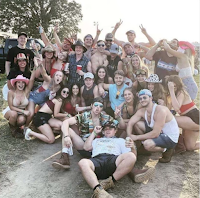
This is a typical summer day for my friend group. This picture was taken at Country Thunder, an annual music and camping festival in Twin Lakes, Wisconsin. This behavior is, at minimum, a weekly occurrence.

I was never embarrassed by my upbringing until I began to share it with others who were not raised in my Illinois hometown. My home county borders Walworth County, Wisconsin (population density of 191.7 per square mile), and I spent a lot of time in Wisconsin growing up. My house, much like my friends’ homes, was filled with clutter, empty bottles, and cigarette butts. All too often, dinner was meager leftovers disguised as a salad or stew; other times it was eaten with my mom in a bar. Either way, my mom and I washed the meal down with a bottle of room-temperature Coors Light and a breath of fresh smoke from the cigarette burning in my mother’s hand.

For a long time, my relationship with my mother consisted of nothing more than sharing a beer in my room while I did homework and listened to her complain about work. “Smoking kills,” I’d say as the air became hazy. “Work will kill me first,” she’d reply, “or hunger will get us both if I quit my job.”

Before I continue, I’d like to state that I adore my mother and greatly appreciate the sacrifices she has made for me. As a working, single parent who has lived a traumatic life, she was doing the best she could. I wouldn’t be where I am today, or probably even alive, without my mother and her selfless parenting.

Now that I am in a California law school, studying rural livelihoods, I realize my classmates’ judgment of my past is fitting. Although alcoholism is in no way exclusive to rural areas, I have learned that rural residents are much more likely to struggle with it, particularly those in the Midwest.

Recently, I stumbled upon this map, compiled by Ph.D student Nicholas Pierson at the University of Chicago from data gathered by County Health Rankings by the University of Wisconsin:


At first glance, I laughed and was proud that Wisconsin dominated the map. (For those not familiar with Wisconsin, the tiny white area in the middle-right is a lake, not a county).

Then, I began to ponder how Wisconsin got so drunk.

Numerous studies have shown that children mirror habits from their parents, as observational learning is one of the fundamental ways developing minds develop their behavior. This led me to wonder, does the time-old adage about “monkey see, monkey do” perpetuate alcoholism in Wisconsin?

From a young age, Wisconsinites are surrounded by drinking. Children often take trips to see the Clydesdale horses at the headquarters of the Miller Brewing Company in Milwaukee or cheer on their MLB team, the Milwaukee Brewers

This pride surrounding beer (and drinking it) is evident in the legislation, too. In Wisconsin, underage persons are legally allowed to be served alcoholic beverages in public, so long as they are accompanied by a parent, legal guardian, or spouse of legal drinking age. Further, many bars interpret this loosely. At age 12, I sat with my mom and legally drink in bars. As I got older, my friends and I would go with people of age and claim they were our guardians or spouses, which allowed us to be served just as easily. When doing so, we knew to stay out of urban centers like Milwaukee, where the laws tended to be more strictly enforced. We opted instead for small, corner bars in less populous areas that rarely check IDs at all.

However, allowing those under 21 to legally drink in public is not the only legislative loophole that allows minors to partake in addictive habits. Wisconsin law allows adults to escape liability for facilitating underage drinking. Their code specifies the elements of “knowingly permitting or failing to take action,” yet this only applies to adults physically occupying the property when underage drinking occurs. For lodging establishments, liability can be avoided if the establishment does not have hired security and if minors pay for the rented space themselves. (Although not strictly related to alcohol, Wisconsin also allows the sale of tobacco products to those 18 and over, even though federal law mandates an age of 21 to purchase.) 

As children grow to become adults, access to alcohol increases substantially. Wisconsin law allows adults to begin buying alcohol as early as 6 am. Tax on alcohol is also low in Wisconsin. Instead of using a percentage of cost sold, Wisconsin taxes alcohol by volume, at the following rates: all beer and cider is taxed at around 6.5 cents per gallon; wine is taxed at 25 cents per gallon; and liquor is taxed at $3.25 per gallon. These are among the lowest rates of taxation for alcohol in the nation. For comparison, consider that Washington state taxes beer at 26 cents per gallon, wine at 87 cents per gallon, and liquor at $35.22 per gallon. 

Wisconsin even provides a legislative loophole for the enforcement of drunk driving. Legislation classifies driving with a BAC over 0.08 as Operating While Intoxicated (OWI) instead of Driving Under the Influence (DUI). The difference between the two is in the enforcement because officers are not required to cite or arrest an adult for an OWI, even though the driver may be legally drunk. The consequences of an OWI are also far less harsh than that of a DUI because jail time is not imposed on first-time offenders unless the drunk driving results in injury, death, or endangerment of a minor (which occurs if a minor is in the vehicle when stopped by an officer). Furthermore, second-time offenders do not have much threat of jail time if their first offense happened ten or more years ago. Since OWI laws are much more lax than other states, many Wisconsin drinkers have the mindset that there is no penalty for drunk driving as long as they’ve never been caught before. 

Alcohol use is also greatly accepted in Wisconsin. Although there is no definitive reason as to why drinking is a cultural norm, everybody there agrees that it is. In fact, many Wisconsinites are proud to be known as drinkers, brag about their high-tolerances, wear state-specific drinking merchandise, and are even globally recognized for their spirit for the spirits.


This all seems like a lot of good (yet, irresponsible) fun until you consider this through the rural lens. After looking at the “% Excessive Drinking per County Map” above, I began to wonder why the upper Midwest, namely Wisconsin, Minnesota, Iowa, Illinois, the Dakotas, and Michigan, drink so excessively. A pattern emerged when comparing the map above to the “Classification of Counties” map by the Daily Yonder, which depicts which counties are rural, exurban, and urban:


Many of the Wisconsin counties with the highest percentage of excessive drinking are rural counties. I gave my best attempt at Photoshop to overlay the two, with the darkest green being rural areas with the highest percentages of excessive drinking:


The phenomenon of higher alcoholism rates in rural areas has been studied in length, and rural Wisconsin is no outlier to researchers’ findings. Statistics show that rural Wisconsinites have higher rates of excessive drinking than their urban neighbors. This study cites two main reasons for drinking alcohol: in social scenarios or to cope with mental health issues.
 
These two factors are certainly reflective of what I’ve seen in rural Wisconsinites. I’ll discuss social scenarios later, as I feel the tie between mental health issues and drinking is stronger in rural Wisconsin. One reason for this is the harsh winter climates. Although all of Wisconsin is subject to cold and gloomy weather, rural areas tend to suffer more from the elements. This is due to a lack of concentrations of buildings, pavement, and other surfaces that absorb and retain heat, and a lack of resources to assist those needing refuge from the cold. Additionally, many rural counties in Wisconsin do not receive the warming effect of Lake Michigan in the winter. 
 
Over 3 million people in the U.S. were diagnosed with seasonal depressive disorder (SAD), but many more experience some version of the “winter blues,” although not as severely. SAD and the “winter blues” typically occur during the colder months of the year when the skies are also drearier. Wisconsin experiences these colder months from October to April, making Wisconsinites susceptible to seasonal sadness six months out of the year. This is in addition to the higher depression rates rural citizens already face compared to their urban counterparts. (This 2014 post expands on the mental health crisis facing rural America). More than 2 million Wisconsin residents (almost half of the population) reported living in a community without access to mental health care. This data point does not include those who did not receive the poll and those who did not report, and it does not distinguish between rural and urban respondents.
           
Additionally, treatment for alcohol dependence and addiction is harder to find in rural Wisconsin. Although many areas have access to Alcoholics Anonymous programs, a large number of towns have no meetings within a 30-minute drive. Community substance abuse programs exist in every county, but they are often overcrowded, underfunded, and not available in all rural communities
 
Moving on to the social aspect, it is common for rural Wisconsinites to entertain themselves and rely on get-togethers as the only “fun” thing to do. (These get-togethers largely resemble the many basement scenes in That 70’s Show, which is based on the life of teenagers in rural Wisconsin). As established above, you can find alcohol anywhere in America’s Dairyland. However, urban areas have more alcohol-free activities to keep people entertained. Some rural Wisconsin counties rely on tourism, but the without the population to keep alcohol-free activities open year-round, the off-season only increases alcohol access. For example, Door County (Population 30,369), known as “the Cape Cod of the Midwest,” is a top summer destination for camping, fishing, lake life, and family fun. Yet when summer tourism has reached its end, many of the tourist attractions close. The only things that survive being open during the winter months are the alcohol establishments. For perspective, Door County has one liquor outlet for every nine residents
 
The combination of cultural, legislative, and societal factors, alongside high rates of mental health issues and low access to resources paves the way for generational alcoholism. Children—myself included—start drinking at a young age. This behavior is normalized, accepted, and in some cases legalized in Wisconsin. A quick Google search will pull up article after article on Wisconsin’s drinking culture and almost anyone from there will second it with first-hand accounts. As these children grow up, their drinking habits often become more alarming. Alcohol becomes easier to access and afford, punishments for drinking decline, and reasons to drink increase. Urban centers get to experience different lifestyles and have a better chance of changing their drinking habits. However, those in rural areas may see this drinking culture as normal behavior, because they haven’t experienced any other way of living.
 
As bizarre as it sounds, I am so grateful for the COVID-19 lockdowns because prior to that, I was an alcoholic. I started drinking when I was nine, my mom giving me a shot to calm me down or cure a sick throat. By the time I was 13, I had replaced Mountain Dew with beer. When I went to college, I could outdrink anybody, and I was proud of it. When the lockdown happened, I couldn’t go to bars, the stores were sold out of liquor, and I didn’t have anyone to drink with. I was an essential worker at the time, so I picked up extra shifts and filled my time with four jobs instead of filling my void with alcohol.
 
I will always be grateful for this time because it allowed me to break the cycle, culture, and tradition of alcoholism that was passed on to me. I can’t say the same for my friends and family, but their bootstrap mentality is a post for another time.