Showing posts with label mental health. Show all posts

Wednesday, April 15, 2026

Access to healthcare supports climate resilience everywhere, but especially in rural America

Salinas River near Greenfield, CA
© Jillian Gronnerud (2018)
Human health and environmental health are undeniably interdependent. Clean air and water, limited exposure to pollutants, a preserved natural environment, and adequate protection from occupational health and safety hazards are a few of the ways that robust environmental protection can support human health. As the effects of climate change become more visible and more severe, so too do the effects on human health and well-being. 

The World Health Organization's overview on environmental health tells us that climate change is profoundly affecting human health: natural disasters, infectious diseases, heat-related illnesses and death, effects on food production, migration, and economic instability are among the direct and indirect impacts. According to the WHO, more than 13 million people worldwide die each year due to modifiable environmental conditions. 

Zooming in on food production, climate change is already having major impacts on agricultural operations around the world. In the United States, impacts manifest directly as higher average air temperatures, changing precipitation patterns, and rising concentrations of atmospheric carbon dioxide. Indirectly, productivity is harmed by changes in disease occurrence and insect and weed populations. According to one USDA report, "research has documented cases where elevated atmospheric levels favor the growth of weeds over the growth of the crop species with which they compete." 

Taking a more nuanced look at climate change effects on the economics of US agriculture, the same USDA report notes that agricultural production is chronically vulnerable to environmental stressors (dry spells, insect damage, disease outbreak), making the added unpredictability of climate impacts unwelcome. In some cases, climate change effects render agricultural operations economically non-viable. 

In a March 2026 piece for Inside Climate News, Jordan Gass-Pooré interviewed a family farmer from upstate New York who stopped growing vegetables because "they were afraid extreme weather events would ruin their crops." Reflecting on the decision, Samantha Kemnah told ICN: "'We really enjoyed growing vegetables [. . .] [b]ut we couldn’t continue to commit to people, to raise food, and then have a hailstorm wipe it all out.'"

Photo Credit: US Department of Agriculture (2016)
A lack of formal, institutional support for farmers like Kemnah complicates the picture further. Diversified farms and smaller family farms face a lack of governmental support, in part because subsidies remain geared toward commodity crops and often come with a minimum base acre requirement. The result? Small family farms are hemmed in by stiff financial conditions and unable to access capital needed to run their business. Recent USDA research reveals that "[m]any farmers face steep hurdles to diversify their crop rotations. More diverse rotations may make management more complex and may require new equipment. Farmers may also need to learn how to grow new crops."

When farms like the Kemnah's are forced away from diversified crops and toward subsidized commodities, they are also driven away from crop rotation and other environmentally beneficial practices that could serve as part of the farm's climate change mitigation strategy

Cows in field near Duncan Mills, CA
© Lisa Pruitt (2025)
With a clearer picture of the impacts of climate change on US agriculture in mind, the remainder of this post will focus on one key aspect of the nexus between the environmental and human health. The basic argument goes – and research supports – that access to high quality healthcare might be one of the best preventative measures we can implement to promote climate resilience for American farmers, farmworkers, and the lands they live and work on. 

The recent Inside Climate News article by Gass-Pooré paints a picture of the current relationship between healthcare and those with agricultural livelihoods:
In the U.S., nearly half of rural residents, including farmers, are uninsured or insured by government-funded programs such as Medicaid or Medicare. Nearly one in four people under the age of 65 [...] have Medicaid coverage [...] Now, even this system is in peril as millions of Americans are expected to lose coverage as a result of pending changes and cutbacks to Medicaid [...] As a result, some farmers risk losing their lifeline and becoming uninsured. It would leave them even less prepared to do farm work and to tackle the oncoming impact of climate change. 
These dynamics suggest that healthcare access is not merely a social service for farmers, but a critical component of resilience, both at the individual and systemic level. Rates of work-related death for farmers are seven times the national average. Working in the elements, with heavy equipment, and near chemicals mean that farmers face increased rates of occupational risks, injury, and chronic illness. Demanding work, economic instability, and isolation manifests in the form of mental health challenges at rates far higher than the general population (a 2021 CDC report shows a male suicide rate of 52.1 per 100,000 among farmers and ranchers, compared to 32.0 per 100,000 among male working-aged adults across all occupations).

Despite this risk profile, farmers routinely encounter barriers to care, including provider shortages, cost, and the associated prospect of medical debt.  In a 2022 study by Florence Becot & Shoshanah Imwood, researchers reported that 20.3% of American farm households had medical debt exceeding $1,000, and that 55 percent of these households were not confident they could cover the costs of a major illness or injury.

The concurrent loss of Affordable Care Act subsidies and challenging economic conditions means that health insurance will become outright unaffordable for many farmers. The decision then becomes whether to continue working and forgo coverage – a risky proposition in such a dangerous occupation – or to leave the industry altogether in search of a job that will provide health insurance.

By contrast, Gass-Pooré's article documents describes not-for-profit health plans in Germany, which are not tied to employment and strictly limit how much patients must pay out of pocket. These plans enable farmers to work full-time and "take advantage of reliable government support" as they implement farming practices meant to improve soil health and provide other climate mitigation benefits.

The situation in America is something else entirely. Gass-Pooré summarizes the current state of affairs: 
Climate change makes it harder to maintain a productive farm, health care cuts threaten farmers’ ability to work the land and cuts to the programs that could help with both mean their lives are more uncertain than ever. 
The connections between environmental health, agricultural viability, and human well-being are increasingly difficult to ignore. Climate change places growing strain on farmers and farmworkers, while structural barriers, from limited healthcare access to outdated and failing subsidy systems, compound their vulnerability. 

As this post has explored, improving healthcare access offers a tangible pathway to support both individual resilience and broader environmental outcomes. By treating healthcare as part of the infrastructure that sustains agriculture, policymakers can better equip rural communities to withstand climate pressures while preserving the systems that feed and sustain us all. 

Sunday, February 1, 2026

If you build it, they will come: Rural relocation incentive programs prove popular

In an effort to combat rural depopulation, small communities across the United States are thinking of inventive ways to encourage relocation. Programs have popped up across the country offering financial incentives to new residents, ranging from down payment assistance to cash stipends. These packages can include anything from free internet service and recreation passes to lunch with the mayor. 

An earlier post on this blog discussed how rural communities are attracting California’s remote workers to Indiana incentive programs. This post discusses two programs that have emerged through state  initiatives in the last few years since that post that are seeking to draw folks from all backgrounds to find their new rural homes. Both programs offer bigger financial incentives than previous programs, and they specifically reward homeownership. 

An infrastructure project in Hickman, NE, an hour northwest of Pawnee City.

One program in Pawnee City, Nebraska, a town of about 900 residents, 90 minutes southeast of Lincoln, attracted considerable media attention last year. As part of their Vision 2030 plan, the city is offering $50,000 in down payment assistance to new home buyers. One video on the program from business news service Morning Brew garnered over one million views.  The money for this program has come from a grant from the Nebraska Affordable Housing Trust,

Over the next five years, the city plans to build 25 houses, multiple apartment buildings, and new community amenities. These projects are set for infill lots already owned by the city, which has helped to reduce costs.  The first two houses will be sold for $325,000, significantly higher than the average home price of $116,768 in Pawnee City. 

But the buzz has proved to be more than just media hype. The Chamber of Commerce reported receiving 115 applications for the two homes in the first two weeks. To qualify, applicants must make no more than 120% of the Area Median Income (AMI), $108,375 for a family of four.

Aaron Sawyer, Pawnee City's Economic Development Director, explained to Morning Brew what kind of applicants they are looking for:

The ideal people for these homes that we're building here in Pawnee City would be people that work from home. They can get a lot more bang for their buck to come to a small town like this, in a safe environment, and their same job, and just have a much better lifestyle.

Pawnee City isn't the only place trying to attract the growing number of remote workers to rural areas. Ascend WV is one of the largest relocation programs, covering several rural communities across West Virginia. A partnership between Brad D. Smith, former CEO of Intuit, Governor Patrick Morrissey, the West Virginia Department of Tourism, and the University of West Virginia, this program provides incentives for remote workers to move to the Mountain State for at least two years. 

Maverick's Bar, located in Morgantown, WV, an Ascend WV community.

Ascend WV is offering $12,000 cash payments for relocation, paid out in monthly installments over two years. If participants choose to buy a home at any point in their two years, the remaining money can be paid out as a lump sum for a downpayment or other home-buying expenses. The program also offers free outdoor recreation and gear rentals, access to coworking spaces, professional development through West Virginia University, and exclusive social events.

The program seeks to grow West Virginia's economy while helping remote workers find a community to call home and get involved in. West Virginia recorded the ninth-worst job growth of any state coming out of the pandemic, and post-COVID corporate investment has been concentrated in wealthier-than-average counties. This program could drive spending and tax revenue to more remote locations, like New River Gorge. The community there still faces long-standing infrastructure concerns, like sufficient housing for residents, even after the recent designation of New River Gorge as a National Park. 

Ascend WV complements First Ascent, a program to support recent graduates of West Virginia University and avoid brain-drain.WVU Today reported that as of September 5, 2025, 

[B]oth programs have drawn nearly 65,000 applicants, relocated upwards of 950 new residents, and kept 60 graduates in West Virginia, boasting above a 96% retention rate. Notably, 38% of participants also are West Virginia homeowners.

It remains too early to tell if these relocation programs are enough to meaningfully combat rural depopulation over the long term. However, these programs have proven incredibly popular and created significant online chatter. Attracting remote workers could pay off considerably, as they are able to increase the tax base and drive up consumer spending, without taking much-needed jobs away from residents. 

The gain isn't solely with the rural community, however. Young people with remote jobs report feeling less happy and engaged in their communities. These programs, especially those that offer social engagement and recreation opportunities, can help people find their place in the world. As twin crises of affordability and loneliness impact young Americans, programs like these may offer a chance for rural areas to revitalize community, reverse demographic trends, and shore up tax revenue. 

Monday, December 29, 2025

Rural health "slush fund" distributions announced

Fall River Mills, California
(c) Lisa R. Pruitt 2018
The Centers for Medicare and Medicaid Services announced this week the establishment of the Rural Health Transformation Program in relation to Trump's "One Big Beautiful Bill" passed in July--and the so called "rural slush fund" that was a last-minute addition to that law.  An earlier post about that late addition to the law is here, also noting that it was added in part to secure the vote of U.S. Senator Lisa Muskowski's (Alaska) support for the law.  

The Rural Health Transformation Program website touts it as 
empower[ing] states to strengthen rural communities across America by improving healthcare access, quality, and outcomes by transforming the healthcare delivery ecosystem. Through innovative system-wide change, the RHT Program invests in the rural healthcare delivery ecosystem for future generations.

Its stated goals are: 

  • make rural America healthy again
  • sustainable access
  • workforce development
  • innovative care
  • tech innovation
At the end of this post, I cut and pasted from this website more information about the structure and requirements.  For now, however, I want to focus on details of the distribution.  First, all states got a share of the distribution,  and the states that fared best were Texas, Alaska, California, Oklahoma and Montana.  That said, the award amounts to the states did not vary dramatically.  The average amount awarded to each state was $200 million, with the range from $147 million (New Jersey) to $281 million (Texas).  Here's an excerpt from the CMS announcement of the awards, which went to all 50 states.  
This unprecedented federal investment will help states expand access to care in rural communities, strengthen the rural health workforce, modernize rural facilities and technology, and support innovative models that bring high-quality, dependable care closer to home.

It includes this long quote from Health and Human Services Secretary Robert F. Kennedy, Jr.:  

More than 60 million Americans living in rural areas have the right to equal access to quality care.  This historic investment puts local hospitals, clinics, and health workers in control of their communities’ healthcare. Thanks to President Trump’s leadership, rural Americans will now have affordable healthcare close to home, free from bureaucratic obstacles.

It also features this direct quote from Dr. Mehmet Oz, the CMS administrator:  

Today marks an extraordinary milestone for rural health in America. Thanks to Congress establishing this investment and President Trump for his leadership, states are stepping forward with bold, creative plans to expand rural access, strengthen their workforces, modernize care, and support the communities that keep our nation running. CMS is proud to partner with every state to turn their ideas into lasting improvements for rural families.

Roll call covered the matter, with a focus on Texas.  Some key excerpts follow: 

Twenty percent of [a state's] score [on the application for the competitive part] was determined by a state’s policy actions, including vows to pursue waivers to ban SNAP users from buying certain items like soda and candy, reinstating the presidential fitness test for schoolchildren and requiring that medical schools teach students about nutrition, among other things. States could lose money in future years through a “rescoring” process if they don’t follow through on those initiatives, Oz said.

The remaining 30 percent is based on the strength of the ideas that states proposed in their applications.

Projects highlighted by CMS on Monday include ones that aim to expand access to preventative, primary, maternal and behavioral health care. States also are pursuing “food as medicine” initiatives, models to address chronic disease prevention and programs to shore up their health care workforce.

Critics had argued the amount of funding available is nowhere near large enough to offset reductions in federal Medicaid spending made by the reconciliation law, which amounts to $911 billion over 10 years. Sen. Susan Collins, R-Maine, who voted against the bill, had pushed for at least $100 billion in rural health funding.

The $50 billion would offset only about 37 percent of the estimated loss of federal Medicaid funding in rural areas, according to KFF, a health policy research organization.

But Dr. Mehmet Ozi is quoted as saying the funding is not intended to offset the reductions:  

The purpose of this $50 billion investment in rural health care is not to pay off bills.  The purpose of this $50 billion investment is to allow us to right-size the system and to deal with the fundamental hindrances of improvement in rural health care.

This excerpt from PBS Newshour coverage hits more squarely at the politics of the matter and what the Trump administration's CMS is trying to accomplish with these awards in relation to its wider "Make America Healthy Again" agenda: 

Several Republican-led states — including Arkansas, Iowa, Louisiana, Nebraska, Oklahoma and Texas — have already adopted rules banning the purchase of foods like candy and soda with SNAP benefits.

The money that the states get will be recalculated annually, Oz said, allowing the administration to "claw back" funds if, for example, state leaders don't pass promised policies. Oz said the clawbacks are not punishments, but leverage governors can use to push policies by pointing to the potential loss of millions.

"I've already heard governors express that sentiment that this is not a threat, that this is actually an empowering element of the One Big Beautiful Bill," he said.

Carrie Cochran-McClain, chief policy officer with the National Rural Health Association, said she's heard from a number of Democratic-led states that refused to include such restrictions on SNAP benefits even though it could hurt their chance to get more money from the fund.

"It's not where their state leadership is," she said.
Next, I quote from the analysis of a rural health care consultant working out of Texas, which came across my LinkedIn feed: 
Just reviewed the state allocations from CMS’s landmark $50B Rural Health Transformation Program, and the per‑rural‑person math is fascinating. I'm a CPA and I love excel...so you know I had to create my end of year fun facts related to the CMS awards for RHTP.

If you missed the announcement, here is a link to the full article

For context, the average award across all states is $1,957 per rural person.
Texas received $329 per rural person — a solid, meaningful investment in our rural communities. 

N.B.   It is not clear how this consultant is defining "rural" for purposes of these calculations.  

To put that in perspective:
Rhode Island: $31,525 per rural person
Just above Texas: Ohio ($345), NC ($360), PA ($390), MI ($413)
Next tier below RI: NJ ($5,343), AK ($4,949), MA ($3,332), DE ($3,231)

Texas’s total award is $1.4 billion over five years — the largest in the country. While we weren’t guaranteed the top spot, the hard work by the Texas team at HHSC on the application positioned us to lead in rural innovation.

I was personally hoping for closer to $2.1B, but we’ll take this $1.4B and put it to work transforming the rural health landscape across Texas. Huge congratulations to the HHSC team and all our partners who made this possible.

Here’s to an innovative, data‑driven 2026 and beyond for rural Texas! 🌟
Finally, I'm pasting here the details on the program (as promised above), which is essentially the call for applications: 

Program Structure

RHT Program funding is $50 billion to be allocated to approved States over five fiscal years, with $10 billion of funding available each fiscal year, beginning in fiscal year 2026 and ending in fiscal year 2030.
  • 50% to be distributed equally amongst all approved States
  • 50% will be allocated by CMS based on a variety of factors including rural population, the proportion of rural health facilities in the State, the situation of certain hospitals in the State, and other factors to be specified by CMS in the NOFO
Uses of Funds

States must use RHT Program funds for three or more of the approved uses of funds:Promoting evidence-based, measurable interventions to improve prevention and chronic disease management.
  • Providing payments to health care providers for the provision of health care items or services, as specified by the Administrator.
  • Promoting consumer-facing, technology-driven solutions for the prevention and management of chronic diseases.
  • Providing training and technical assistance for the development and adoption of technology-enabled solutions that improve care delivery in rural hospitals, including remote monitoring, robotics, artificial intelligence, and other advanced technologies.
  • Recruiting and retaining clinical workforce talent to rural areas, with commitments to serve rural communities for a minimum of 5 years.
  • Providing technical assistance, software, and hardware for significant information technology advances designed to improve efficiency, enhance cybersecurity capability development, and improve patient health outcomes.
  • Assisting rural communities to right size their health care delivery systems by identifying needed preventative, ambulatory, pre-hospital, emergency, acute inpatient care, outpatient care, and post-acute care service lines.
  • Supporting access to opioid use disorder treatment services (as defined in section 1861(jjj)(1)), other substance use disorder treatment services, and mental health services.
  • Developing projects that support innovative models of care that include value-based care arrangements and alternative payment models, as appropriate.
  • Additional uses designed to promote sustainable access to high quality rural health care services, as determined by the Administrator.
This KFF Health News site tracked the states' applications for these funds.  

Saturday, June 28, 2025

Op-ed by Alaska legislators decries likely effect of "Big Beautiful Bill, "especially in rural areas

Bryce Edgmon and Cathy Giessel of the Alaska legislature have published an op-ed in today's New York Times, "Our State Cannot Survive this Bill:"  One of the legislators is a Republican and the other an Independent, and they focus on their bipartisanship.  In some ways, this piece echoes analysis we are seeing about how many "red states" will suffer particularly under Trump's "big beautiful bill," but it also features some Alaska specifics.

Here's the lede: 

Across the country, state lawmakers like us are bracing as the federal government considers a bill that will throw state budgets into chaos and add red tape that our social service agencies do not have the capacity to administer. If the budget reconciliation bill passes Congress in anything like its current form, we will be left to deal with the fallout.

The likely impacts from the “big, beautiful bill” are particularly ugly for our home state, Alaska: Nearly 40,000 Alaskans could lose health care coverage, thousands of families will go hungry through loss of benefits from the Supplemental Nutrition Assistance Program, or SNAP, and the shift in costs from the federal government to the state will plunge our budget into a severe deficit, cripple our state economy and make it harder to provide basic services.
And in these paragraphs, the writers get around to the rural angle: 
The benefits of Medicaid and the SNAP program permeate the entire fabric of the Alaska economy, with one in three Alaskans receiving Medicaid, including more than half of the children. In remote Arctic communities, Medicaid dollars make medical travel possible for residents from the hundreds of roadless villages to the communities where they are able to receive proper medical treatments.
We fear that if this bill passes, a village in rural Alaska might lose its one and only grocery store because of a drastic decline in SNAP dollars. It might also lose its sole health care clinic or hospital because it cannot sustain its services with decreased Medicaid reimbursements. The reconciliation bill does not take into account the uniqueness of Alaskan lifestyles and geographic remoteness.

The legislators explain that the federal cuts will cause costs for many services to be shifted to the state budget, which will cause great strain.  It also takes up the fact that work requirements for public benefits are an ill fit for rural Americans.

Alaska cannot afford to lose health care funding. Our state is near the top of the list for the highest rates of suicide, tuberculosis and sexually transmitted infections in the nation. It is also severely lacking in adequate behavioral health services. The cuts will only make these problems worse.

Work requirements instituted in Medicaid are untenable for rural Alaska, with many communities facing limited broadband access and job opportunities.

Here's a piece in The Atlantic, by Russell Berman, suggesting that Kentucky Republicans are not afraid to stand up to Trump

Wednesday, February 19, 2025

Anti-trans policies hit hard in rural America

In his second inaugural address, President Trump declared “As of today, it will henceforth be the official policy of the United States government that there are only two genders: male and female.”

Transgender individuals account for roughly 1.6 million people in the United States, accounting for only roughly .48% of the US population. Roughly one in six transgender individuals live in a rural area.

Over the past decade, anti-trans rhetoric and policies have become a focal point in the culture war for the Republican Party and the far right. The ACLU is currently tracking 388 laws that target LGBTQ+ individuals, many of which specifically target transgender individuals and their civil rights (from gender-affirming care, bathroom access, ability to participate in sports, curriculum content, drag show bans, redefining sex, and more)
(for a prior blog post about anti-LGBTQ+ legislation, see here). 26 states currently ban gender-affirming care for minors in some capacity (16 of which are being challenged in court; 10 states have bans that are currently enforced). These laws all explicitly target trans individuals, with all 26 states having exceptions for puberty blockers, hormone treatment, and gender affirming surgery if the patients are cisgender. In addition to laws targeting transgender minor's access to gender-affirming care, seven states currently have laws that aim to restrict access to gender-affirming care for transgender adults by targeting insurance policies. 

Anti-trans rhetoric and laws have clear implications for the safety of the trans community. On January 27th, 2025, President Trump signed an executive order banning transgender individuals from serving in the military, echoing an order he signed in his first term. The order is estimated to affect around 15,000 military personnel, which is sure to affect not only their livelihoods (if they are discharged from the service), but also has the strong possibility of forcing transgender service members back into the closet in order to keep their position and station. The order also included language that directly insinuated that transgender individuals were not mentally healthy, were physically unable to serve, and were unable to have "the humility and selflessness required of a service member." 

The Human Rights Campaign has tracked the deaths of 265 individuals from 2018 to 2024 whose deaths were caused by "anti-trans motivations." In 2024, 32% of these victims were misgendered or misnamed in the press after being murdered. 

Anti-trans laws, in addition to restricting access to care, have a significant impact on the mental health of trans youth. According to the Trevor Project:
From 2018 to 2022, 48 anti-transgender laws were enacted in the U.S. across 19 different state governments. The study examined the causal relationship between these laws and suicide risk over this five-year time period, using national survey data collected from more than 61,000 transgender and nonbinary youth. Results concluded that, during this time period, anti-transgender laws significantly increased incidents of past-year suicide attempts among transgender and nonbinary youth by as much as 72%.
While anti-trans rhetoric and policies have a clear negative impact on the trans community, its effects hit especially hard in rural areas. Being transgender in a rural community means your access to much needed support is likely lower than compared to your urban counterparts. One study found that 47% of rural transgender individuals do not feel emotionally supported by their families; and that "only 16.3% of rural transgender adults said they felt supported by their families, compared to 30.4% of urban transgender adults." Further exacerbating this lack of emotional support is that for trans individuals in rural communities, is that they are likely to be the only member of the community who is not cisgender.

It is known that general support (from family, or others in your social sphere) and health access are incredibly helpful in reducing the risk of suicide ideation for trans individuals. In rural areas however, trans individuals are less likely to have access to the technology needed for virtual support, less likely to find a supportive in-person community, and less likely to have access to medical care within their community (for prior blog post about LGBTQ+ issues in rural medical care, see here).

When it comes to accessing medical care, trans individuals are likely to face even more obstacles than those already faced in rural communities. Roughly one in three rural transgender individuals experience some form of discrimination by their healthcare provider. A third of rural transgender patients further report needing to inform their provider about their specific health care needs in order to receive adequate treatment (for prior blog posts about attempts in Colorado to educate rural healthcare providers on transgender care, see here). 

This lack of access and acceptance from medical providers carries a heavy toll. According to the 2018 Colorado Transgender Health Survey, having access to inclusive care resulted in being less likely to delay care due to discrimination, being less likely to have depression, and lower rates of attempted suicide. 

It is increasingly normal to see and hear anti-trans rhetoric, and increasingly common to see the introduction of anti-trans legislation. These anti-trans actions have very real, very painful, and very lethal effects on our fellow Americans. We must actively work towards supporting the trans community, especially those who live in rural areas. 

Monday, September 2, 2024

Still more on the rural vote as Tammy Baldwin courts dairy farmers, from WSJ

Katy Stech Ferek reports in today's Wall Street Journal under the headline, "Democrat Woos Dairy Farmers to Keep Crucial Senate Seat."  The subhead is "Sen. Tammy Baldwin of Wisconsin hits country roads and agricultural fairs, seeking to win over rural Trump supporters once more."  Here is the lede: 
CHIPPEWA FALLS, Wis.—Sen. Tammy Baldwin had an unusual talent during her last election: convincing rural supporters of Republican Donald Trump that they should vote for her, too.

This November, Senate Democrats need Baldwin to do it again.

Wisconsin is a prime battleground to determine the next president, but Democrats also need a win in the Badger State to keep control of the Senate. Baldwin’s campaign for a third term against the wealthy banker Eric Hovde, who says the Democrat is an out-of-touch career politician, has sent her down country roads in sparsely populated counties that cut through farmland and curve around lakes.

“I might not have met every farmer, but I think I found over time that word gets out,” said Baldwin, 62 years old, after a long day of campaigning outside Leinenkugel’s brewery in Chippewa Falls. Voters might be frustrated with gridlock, she said, “But to know somebody’s out there fighting for them, it’s a big deal.”

And here's a further quote: 

Supporters have said Baldwin connects to some conservative voters by focusing on economic issues, such as the cap on the out-of-pocket cost for insulin at $35 a month. On the campaign trail, she talks about leading 2018 legislation requiring federal water infrastructure projects to use American-made steel products, a requirement signed into law by Trump. She has secured mental-health resources for farmers and is trying to get federal money to test private wells for contamination into the next farm bill.

* * * 

Baldwin avoided Biden during his campaign visits to Wisconsin earlier this year. But in an indication that Democrats see Harris differently, Baldwin joined the vice president at her first presidential campaign rally, held at a high school outside Milwaukee.
This is from 60-year-old dairy farmer Randy Roecker of Loganville, population 300, in Sauk County, just west of Madison: 

[Roecker] said he usually supports conservative candidates but will vote for Baldwin, in part because of the mental-health resources she secured. He said he supports her fight to keep the label “milk” off nondairy beverages made of almonds, oats and other alternatives.

Roecker said: 

Tammy is the only Democrat that I really have trusted.  I think she cares. That’s truly what it is.… These other ones just want to get elected and hold their power.

And here's the word from Baldwin's Republican opponent, Eric Hovde, a real estate magnate who has lent his campaign $13 million and who lives part time at a home in Laguna Beach, California:  

“It’s the No. 1 issue. No question about it,” he said of inflation, adding that, if elected, he would focus on fixing the economy and stopping the flow of fentanyl into rural communities. He said his support in rural areas is evident by the lawn signs on display. But, he acknowledged, “There is a percentage of voters we have to close the gap on.”

Wednesday, June 12, 2024

How summer brings rural and urban together, and the opportunity that presents

Karen Tolkkinen, a columnist for the Minneapolis Star-Tribune, wrote a few days ago about an aspect of rural-urban difference.  Specifically, she writes about how summer, when tourists from cities flock to "greater Minnesota" (meaning everything that's not the Twin Cities, but especially rural places), provides an opportunity for bridging the rural-urban divide. 

They talk about an urban-rural divide — economic, political — and maybe patience is another. We here in rural America are accustomed to waiting for plants to grow, for livestock to mature, for the fish to bite. A place steeped in farming culture places less importance on instant gratification, on rushing and rushing, unless the corn is ready to combine and there's snow in the forecast. Waiting provides a chance to think about things, to observe the world around you, to breathe.

* * *  

Now that summer is well underway in greater Minnesota, tourists are flooding into all regions of the state. From Memorial Day to Labor Day, they will fill the restaurants and hotels, line the streets of small towns for parades and swell the audiences of community theater. The dollars they bring help pay for rent or tuition or groceries. These dollars are meaningful, and this column is not intended to diminish the importance of tourism or tourists in greater Minnesota. For every sourpuss, there are a dozen happy campers.

I just ask that kindness prevail.

Summer tourism brings urban and rural together like no other time of the year. It's a chance to get to know each other, to listen to each other's perspective, to absorb new ideas and build respect for the places we are from. It can be used to heal our divides, to realize that we're all Minnesotans and we're all in this together.

Greater Minnesota is more than spectacular waterfalls or wake surfing or tubing. Greater Minnesota is also the people who live here year-round and who are often scraping by financially or are working toward big dreams of our own or are worried about a loved one who has been depressed and has to wait a month to see a therapist.

* * *  

[N]obody is a social underling. You realize that when you live in a rural area.

Are rural folks more patient?  I don't know, but a 2022 Washington Post essay on rural reticence, which may be related, stuck with me.  

Wednesday, February 7, 2024

Extraordinary story of French farmer behind recent blockade in Southern France

Catherine Porter reported for the New York Times last week under the headline, "The Farmers' Protests Have Become a Wildfire.  He was the Spark."  The "he" is Jerome Bayle, and this story is largely about the 42-year-old former professional rugby player who has been running his family's farm since his father died by suicide in 2015, at age 61.  

The story's lede is catchy, for sure, and presents a real contrast between rural and urban: 
Jérôme Bayle had spent seven nights on a major French highway, leading a group of aggrieved farmers in protest, when the prime minister arrived, dressed in his Parisian blue suit and tie, to thank them for “making France proud” and announced he would meet their demands.

Before camera flashes and outstretched microphones, Mr. Bayle told Prime Minister Gabriel Attal that he had seen the standoff as a match between two teams — the revolting farmers, led by Mr. Bayle, and the government, led by Mr. Attal.

“I don’t like losing,” said Mr. Bayle, dressed decidedly more casually, with a baseball hat on his head, turned backward. The thick crowd around him chuckled. It was clear his team had won.

Then there is this bit, which provides a wider-angle perspective: 

More broadly, not just in France but all around Europe, farmers are complaining about rising costs from inflation and the war in Ukraine. Those burdens have been exacerbated as the governments look to save money by shaving farm subsidies, even as the European Union heaps more regulations on farmers to meet climate and other environmental goals.

You can hear Porter's further commentary on Bayle and his victory on the NYTimes audio of this story. 

Regarding the wider European angle, here's news yesterday of a Spanish farmer blockade. 

Friday, September 15, 2023

Los Angles Times' poignant feature on rural youth in California's far north state

Hailey Branson-Potts, a terrific story teller who works as a metro reporter for the Los Angeles Times, filed her second big story this season out of Modoc County, in the state's far northeast corner.  The digital headline is "There's a hidden crisis among California's rural kids. Would this teen make it?"  

"This teen" is Linda Plumlee, a recent high school graduate from Modoc who has been an emancipated minor for several years.  This fall, she's off to UC Berkeley--against all odds.  

Plumlee, it turns out, is just one of the more extraordinary stories among rural California teens facing uphill battles to stay in school, keep roofs over their heads, and eat.  Here's the part of Branson-Potts feature that provides critical context:  
About eight years ago, educators in Modoc County realized they had a serious problem.

Students kept melting down, becoming so angry or disruptive that they had to be pulled from classrooms. The county’s suspension rate was about three times higher than the state average, and students were twice as likely as those statewide to be chronically absent.

“We realized we were dealing with something bigger than behavior,” said Misti Norby, deputy superintendent of the Modoc County Office of Education. “We were like, what’s going on with our kids?”

Teachers across Modoc County assessed their students, relying on a fact of small-town life that can be both a blessing and a curse: everyone knows everyone’s business. They did an informal, anonymous tally of what are called adverse childhood experiences, or ACEs, which include abuse or neglect; a parent’s death, incarceration or divorce; and mental illness or substance abuse in the home.

About 58% of kids in Modoc County, Norby said, were believed to have four or more ACEs, putting them at significantly higher risk later in life of suicide, substance abuse, chronic health problems and unemployment.

“It was very eye opening,” Norby said. “We now function on: We know they have trauma. Somewhere. Somehow.”

Models consistently show the state’s highest rates of childhood trauma are in rural Northern California, where there is a dire shortage of both primary care and mental-health care providers.

The gun violence and poverty experienced by young people in some urban neighborhoods is well-documented in the media and popular culture. But these issues are as present, if not even more common, in rural areas. While homicide rates are lower, suicide rates are generally much higher in rural than urban counties.

Home to just 8,500 people, Modoc County is one of California’s poorest, with a fifth of the population living in poverty.

* * * 

Now, when social workers or other county officials learn that a child has experienced a major trauma, they email Norby, who then emails the child’s school district.

She provides no details about the incident. Just a name and the words: “Handle with care.”

Also, here's an interesting vignette of life for teens in rural Modoc: 

Alturas was where [Plumlee] and her friends cruised Main Street, cracking jokes and dreaming about the future. It was where teachers and school counselors spent countless hours keeping her spirits up through the emancipation process.

Most stores and restaurants close by 8 p.m. There’s the single-screen Niles movie theater on Main Street — but it only screens once a day on weekends.

Teenagers go hiking, hunting or fishing in the nearby mountains. They party and drink. Or they drive 100 miles to shop in Klamath Falls, Ore. — where the nearest Walmart is.

Their lives revolve around school: sports, band, Future Farmers of America, drama club.

Don't miss this entire feature, which appeared on the front page of the Los Angeles Times print edition on Sept. 16. 

Wednesday, April 19, 2023

The culture of alcoholism in Wisconsin and its effect on rural Wisconsinites


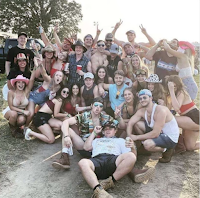
This is a typical summer day for my friend group. This picture was taken at Country Thunder, an annual music and camping festival in Twin Lakes, Wisconsin. This behavior is, at minimum, a weekly occurrence.

I was never embarrassed by my upbringing until I began to share it with others who were not raised in my Illinois hometown. My home county borders Walworth County, Wisconsin (population density of 191.7 per square mile), and I spent a lot of time in Wisconsin growing up. My house, much like my friends’ homes, was filled with clutter, empty bottles, and cigarette butts. All too often, dinner was meager leftovers disguised as a salad or stew; other times it was eaten with my mom in a bar. Either way, my mom and I washed the meal down with a bottle of room-temperature Coors Light and a breath of fresh smoke from the cigarette burning in my mother’s hand.

For a long time, my relationship with my mother consisted of nothing more than sharing a beer in my room while I did homework and listened to her complain about work. “Smoking kills,” I’d say as the air became hazy. “Work will kill me first,” she’d reply, “or hunger will get us both if I quit my job.”

Before I continue, I’d like to state that I adore my mother and greatly appreciate the sacrifices she has made for me. As a working, single parent who has lived a traumatic life, she was doing the best she could. I wouldn’t be where I am today, or probably even alive, without my mother and her selfless parenting.

Now that I am in a California law school, studying rural livelihoods, I realize my classmates’ judgment of my past is fitting. Although alcoholism is in no way exclusive to rural areas, I have learned that rural residents are much more likely to struggle with it, particularly those in the Midwest.

Recently, I stumbled upon this map, compiled by Ph.D student Nicholas Pierson at the University of Chicago from data gathered by County Health Rankings by the University of Wisconsin:


At first glance, I laughed and was proud that Wisconsin dominated the map. (For those not familiar with Wisconsin, the tiny white area in the middle-right is a lake, not a county).

Then, I began to ponder how Wisconsin got so drunk.

Numerous studies have shown that children mirror habits from their parents, as observational learning is one of the fundamental ways developing minds develop their behavior. This led me to wonder, does the time-old adage about “monkey see, monkey do” perpetuate alcoholism in Wisconsin?

From a young age, Wisconsinites are surrounded by drinking. Children often take trips to see the Clydesdale horses at the headquarters of the Miller Brewing Company in Milwaukee or cheer on their MLB team, the Milwaukee Brewers

This pride surrounding beer (and drinking it) is evident in the legislation, too. In Wisconsin, underage persons are legally allowed to be served alcoholic beverages in public, so long as they are accompanied by a parent, legal guardian, or spouse of legal drinking age. Further, many bars interpret this loosely. At age 12, I sat with my mom and legally drink in bars. As I got older, my friends and I would go with people of age and claim they were our guardians or spouses, which allowed us to be served just as easily. When doing so, we knew to stay out of urban centers like Milwaukee, where the laws tended to be more strictly enforced. We opted instead for small, corner bars in less populous areas that rarely check IDs at all.

However, allowing those under 21 to legally drink in public is not the only legislative loophole that allows minors to partake in addictive habits. Wisconsin law allows adults to escape liability for facilitating underage drinking. Their code specifies the elements of “knowingly permitting or failing to take action,” yet this only applies to adults physically occupying the property when underage drinking occurs. For lodging establishments, liability can be avoided if the establishment does not have hired security and if minors pay for the rented space themselves. (Although not strictly related to alcohol, Wisconsin also allows the sale of tobacco products to those 18 and over, even though federal law mandates an age of 21 to purchase.) 

As children grow to become adults, access to alcohol increases substantially. Wisconsin law allows adults to begin buying alcohol as early as 6 am. Tax on alcohol is also low in Wisconsin. Instead of using a percentage of cost sold, Wisconsin taxes alcohol by volume, at the following rates: all beer and cider is taxed at around 6.5 cents per gallon; wine is taxed at 25 cents per gallon; and liquor is taxed at $3.25 per gallon. These are among the lowest rates of taxation for alcohol in the nation. For comparison, consider that Washington state taxes beer at 26 cents per gallon, wine at 87 cents per gallon, and liquor at $35.22 per gallon. 

Wisconsin even provides a legislative loophole for the enforcement of drunk driving. Legislation classifies driving with a BAC over 0.08 as Operating While Intoxicated (OWI) instead of Driving Under the Influence (DUI). The difference between the two is in the enforcement because officers are not required to cite or arrest an adult for an OWI, even though the driver may be legally drunk. The consequences of an OWI are also far less harsh than that of a DUI because jail time is not imposed on first-time offenders unless the drunk driving results in injury, death, or endangerment of a minor (which occurs if a minor is in the vehicle when stopped by an officer). Furthermore, second-time offenders do not have much threat of jail time if their first offense happened ten or more years ago. Since OWI laws are much more lax than other states, many Wisconsin drinkers have the mindset that there is no penalty for drunk driving as long as they’ve never been caught before. 

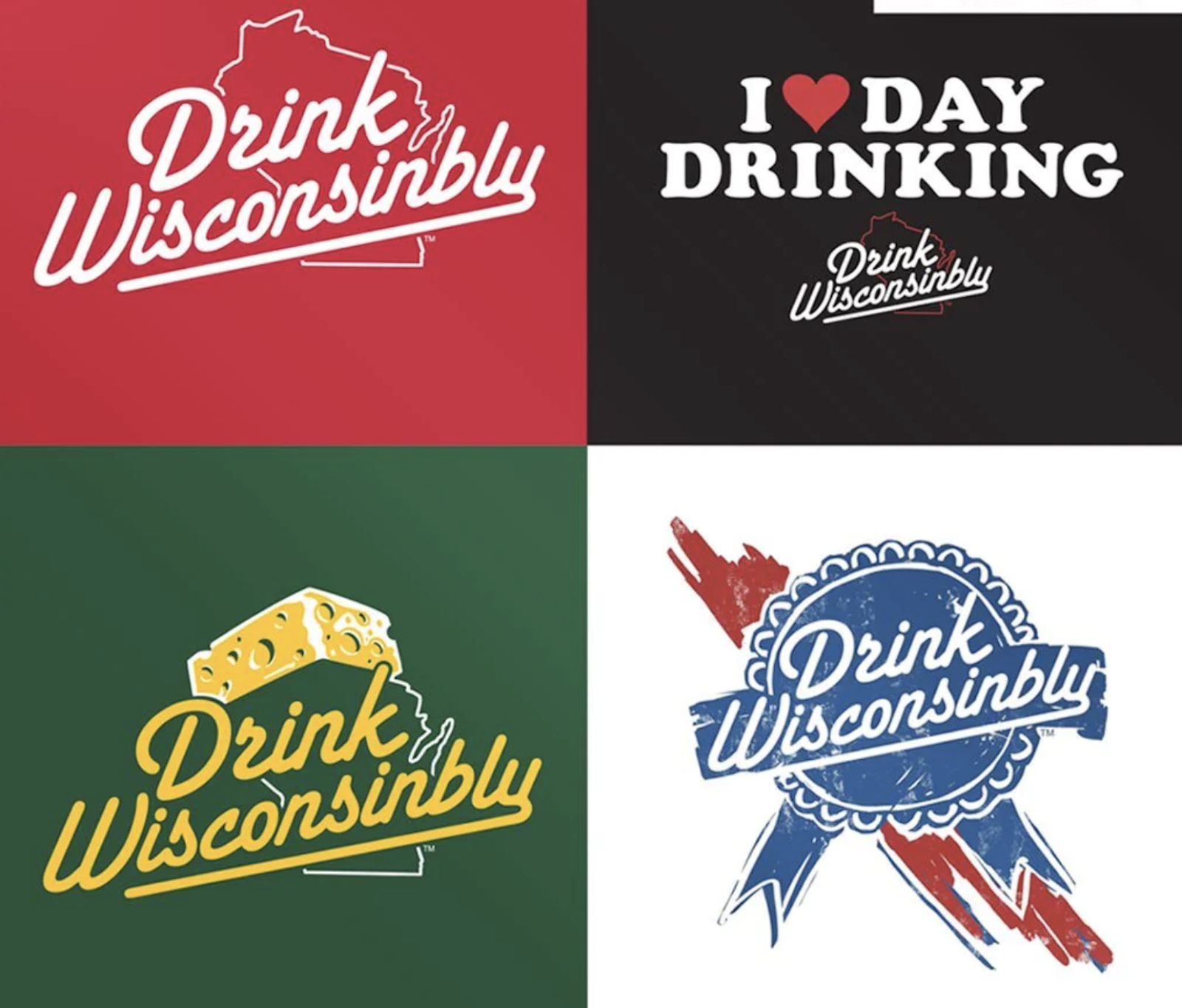
Alcohol use is also greatly accepted in Wisconsin. Although there is no definitive reason as to why drinking is a cultural norm, everybody there agrees that it is. In fact, many Wisconsinites are proud to be known as drinkers, brag about their high-tolerances, wear state-specific drinking merchandise, and are even globally recognized for their spirit for the spirits.


This all seems like a lot of good (yet, irresponsible) fun until you consider this through the rural lens. After looking at the “% Excessive Drinking per County Map” above, I began to wonder why the upper Midwest, namely Wisconsin, Minnesota, Iowa, Illinois, the Dakotas, and Michigan, drink so excessively. A pattern emerged when comparing the map above to the “Classification of Counties” map by the Daily Yonder, which depicts which counties are rural, exurban, and urban:


Many of the Wisconsin counties with the highest percentage of excessive drinking are rural counties. I gave my best attempt at Photoshop to overlay the two, with the darkest green being rural areas with the highest percentages of excessive drinking:


The phenomenon of higher alcoholism rates in rural areas has been studied in length, and rural Wisconsin is no outlier to researchers’ findings. Statistics show that rural Wisconsinites have higher rates of excessive drinking than their urban neighbors. This study cites two main reasons for drinking alcohol: in social scenarios or to cope with mental health issues.
 
These two factors are certainly reflective of what I’ve seen in rural Wisconsinites. I’ll discuss social scenarios later, as I feel the tie between mental health issues and drinking is stronger in rural Wisconsin. One reason for this is the harsh winter climates. Although all of Wisconsin is subject to cold and gloomy weather, rural areas tend to suffer more from the elements. This is due to a lack of concentrations of buildings, pavement, and other surfaces that absorb and retain heat, and a lack of resources to assist those needing refuge from the cold. Additionally, many rural counties in Wisconsin do not receive the warming effect of Lake Michigan in the winter. 
 
Over 3 million people in the U.S. were diagnosed with seasonal depressive disorder (SAD), but many more experience some version of the “winter blues,” although not as severely. SAD and the “winter blues” typically occur during the colder months of the year when the skies are also drearier. Wisconsin experiences these colder months from October to April, making Wisconsinites susceptible to seasonal sadness six months out of the year. This is in addition to the higher depression rates rural citizens already face compared to their urban counterparts. (This 2014 post expands on the mental health crisis facing rural America). More than 2 million Wisconsin residents (almost half of the population) reported living in a community without access to mental health care. This data point does not include those who did not receive the poll and those who did not report, and it does not distinguish between rural and urban respondents.
           
Additionally, treatment for alcohol dependence and addiction is harder to find in rural Wisconsin. Although many areas have access to Alcoholics Anonymous programs, a large number of towns have no meetings within a 30-minute drive. Community substance abuse programs exist in every county, but they are often overcrowded, underfunded, and not available in all rural communities
 
Moving on to the social aspect, it is common for rural Wisconsinites to entertain themselves and rely on get-togethers as the only “fun” thing to do. (These get-togethers largely resemble the many basement scenes in That 70’s Show, which is based on the life of teenagers in rural Wisconsin). As established above, you can find alcohol anywhere in America’s Dairyland. However, urban areas have more alcohol-free activities to keep people entertained. Some rural Wisconsin counties rely on tourism, but the without the population to keep alcohol-free activities open year-round, the off-season only increases alcohol access. For example, Door County (Population 30,369), known as “the Cape Cod of the Midwest,” is a top summer destination for camping, fishing, lake life, and family fun. Yet when summer tourism has reached its end, many of the tourist attractions close. The only things that survive being open during the winter months are the alcohol establishments. For perspective, Door County has one liquor outlet for every nine residents
 
The combination of cultural, legislative, and societal factors, alongside high rates of mental health issues and low access to resources paves the way for generational alcoholism. Children—myself included—start drinking at a young age. This behavior is normalized, accepted, and in some cases legalized in Wisconsin. A quick Google search will pull up article after article on Wisconsin’s drinking culture and almost anyone from there will second it with first-hand accounts. As these children grow up, their drinking habits often become more alarming. Alcohol becomes easier to access and afford, punishments for drinking decline, and reasons to drink increase. Urban centers get to experience different lifestyles and have a better chance of changing their drinking habits. However, those in rural areas may see this drinking culture as normal behavior, because they haven’t experienced any other way of living.
 
As bizarre as it sounds, I am so grateful for the COVID-19 lockdowns because prior to that, I was an alcoholic. I started drinking when I was nine, my mom giving me a shot to calm me down or cure a sick throat. By the time I was 13, I had replaced Mountain Dew with beer. When I went to college, I could outdrink anybody, and I was proud of it. When the lockdown happened, I couldn’t go to bars, the stores were sold out of liquor, and I didn’t have anyone to drink with. I was an essential worker at the time, so I picked up extra shifts and filled my time with four jobs instead of filling my void with alcohol.
 
I will always be grateful for this time because it allowed me to break the cycle, culture, and tradition of alcoholism that was passed on to me. I can’t say the same for my friends and family, but their bootstrap mentality is a post for another time.

Friday, March 17, 2023

Crisis close to home: Nevada's failing mental health services

Over the past three months I've been reflecting on my time here at UC Davis Law as a first generation student with a person history in a flurry of rural towns across Nevada and California. I wound up in law school as the result of what I tend to refer to as a line of "self-sabotaging matriarchs." From my great-grandmother to my mother and eldest sister, my family's intergenerational poverty can be chalked up in large part to the codependency of its women on men who were steeped in drug and alcohol abuse. The chaos and poverty were inflamed by my family confining itself to rural places, where the domestic violence and drug abuse were hidden behind the walls of single or double-wide mobile homes.

For me, the chaos peaked when my mom tried to force me to leave our destitute life in the "Cowboy Capital of the World," Oakdale, California to return with her to Winnemucca. She was running back to what was known: a rural town where she could indulge and conceal her addictions to substances and men. But to preserve my chance at a better life, I knew I couldn't go with her. So, after a turbulent back-and-forth, she told me simply: "you can [sic] stay here then." Those words caused us to be estranged for the past decade. 

But on the brink of graduation, I can't help myself from looking back. Through everything, there is still and will always be a part of me that loves the woman who brought me into this world and raised me as best she could. So, about two weeks ago, I called her on video chat. She was living with her boyfriend in a trailer park on the outskirts of Winnemucca. I wasn't sure which version of her I was going to get. She suffers from schizophrenia and bipolar disorder (the latter being the one I inherited), and when you add substance abuse on that, it forms different personalities that for her varied from the woman I called my mother to the woman who abandoned me. 

But this time it was neither. She could barely look at me, and I knew that meant something was awry. I tried lightening the mood by asking her positive questions: what are some great traits you gave your son? What things you are looking forward to over the next few years? It was the latter question that caused a pause and a tear. I called her again the following week and she told me she was going to check herself in to rehab. I asked what prompted the decision and she said, she couldn't say aloud because her boyfriend was in the trailer. She did say, however, "I couldn't give you an answer to where I want to be in the next few years," and when I asked her want she wanted to be, she cried and held up a note: "free."

My mom's journey to freedom could only begin by taking an Amtrak from Winnemucca to Reno - a 165-mile journey that would otherwise take two and half hours by car. And so I thought: "what mental health resources are available in remote, rural places like northern Nevada?" As it turns out, close to none. Nevada is in the bottom five states with the lowest ratio of licensed psychologists to population, just 12: 100,000. Humboldt County (the county seated in Winnemucca) doesn't have any licensed psychologists. Consequently, Nevada is in the top three U.S. territories with the highest rate of unmet needs for illicit drug use and alcohol disorders (closely behind Colorado and the District of Columbia) that often exacerbate preexisting mental disorders. 

Overall, the state only has 460 licensed psychologists. Each county in Nevada meets the federal definition of a professional mental health provider shortage. As a result, many psychologists in the state have waitlists for assessments for about two months, while the waitlists for treatment are often a year long. The largest medical provider in Humboldt County is the Humboldt General Hospital and where there is only one licensed "clinical social worker" and one psychiatric nurse practitioner. But one nurse practitioner cannot begin to meet the needs of a county with 17,600 people

Another part of the problem is the lack of public transportation. As noted above, people like my mother who live in northern rural counties that are hundreds of miles from Reno where many of the licensed physicians are located face transportation barriers. Because there are no "long range" transportation services in these parts of the state, it is harder for people in those counties to seek proper treatment for their mental health disorders -- or any other services for that matter. 

But there have been movements to address these issues. One solution relates to accessibility of housing for people who suffer from debilitating mental health disorders. A Nevada Senate Bill is trying to increase the real property transfer tax by 20 cents for every $500 of value to build affordable housing for Nevadans with mental health conditions, disabilities, and those who are lower income. The bill seeks to address the problem that one woman characterized as people having no place between "'the hospital and the streets.'" But the bill has been met with resistance by the corporate community in the state. The Nevada Realtors and Vegas Chamber testified against the bill, arguing that a new tax increase would harm first-time homeowners. On the opposite end, Reno + Sparks Chamber of Commerce, Nevada Rural Hospital Partners and other organizations dedicated to serving rural community mental health needs argue that the legislation is critical to support people in the state who already face insurmountable obstacles to getting proper care. 

These issues are only the tip of the iceberg, as insurance companies add fuel to the fire by denying benefits to people for mental health services as well as denying mental and behavioral health specialists into their networks. For people like my mother, who rely on a mix of public health benefits including Medicare and Social Security Disability, getting care for serious mental disorders is almost impossible in rural communities. As a result, millions of people living in rural areas across the country fall into hopelessness. In the wake of the COVID-19 pandemic, the problem of inadequate mental health care has received widespread attention but stakeholders have taken little action to meet the needs of people who suffer from mental and physical isolation. 

As for my mother, when I last spoke to her she hadn't been able to make the trip to Reno because the Amtrak was not running given the recent snowstorms battering northern Nevada. When I reached out to her again to see if she had made it to her intake appointment she didn't answer and hasn't since. I can only hope she made it. And for people in circumstances like mine (higher education students with no income other than financial aid) who have relatives living in rural areas trying to seek treatment for mental disorders, that's about all we can do for them: hope. 

Friday, January 27, 2023

Sexual and gender minority health care in rural America (Part I): The state of affairs

When I told my family practitioner that I was having sex with men, he walked out of the consultation room and never treated me again. The medical profession was not, as I had naively hoped, immune to the stigmas that permeated the rest of my life as a gay kid living in rural Virginia (prior post on LGBTQIA+ bullying here). 

A few years later, I expressed an interest to my replacement doctor in starting Pre-Exposure Prophylaxis (PrEP), a preventive treatment commonly used by gay and bisexual men, among other at risk populations, which decreases the risk of contracting HIV sexually by 99% according to the Center for Disease Control and Prevention (CDC) (prior post on rural HIV treatment here). My doctor informed me that he had "never heard of that" and was "not comfortable prescribing" it to me.  

My experiences with health care providers are far from unique for sexual and gender minority (SGM) populations residing in rural America. In a CBS News article headlined "Transgender people in rural America struggle to find doctors willing or able to provide care," Tammy Rainey, a transgender woman who needs hormone estrogen, details her inability to access gender affirming care near her hometown in rural northern Mississippi. I mention Rainey, specifically, because my own doctor's words echo in her doctor's response to her request for an estrogen prescription: 

I just don't feel like I know enough about that. I don't want to get involved in that.

I now drive an additional 35 minutes towards Washington, D.C. for doctor's appointments. Rainey has to drive 170 miles round trip to pick up her estrogen from a provider in Memphis, Tennessee.

It is well documented, including by the CDC, that rural Americans suffer significantly poorer health outcomes relative to urban Americans. These disparities arise from a myriad of social determinants of rural health, many of which have been discussed on this blog, including financial constraints and the intertwined phenomena of rural doctor shortages and hospital closures

SGMs in rural America, a population estimated to be up to 3.8 million, face the same health disparities as their non-SGM counterparts, but also confront unique challenges as SGMs that are amplified by the rural experience. Specifically, heteronormativity, discrimination, and stigma distinguish the health of SGM groups in ways that demand specific attention from academics, public health professionals, and policymakers. 

As Ilan Meyer identifies in an editorial in the American Journal of Public Health, from an institutional perspective heteronormativity contributes to health disparities by disadvantaging SGM people in: 

the selection of research priorities, the design of public health prevention and intervention programs, the development of standards of care, access to care, and the provision of culturally sensitive care.

WVUToday article from last year summarizing Zachary Ramsey's research highlights specific examples of obstacles SGMs face as a result of heteronormativity in health care systems, including insurance plans that fail to cover imperative SGM treatments and a knowledge gap between health care providers' training and SGM health needs. The existence of this knowledge gap is evident in a 2019 study conducted by the Movement Advancement Project (MAP), "Where We Call Home: Transgender People in Rural America," which found 23% of transgender people in rural America had to teach their provider about transgender health care needs in order to receive necessary care.

Zooming in, a 2021 Center for American Progress article, "Protecting and Advancing Health Care for Transgender Adult Communities," details how recurring exposure to discrimination, stigma, and the threat of violence, in conjunction with disadvantageous sociopolitical and economic risk factors, materially contributes to worsened overall health outcomes for SGMs, such as increased rates of chronic health conditions. Notably, mental illness among SGMs resulting from regular psychological stress is of particular concern in rural areas, where specialized SGM mental health resources are almost never available.   

Moreover, as I experienced in rural Virginia, the trauma of anti-SGM discrimination and stigma is frequently reenacted by poor clinical care. According to MAP's 2019 analysis, one in three transgender people in rural America experienced discrimination by their health care provider in the past year. Similarly, a 2021 Williams Institute survey found 38.3% of SGM patients expressed concern about being judged negatively when accessing health care due to their SGM status. Experience and fear of stigma in health care settings has significant implications beyond concerns of bedside manner. A 2016 study published in PLOS ONE identified that higher stigma in health care settings directly correlated to lower utilization of primary care services by rural SGM groups, thereby contributing to health disparities.       

Refocusing on rural contexts, MAP's 2019 analysis highlights four ways rural life exacerbates negative health consequences experienced by SGMs: (1) increased visibility, (2) ripple effects, (3) fewer alternatives, and (4) fewer support structures. First, increased visibility, arising from decreased population and heightened sense of community, renders non-conforming SGMs more at risk for harassment. Second, the intimate nature of rural communities increases the likelihood that ostracization by a portion of the community, such as a religious body, will have a ripple effect that spreads unlike it would in an urban setting. Third, scarcity of rural health care providers is especially challenging for SGMs because accessible providers often are not informed on their distinct needs and sometimes are religiously affiliated, such that, they can deny service under state religious exemption laws. Finally, geographic isolation means fewer support structures generally, a reality which leaves rural SGMs struggling to find adequate support in virtually every area ranging from social to legal.        

While I have painted a bleak picture of the American public health landscape as it pertains to SGM populations in rural areas, there are actionable ways in which we as individuals, local communities, and a nation can improve this state of affairs (prior post on improving transgender health care in rural Colorado here). Critically, adopting an intersectional framework that centers SGMs existing at the axis of multiple marginalized identities, specifically transgender people of color, is necessary for effective mitigation of SGM health disparities. 

Friday, November 25, 2022

Sacramento Bee publishes op-ed on California's rural mental health crisis

The author is Inyo County supervisor Matt Kingsley, who is also Delegate to the Rural County Representatives of California.  He writes under the headline, "A California crisis: Too many rural communities have no access to mental health treatment."  
In rural California, where behavioral health provider availability already ranges from limited to nonexistent across large expanses of geography, the care crisis is particularly challenging. To ensure everyone in California has access to care, we need to invest in the behavioral health workforce, infrastructure and systems of the state’s rural communities.

Across rural areas, health care and behavioral health care facilities are often limited in number. This is due in part to financing restrictions that have diminished the ability of rural local governments to invest in providing the full continuum of treatment services.

Additionally, some rural areas have no community-based organizations to assist in providing behavioral health services. My county, Inyo, has a federally qualified health care center and an Indian Health Service provider in the town of Bishop. The rest of the county’s 10,000 square miles are underserved or completely unserved by a qualified health center or community-based organization. High job vacancy rates among rural mental health care providers add to this access disparity. As of fiscal 2021, 33 rural California counties were designated as having mental health professional shortage areas. With little behavioral health infrastructure and housing availability, the capacity to build the workforce in rural areas is limited.

This is exacerbated by high burnout and turnover rates among the small number of county behavioral health employees who are tasked with providing 24-hour crisis response on top of direct services to severely mentally ill people. In rural counties, these cases are complicated by significantly constrained placement options, sometimes requiring county staff to transport people in crisis across several hundred miles for stabilization.

* * *
Addressing the mental health crisis in rural communities requires strategies such as loan forgiveness programs to build the necessary behavioral health infrastructure and workforce. Targeting such investments to underserved communities can help ensure that we serve the health care needs of vulnerable people in rural communities where the need is dire.

I note that Republican Kevin Kiley has just been declared the winner in California's 3d congressional district, which includes Inyo County and the rest of the eastern Sierra, along with many other rural counties.  In fact, Kiley's district stretches some 450 miles from north to south.  It'll be interesting to see if he supports the sort of government interventions that supervisor Kingsley is pleading for in his op-ed.