Showing posts sorted by relevance for query klamath fish. Sort by date Show all posts

Monday, October 16, 2023

Unleashing the river: The Klamath dam removal project

The Klamath River, flowing through California and Oregon, is not just a waterway but a lifeline for people and wildlife. For decades, the river has faced numerous challenges, including water diversions, pollution, and four hydroelectric dams that have significantly altered its natural flow. Now, however, a remarkable endeavor is underway to restore the Klamath River to its former glory: The Klamath dam removal project is the largest dam removal in the world. You can read prior posts about the Klamath dams here and here.  

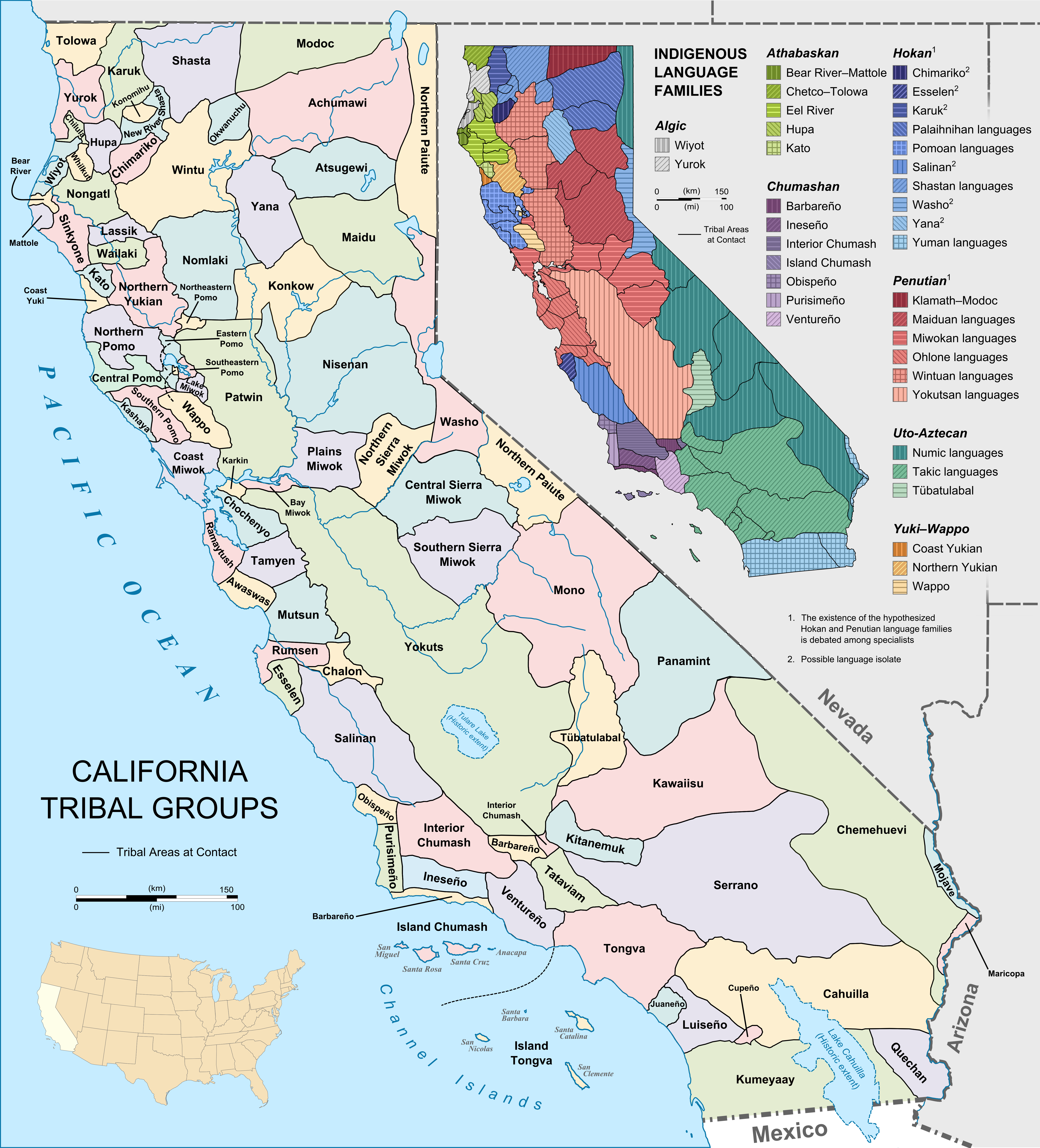
The Klamath River holds deep cultural significance for indigenous tribes, particularly the Yurok, Karuk, and Hoopa Valley tribes. These tribes have relied on the Klamath for thousands of years to provide salmon, steelhead, and suckers. However, the river’s ecosystem began to deteriorate in the 20th century with the construction of four hydroelectric dams: Iron Gate, Copco 1, Copco 2, and J.C. Boyle. The four dams were built for power generation and disrupted fish migration, sediment transport, and nutrient cycling. Annelia Hillman, a traditional food coordinator for the Yurok tribe, commented,

This river is our lifeline. It’s the foundation to our people, for our culture.

In 2001, two cases brought national attention to issues between farmers who relied on the dam’s water for irrigation and the Coho salmon listed under the Endangered Species Act: Kandra v. United States and Pacific Coast Federation of Fishermen’s Associations v. U.S. Bureau of Reclamation. In these cases, locals and agencies fought over who deserved water during a historically dry year. The Bush administration ultimately sided with the irrigators, diverting water to farmers during the drought year. These water diversions drained critical river habitats, culminating in salmon populations plummeting during the 2002 Fish Kill. Outrage over the 34,000 dead salmon supercharged the campaign to remove the dams (See also Yurok Tribe v. U.S. Bureau of Reclamation and Baley v. United States).  

Iron Gate Dam (Photo: Katie Eng, September 29, 2023)

Last month, I had the privilege of hearing from the CEO of the Klamath River Renewal Corporation, Mark Bransom. Bransom spoke about FERC’s decision to decommission and acknowledge the social and cultural impacts of the dams  for the first time. FERC also banned the Klamath’s hydroelectric license. For more about FERC’s approval of the four dams, see this blog post. 

Today, the Klamath River Renewal Corporation is working to blast holes through the base of the dams, dredging out the accumulated sediment and flushing the sediment and accumulated algae (muck) into the ocean. When I visited the dam last month, Bransom commented, 

The river needs to go through a little more pain before it heals again.

Meanwhile, the Klamath River Renewal Corporation is working closely with indigenous tribes to cultivate seeds from over 90 species of native vegetation. They hope to plant over 19 billion seeds over 8,000 acres. With such aggressive efforts, the Renewal Corporation anticipates a 24-month timeline for the project to be complete, with returning adult salmon inhabiting the river by next October. 

It would be surprising, of course, if a project of this size had zero opposition. In fact, Bransom says the Renewal Corporation has struggled with balancing the interests of environmentalists and local property owners —he calls them the “way of life” people versus the “quality of life” people. 

Driving along the roads of rural Hornbrook, California, where Iron Gate Dam lives, it is typical to see signs protesting the dam’s removal. Bransom says locals are worried about the noise, the future lack of a lake for recreational activities, and the impacts on property values. He spoke about the difficulties in telling senior locals, whose retirement money is wrapped up in their waterfront property, that the removal will affect their estates for the next decade. Bransom believes that ten to fifteen years from now, the Klamath River’s restored wildlife and salmon populations will positively impact property values and the lives of those that’s live beside it.

J.C. Boyle Dam (Photo: Katie Eng, September 30, 2023)

The possibility of salmon returning to the Upper Klamath raises questions about whether the dam removal project could inspire other changes in Oregon and California. One such place a dam removal project may be warranted is the Snake River, where tribes and farmers suffer from water shortages and related environmental issues. Under the direction of his legal team, Bransom was unable to comment on whether he thinks similar efforts would be successful in California. However, Bransom has hope that the lessons learned from the Klamath dam removal project will be used for years and decades to come—including in other locales facing similar quandaries.

Wednesday, September 27, 2023

Rural responses to corporate utility disasters (Part II): Dam removal lessons from the Klamath

Two weeks ago, I wrote about the August 10 PG&E canal failure that sent millions of pounds of sediment into Butte Creek, a Sacramento River tributary, threatening the spring-run chinook and overall ecosystem health. (You can read my first post about the incident and initial community response here.) I left off wondering how rural community members might reclaim land and power (of both the political and electric varieties) from PG&E and I decided to go looking for ideas based on strategies already employed by rural communities in other places.

Big, investor-owned utilities overlooking rural people and land is nothing new. In the 1930s, while most cities and towns had been electrified, only 10 percent of rural America had been. Utility companies hesitated to extend services to sparsely populated places because they doubted they’d receive a return on investment. More recently, rural California communities have borne the brunt of utility-caused wildfires and rolling blackouts. Utility-owned dams and diversions have caused massive fish kills and other ecosystem impacts in the places rural people call home.

The Butte Creek Canyon community is no exception; the 2018 Camp Fire swept through much of the canyon, diversions and low water flow caused a tragic 2021 fish kill, and now, the 2023 canal breach has further damaged the ecosystem and threatened this year’s salmon. The area has also suffered a number of blackouts; the ones from 2017-19 are documented on this interactive map.

When I began researching how other communities have responded to big utility oversights, I thought perhaps I’d find a blueprint from another rural community that could apply to Butte Creek Canyon. Though I didn’t find anyone who had dealt with the exact combination of dam removal and local energy control (if you know of any, please let me know in the comments), I did find two projects that could serve as inspiration to canyon residents: the Klamath dam removal project and the Blue Lake Rancheria low-carbon microgrid project.

Based on what I’ve learned so far about energy, dams and the Federal Energy Regulatory Commission (FERC), I'll explore how adapting strategies from these projects could benefit the Butte Creek Canyon community over my next two posts.

Let’s begin with the Klamath dam removal project. For a more detailed history and background of the Klamath dams and subsequent removal campaign, you can check out this timeline, listen to this episode of Future Ecologies and read this past blog post. In brief, four dams, Copco 1, Copco 2, Big Bend and Iron Gate were constructed along the Klamath River between 1918 and 1962. The dams prevent(ed) salmon from reaching the Klamath’s upper waters, where they historically spawned. In 2002, diversions for irrigation during a drought year resulted in low water flows and the death of as many as 68,000 salmon. Though the Karuk, Yurok and Klamath tribes opposed the dams since they were constructed, the historic fish kill was the catalyst for a 20-year campaign to remove the dams.

The first and smallest dam, Copco 2, was removed this summer. The remaining three are slated to come down by the end of 2024, according to this CalTrout article. The removal of these four dams constitutes the largest dam removal in U.S. history, so how did it happen? As it turns out, via a corporation.

After years of negotiating and coalition-building, as well as political setbacks, the tribes and other stakeholders formed a not-for-profit corporation, the Klamath River Renewal Corporation (KRRC), to obtain the dam licenses and oversee removal. PacifiCorp, the utility that owned the dams, had acknowledged that the dams were no longer economical but was reticent to take on the liabilities of dam removal. KRRC negotiated a license transfer agreement and, with FERC approval, took ownership of the dams in 2021. To make the transfer possible, the states of California and Oregon agreed to serve as co-licensees.

The story of the Butte Creek Canyon dams has many parallels to the Klamath River, albeit on a smaller scale. Both are stories of Indigenous people, salmon, old dams, and corporate utility neglect. Butte Creek sits on the ancestral homelands of the Mechoopda people. Every spring, the river and its people welcome one of the last wild populations of Central Valley spring-run chinook salmon, but the salmon have been threatened by a hydroelectric project. And, like PacifiCorp did for the Klamath dams, PG&E has conceded that its DeSabla-Centerville hydroelectric project, of which the failed canal and Centerville Dam are a part of, doesn’t make economical sense. Yet it has not seriously pursued decommissioning and removing the project.

PG&E did attempt to withdraw from the project in 2017, but the FERC denied permission to do so until a notice period had been held to allow the public an opportunity to express interest in acquiring the license. PG&E then continued to apply for annual licenses to operate the project. The utility has recently applied to transfer the project to its subsidiary, Pacific Generation, according to an action alert from advocacy group Friends of Butte Creek.

Friends of Butte Creek is encouraging advocates to write to the FERC, urging them to disallow the transfer and require PG&E decommission the project and remove the Centerville dam, or to alternatively require Pacific Generation to do so after a transfer. I agree that PG&E should absolutely take responsibility for its actions and remove the outdated and harmful infrastructure on its own.

However, if that effort fails, I wonder if a not-for-profit corporation created by canyon residents, tribal members and conservation groups like CalTrout might succeed in an endeavor similar to the KRRC. By creating a non-profit to obtain the hydroelectric project licenses and remove the harmful infrastructure, community stakeholders could forge coalitions, protect the environment, return agency to rural communities and save the Butte Creek salmon.

In my next post of the series, I’ll write about how an entity like this could also provide safer, more reliable energy, taking cues from municipal power districts and tribal microgrid projects.

Friday, July 23, 2021

Could clever fish-spawning strategy avert violence in Klamath water wars?

Anita Chabria and Hailey Branson-Potts report from Tulelake, California, population 1,020, in Siskiyou County:  

It’s a strange place to find fish, deep in the high desert, where drought-baked earth butts against scrubby mountains.

But water spews from the hot springs on Ron Barnes’ land near the California-Oregon border, pure and perfect for rearing c’waam and koptu, two kinds of endangered suckerfish sacred to Native American tribes.

Barnes, who holds an advanced degree in aquaculture from UC Davis, has dug dozens of ponds on his property and filled them with thousands of young suckerfish. He hopes raising and releasing them into the wild will end the region’s epic water wars — or at least get federal regulators out of the mix before his neighbors descend into violence.

The story quotes Barnes:  

We have to take a pragmatic view of this thing.  The single most effective way to get the government off our backs is to restore the fish population.

The story continues: 

The suckerfish, which are on the endangered species list, are at the heart of a rancorous water controversy. They typically spawn in nearby Upper Klamath Lake, an agricultural reservoir that is growing increasingly dry and toxic. To ward off their extinction, federal regulators have cut off every drop that normally flows from the lake to the Klamath Reclamation Project, a federally built web of irrigation canals that once held the promise of almost limitless water for nearby farms.
Growers and landowners in the region are divided between those who are furious but want a peaceable path forward, like Barnes, and those who are threatening to take water by force.

A recent post about the drought that is aggravating the Klamath water wars and Ammon Bundy's role in advocating taking the water by force, is here.  Earlier posts about the Klamath water wars are here.  

Thursday, July 8, 2021

Ammon Bundy, "man about town," talking water and housing in Oregon and Idaho

This piece out of Klamath Falls, Oregon about the West's water crisis caught my attention last month.  Emmas Marris reports in The Atlantic, under the headline, "The West Can End the Water Wars Now."  Here's the lede for the story, which doesn't focus on Bundy, but does provide important context:

[I]n the West, people are, by and large, aggrieved. This is not entirely their fault. Federal and state governments have made lots of promises to people in the West, or to their parents or grandparents. Some people were promised that their land would not be taken, while other people were promised free land. Some were told that they could withdraw water from this or that lake or river every year until the end of time, others that their right to hunt or fish on their territory would never be infringed.
But the natural abundance those promises were based on has been squandered by generations of mismanagement. In the Klamath Basin, in Southern Oregon and Northern California, where I live, Klamath tribal members haven’t been able to exercise their “exclusive right of taking fish in the streams and lakes,” as protected in a 1864 treaty, for decades, because the fish keep dying.

And here's the bit that sums up what Bundy is up to (note, it potentially involves violence):   

A handful of far-right agitators connected with the infamous anti-government cowboy Ammon Bundy spent $30,000 to buy a plot of land adjacent to the closed headgates of the main irrigation canal, and they are publicly threatening to force them open. The gates are controlled by the Bureau of Reclamation and blocked with bulkheads. Heavy machinery would be required to move them. The farmers Grant Knoll and Dan Nielsen are giving interviews from the shade of a large, circus-striped tent by the headgates: They see their promised water allocation as private property that the federal government has stolen from them.

And then Anita Chabria and Hailey Branson-Potts reported for the Los Angeles Times that Bundy, in suburban Boise, Idaho, was arguing that the shortage of housing was a reason to end public land ownership.  The headline is "Ammon Bundy seizes on housing shortage in new bid to take public lands in Idaho."  Here's a salient quote:

Bundy is reframing the decades-long but narrow fight of his father, Cliven Bundy, against the Bureau of Land Management — the other BLM, as it’s known here — into a platform with broader appeal. He wants to use the governorship to wrest ownership of federal land for state control. It’s a campaign aimed at voters dreaming of wide open spaces and homes they can afford, wrapped in an idealized view of western life where land and resources are limited only by an unwillingness to use them.

Neither America nor the Gem State, he told the crowd, can survive the liberal creep of growing cities or the economic toll of too few houses for too many people. To “keep Idaho Idaho,” as his slogan promises, growth needs to happen out instead of up, as he puts it.

The federal government is “forcing everybody down into big cities and where they’re just surviving,” Bundy said in a recent interview with The Times. He spoke from his home outside Boise on five acres of apple orchards in an agricultural area known as Treasure Valley, surrounded by public lands.

Of course, Bundy and his family have long pressed for an end to federal government ownership of land.  That's been their signature issue, as covered here, regarding the 2016 seizure of the Malheur Wildlife Reserve, and other issues.  

Monday, September 5, 2011

Glimpses of water justice in California

The golden state takes much pride in its abundance of natural resources. And why not? After all, miner's struck it rich in the 1848 Gold Rush, it is home to the tallest trees in the world-the redwoods, and it enjoys the eternal sunshine (hence the "golden")--just to name a few. Still, found within the state are whole communities that lack access to one of the most basic natural resources that humans need to survive:water.

Safe drinking water to be exact. Here enters the question of water justice. The Environmental Justice Coalition for Water defines water justice as “[T]he ability of all communities to access safe, affordable water for drinking, fishing, recreational and cultural uses.”* Consequently, those who suffer from water injustice tend to be poor, immigrant, rural, or people of color. In the rural context, California’s massive agricultural system has tapped the state’s rivers and has their natural flows in order to fuel giant monoculture crop fields. Furthermore, the chemical fertilizers and pesticides used during the growing seasons seep into the soil and inevitably affect underground water basins.

According to an article in New America Media, 220 communities found within rural California struggle for access to affordable, safe drinking water. Traces of toxins that cause cancer and birth defects have been linked to people's kitchen faucets. In Lanare, California residents have had to pay a hefty fee for ensuring access to drinkable water. The choices set before communities like Lanare are privatize public works, buy bottled water, or drink what is available, which is often below state health standard water. All of these are expensive "choices."

With no reliable public works system, many people end up having to rely heavily on bottled water. Bottled water is a choice that comes with a mountain of hidden costs, and the environment foots much of the bill. According to a 2007 report by the Food and Water Watch, it is estimated that the United States consumes more than half a billion bottles of water every week and generates 2 million tons of PET plastic botttles waste every year.

To the north, a different kind of struggle over water is taking place along some of California's majestic rivers. In redwood country, native communities have been struggling to have full access to the river, claiming they depend on the river for economic, social and cultural purposes. Dams are the biggest barriers to the tribe's self-sufficiency.

The dams' alterating of the natural river flows have been linked to the rise of blue-green algae (BGA) or Microcystis aeruginosa, the 2002 massive salmon fish kill, and impending threat of loss of cultural knowledge. Throughout Humboldt and Shasta Counties one finds warning signs advising people not to go in the water due to the high levels of BGA. According to the World Health Organization and the Klamath River Keepers, chronic exposure to BGA has been linked to liver failure and cancer.

In the summer of 2002, residents of the Klamath River Watershed witnessed one of the largest fish kills in the nation's history. It is estimated that over 70,000 salmon died due to low water levels and high temperatures. The struggles of local tribes led up to a 5-year-long campaign targeting PacificCorps—a Scotland based multinational corporation. The “Un-Dam the Klamath” campaign successfully negotiated the removal of all the dams on the Klamath River basin.

Author of Water Wars, Vandana Shiva, reminds us of the important role of community and culture in the development of sustainable agriculture and water systems. In a brief interview, Shiva discusses water culture in India. Her analysis of water as a resource of life, culture and ecology and not as a commodity to be privatized and reap profits from is fitting to the discussion of water in rural California. Many Californian's like Indian citizens, have a deep intimate relationship to their water resource (i.e. rivers, lakes, pacific ocean). The relationships take on economic, social, spiritual and/or cultural dimensions. The Northern California tribes have been making this precise claim--without water there is no life. A claim we must take serious especially with dramatic changes in global climate temperatures.

While water (in)justice manifest on multiple scales throughout rural California, it is also becoming more apparent that communities are expressing a common demand to have local control of their resources. Signs of local autonomy abound in the state and beyond. In Stockton, Ca citizens ran out a multinational corporation (OMI-Thames) attempting to privatize the city's water system; in other parts of the central valley, residents are organizing campaigns to protect the diminishing groundwater from harmful agricultural chemicals; and lastly, more people are taking steps to ensure that corporations don’t manage their livelihoods through the exploitation of resources such as water (check out the take back the tap campaign).

Saturday, November 19, 2022

FERC approves removal of four dams on Klamath River in California and Oregon

The Associated Press story, picked up by NPR, is here under the headline, "The largest dam demolition in history is approved for a Western river.'  An excerpt follows: 

U.S. regulators approved a plan Thursday to demolish four dams on a California river and open up hundreds of miles of salmon habitat that would be the largest dam removal and river restoration project in the world when it goes forward.

The Federal Energy Regulatory Commission's unanimous vote on the lower Klamath River dams is the last major regulatory hurdle and the biggest milestone for a $500 million demolition proposal championed by Native American tribes and environmentalists for years. The project would return the lower half of California's second-largest river to a free-flowing state for the first time in more than a century.

Native tribes that rely on the Klamath River and its salmon for their way of life have been a driving force behind bringing the dams down in a wild and remote area that spans the California and Oregon border.

The story quotes Yurok Chair Joseph James on the vote:   

The Klamath salmon are coming home. The people have earned this victory and with it, we carry on our sacred duty to the fish that have sustained our people since the beginning of time.

The story continues: 

Plans to remove the dams have not been without controversy.

Homeowners on Copco Lake, a large reservoir, vigorously oppose the demolition plan and rate payers in the rural counties around the dams worry about taxpayers shouldering the cost of any overruns or liability problems. Critics also believe dam removal won't be enough to save the salmon because of changing ocean conditions the fish encounter before the return to their natal river.

Also regarding the critics, the story quotes Richard Marshall, head of the Siskiyou County (California) Water Users Association: 

The whole question is, will this add to the increased production of salmon? It has everything to do with what's going on in the ocean (and) we think this will turn out to be a futile effort.  Nobody's ever tried to take care of the problem by taking care of the existing situation without just removing the dams.

Tuesday, May 25, 2021

More NYT coverage of rural, this time from central and far northern California

I'm feeling like a broken record recently, but I want to highlight two more stories out of rural America--specifically "rural" California.  

The first is out of Weed, in Siskiyou County, which borders Oregon.  Thomas Fuller reports under the headline, "No Longer the ‘Devil’s Lettuce’: How the Town of Weed Embraced Weed."  The subhead is "For decades, a rural California city winced at the puns. Now it’s cashing in."   Weed's population is 2967, and Siskiyou County's population is 44,900.   

Another recent post out of Weed is here, and the last time Weed was in the New York Times is here, about water wars. 

"Water wars" is a good segue to the second story, which is about how parts of the Central Valley are literally sinking.  The headline for today's story by Lois Henry is "The Central California Town that Keeps Sinking."  Here's an excerpt: 

Over the past 14 years, the town has sunk as much as 11.5 feet in some places — enough to swallow the entire first floor of a two-story house and to at times make Corcoran one of the fastest-sinking areas in the country, according to experts with the United States Geological Survey.

Subsidence is the technical term for the phenomenon — the slow-motion deflation of land that occurs when large amounts of water are withdrawn from deep underground, causing underlying sediments to fall in on themselves.

Corcoran's population is 24,813.  It is in the far eastern part of Kings County, population 152,892.  This story was co-published in High Country News. 

P.S.  Another big NYT water story out of the west, this one dateline Klamath Falls, California, is here.  It is reported by Mike Baker and published on June 1, 2021.  Here's the lede:  

Through the marshlands along the Oregon-California border, the federal government a century ago carved a whole new landscape, draining lakes and channeling rivers to build a farming economy that now supplies alfalfa for dairy cows and potatoes for Frito-Lay chips.

The drawdowns needed to cover the croplands and the impacts on local fish nearing extinction have long been a point of conflict at the Klamath Project, but this year’s historic drought has heightened the stakes, with salmon dying en masse and Oregon’s largest lake draining below critical thresholds for managing fish survival. Hoping to limit the carnage, federal officials have shut the gates that feed the project’s sprawling irrigation system, telling farmers the water that has flowed every year since 1907 will not be available.

Some farmers, furious about water rights and fearing financial ruin, are already organizing a resistance. “Tell Pharaoh let our water feed the Earth,” said a sign erected near the nearly dry irrigation canal that would usually be flowing with water from Upper Klamath Lake in southern Oregon.

Tuesday, August 23, 2022

California warns farmers and ranchers to stop diverting water as thousands of fish in Klamath River die

The Associated Press reports, dateline Happy Camp, California, population 905.  

California has warned a group of farmers and ranchers near the Oregon state line to stop diverting water from an area already wracked by extreme drought and a wildfire that killed tens of thousands of fish.

The State Water Resources Control Board issued a draft cease-and-desist order Friday to the Shasta Water Assn., warning it to stop taking water from the Shasta River watershed.

The association has 20 days to request a hearing or the order becomes final and could subject the organization to fines of up to $10,000 a day, according to the state water agency.

* * * 

Since last year, the state agency has curtailed water use in the watershed in order to keep water flowing in the Shasta River, a main tributary of the Klamath River and a nursery for a fragile and federally protected salmon species.

Prior posts about the Klamath River basin are here.  The pieces most closely related to today's news are these.   

Thursday, September 1, 2022

And the winner, by a head, is Alaska Native Democrat Mary Peltola

Peltola beat former Vice Presidential candidate (2008) and former Alaska Governor Sarah Palin 51.5% to 48.5% in Alaska's ranked-choice voting on Tuesday.  Politico reports here, the New York Times here, and NPR here.  The Washington Post offers this analysis, focusing not on Peltola's win but on Sarah Palin's loss.  The Associated Press story by Becky Bohrer, picked up by the Los Angeles Times, featured this tidbit: 
Peltola, a former state lawmaker who most recently worked for a commission whose goal is to rebuild salmon resources on the Kuskokwim River, cast herself as a “regular” Alaskan. “I’m not a millionaire. I’m not an international celebrity,” she said.
It also mentioned that August 31, the day the election was called for Peltola, was her 49th birthday.  And 49 is also the number of years her predecessor, Representative Don Young (R), served in the seat before he died in March of this year.  Read more about Young and the Alaska political vibe generally here.

Meanwhile, I've been getting a kick out of Peltola's recent Tweets, including many that reference fish and the state's fishing industry.  This is perhaps not a surprise given her work for a commission to rebuild salmon resources in her home region, but it's a huge difference from the invocation of national politics that we see in so many races.  Peltola seems very focused on the local, on Alaska--what makes it special, what its residents need, and what she'll do for them.  And with that commitment comes a great deal of focus on fishing... 

This next screenshot plays on a trend (or is it a meme?) today to use one word to sum up what one does or cares about.  Amtrak, for example, said "trains," and President Joe Biden said, "democracy." Mary Peltola said "salmon"  😀
Peltola will now vie in November to retain this seat, beyond the completion of Don Young's term.  As of  this evening, she had raised more than $500,000 from across the country to finance her general election campaign.  

Prior Legal Ruralism posts about Peltola are here and here. 

Postscript:  Here are two most screenshots from Sunday, Sept. 4: 


Fish!  Fish and more fish.  I'm gonna' look now for some data on the centrality of fishing to Alaska's economy.  It must be big!  and Mary Peltola knows it.  Indeed, wondering how it compares to the centrality of the salmon to the Yurok tribe in far northern California, on the Klamath River.  

Wednesday, August 23, 2023

Big wind energy plans for remote-ish far northern California

Politico reported last week on a proposal to "develop offshore wind at a depth and scale never before attempted in the world"--and to do it in a place that has seen little public investment in recent decades:  Humboldt County, California, population 136,000.  After noting the region's boom-and-bust cycle and high poverty rate, journalist Wes Venteicher describes the project:  

The offshore wind proposal, driven by the Biden and Newsom administration efforts to dramatically increase renewable energy, would erect dozens of turbines three times the size of that smokestack with blades as long as a football field in an area of the Pacific Ocean nearly 10 times the size of Manhattan.

He then turns to some of the projects challenges, including the region's recent history of boom-and-bust, resulting in low per capita incomes:  

[T]he project faces a host of major challenges. They include not just the obvious economic and bureaucratic hurdles but also a widespread distrust of outsiders in a region where indiscriminate logging engendered deep resentment and where an illegal marijuana industry created a counterculture haven in the fog-shrouded mountains.

The region is still recovering from mistakes of the past. International wind developers are pitching their projects just as many residents celebrate the removal of Klamath River dams the Yurok Tribe and the fishing industry fought for decades. The structures destroyed rich salmon habitat to export hydropower even as many native people lived without electricity.
Venteicher quotes Yurok Vice Chairman Frankie Myers: 
It has to be done right.  Because we have to avoid being in the same position we are now 50 years from now. I’ve spent most of my life fighting the dams. I do not want to leave my children a fight to remove offshore wind.
* * *
Humboldt Bay, now marred by rotted docks and contaminated soil, was home to 250 sawmills in 1950. By the 1970s, over half of California’s fish were being pulled from the bay. The county’s famously high-quality illegal cannabis took over after that, snaking across tens of thousands of acres in the hills. The plant’s skunky odor still wafts through Eureka, but legalization made it much less lucrative.
* * *
The land — which now hosts two seaweed farms, an oyster hatchery and temporary storage for freshly caught hagfish — would be transformed into an industrial terminal with up to 650,000 square feet of building space, lights mounted 150 feet in the air and giant cranes that crawl through the water on tank treads.
* * *
[L]eaders such as Yurok Tribal Court Judge Abby Abinanti worry how the expected influx of construction and manufacturing labor, some likely to occupy temporary “mancamps,” will affect vulnerable people such as native women who already go missing and are killed at higher rates than other groups.

“Our concern is that these camps end up elevating those kinds of statistics unless preventative efforts are made,” said Abinanti.

She also wants to make sure women have the same access as men to the new jobs through training.

A recent post about Humboldt County is here, with links to other posts from that part of the world embedded.

Postscript:  On Oct., 16, 2023, CalMatters published Part I of a two-part series on the Humboldt wind farm, by Pulitzer Prize winning journalist Julie Cart.  

Friday, March 3, 2017

The State of Jefferson-- a resource struggle centuries in the making

Nestled among rich forests and steep mountains, the State of Jefferson is a quasi-mythic political dream for many of its residents in Northern California and Southern Oregon. In 1941, residents of the Siskyou mountains, disgruntled at the State of California's persistent neglect of critical road and other infrastructure and its exploitation of the resources of the area, made a theatrical show of 'seceding' from the state. They set up roadblocks to demand documentation of those entering and exiting, and hoisted a flag bearing a distinct "XX" legend to signify their double crossing by the governments of Sacramento and Salem. Today, that XX flag can be seen across vast swaths of Northern California and Southern Oregon to signify a contempt for the remote governments that residents perceive to control resources that rightfully belong to them. Residents are vigorously anti-regulation, and see themselves as the victims of the repression of the state. Jeffersonians rightly perceive that they wield little political clout in California, paying in more than they get back. Are the Jeffersonians the only victims in California's North Country?

The answer to that might start by examining their choice of name- presumably chosen as a nod to the small government, state's rights' oriented Thomas Jefferson. Having lived and travelled in the State of Jefferson, I can't help but think of another resonance, one not intended by the secessionists: That of Thomas Jefferson as one of the initial architects of Indian Removal. The State of Jefferson is laid over a complex patchwork of pre-existing tribal nations that occupied the land. Although the Jeffersonians often claim to be "native Californians", indigenous tribes such as the Yurok, Hupa, Karuk, Wintu, and many others long predate the arrival of Europeans. I can't help but see the State of Jefferson as a continuation of a long history of erasure of indigenous political formations by those of white colonists.

The proponents of the State of Jefferson are the heirs to a tradition of aggressive resource extraction that began with the Gold Rush in the 1850s. After the discovery of gold at Sutter's Mill in Coloma, men hoping to find their fortune poured into previously sparsely populated areas of Northern California. The results were disastrous for the tribal peoples of the area. Small conflicts between white prospectors and natives regularly degenerated into wholesale massacres. Across what is now the heart of Jefferson, native people were slaughtered by militias composed of gold-hungry prospectors and settlers. See, for example, the murder of 153 Wintu Indians by white settlers in the Bridge Gulch Massacre near Hayfork. Or the murder of between 80-250 Wiyot people by the residents of Eureka in 1860.

While wholesale slaughter of indigenous peoples has thankfully stopped, conflicts over the resources of the area between the native tribes and others have been a constant. In the 1970s and 80s, the US Forest Service began to construct a road between the hamlets of Gasquet and Orleans in the southern Siskyou mountains in order to facilitate logging access. The road was to pass through an area considered sacred to the Yurok, Karuk, and Tolowa. The Yurok tribe petitioned for an injunction against the construction of the road on the theory that its construction was a violation of their First Amendment rights to practice their religion there. The 9th Circuit ruled that completion of the road was a violation of the Free Exercise clause, but the judgment was reversed at the Supreme Court in 1988. Luckily for the tribes, the completion of the road was stopped as part of the designation of the Smith River Wild and Scenic National Recreation Area.

Such conflicts over resource extraction continue to the present day. The Karuk intervened in a case on the side of the state over a moratorium on suction dredge gold mining (explained succinctly in this Legal Ruralism blog post) in 2008. The Karuk, who are based in Happy Camp on the Klamath River, are against suction dredge gold mining because it may injure fish populations in the river. One note of interest about Happy Camp: it was briefly named "Murderer's Bar" in reference to either violence surrounding claim jumping or clashes with native peoples.

None of this is to say that the grievances of the State of Jefferson are simply illegitimate; because one population suffers it does not lessen the suffering of others. In fact, many of the social ills that affect the tribal people of the North Country, such as extremely high rates of suicide, also afflict the libertarian dreamers of the State of Jefferson. Although the State of Jefferson advocates posit unfettered and unregulated resource extraction as the way to generate the capital to escape such despair, it seems clear to me that such a move would only reinforce patterns of oppression of native peoples that have existed since the 1850s. These counties need a way forward-- I hope they will find one that can bring along everyone.