
Two weeks ago, I wrote about the August 10 PG&E canal failure that sent millions of pounds of sediment into Butte Creek, a Sacramento River tributary, threatening the spring-run chinook and overall ecosystem health. (You can read my first post about the incident and initial community response here.) I left off wondering how rural community members might reclaim land and power (of both the political and electric varieties) from PG&E and I decided to go looking for ideas based on strategies already employed by rural communities in other places.
Big, investor-owned utilities overlooking rural people and land is nothing new. In the 1930s, while most cities and towns had been electrified, only 10 percent of rural America had been. Utility companies hesitated to extend services to sparsely populated places because they doubted they’d receive a return on investment. More recently, rural California communities have borne the brunt of utility-caused wildfires and rolling blackouts. Utility-owned dams and diversions have caused massive fish kills and other ecosystem impacts in the places rural people call home.
The Butte Creek Canyon community is no exception; the 2018 Camp Fire swept through much of the canyon, diversions and low water flow caused a tragic 2021 fish kill, and now, the 2023 canal breach has further damaged the ecosystem and threatened this year’s salmon. The area has also suffered a number of blackouts; the ones from 2017-19 are documented on this interactive map.
When I began researching how other communities have responded to big utility oversights, I thought perhaps I’d find a blueprint from another rural community that could apply to Butte Creek Canyon. Though I didn’t find anyone who had dealt with the exact combination of dam removal and local energy control (if you know of any, please let me know in the comments), I did find two projects that could serve as inspiration to canyon residents: the Klamath dam removal project and the Blue Lake Rancheria low-carbon microgrid project.
Based on what I’ve learned so far about energy, dams and the Federal Energy Regulatory Commission (FERC), I'll explore how adapting strategies from these projects could benefit the Butte Creek Canyon community over my next two posts.
Let’s begin with the Klamath dam removal project. For a more detailed history and background of the Klamath dams and subsequent removal campaign, you can check out this timeline, listen to this episode of Future Ecologies and read this past blog post. In brief, four dams, Copco 1, Copco 2, Big Bend and Iron Gate were constructed along the Klamath River between 1918 and 1962. The dams prevent(ed) salmon from reaching the Klamath’s upper waters, where they historically spawned. In 2002, diversions for irrigation during a drought year resulted in low water flows and the death of as many as 68,000 salmon. Though the Karuk, Yurok and Klamath tribes opposed the dams since they were constructed, the historic fish kill was the catalyst for a 20-year campaign to remove the dams.
The first and smallest dam, Copco 2, was removed this summer. The remaining three are slated to come down by the end of 2024, according to this CalTrout article. The removal of these four dams constitutes the largest dam removal in U.S. history, so how did it happen? As it turns out, via a corporation.
After years of negotiating and coalition-building, as well as political setbacks, the tribes and other stakeholders formed a not-for-profit corporation, the Klamath River Renewal Corporation (KRRC), to obtain the dam licenses and oversee removal. PacifiCorp, the utility that owned the dams, had acknowledged that the dams were no longer economical but was reticent to take on the liabilities of dam removal. KRRC negotiated a license transfer agreement and, with FERC approval, took ownership of the dams in 2021. To make the transfer possible, the states of California and Oregon agreed to serve as co-licensees.
The story of the Butte Creek Canyon dams has many parallels to the Klamath River, albeit on a smaller scale. Both are stories of Indigenous people, salmon, old dams, and corporate utility neglect. Butte Creek sits on the ancestral homelands of the Mechoopda people. Every spring, the river and its people welcome one of the last wild populations of Central Valley spring-run chinook salmon, but the salmon have been threatened by a hydroelectric project. And, like PacifiCorp did for the Klamath dams, PG&E has conceded that its DeSabla-Centerville hydroelectric project, of which the failed canal and Centerville Dam are a part of, doesn’t make economical sense. Yet it has not seriously pursued decommissioning and removing the project.
PG&E did attempt to withdraw from the project in 2017, but the FERC denied permission to do so until a notice period had been held to allow the public an opportunity to express interest in acquiring the license. PG&E then continued to apply for annual licenses to operate the project. The utility has recently applied to transfer the project to its subsidiary, Pacific Generation, according to an action alert from advocacy group Friends of Butte Creek.
Friends of Butte Creek is encouraging advocates to write to the FERC, urging them to disallow the transfer and require PG&E decommission the project and remove the Centerville dam, or to alternatively require Pacific Generation to do so after a transfer. I agree that PG&E should absolutely take responsibility for its actions and remove the outdated and harmful infrastructure on its own.
However, if that effort fails, I wonder if a not-for-profit corporation created by canyon residents, tribal members and conservation groups like CalTrout might succeed in an endeavor similar to the KRRC. By creating a non-profit to obtain the hydroelectric project licenses and remove the harmful infrastructure, community stakeholders could forge coalitions, protect the environment, return agency to rural communities and save the Butte Creek salmon.
In my next post of the series, I’ll write about how an entity like this could also provide safer, more reliable energy, taking cues from municipal power districts and tribal microgrid projects.
Showing posts sorted by date for query camp fire. Sort by relevance Show all posts
Showing posts sorted by date for query camp fire. Sort by relevance Show all posts
Wednesday, September 27, 2023

Saturday, September 16, 2023
Fired from fire insurance? Large insurers pull out of the California market
Wildfires have become an increasingly common disaster in California. From 1996 to 2001, the number of wildfires in northern and central California increased fivefold due to climate change. The communities most at risk are those located in rural areas—over 85% of California's rural land is now in "high" or "very high" severity zones for wildfire danger.
The growing number of wildfires has become a devastating risk not only to rural homeowners, but to home insurance companies as well. Fire insurance is usually covered under general homeowners' insurance and is not a separate coverage, as flood insurance is. The increase of wildfires has resulted in growing premiums and deductibles for home insurance, and more shockingly the withdrawal of two leading home insurers from the California market. In the past year, State Farm, the largest insurer in California, and Allstate both announced they would no longer be accepting applications for homeowners' and renters' insurance in the state.
This may not be so surprising after the disastrous impact of wildfires in recent years. In 2018, the Camp Fire in Paradise destroyed nearly 19,000 properties costing insurers $16.5 billion. (Read more about the Camp Fire in Paradise here and here.) The year before, the wine country wildfires totaled over $3.3 billion in insured losses.
State Farm explained the reasons behind their decision were "historic increases in construction costs outpacing inflation, rapidly growing catastrophe exposure, and a challenging reinsurance market."
Considering the increased risk of wildfires in rural areas, this will undoubtedly have a disproportionate impact on homeowners in rural communities.
Allstate went further and made the decision to drop some policyholders living in high-risk fire zones. Beth Pratt, who lives near Yosemite National Park in Mariposa County, was dropped by Allstate after they had insured her for 31 years. She told NPR, "I get companies need to make money. I have no problem with that...But to just drop people—you know, it's scary. It leaves us feeling extremely vulnerable."
While state law does not require homeowners' insurance, most mortgages do require it as a condition of the loan. Smaller insurers are available for lower fire risk zones. For those living in high-risk areas that private insurers refuse to cover, the state offers the Fair Access to Insurance Requirements (FAIR) plan. The FAIR plan consists of insurers in the state willing to cover these areas but it comes at a high cost and for far less coverage than standard policies.
The hesitancy of insurers to provide policies for homes in high-risk areas is certain to affect new homeowners. According to the Insurance Information Institute, there are 1.2 million homes in California that are at risk of extreme wildfire, and there has been an influx of people moving into these fire-prone areas. While owning property may seem cheaper in rural areas, it is increasingly coming with a hefty added cost. A home insurance policy from an insurer such as State Farm for a million-dollar house in the Santa Cruz mountains would usually be around $150 a month, but with the FAIR plan, the rate is closer to $600 a month. This will be a barrier to many people looking to move to rural areas and buy property.
Pratt also told NPR, "The notion that, somehow, you know, we all built in this high-risk fire area—well, no, we didn't have major fires here every year." It is unclear what the solution for affordable home insurance is when wildfires and other natural disasters are becoming far too frequent. It seems truly unfair, however, for large insurance companies to be able to pull out when they are needed most.
You can read more about the disproportionate impact the lack of insurance has on rural communities here and here.
Wednesday, September 13, 2023
Rural responses to corporate utility disasters: Reimagining the future of Butte Creek Canyon after PG&E canal breach
Residents of Butte County, California are no strangers to PG&E-caused disasters. The latest of the vast corporate utility’s mishaps occurred August 10, when a breach of Butte Canal sent millions of pounds of sediment careening into Butte Creek, which runs through Butte Creek Canyon. The sediment turned the water orange and silty, threatening the survival of this year's salmon class and causing deep concern for ecosystem and human health.
The breach happened above Helltown and Centerville, two very small, unincorporated canyon communities about a half hour northeast of Chico and located on the ancestral homelands of the Mechoopda tribe.
I first learned about the breach through the Instagram of a Helltown local, who posted devastating videos of the murky orange waters and documented river otters desperately trying to find the end of the pollution. In the weeks since, I’ve observed that much of the clean up effort responding to this catastrophe is coming from rural canyon residents who have a deep connection with the land and water in their backyards.
For many canyon residents, their biggest concern revolves around the creek’s salmon population. Butte Creek, a 93-mile tributary of the Sacramento River, supports the state’s largest population of wild spring-run Chinook salmon and is one of only three tributaries that still support a self-sustaining salmon population. This makes the creek critical to saving the state’s endangered salmon population. The conservation group California Trout explained in a blog post about the incident:
The more I learn about the canal breach, the sadder and angrier I am, feelings I know are shared by many other people from the area.
Allen Harthorn, a canyon resident and founder of advocacy group Friends of Butte Creek, told ChicoSol, “This event is essentially an underwater Camp Fire — there’s no fire, but it’s killing everything in its path.”
Harthorn is referencing a devastating wildfire that burned much of Butte Creek Canyon in 2018. State fire investigators determined it was started by PG&E transmission lines and in litigation over the fire, PG&E settled with the town of Paradise and Butte County for $522 million in 2019. It also settled with individual fire victims from the Camp Fire and other Northern California fires for a total of $13.5 billion. You can read more about the Camp Fire here.
Community frustration with PG&E is palpable (and aligns with statewide trends). I’ve heard and seen it voiced by residents in comments on news articles and social media posts about the breach, in my own conversations with friends and family in the area, and by Butte County District Attorney Mike Ramsey, who facetiously referred to PG&E as his “favorite punching bag” in the recent community meeting discussed below. A Friends of Butte Creek post about the incident reads, “We must not let PG&E continue to get away with destroying our watershed. The District Attorney and California Department of Fish and Wildlife are investigating the incident and potential legal actions are possible.”
As I see it, this anger, alongside hope, is fueling powerful community response and creating opportunity for meaningful change.
Following the breach, canyon residents organized a community meeting at the old Centerville Schoolhouse on August 24, and the community showed up in force. A recording of the meeting can be viewed here.
One of the organizers set the tone of the meeting in two meaningful ways. First, she asked everyone who was angry about the incident to raise their hand, her own hand going up first. With those feelings acknowledged, she asked for the meeting to center on solutions, rather than grievances. She also asked explicitly for people to leave partisan politics at the door. I’ve long felt that environmental action and sense of place can transcend partisanship (and the urban-rural divide), and it was refreshing to see that play out.
The meeting then turned toward understanding the problem and thinking about solutions. He-Lo Ramirez, environmental director and member of the Mechoopda Tribe shared the significance of salmon and the Butte Creek Canyon watershed to the Mechoopda people. A video created by canyon residents showed the site and effects of the breach. Harthorn talked about the creek’s salmon runs and the history of the canal project, which is connected to the DeSabla-Centerville hydroelectric project.
Harthorn envisions decommissioning the hydroelectric project and replacing it with a fish restoration project. He noted in the meeting that even PG&E has recognized the power project makes no economic sense. PG&E even tried to withdraw its long-term licensing application for the project in 2017, but the Federal Energy Regulatory Commission denied that request. Since 2009, PG&E has operated with yearly permits.
Harthorn talked about how removing the energy project would allow for the removal of power lines as well. This would benefit the area via less clear-cutting around lines and reduced fire risk, a topic of equally great concern to canyon folks.
The breach happened above Helltown and Centerville, two very small, unincorporated canyon communities about a half hour northeast of Chico and located on the ancestral homelands of the Mechoopda tribe.
I first learned about the breach through the Instagram of a Helltown local, who posted devastating videos of the murky orange waters and documented river otters desperately trying to find the end of the pollution. In the weeks since, I’ve observed that much of the clean up effort responding to this catastrophe is coming from rural canyon residents who have a deep connection with the land and water in their backyards.
For many canyon residents, their biggest concern revolves around the creek’s salmon population. Butte Creek, a 93-mile tributary of the Sacramento River, supports the state’s largest population of wild spring-run Chinook salmon and is one of only three tributaries that still support a self-sustaining salmon population. This makes the creek critical to saving the state’s endangered salmon population. The conservation group California Trout explained in a blog post about the incident:
Sediment in a stream is natural, but if sediment levels get too high, like they are currently at Butte Creek, it can be extremely dangerous for fish and other wildlife. Sediment blocks light that allows algae to grow, harms fish gills, fills or blocks important habitats, and stops fish from seeing well enough to move around or feed.CalTrout also noted that the impacts on fish and other wildlife can’t be fully assessed until the creek flushes out.
The more I learn about the canal breach, the sadder and angrier I am, feelings I know are shared by many other people from the area.
Allen Harthorn, a canyon resident and founder of advocacy group Friends of Butte Creek, told ChicoSol, “This event is essentially an underwater Camp Fire — there’s no fire, but it’s killing everything in its path.”
Harthorn is referencing a devastating wildfire that burned much of Butte Creek Canyon in 2018. State fire investigators determined it was started by PG&E transmission lines and in litigation over the fire, PG&E settled with the town of Paradise and Butte County for $522 million in 2019. It also settled with individual fire victims from the Camp Fire and other Northern California fires for a total of $13.5 billion. You can read more about the Camp Fire here.
Community frustration with PG&E is palpable (and aligns with statewide trends). I’ve heard and seen it voiced by residents in comments on news articles and social media posts about the breach, in my own conversations with friends and family in the area, and by Butte County District Attorney Mike Ramsey, who facetiously referred to PG&E as his “favorite punching bag” in the recent community meeting discussed below. A Friends of Butte Creek post about the incident reads, “We must not let PG&E continue to get away with destroying our watershed. The District Attorney and California Department of Fish and Wildlife are investigating the incident and potential legal actions are possible.”
As I see it, this anger, alongside hope, is fueling powerful community response and creating opportunity for meaningful change.
Following the breach, canyon residents organized a community meeting at the old Centerville Schoolhouse on August 24, and the community showed up in force. A recording of the meeting can be viewed here.
One of the organizers set the tone of the meeting in two meaningful ways. First, she asked everyone who was angry about the incident to raise their hand, her own hand going up first. With those feelings acknowledged, she asked for the meeting to center on solutions, rather than grievances. She also asked explicitly for people to leave partisan politics at the door. I’ve long felt that environmental action and sense of place can transcend partisanship (and the urban-rural divide), and it was refreshing to see that play out.
The meeting then turned toward understanding the problem and thinking about solutions. He-Lo Ramirez, environmental director and member of the Mechoopda Tribe shared the significance of salmon and the Butte Creek Canyon watershed to the Mechoopda people. A video created by canyon residents showed the site and effects of the breach. Harthorn talked about the creek’s salmon runs and the history of the canal project, which is connected to the DeSabla-Centerville hydroelectric project.
Harthorn envisions decommissioning the hydroelectric project and replacing it with a fish restoration project. He noted in the meeting that even PG&E has recognized the power project makes no economic sense. PG&E even tried to withdraw its long-term licensing application for the project in 2017, but the Federal Energy Regulatory Commission denied that request. Since 2009, PG&E has operated with yearly permits.
Harthorn talked about how removing the energy project would allow for the removal of power lines as well. This would benefit the area via less clear-cutting around lines and reduced fire risk, a topic of equally great concern to canyon folks.
Ramsey promised accountability and talked about litigation options, before welcoming some "boots-on-the-ground" PG&E officials to the podium to talk about their response to the breach. The PG&E representatives at the meeting voiced their own deep concerns over the breach and emphasized the utility's prompt response. Residents were respectful of the PG&E employees but insisted on corporate accountability.
As residents move forward with holding PG&E responsible and advocating for solutions that protect the canyon and fish, I’m curious what roadblocks stand in their way and what a reimagined and more sustainable future for the canyon might look like. Can community-based solutions, or even community-operated power, reduce both stream pollution and wildfire risk? In my next post, I’ll explore ways other rural communities are responding to big utilities mistreating or overlooking them and how those responses might transfer to Butte Creek advocacy.
Thursday, January 6, 2022
Legal consequences of state investigators' finding that PG&E equipment involved in start of Dixie Fire
The Los Angeles Times is just one of many outlets reporting Tuesday on PG&E's role in the ignition of the Dixie Fire in July, 2021, one of the largest in California history. Here's an excerpt from Gregory Yee's story:
State investigators have determined that a Pacific Gas & Electric Co. power line was responsible for sparking last year’s massive Dixie fire, which torched more than 960,000 acres in five Northern California counties as it burned clear across the Sierra Nevada.
According to a statement by the California Department of Forestry and Fire Protection, investigators found that the fire “was caused by a tree contacting electrical distribution lines owned and operated by Pacific Gas & Electric located west of Cresta Dam.”
The department’s investigative report was forwarded to the Butte County district attorney’s office, according to Tuesday’s statement.
Cal Fire officials referred all questions regarding the report to prosecutors. The district attorney’s office could not be reached for comment Tuesday night.
This, from Scott Rodd of Capital Public Radio, provides further context on the utility's fire-related legal woes:
The utility giant said in a statement that it “will continue to be tenacious in our efforts to stop fire ignitions from our equipment and to ensure that everyone and everything is always safe.” Those efforts include a multi-billion dollar undertaking to bury 10,000 miles of powerlines and to keep cutting off power in areas where there’s high wind.
The announcement is not a total surprise. In July, PG&E reported to the California Public Utilities Commission that its equipment may have caused the Dixie Fire. One of the utility’s employees responded to a power outage reported at Cresta Dam and found blown fuses and a tree leaning into PG&E equipment, with fire burning at the tree’s base.
At the time, Cal Fire investigators took several pieces of PG&E equipment.
Last year, Cal Fire investigators concluded the utility started the Zogg Fire, which burned 56,000 acres and killed four people. The Shasta County District Attorney’s Office charged the utility with manslaughter and other crimes in September.
In 2018, PG&E’s equipment started the deadly Camp Fire in Butte County. The fire leveled the town of Paradise and killed 85 people. PG&E later pleaded guilty to 84 counts of manslaughter. In the following months, the company sought bankruptcy protection as it faced tens of billions of dollars in potential liability for wildfires it caused.
Here's a follow up from Rodd today focusing on a newish wildfire liability fund:
Pacific Gas & Electric could be the first company to access a wildfire liability fund established by the state over two years ago, intended to keep utilities solvent after causing major wildfires.
* * *
Gov. Gavin Newsom established the liability fund by signing AB 1054 in the summer of 2019, as PG&E faced tens of billions of dollars in potential liability for wildfires it caused. The bill established a $21 billion liability fund to help utilities cover the cost of major wildfires started by their equipment.
At the time, PG&E — the state’s largest utility — had already filed for bankruptcy protection and faced uncertainty about its future.
The state’s three largest utilities — PG&E, Southern California Edison and San Diego Gas & Electric — will pay for half of the $21 billion fund, and their customers will cover the other half through rate increases. Currently, the fund has about $11 billion, according to a report released last week by the California Catastrophe Response Council, which oversees the fund.
Utilities must pay $1 billion in claims before being able to access the fund. PG&E’s liability for the Dixie Fire is expected to surpass that threshold.
Michael Wara, a senior research scholar at Stanford University’s Woods Institute for the Environment, is on the council. He said claims tied to the Dixie Fire could be a useful test of the fund’s responsiveness, and see where there’s room for improvement.
Also today, The Guardian has published a feature on Greenville, the Plumas County town destroyed by the Dixie Fire. The photos by Rachel Bujalski are powerful, as are the stories collected by journalist Dani Anguiano.
Prior posts about the destruction of Greenville are here and here.
Tuesday, October 26, 2021


Wednesday, October 20, 2021
Combating illegal cannabis farming in California and related grandstanding by a U.S. Representative
I blogged yesterday about private fire fighting efforts by Hmong pot farmers in Siskiyou County, California, on the Oregon state line. Today I want to highlight this Sacramento Bee story about efforts there to eliminate illegal cannabis grows. The headline is "California marijuana busts surge despite legalization as agencies target illicit growers." The story embeds a video clip of what I think can fairly be described as a publicity stunt by U.S. Representative Doug LaMalfa (R). It's a clip of him in a bulldozer destroying pot farms in the far northern California county, which is in his sprawling, mostly rural district. At the end of the video, LaMalfa emerges from the bulldozer and raises his arms in a victory gesture.
Andrew Sheeler reports for the Bee:
Four years after weed became legal in California for adult recreational use, state law enforcement officials have doubled the amount of illicit marijuana plants seized and eradicated in an annual campaign.
California Attorney General Rob Bonta on Monday announced that the California Department of Justice’s annual Campaign Against Marijuana Planting program, also known as CAMP, had eradicated nearly 1.2 million illegally cultivated cannabis plants this year.
That’s up from 614,267 plants seized in 2018, the first year that recreational marijuana was legal in California.
It includes this statement from Bonta:
Illegal and unlicensed marijuana planting is bad for our environment, bad for our economy, and bad for the health and safety of our communities. Today, I’m directing my office to review the CAMP program and ensure that we are using our resources to effectively address the environmental, labor, and economic impacts of illegal cultivation. From dumping toxic chemicals in our waterways to cheating the state out of millions of tax dollars, illicit marijuana grows have far-reaching impacts and unintended consequences.
Tuesday, September 21, 2021
Lawyers scramble to represent California wildfire victims as plaintiffs
 |
| Ad from my Twitter feed, Sept. 26, 2021 |
Lily Jamali reported for KQED, in a story picked up by National Public Radio yesterday. It's about lawyers, local and from far away, soliciting clients at an event in Plumas County, amidst the Dixie Fire rubble. The lawyers want to represent those damaged by the Dixie Fire in a lawsuit against PG & E, or anyone else who may be found responsible for the fire's recent destruction. It's an important story that names names, meaning names of attorneys who've represented plaintiffs in relation to other lawsuits, like those arising from the Camp Fire that destroyed Paradise. And those lawyers have not always made good on their representations to clients. At the end of the audio story is an admonition from the Plumas County District attorney to residents to choose their attorney wisely.
An August, 2021 Wall Street Journal story on the shortcomings of the litigation against PG&E that arose from the Camp Fire is here.
Sunday, September 12, 2021
Looking out for the rural disabled in the midst of natural disasters
The New York Times published a big story today on the challenges of protecting people with disabilities amidst natural disasters like the recent wildfires in California. Amanda Morris reports from the Dixie Fire, including Plumas County.
As wildfires burn with greater size and intensity across the American West, forcing thousands of people to evacuate their homes each year, communities in the danger zone are struggling to protect their disabled and older residents.
This is a particular problem in Northern California, where some of the biggest blazes are now burning, including the Dixie fire, the second largest in state history. The region is home to a significant population of people with disabilities — the percentage in the area is roughly twice the state average — many of whom live in largely rural areas that lack the critical infrastructure and resources needed to support them during disasters.
The Camp fire wiped out the town of Paradise in 2018, killing at least 85 people — the majority of whom were older or disabled, according to Butte County data. The next year, a state audit found that the county, which includes Paradise, had not adequately prepared to protect people with “access and functional needs,” and that the California Governor’s Office of Emergency Services had not provided enough guidance to local officials about how to develop emergency plans for them.
Since then, a growing number of California communities have partnered with local disability organizations to develop better plans to alert, evacuate and shelter vulnerable populations. But plenty of weak spots remain, and officials acknowledge that many people could still find themselves in danger.
Other posts about the Dixie Fire are here, and other posts about disability issues are here.
Sunday, August 8, 2021
Remembering Greenville, California--and awaiting its rise from the ashes
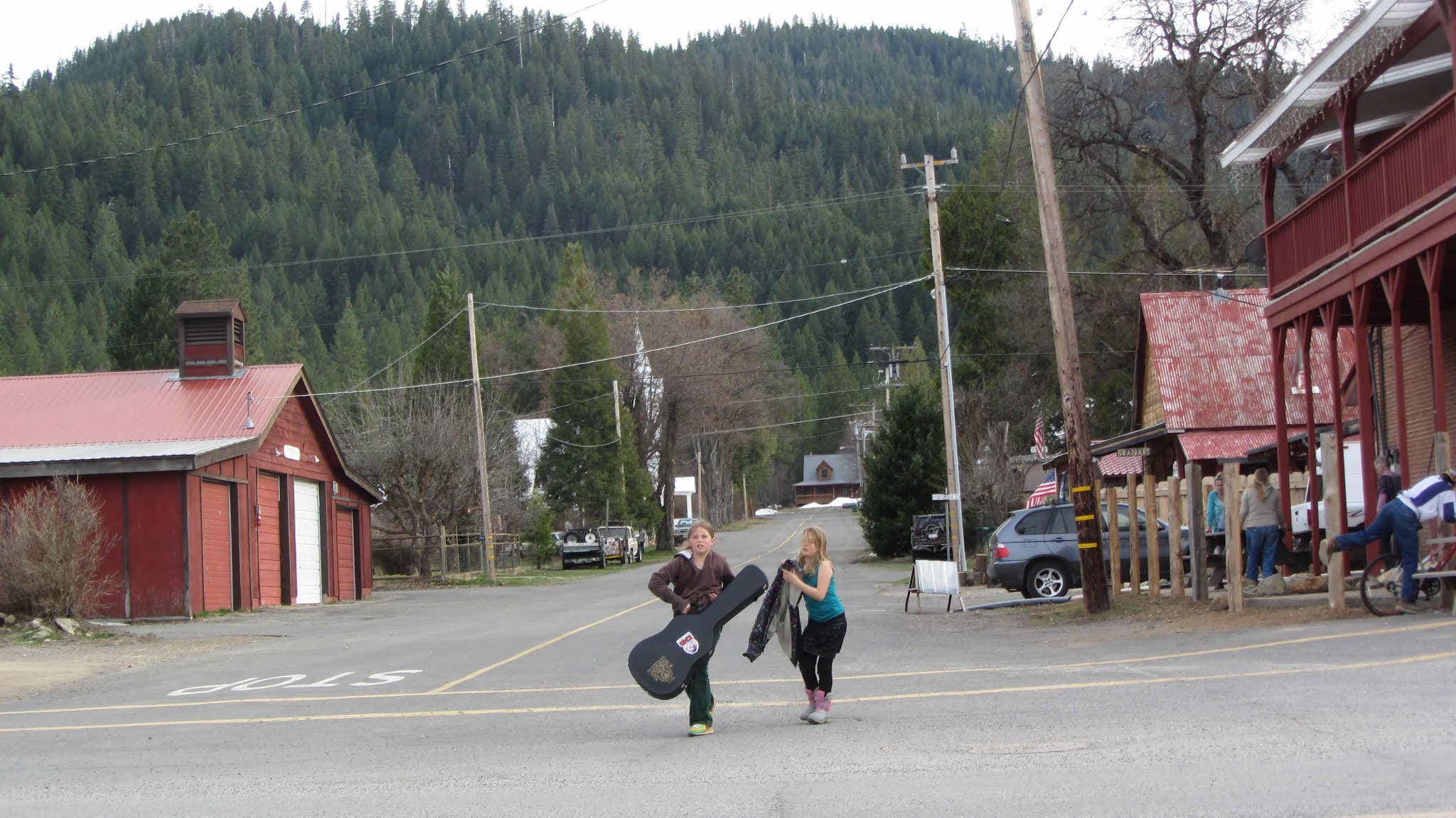 |
| Young musicians Downtown Greenville, California, March 2013 |
I spent several days of the 2012-2013 academic year in Plumas County, California. A good bit of that time was in Greenville, a town of about a thousand folks in an area called Indian Valley, less than an hour north of the county seat, Quincy. Plumas County is about the size of Delaware, but it's sparsely populated, with just about 20,000 residents.
 |
| Village Pharmacy (left) in a building dating to the 1860s, was destroyed in the Dixie Fire Wednesday night. (c) Lisa R. Pruitt 2013 |
The year I spent working off and on with my law students in Plumas County is documented in this report that my students and I produced. We were conducting what is called "participatory action research" in collaboration with Legal Services of Northern California, which had a grant to do do early outreach related to the Affordable Care Act's implementation.
Historically Mountain Maidu territory, Greenville is one of the poorest parts of the county--and, indeed, one of the poorest places in California. I took many photos (all (c) Lisa R. Pruitt 2013), and I'm going to share some here as a reminder of what Greenville was--and might be again.
 |
| Anna's Cafe, Greenville |
 |
| Downtown Greenville, March 2013, with Way Fair Tavern and Anna's Cafe in background behind the flag |
I say "might be again" because on Wednesday evening, Greenville was largely destroyed in the Dixie Fire, now the second largest fire burning the United States, and one of the largest fires ever in California. As the crow flies, Greenville is not many miles from where the Camp Fire destroyed the town of Paradise in 2018. Indeed, the Camp Fire and the Dixie Fire started in the same area, both in the Feather River Canyon. The Camp Fire burned west and north from there, while the Dixie Fire burned mostly south and east. Also threatened is the Plumas County town of Chester, which borders Lassen County, and the fire is now also burning into Lassen National Park.
I'm featuring here a sampling of the photos I took in 2013 in and around Greenville. (I took many, many more, so may do a few additional posts featuring different aspects of Greenville and Indian Valley).
 |
| Indian Valley Chamber of Commerce and a bookkeeping service, Greenville, California, Spring 2013 |
 |
| Hotel in Downtown Greenville. The building whose corner you can see on the right is the Village Pharmacy, pictured above. |
 |
| Lutheran church, 2013. You can see after-fire photos of the church at the links below, where just the sign remains. |
 |
| Music studio Greenville, 2013 |
You can read more about what happened in Greenville on Wednesday here, here, here, and here. You'll see there photos of what's left of some of the buildings I photographed in 2013.
 |
| Hunter Ace Hardware, Greenville, Spring 2013 |
 |
| Greenville Rancheria Tribal Medical Center, Spring 2013 |
 |
| Greenville Library, Spring 2013 |
 |
| Way Station Tavern, which sat right across from Village Pharmacy and across Hwy 89 from Anna's Cafe. You can see after-fire photos of the tavern at the links below |
This latest, by Anita Chabria for the Los Angeles Times, features the story of Kevin Goss, a pharmacist in Greenville and also a long-time member of the County Board of Supervisors. (As a county supervisor and business owner, Goss is mentioned in the report my students and I produced). You can see a photo of his Village Pharmacy above, from 2013. He was in escrow to sell the business to a pharmacist in Quincy when the Dixie Fire destroyed it.
 |
| A woman was selling goat's milk-based products out of an outbuilding behind her home, on a residential street, Feb. 2013 |
Here's a Eulogy for Greenville, written by resident Meg Upton and published in the Plumas News. It talks about politics--though it puts a good spin on how community spirit overrides politics in Greenville because they're too small and need each other too much to alienate one another. And it reminds me of this very memorable photo I took in Greenville in 2013:
 |
| Greenville, California, Spring 2013 |
Speaking of politics, Governor Gavin Newsom visited Greenville yesterday and posted this video on Twitter. Mostly, Newsom focused on climate change's role in this disaster, but he also said the Dixie Fire and the disaster in Greenville is "about people's culture, their identity, lifestyles, a sense of place, memories that are attached to this, one of the oldest communities in California. This is about our families, our kids ... we have a deep responsibility to rebuild."

More photos to follow in a future post.
Post script: You can see after-fire photos of some of these places, including the Greenville public library, the Greenville Rancheria Medical Clinic, and the Way Station Tavern in this August 12 story from the Los Angeles Times.
Saturday, December 19, 2020
Applications down at Cal State University's "rural" campuses in northern California
A story in today's Los Angeles Times reports that applications to University of California campuses are up this fall, while applications to California State University (CSU) campuses are generally down, but especially at locations like Dominguez Hills, which serves many low income students, and at CSU's northern California campuses, several of which are rural by some measure.
The change in volume of applications varied by campus, dropping by as much as 26% among first-time freshmen at Sonoma State and increasing by as much as 9% at Cal Poly Pomona. In part, the numbers reflected some ongoing trends: the recent struggle of several Northern California campuses to attract students from outside their areas because of competition from Southern California, wildfires, limited housing availability and the high cost of housing.
In addition to Sonoma State, there are CSU campuses in Chico, which was badly impacted by the Camp Fire in 2018 and another major fire in Butte County this year, and in Arcata (Humboldt State). Sonoma State is in Rohnert Park, near Santa Rosa, the county seat of Sonoma County.
The story is reported by Teresa Watanabe and Nina Agrawal.
Tuesday, September 22, 2020
Small towns in the West obliterated by fire (Part IV): Berry Creek, California
Here's the lede for Maria La Ganga's story out of Berry Creek, whose population varies dramatically depending on the source:
Berry Creek has been many things in its long history — a stagecoach stop, a lumber town, a vacation spot, a gold mining camp. It is home to retirees from crowded, expensive cities, marijuana growers and loners — lots of loners.
Now, Berry Creek has a new and terrible distinction. When the North Complex West Zone fire swept through this wooded enclave about two weeks ago, it killed more people and destroyed more homes here than anywhere else in its destructive path.
Fire Station 61 burned to the ground. Chief Reed Rankin, who heads the volunteer company, lost his home in the blaze. Only one of the seven current or former firefighters still has a house to go back to when evacuation orders are lifted.
See earlier posts about Berry Creek in this series.
Wednesday, September 9, 2020
Small towns in the West obliterated by wildfire (Part I)

That's the sobering theme of several reports from the past few days, stories out of Washington, Oregon and California.
Here's one from Whitman County, Washington, where the town of Malden, population 203, was destroyed on Monday.

Here's another from Mill City, Oregon, population 1,855, which straddles Linn and Marion counties, both metropolitan. This story includes video from Mill City and Gates. Meanwhile, several towns and cities in southwest Oregon, including Ashland and Medford in metropolitan Jackson County, were evacuated last night. Other stories about the Oregon fires are here and here. Governor Kate Brown has told Oregonians to brace for the worst; she expects the highest death toll ever from wildfires in the state.

Finally, Berry Creek, (population unspecified on Wikipedia) in Butte County, California, was destroyed today. Paradise and Concow, other Butte Co. communities decimated by the 2018 Camp Fire, are also threatened, as the county seat, Oroville. Read more here. All photos here are from the Berry Creek community (c) Lisa R. Pruitt 2012.

The Creek Fire in Fresno and Madera counties has decimated the community of Big Creek. Read more here and here. Other Central Valley and Sierra Nevada communities are also threatened, as well as those along the Central Coast.
Friday, November 8, 2019
Revisiting Paradise Lost, a year on
The Camp Fire destroyed the Butte County city of Paradise, along with a few smaller communities, a year ago today. Thus, many radio programs and newspapers are running commemorative features. I'm linking to just a few of them below. Legal Ruralism's earlier coverage of the Camp Fire disaster is here, here, and here. And here you'll find the CalATJ's policy brief on rural disasters, which was published this summer.
From Northstate Public Radio
From National Public Radio--predictably about sports (another exemplar of that is here)
From the New York Times.
From the Sacramento Bee.
From the Los Angeles Times
From the San Francisco Chronicle.
From Northstate Public Radio
From National Public Radio--predictably about sports (another exemplar of that is here)
From the New York Times.
From the Sacramento Bee.
From the Los Angeles Times
From the San Francisco Chronicle.
Saturday, October 26, 2019
On California's wildfires and blackouts, and their impact on rural folks
As we enter the second major round of blackouts in California, I thought I'd collect here some coverage of the last round, earlier this month, and also some breaking news of the impact on rural Californians up and down the state.
During the mid-October blackouts, the Wall Street Journal ran this story with the dateline Eureka, California, population 27,191, and county seat of Humboldt County, population 132,646. The story features the North Coast Co-op, which had to throw out spoiled food after power was cut off.
Anita Chaba and Taryn Luna filed this story for the Los Angeles Times on October 11, headlined "PG&E power outages bring darkness, stress and debt to California’s poor and elderly." The dateline is Clearlake, California, population 15,000, and its focus is the personal toll on residents living with the power outages, including the frail and elderly. Here's an excerpt:
As I prepare to post this, the Sonoma County communities of Healdsburg (population 11,254) and Windsor (population 26,801) are under evacuation orders because of the Kincaide Fire, which required the evacuation of smaller Geyserville (population 862) earlier this week. Hundreds of thousands of customers are expected to be without power in both rural and urban parts of California this weekend.
During the mid-October blackouts, the Wall Street Journal ran this story with the dateline Eureka, California, population 27,191, and county seat of Humboldt County, population 132,646. The story features the North Coast Co-op, which had to throw out spoiled food after power was cut off.
Anita Chaba and Taryn Luna filed this story for the Los Angeles Times on October 11, headlined "PG&E power outages bring darkness, stress and debt to California’s poor and elderly." The dateline is Clearlake, California, population 15,000, and its focus is the personal toll on residents living with the power outages, including the frail and elderly. Here's an excerpt:
Few understood what the challenges would be until they were in the dark: a mom who couldn’t refill her son’s medication for bipolar disorder; a man with schizophrenia who couldn’t quiet the voices in his head without the television on; the people on dialysis who had to travel to another town. In El Dorado County, just northeast of Sacramento, an elderly man died minutes after apparently losing power to his CPAP machine, according to a report from the local fire agency, though an autopsy listed severe coronary artery atherosclerosis as the cause of death.
Even little things became hard. Ice and charcoal were scarce, making it difficult to keep food cold or cook a meal. Freezing showers were too intimidating for elderly nursing home residents as fall arrives with 45-degree nights here.
“You don’t know until it happens how it’s really going to affect you,” said Tara Drolma, 72, who was watching the power fade on her emergency battery, and wondering if she would have to choose between charging her electric wheelchair or her heart monitor.In November last year, following the eruption of the Camp Fire which destroyed Paradise, California, the Los Angeles Times ran this story about possible long-term solutions to the state's fire danger. Its headline is, "Deadly California fires prompt bold thinking about prevention: Shelters, strict zoning, buyouts." It quotes Bruce Cain of Stanford's Bill Lane Center for the American West:
We have to really start to think about new measures and new approaches that have to be more drastic. ... [Among them is] “a strategic retreat from communities that are never going to be safe.And here's perhaps the most ominous headline, from the New York Times this week, "A Forecast for a Warming World: Learning How to Live with Wildfire."
As I prepare to post this, the Sonoma County communities of Healdsburg (population 11,254) and Windsor (population 26,801) are under evacuation orders because of the Kincaide Fire, which required the evacuation of smaller Geyserville (population 862) earlier this week. Hundreds of thousands of customers are expected to be without power in both rural and urban parts of California this weekend.
Subscribe to:
Posts (Atom)