Friday, June 7, 2024

On the distinction between the rural lawyer shortage and the rural ATJ crisis

Daria Fisher Page and Brian Farrell of the University of Iowa wrote recently in Law 360 under the headline, "Behind The Unique Hurdles Of Rural Access To Justice."  Here's the gist of their argument, which is a shorter version of their recently published article in the Washington Law Review.  
We argue, however, that rural access to justice challenges and the rural attorney decline have become conflated and viewed as a single crisis in which the declining number of attorneys is understood to be the cause of the rural access to justice problem, and recruiting new attorneys is therefore the preferred solution.

Moreover, these conclusions have often been reached in the absence of agreed-upon definitions of "rural" or "access to justice." We view the rural attorney shortage and rural access to justice as distinct but related phenomena.

Much of the entanglement comes from the fact that access to justice has often been, quite simplistically, measured by reference to attorneys per capita or attorneys per county.

This usage reflects both a narrow understanding of what access to justice means and the fact that, unlike other potential metrics, data on licensed attorneys has been cheaply and readily available from regulating authorities.

The romantic view of the accessible, though generalist, Main Street lawyer may persist. But research shows a growing gap between the needs of low-income rural clients and available private legal services in rural communities.

An attorney is a poor measure of access to justice if their skills and expertise don't match the needs of the community or their services aren't affordable.
Increasingly, access to justice scholars and policymakers have recognized that access to justice is not synonymous with access to lawyers.

Instead, the focus has been to better understand the likelihood individuals in a given location will encounter justice problems and their actual legal needs when they do. An inquiry into rural access to justice focused on people's needs, the outcomes they're looking for and how they want to be treated will allow for the implementation of interventions that best match these needs.

Thursday, June 6, 2024

What school choice looks like in rural Arkansas: Tiny district turns to YouTube and Facebook ads to attract students

School choice is a topic I've been interested in for some time, certainly since school consolidation was mandated in Arkansas in the early aughts.  I wrote about it here in 2012.  During a recent visit to Arkansas for the April eclipse, I saw the electronic billboards at schools in Cotter and Bee Branch touting their schools in that context--that is, they were recruiting students. As I observed back in 2012, I find this curious given that rural students typically already must travel inconvenient distances to get to the nearest school, so it's always struck me as unlikely that students (and their parents) would choose to travel greater distances to a neighboring school district.  

More recently, "school choice" is back in the news because of the proliferation of voucher programs that permit parents to use public tax money to send their children to private schools, including religious ones.  The Washington Post ran a big feature on the topic a few days ago.

Now, I see in my hometown Newton County Times (May 8, 2024 issue; no link is available on the newspaper's website) that the tiny Deer/Mt. Judea School District there is engaged in an advertisement streaming campaign to reach prospective students who might choose the school.  Deer/Mt Judea is perennially on the verge of closure due to falling below the enrollment threshold.  (That was the topic of this 2011 post) The school board engaged A4 Advertising, a "national advertising and data company that provides audience-based multiscreen advertising solutions."  The company is targeting only households with children aged 4 to 18.  The ad executive, Tonda Mixon, proposed sending ads about the school's "latest curriculum of drone technology, cave exploration and study as well as its more established distance learning program to designated households within a 50-mile radius of the school district."  

At the April 25 board meeting, the board got data about the 15-second and 30-second commericals that have been running on YouTube.  The ads have been streamed 48,000 times, and the VCR (Video Completion Rate is 96% and 97%). The ads are not skippable, which lends to a higher VCR rate, though viewers could still click away from the website when they see the ad come up.  Most of the advertisements are being viewed on television sets rahte rhtan on computers and tablets, Mixon reported.  

The superintendent said the school is now looking at doing "some Facebook advertising and boosting to generate about 27,000 additional views."  The board will decide over the next few months how hard it wants to push the different ads.  The school board president said he expects to see the fruits of the advertising effort in six to eight months.  The story reports that "Patrons of the school district voiced their concerns that the school board wasn't doing enough to promote the schools and raise the district's enrollment numbers." 

The story explains that the "drone technology and caving programs were recently added to the district's curriculum based on student interest.  The school district pioneered digital learning prior to the COVID-19 pandemic when schools suddenly had to initiate distance learning programs for their stay-at-home students.  That reduced the number of students enrolled in Deer-Mt. Judea's program.  However, schools have begun to abandon distance learning in favor of returning to tradition in-person teaching.  The school district's digital program has rebounded and recently the program's director said all of the existing student slots were full."  

In other business, the school board authorized the purchase of 300 Chromebooks for $96,528, which will come from federal funds.  Currently, the school has "stacks of expired units," an apparent reference to the fact they "can be updated only so often."  It was reported that two or three of the Chromebooks are turned in each day for repair.  After gathering three bids for the purchase, the school negotiated to get the devices for less than $300/each. 

In other front page news from the May 8, 2024 issue were these headlines: 

  • Senate approves new regulations for crypto mining (republishing a press release from the Arkansas Senate)
  • Administrative office of the Courts delivers naloxone kits (several employees of the administrative office of the court, a circuit judge, and drug court personnel are pictured with the story)
  • Despite bad weather Career and Info Fair reigns in Bradley Park.   An accompanying photos features two employees of the Newton County Sheriff's Office, the jail administrator and a deputy.  a jailer position is currently open.  Health insurance benefits are included.  
  • Waterfall tour May 11.  This Spring Waterfall Chasing Back Road Tour is sponsored by Jasper Advertising and Promotion Commission, and the cost is $50/vehicle. 

Tuesday, June 4, 2024

Rural women attorneys comment on work-life balance

Danielle C. Forseth and Melissa Luna wrote in the Advocate, the Idaho State Bar Magazine, last fall about "Women Attorneys and Achieving Work/Life Balance in Rural Idaho."  Here's an excerpt about Idaho State Bar geo-demographics generally:
Idaho has a total of 5,474 active attorneys of which 4,005 reside or have an office in-state.  Idaho’s Fourth Judicial District represents 2,226 of these active and in-state attorneys, leaving 1,779 attorneys to serve the remainder of Idaho. In comparison, Idaho’s Sixth Judicial District claims 189 active, in-state attorneys. In 2020, the ABA reported “two-thirds of [Idaho] counties (29 of 44) have less than one lawyer per 1,000 residents, including three counties with no lawyers at all and two counties with only one lawyer.”For every 1,000 residents, Idaho has 2.2 attorneys. The number of attorneys available to enter into attorney-client relationships with local residents shrinks once prosecutors, city attorneys, and county attorneys are subtracted from available attorneys. Further, the “graying of the bar,” or many attorneys who are older and nearing retirement or retiring within the ISB, adds to the scarcity of rural attorneys. 
And this is what the authors wrote about opportunities in the state's rural-ish counties.  They both practice in Moscow, population 24,000, and home to the University of Idaho.  Moscow is the county seat of Latah County, with a population of nearly 40,000.
Danelle Forseth joined long-time Moscow attorney Ronald Landeck in 2011 full-time after having worked part-time for several years to care for two children until they reached school-age. Melissa Luna joined the law firm in 2015 after working as an in-house civil rights investigator for colleges and universities. She landed in Moscow when her spouse took a position in the region. Danelle recalls:

“Melissa and I graduated from law school together. We had been chatting about job opportunities in Idaho when she said she would be moving to Moscow. I urged her to meet with Ron and me and consider coming to work with us as we had a tremendous need for another attorney to serve our clients. In my experience, there is never a shortage of people or businesses in need of legal assistance in our community.”

Another rural attorney, Susan Wilson, who has mostly practiced as a solo practitioner, also enjoys working in small towns in Idaho.  She states:
“I have more than enough clients to support my lifestyle. I think attorneys in small towns will always be busy – just the nature of having a general practice and conflicts of interest with other attorneys – the whole supply and demand model is very much applicable to attorneys and just like any other market restriction, we have conflicts of interests that force involving other counsel. I’m not even talking about litigation – even transactional attorneys, estate planning attorneys, probates, etc. Every area of law.”

In the authors’ practices, there are enough billable hours to cover expenses and pay themselves salaries above the annual mean wage earned by all attorneys in Idaho. In fact, at different times of the year, they must decline cases to keep their caseloads at a manageable level. In addition, author Melissa has also qualified as a Parenting Coordinator under the Family Law Rules of Procedure and works with parents to make decisions after the entry of a custody decree. 
Another local attorney, solo practitioner Jennifer Ewers, offers other types of legal services to the community, such as mediation services. She comments, “As a mediator, I hope I am helping the community by providing a service that allows parties to resolve family law and other disputes in a less contentious and costly forum than court, and that leaves the outcome of the process in their hands.”.

So little has been written about female lawyers practicing in the rural United States.  That made me especially happy to see these reflections recorded, even though the authors are not writing much that is explicitly gendered.  As much as anything, the story seems to confirm that there's plenty of business for small-town attorneys--at least in "small towns" the size of Moscow, which isn't all that small.  

Friday, May 31, 2024

My Rural Travelogue (Part XXXIX): Hvar Island, Croatia

Island of Hvar, Croatia
all photos (c) Lisa R. Pruitt 2024

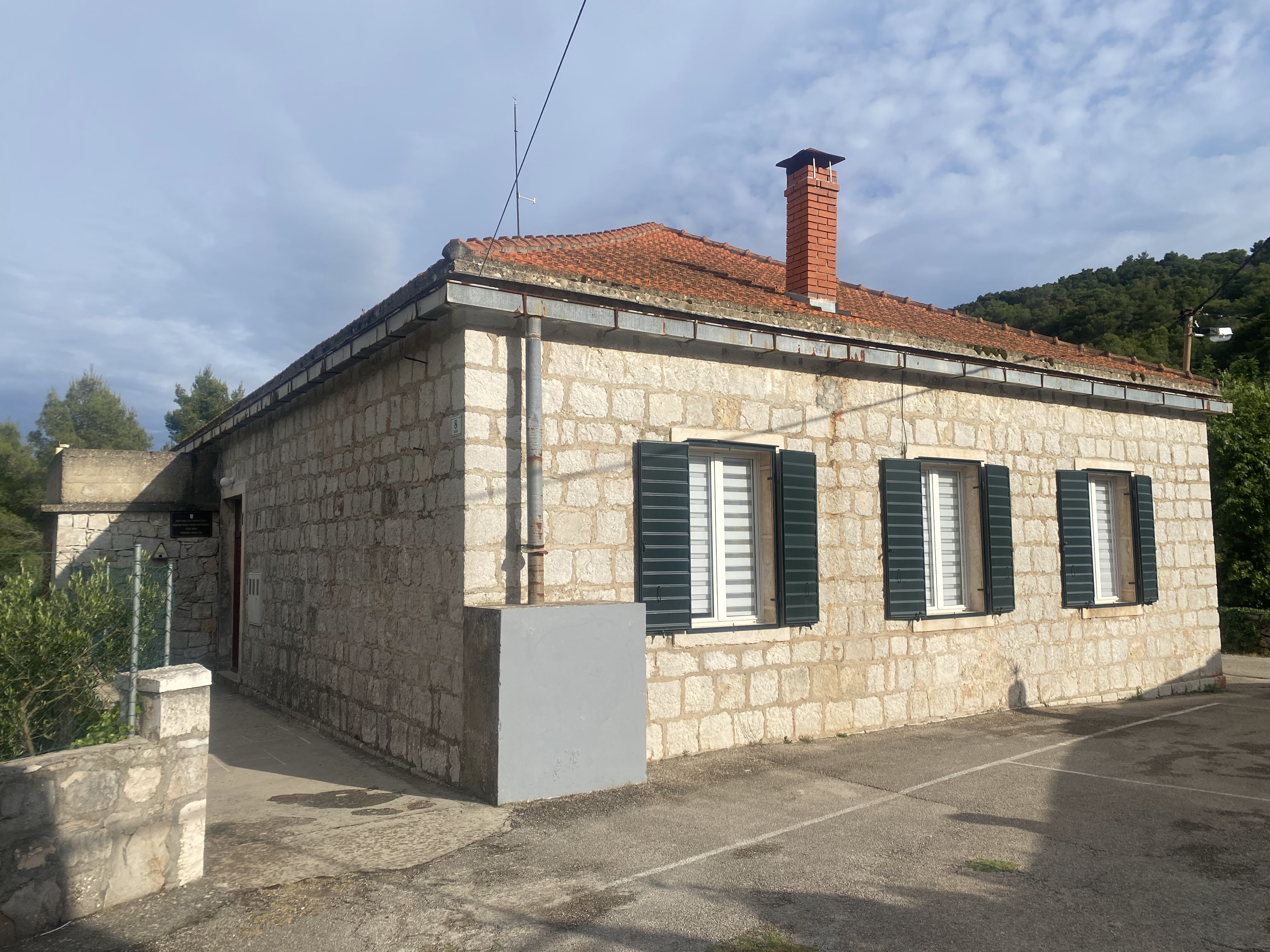
I've been traveling in Slovenia and Croatia the last week or so and, not surprisingly, paying particular attention to rural places.  A few days ago, I visited the Island of Hvar (population 10,678 on an island 42 kilometers long).  Our guide--because it was raining and she was delaying the start of our bicycle tour--drove us over the mountain between Hvar town and Stari Grad (population 2,772), and through the village of Velo Grablje, which featured this sign about the "entity" being protected cultural heritage.  (Going over the mountain as we did was a longer-distance alternative to going through a tunnel).  We saw what appeared to be the only restaurant in the village overflowing with families following first communion at the nearby church.  (We also stopped in the "ghost town" of Malo Grablje, a few kilometers below, along the same "back road").  Among the things we have learned here is that not only music and art, but also recipes and--as we see here--entire villages can be deemed protected cultural heritage.  

As we have found to be the case elsewhere in Croatia--including on Hvar and other islands in Dalmatia, small-scale agriculture is widespread.  Many folks have small garden plots in their front or back yards, and on Hvar many also have plots in the Stari Grad Plain, prime agricultural land that made Stari Grad such a desirable location for settlement.  Many also have small vineyards and/or olive groves, which are also on terraces that stretch up the mountainsides.   

Vineyard near Stari Grad, Hvar Island
Stone wall along ancient Roman road on Stari Grad Plain

Potato plants are as common as vineyards and olive groves on the island.

Little free library in Stari Grad

Our guide, who is viola player as well as a cyclist and librarian, told us about a recent benefit concert she played to raise funds to buy food for donkeys kept by a local woman.  The yield from the event raised a few thousand Euros for the care of the donkeys.  That outdoor concert was held near the restaurant featured in this advertisement, adjacent to the village of Dol, which rises above the Stari Grad Plain.
Public library, Stari Grad.  It is above a coffee shop,
right on the waterfront, next to the city hall.

K-4 school in the village of Dol; older children go to school in Stari Grad 

Artichoke plant next to a stone wall on road between Dol and Vrbnj

Hvar is known for its lavender, which was in early season.

Thursday, May 30, 2024

Judge in rural-ish county censured, partly for failure to disclose relationships with attorneys, litigants

This week, California's Commission on Judicial Performance censured and removed a judge from the Humboldt County California Superior Court.  Jackson Guilfoil reports for the Times-Standard, Eureka on the matter involving Gregory Kreis, who admitted 17 of 21 counts against him.  The former judge has also agreed never again to serve as a judicial officer.  (A prior post with background on the allegations against Kreis is here).

The Commission on Judicial Performance stated:  

The commission issued a censure and bar to Judge Kreis as a result of multiple acts of misconduct. In at least 44 cases over which he presided, Judge Kreis failed to disclose his relationships with seven attorneys; his familiarity with individuals involved in matters before him; or the extent of his relationships with the individuals. The extent and type of this misconduct is serious. Also, the commission commented that it took particularly seriously the judge's sexual misconduct with a female acquaintance. Further, the commission based the censure and bar on Judge Kreis's conduct in treating attorneys and litigants poorly, including making inappropriate, sarcastic, and gratuitous comments to them.

This familiarity among litigants, attorneys and judges reflects a challenge for administration of justice in rural-ish places:  the lack of anonymity or "high density of acquaintanceship" that marks these communities.   That is no excuse, however, for Kreis' failure to disclose these relationships.   

The Guilfoil story includes this summary, which touches on the conflict issue, as well as other more salacious charges levied at Kreis: 

Most of the CJP's initial accusations remained in the stipulated agreement, including a moment when Kreis touched the butt of a mutual friend after being told not to, though the majority of the counts stemmed from hearings where Kreis either did not disclose a conflict or would not recuse himself. Several cases cited in the decision were litigated by Kreis' personal friends, former friends or attorneys representing him in other cases.

Kreis' attorney, James Murphy, said Kreis agreed to these terms because he lost his recent bid for re-election.  Murphy is quoted, "He lost the re-election bid, so he was going to be a short-timer. No sense staying on."  Murphy also commented that he "believes the CJP interfered in the election by announcing their disciplinary inquiry into Kreis during campaign season." 

Here is a story about Kreis' appointment to the bench, by Governor Jerry Brown, in 2017.  He was previously a public defender in Humboldt County.  Kreis is an alumnus of CSU Humboldt, which suggests he may have grown up in the region.  

Tuesday, May 28, 2024

NYT op-ed on Biden's investments in rural America: Why they matter and how to make them happen

Tony Pipa of the Brookings Institution wrote in the New York Times opinion section this weekend under the headline, "Biden Wants to Send Billions to Rural America, but This Must Happen First."  

President Biden regularly emphasizes how the major pieces of legislation he has signed — the Infrastructure Investment and Jobs Act, the CHIPS and Science Act and the Inflation Reduction Act — expand opportunities for Americans.

This is especially true for rural Americans. Those three laws appropriated billions of dollars — about $464 billion — for many projects that could be particularly relevant to rural communities, allowing them to dream of a different economic future.

I am often asked if rural voters will give Mr. Biden credit for all that money and the changes it could bring and will show their appreciation at the ballot box. My answer is that it is unrealistic to expect place-specific investments to have an immediate impact on elections.

Rural places remain skeptical that federal policymakers have their best interests at heart. Proving otherwise will take intention and time.

Pipa goes on to explain how important implementation is, by which he refers to the lack of bandwidth many rural local governments have to plan, develop projects, and write grants.   This is because many of these local governments are run by officials who are elected but unpaid.   Here's some data he uses to illustrate the point:   

Only 15 percent of Michigan’s smallest jurisdictions, for example, express confidence in their ability to get access to federal grants, whereas the rate for jurisdictions over 30,000 people is close to 40 percent. A national survey published in 2019 found more than half of rural counties experienced moderate or significant fiscal stress, so for programs where local governments must match the federal funding, those counties face an additional challenge.

This, Pipa predicts, portends likely inequitable distribution of these federal monies.  He also gives a nod to the recent debate over whether rural places are worthy of investment.  

These human capital issues and the impact they have on garnering federal dollars, as well as charitable grant funding, have been addressed in prior posts here, here, and here.  

Pipa's X (formerly Twitter) thread about the op-ed is here.  

I discuss some of the issues Pipa raises--in particular the challenge of showing rural folks that the federal government is working for them, too--in my recent commentary in the Cambridge Journal of Regions, Economy, and Society:  "Mustering the political will to help left-behind places in a polarized USA.

Monday, May 27, 2024

Solving a rural county's public defender shortage one (or two) lawyer(s) at a time

The Methow Valley News reported earlier this month on an expansion of the public defender staff in Okanogan County, Washington (population 42,000).  (A prior post about the situation in this county that straddles the Cascades, on the Canadian border, is here).  The story is by Marcy Stamper, and the lede follows: 

The situation for people in Okanogan County who can’t afford a lawyer — and for the attorneys who represent them in court — has improved, with two lawyers joining the county’s public defense team and more money for indigent defense available through the end of the year.

One attorney started at the end of April and the other starts next week, Anna Burica of Burica Law, who holds the contract for public defense work for Okanogan County, said last week. One lawyer will work full-time on cases in Okanogan County Superior Court, and the other will work a 75% schedule in District Court. Neither attorney is based in Okanogan County, so both will handle many cases remotely, traveling to the county as needed for trials, certain hearings, and to meet with clients, Burica said.

The additional attorneys and money from the county “will keep us afloat a little longer,” Burica said. Because the state places limits on the number of cases each attorney can handle, Burica and another attorney expect to reach their limit by August, she said.

The story then describes new standards regarding case load limits for public defenders.  These standards that will be implemented over the next four years: 

The new numbers mean that Okanogan County will need 10 full-time attorneys for Superior Court cases, another 10 in District Court, and two in juvenile court. That’s a huge increase, since current contracts (a mix of full- and part-time) add up to just over three attorneys, Burica said. Burica handles some cases as well as administrative duties.

It’s going to be very difficult to find 22 attorneys to do full-time criminal work, Burica said. The pool for new attorneys is not encouraging — right now, there aren’t even 10 attorneys in Okanogan County, including those in private practice, who practice criminal law on the defense side, she said.

Okanogan County will also need 17 legal assistants to help with investigations and mitigation, Burica said. Mitigation specialists look at a defendant’s entire history — such as family issues or abuse — and can help build a case that avoids the maximum penalty, she said.

Stamper also includes some data I've not seen before regarding law school enrollment nationally: 

The situation is complicated by a drop in law-school enrollment nationwide. There was an average of 43,000 first-year students from 1988 through 2000, but then enrollment grew, peaking at 52,400 in 2010. After that, there was a steep drop for four years, ultimately stabilizing at about 38,000 new law students annually.

These data ignore the fact that most law students desire to work in metropolitan areas rather than rural ones, a bigger issue than the sheer number of those earning J.D. degrees.  Read more on these issues here.

Stamper quotes Okanogan County Commissioner Andy Hover as saying that that the state's failure to fund indigent defense makes it an "unfunded mandate, which counties struggle to afford.  He says the cost of providing indigent defense, which will rise with the new standards, could be "in the millions."  Here's some additional context from Stamper: 

The state Legislature has also appropriated a small amount of money for public defense. That includes $900,000 (split between cities and counties) to improve the quality of public defense services.

Hover called that additional state money “a drop in the hat.”  Stamper continues: 

Another $1.86 million will go toward internships and training, in part with the aim of encouraging attorneys to practice in rural areas. Some appropriations are specifically for representation connected with drug crimes, parents programs, and cases involving the insanity defense.

Read more about what is happening at the state level from Daniel Beekman in the Seattle Times, here and here.  

Sunday, May 26, 2024

On rural gentrification, and the ensuing housing shortage, in coastal California

Hailey Branson-Potts reported for the Los Angeles Times a few days ago from Marin County, the famously wealthy county that lies just north of San Francisco, on the north end of the Golden Gate Bridge.  The headline is "Looking to vacation on the California coast?  Marin County just made it harder."  Here are some excerpts particularly relevant to the issue of rural gentrification. 

In Marin County, the explosive growth in short-term rentals has been particularly divisive in smaller towns. There, the number of full-time residents is dwindling while millionaires’ second — and third — homes, many of which are used as seasonal rentals, sit empty much of the year.

That’s a cruel paradox when there are not enough affordable homes for people who work in those communities, proponents of the cap say.

In unincorporated Marin County, the median sales price of a single-family home rose 98% from 2013 to 2021, to $1.91 million, according to a countywide housing plan adopted last year.

The story quotes Sarah Jones, who directs the Marin County Community Development Agency: 

Housing affordability and housing supply were really the driving factor in why we’re addressing short-term rentals right now.  There’s not housing being built. And the housing that’s available, people are just seeing that it’s more profitable and easier to use it as a short-term rental than to rent it out long term.

Branson-Potts' story continues: 

Although Marin County has much open space, it has little room to expand housing. Roughly 85% of its land, including the Point Reyes National Seashore and the Golden Gate National Recreation Area, is public space or agricultural land protected from development.
Marin County Supervisor Dennis Rodoni, who represents the scenic West Marin towns where vacation rentals are most heavily concentrated, said they have transformed “tiny communities where even losing a few homes is a big deal.”  
Rodoni continues: 
Our volunteer fire departments are losing volunteers.  Our schoolteachers, we’re having a hard time locating them in the community; they have to commute long distances.

Read more about this region of California in several posts here.  Posts about Sonoma County, just to the north of Marin, are here, here, and here.  

Saturday, May 25, 2024

A rural listening (or rallying?) tour in North Carolina

X Post by Anderson Breeze Clayton
from Pasquotank County, NC
I've written a great deal about Anderson Breeze Clayton in the last couple of years.  The North Carolinian is the youngest state Democratic Party chair in the nation.  I've also written about the need for candidates to show up in rural places--the need not to neglect the rural vote, including in Politico here and in the Daily Yonder here.  

In the last few weeks, these two topics have come together as Clayton has been promoting her rural tour, which I'll help document here, based on her X (formerly Twitter) account.  The photo above is from Pasquotank County, population 40,568.


Above is a screenshot of Clayton touting Stop No. 10 on the Rural Tour (note her capitalization here,) in Gates County, population 10,478, on the Virginia state line, in the eastern part of the state. 
Above is Pitt County, population 170,243, which is the Greenville Metro area and so not rural.  But Clayton mentions the rural tour in this post to X, perhaps because Pitt County has rural reaches. 
Above Clayton touts the candidates who are showing up in all 100 counties--which is definitely going to include some rural ones! 
Stop No. 5 was Currituck County, population 28,000, on April 29, 2024.  The county is on the coast, and also borders Virginia.  It is part of the Virginia Beach-Chesapeake VA-NC Combined Statiscal area and includes part of the Outer Banks. 
Here's another post from Stop No. 6, Pitt County.
Stop No. 9 was Hertford County, population 21,552 in the Inner Banks region.
Here Clayton quotes a story that quotes her, "It's a damn good thing to be a Democrat, y'all." and in her re-post, "especially say it in rural North Carolina," with the hashtag #RuralMatters.  

Clayton's more recent posts show her traveling with Democratic National Committee (DNC) Chair Jamie Harrison, of neighboring South Carolina, in the eastern part of NC.  

I'm impressed, as always, with Clayton's commitment to rural North Carolina.   I look forward to seeing where she goes next--and how the Democrats fare in the state in Election 2024.  

Postscript:  the May 29, 2024 NPR Politics podcast is all about the Democrats efforts to win North Carolina, though it attends little to rural issues and doesn't mention Clayton.  It does mention that the Democrats have opened offices in places like Rocky Mount (population 54,000), which isn't really rural. It's also just 45 miles from the state's capital, Raleigh.  

Thursday, May 23, 2024

Rural Legal Scholarship: Magassa and Friedman's "Toward Inclusive Justice"

 Lassana Magassa and Batya Friedman of the University of Washington just published "Toward inclusive justice: Applying the Diverse Voices design method to improve the Washington State Access to Justice Technology Principles" in the ACM Journal on Responsible Computing.  Here's part of the abstract: 

We situate our work in literature on inclusive justice, public interest technology in the courts, value sensitive design, and experiential experts. Then we present our research context, the Washington State ATJ-TPrinc, and our method, the Diverse Voices. We provide details on our methods, including our project genesis and implementation of the Diverse Voices process. We conducted experiential expert panels with four stakeholder groups: legal professionals, currently/formerly incarcerated people, immigrant communities, and rural communities. We then report key concerns and insights which surfaced during the panels as well as the review process and adoption of the revised Principles by the Washington State Supreme Court.

Here is what the authors say about why they chose to include rural stakeholders as one of the four groups of stakeholders in their study:

Panel 4: Rural Communities. Selected to balance the historical leaning for urban communities to be at the center of discussions about technology in the courts [35, 68]; the needs of people in rural areas, their distance from judicial bodies, their digital capabilities, and other factors are likely to differ from those who live in urban areas in Washington State.

This is from the Rural Communities Panel, which features the subhead "Experiential Experts" 

We recruited three experiential experts from rural Western Washington state with the help of public librarians and held the panel in a local public library. Panelists included: (1) an attorney who practiced family law, counseling, and mediation; (2) the city attorney in a town with a population less than 5,000; and (3) a legal assistant who worked as a parenting coach.

Panelists were concerned about bias in the justice system – both bias introduced by technology and bias introduced by human actors. The Scope and Access to Justice for All principles state that technology should not create unfairness or bias. Panelists concurred but also felt that it was important to acknowledge that technology could keep human bias in check.

From "Key Concerns and Insights"

“Human beings are massively biased too, so it's really balancing ... maybe using the two [humans and technology] to help balance out.” – Rural communities panelist
Panelists insisted that having the technology available is useless if the judicial system's actors are not sure how or when the technology can or should be used.
“Oh, one thing before I forget, on phones ... I don‟t know if they still do, but I did a trial down there two years ago, and they have a hard and fast rule that you cannot use a phone in the courtroom. I did a trial, and my assistant was doing research on her phone. The judge said, put that phone away. I said, wait a minute, that‟s impairing my ability to represent my client. The judge said, f**k you, you put that phone away.” – Rural communities panelist
The panelists went on to say that when they used a laptop for the same purpose, the judge had no objections. To this end, panelists proposed that the Maximizing Public Awareness and Use principle should advocate for training for those who interact with or are a part of the justice system.

Panelists also questioned the ATJ-TPrinc focus on "high-tech." They countered with the term "high-touch" to bring the focus back to the people who carry out activities in the judicial system.
“High-tech is great, but this is human beings we're dealing with and relationships. People need to be heard to feel justice. When I see people talking about tech stuff, that rarely comes in.” – Rural communities panelist
The panelists expressed disappointment with the focus on technology over people. While acknowledging that the ATJ-TPrinc went some distance to affirm the justice system's users are people with human problems, nonetheless, panelists believed that if justice is to be experienced and felt, more could be done.
Elsewhere, the article notes the difficulty in recruiting rural informants for the study: 
The time and effort to recruit and schedule panelists varied by community, with some being more challenging than others: Legal Professionals (10 hr), Currently/Formerly Incarcerated (15 hr), Immigrant Communities (20 hr); and RuralCommunities (30 hr).

Table 2 shows the location, duration, and panelist composition for each panel. Panels were held in physical locations convenient for panelists, either at an urban university or at a rural library.

Here are some of the rural findings: 

Rural Communities experts maintained that humans are an essential part of the rural justice system and were concerned that as more technologies are introduced, the rural courts might consider humans less important, in turn having a negative impact on rural court users.
* * * 
Rural Communities experts were concerned that lack of access to adequate translation services could result in people having no or inaccurate representation.

I recommend this article in its entirety to those interested in access-to-justice broadly speaking, as well as those interested in formerly incarcerated individuals and rural communities. 

Wednesday, May 22, 2024

Literary Ruralism (Part XLVII): Kent Haruf's "The Tie that Binds"

Kent Haruf's 1984 novel, The Tie that Binds, leads with something of a contrast--or perhaps it's a more  subtle distinction--between rural and urban.  The opening paragraph also introduces one of the principal characters, Edith Goodnough, whose life the novel chronicles from her birth.  Indeed, it goes farther back still, to her parents' migration from Iowa to eastern Colorado and the fictitious small town of Holt, where all of Haruf's novels are set: 
EDITH GOODNOUGH isn’t in the country anymore. She’s in town now, in the hospital, lying there in that white bed with a needle stuck in the back of one hand and a man standing guard in the hallway outside her room. She will be eighty years old this week: a clean beautiful white-haired woman who never in her life weighed as much as 115 pounds, and she has weighed a lot less than that since New Year’s Eve. Still, the sheriff and the lawyers expect her to get well enough for them to sit her up in a wheelchair and then drive her across town to the courthouse to begin the trial. When that happens, if that happens, I don’t know that they will go so far as to put handcuffs on her. Bud Sealy, the sheriff, has turned out to be a son of a bitch, all right, but I still can’t see him putting handcuffs on a woman like Edith Goodnough. (p. 1)

Sheriff Sealy--representing "the law" plays roles throughout the novel.  He is a peer, for example, of the narrator, Sanders Roscoe.  

(c) Lisa R. Pruitt 2011
Kilmarnock, Virginia 

Early on in the novel, Roscoe is visited by a journalist from the Denver Post, and this exchange ensues: 

“Mr. Roscoe,” he says. “I’m Dick Harrington. With the Post.” 

“That so?” I say. “I hope you’re not selling anything.” 

“No,” he says. “The Denver Post. It’s a newspaper. Maybe you’ve heard of it.” 

“Sure. I’ve heard of it,” I say. “But we keep it out on the back porch where we scrape our boots, so we don’t have to track cow into the kitchen.” Then I throw my head back and laugh. “It saves throw rugs,” I tell him. 

But he doesn’t think that’s real funny; he looks at me like How can I be so dumb and live? Guys like him think they drive the 150 miles out here due east from Denver and when they get here we don’t know anything. They think they have to educate us poor dumb country bastards. They think we don’t know what the Denver Post is. We know all right. We just don’t give a damn. (p. 6) 
How interesting that Haruf offered this observation four decades ago because it's surely even more true now--this assumption that rural folks are stupid.  I am reminded of this recent empirical academic work by Michael Carolan of Colorado State University.  It documents the annoyance of rural Coloradans at their urban counterparts, an annoyance born of feeling unseen and unappreciated.  

The Tie that Binds also features this comparison of rural and urban teens' experiences; it also acknowledges the role of generational change. This excerpt features Edith Goodnough as a teen, along with her younger brother Lyman. 
BUT if Edith and Lyman had been city kids, things might have been different. City kids, even in 1915, had some opportunities to escape which farm kids didn’t have. City kids could take off and walk ten or fifteen blocks or jump on a trolley car going across town and end up as far away from home as if they were in another state entirely, another country even. Then they could make their mark, or not make it, and start their life over or end it, but whatever happened, at least the ties would have been cut, the limits of home would have been broken.

Or if Edith and Lyman had been country kids living now, alive and howling in the 1970s, things might have been different too. It’s TV and movie shows and high school and 3.2 beer and loud music and paved highways and fast cars (and what goes on and comes off too in the back seats of those cars, until maybe Bud Sealy shines his flashlight in through the side windows)—it’s all those things and more that country kids have now, and you can’t tell a farm kid from a town kid, even with a program. They’re just about all the same, all alike in their cars, driving up and down Main Street every Saturday night, honking and howling, in Holt, Colorado. 

But Edith and Lyman didn’t have those things, those chances and opportunities to escape. They were farm kids in the second decade of this violent century, and they were stuck. Their mother died early, like I’ve already said; their father was Roy Goodnough, and even if he was a raging madman sometimes, even if he yelled too much at them, he was still their father.  (p. 52-53)

I am not certain I agree with Haruf that city kids and country kids are now so indistinguishable... but I did love this novel, not least for its intimate, small-town setting.  

Holt is said to be based on Yuma, Colorado, where Haruf once lived.  Interestingly, Yuma was in the news yesterday because of a hail storm there on Monday.