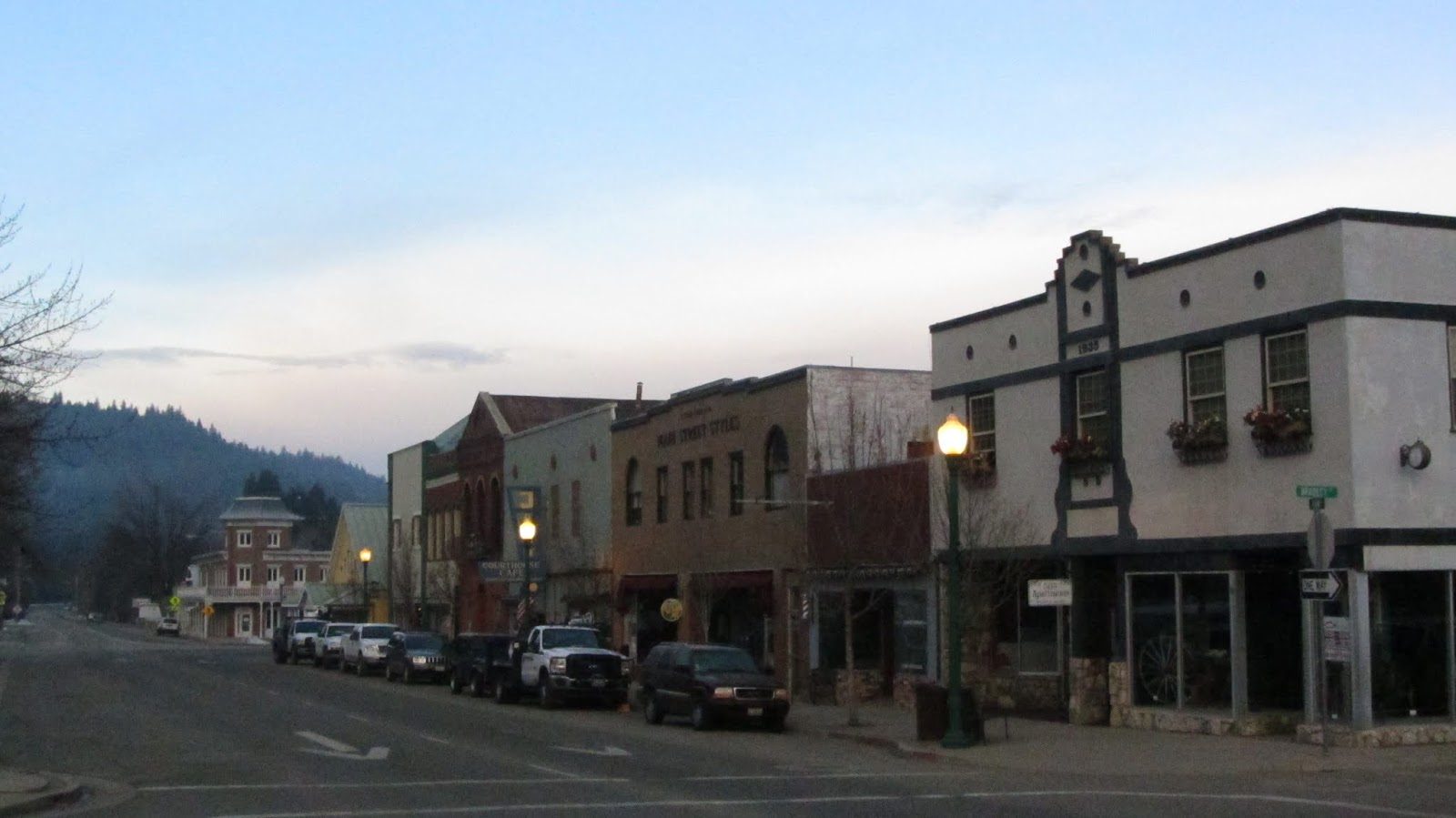
I wrote a few weeks ago (here and here) about State Senator Brian Dahle's campaign for the GOP nod for Governor of California. On Monday this week, Dahle launched a series of campaign videos with this, which focuses on Dahle's--and his family's--decision to make the run, a real David and Goliath contest based on relative campaign funds on hand. The video is titled "Brian Dahle: Road to Change: Episode One," and as of this morning, it has been viewed 717 times. Forty-two likes and no dislikes have been registered. The Brian Dahle for Governor channel has 54 followers, and nine folks have commented on the video.
Screenshot taken 8:15 am on March 12, 2022
Themes I saw in the video:
Focus on his family, including the candidate's two sons and a daughter. Dahle's wife Megan is the Assembly Member for a district that significantly overlaps with her husband's Senate District. One son introduced Dahle at the announcement of his candidacy for Governor. Another son, Chase, is said to be looking after the farm as Dahle and the rest of the family are away campaigning. The daughter, referred to as Ros or Roz, looks about the age of tween or young teen.
The campaign announcement took place in Redding, California with a seemingly small crowd present. Redding, the county seat of Shasta County, is the largest city in the region Dahle comes from (far northern California) and probably the largest city in the district he represents. That said, Dahle's district is huge, the largest in land area among state senate districts, and includes the area where I live, a suburb of Sacramento called Fair Oaks.
California State Senator Brian Dahle's Office in Gold River, California, a Sacramento suburb
A contrast between rural and urban. We see Dahle leaving an urban house--presumably where he and his wife live while in Sacramento--and traveling to his home in Lassen County, where he farms and has a seed company in the tiny town of Bieber. We see several shots of him driving in his pick up truck, including on an interstate--presumably I-5, which would link his homes in Bieber and Sacramento. I couldn't help think how much money he is spending on gas these days--and also how he seemingly could afford to move to an electric vehicle were he so inclined. Dahle also talks about how much more he is motivated to be farming than to be in Sacramento working as a legislator. I wonder if that is a message that works--one he wants to convey when he is running for Governor and will need to be in Sacramento and elsewhere in the state dealing with things other than farming.
And, of course, Dahle talks about things that aren't going well in California, such as the migration of folks away from the state. Dahle expresses concern about lack of opportunity in the Golden State.
Meanwhile, I thought this was an interesting Tweet from the Capital Public Radio (Sacramento) program director, previously a political reporter for the organization.
Adler, the journalist, seems to be contrasting Dahle with Larry Elder, the top GOP vote getter in the failed gubernatorial recall election last fall.
Postscript: The Los Angeles Times published this story today referring to Dahle and another (an independent) who is challenging him as "little known." Here's the paragraph about the two men challenging Newsom:
The field of candidates currently challenging Newsom includes Republican state Sen. Brian Dahle, a conservative, seasoned politician from Northern California, and independent candidate Michael Shellenberger, a longtime activist on energy and homelessness issues. Dahle has never run for statewide office and Shellenberger, who supported Newsom’s recall, ran for governor in 2018 as a Democrat and was backed by less than 1% of California voters.
Brian Dahle (R-Bieber) declared his candidacy for Governor of California yesterday, becoming the first to challenge Governor Gavin Newsom since the recall election in September, 2021. I've written about Dahle previously, here and here. He represents the largest (in land area) Senate district in the state, in far northern and northeastern California, adjacent for miles to Oregon and Nevada.
I'm surprised by his candidacy, mostly because he doesn't seem to have the proverbial snowball's chance in Hell of winning. One reason for that is the imbalance in funds: Dahle, who has served in the legislature since 2014, has $200,000 in his legislative re-election campaign fund, while Newsom has a war chest of $25million.
I found the coverage of Dahle's announcement by the two California newspapers I regularly read of interest. First, the Sacramento Bee failed to even use Dahle's name in its headline, while using Newsom's first and last names, "Republican challenging Gavin Newsom faces uphill battle and $25 million war chest." Here's an excerpt:
Brian Dahle stood before a crowd of supporters in Redding on Tuesday and said he wants to win back California from the “corruption” of one-party rule under Gov. Gavin Newsom.
“I love California, this amazing, beautiful state that used to be the land of opportunity,” he said. “But its leadership is so poor that people are running for the state line...trust me, if you get four more years of this dictator, it will cost you a lot more."
The Bee's story, by Lara Korte, closes with this quote from a spokesperson for Governor Newsom:
Nathan Click, a spokesman for the governor’s campaign, said Dahle’s announcement shows a “sad state of affairs for the California Republican Party.”
“They are trying to pass off the same milque-Trump-toast that Californians soundly rejected last year,” Click said in a statement.
That seems a bit of hyperbole--the Trump comparison, that is--given that a Republican consultant, Rob Stutzman, said Dahle is viewed as "serious lawmaker," who understands the role of policymaking in legislation. But then, this is a partisan business. Also, the "sad state of affairs" in the California GOP sure sounds like a put down of the state's rural reaches. What else could it mean given that Dahle is not, after all, Larry Elder, the radio talk show host who led the candidates to replace Newsom in last year's recall effort.
The local public radio story noted that Dahle had referenced "socialist, special interests" in his announcement. He also called Newsom a "wine merchant," a reference to Newsom's first business, which he parlayed into a major hospitality empire in the greater Bay Area.
Here are those stories in the Bee, side by side, not a Republican actually named in either. Is this because they're Republican? or because they're rural?
At a news conference in Redding announcing his candidacy, Dahle expressed confidence that California voters are yearning for political change. He blamed California’s ongoing struggles with crime, homelessness and a high cost of living on policies embraced by Newsom and the Democratic leadership at the state Capitol.
“I am not willing to leave this broken California to my children, your children and our grandchildren,” Dahle said. “I cannot stand aside and watch corrupt one-party rule continue to poison the future of our state.”
* * *
Dahle’s background and politics offer a stark contrast to Newsom, the son of an appellate court judge who had connections to the highest echelons of the Democratic establishment in liberal San Francisco. There, Newsom rose to national political prominence during his two terms as mayor. He then served eight years as lieutenant governor before being elected governor in 2018.
Dahle represents the northeastern corner of California, a far-reaching legislative district in one of the most conservative and rural areas of the state. A rancher and owner of the Big Valley Seed Co., Dahle lives in Bieber, a tiny town 250 miles north of Sacramento with a population of about 260.
Dahle served on the Lassen County Board of Supervisors before he was elected to the state Assembly in 2012.
It's also interesting that Dahle chose to make his announcement in Redding, the largest city in the area he serves with just over 100,000 residents, but also a focus of recent news coverage because a militia associated campaign successfully recalled a Republican county supervisor who did not resist the governor's mask mandate and other public health measures. Read and listen to more here,here, and here.
Dahle’s family-run campaign has raised just more than $2 million. Newsom, as of late September, sat on a reelection campaign fund with more than $23 million on hand.
Dahle has been crisscrossing the Golden State by plane and his 10-year-old Ford F-150, stumping at county fairs and Farm Bureau luncheons. Newsom ran his first reelection ad on TV in Florida and has been making appearances in Texas and New York, fueling speculation that he might run for president.
Dahle’s supporters have been planting yard signs in the grass along the 5 Freeway in Northern California. Newsom used campaign money to buy billboards last month in seven Republican-led states with the most restrictive abortion bans, touting California’s publicly funded website with information on how to end a pregnancy.
“Gavin Newsom wants to be president. He’s out there talking about it,” Dahle told supporters at a fundraising dinner late last month at Hawes’ farm outside Redding. “He’s not focused on this race, and we’re going to come in from the backside, with God’s help, and we’re going to win.”
Polls show that would indeed take divine intervention in this liberal state where Democrats outnumber Republicans 2 to 1.
Newsom has the backing of 53% of likely California voters, compared with 32% who favor Dahle, according to a poll released this month by the UC Berkeley Institute of Governmental Studies and co-sponsored by The Times.
* * *
“Dahle’s a businessman. He’s a farmer. And he’s had to deal with some very real challenges that many Californians have faced,” Patterson [chair of the California Republican Party] said. “He’s not someone who was born with a silver spoon in his mouth.”
The 57-year-old Republican served 16 years on the Lassen County Board of Supervisors before being elected to the California Legislature in 2012.
In Sacramento, he has earned a reputation for working with colleagues across the aisle. He and his wife, state Assemblymember Megan Dahle, have hosted more than 100 legislators from both major parties at their home in Bieber.
* * *
The family established roots in California during the Great Depression when Dahle’s grandfather was awarded an 80-acre land grant in Tulelake, near the Oregon border. In 1942, the World War I veteran bought additional land outside Bieber for what is still the present-day Dahle farm.
“We’ve been here 92 years. ... We’re the Californians that aren’t leaving. Amen. We’re going to stay and fight,” Dahle told supporters at the fundraising dinner at Hawes’ farm.
You could confidently vote for state Sen. Brian Dahle and smile — not feel the urge to throw up.
A seed farmer from the tiny Lassen County town of Bieber in the mountainous northeast, Dahle, 57, is likeable, level-headed and highly respected by colleagues of both parties. He’s a fighter, but not a ranting demagogue.
“He’s not crazy, which in 2022 puts him ahead of a bunch of other Republicans,” says Jack Pitney, a government professor at Claremont McKenna College.
Pitney is a former Republican National Committee official who registered as an independent the night Donald Trump was elected president in 2016.
OK, but merely being a nice guy rather than a rude wacko is a pretty low bar. It isn’t enough to qualify someone to govern the nation’s most populous state with the world’s fifth-largest economy.
Unlike other Republican gubernatorial finalists in the last quarter century, this one has actually held elective offices, and held them well. He served 17 years as a county supervisor, then more than six in the state Assembly, where he was minority leader, and now is in his fourth year as senator.
He knows the ins and outs of government and has immersed himself in the details of complex public policy, especially water. No training wheels would be needed.
As I have written elsewhere, it's hard to gain traction on rural issues in California because only about 2% of the state's population live in rural places, at least as "rural" is defined (admittedly, narrowly) by the U.S. Census Bureau (population clusters of less than 2,500 or open territory). That trend was defied a few days ago when Brian Dahle of Lassen County (population 34,895, population density 7.39/square mile) defeated Kevin Kiley of Placer County (population 348,432, population density 230/square mile) to become California's newest State Senator. Just as telling in terms of where these candidates come from spatially and culturally, Dahle is a seed farmer from Bieber, California, population 312. (While Bieber is in Lassen County, it is on State Hwy 299, in the corner that connects Shasta County to very sparsely populated Modoc County, which may say something about the Shasta County vote; see below). Kiley lives in the Placer County suburb of Rocklin.
Tavern in Bieber, California (Lassen County)
(c) Lisa R. Pruitt 2018
The California Secretary of State's page about this special election is here. The Sacramento Bee's minimal coverage of the election is here. The Redding Record Searchlight's coverage is here. The Lassen County Times is here, though I was unable to click through to a story about the election, which might have been interesting since Dahle served on the Lassen County Board of Supervisors for 16 years before he was elected to the California General Assembly.
Here are the (approximate) votes (and population counts) for the Senate District's nonmetropolitan counties:
Seen at pubic school in Bieber, California
Advertisement for Lassen Community College
(c) 2018 Lisa R. Pruitt
The prior State Senator for this district was Ted Gaines, who lives in El Dorado Hills, a posh suburb/exurb of Sacramento, just over the Sacramento/El Dorado County line. Thus, the election of Dahle, the seed farmer with a high school education, is quite a shift culturally and experientially.
In the run up to this run off, some controversies about the Senate District 1 election were reported in the Beehere and here. Regarding the former, I can't help wonder if the lack of anonymity associated with rural people and places played a role in its possible efficacy (leaving aside, for now, the very dodgy ethics) of the mailer threatening to disclose folks' voting records. The latter story describes how these two Republicans (Dahle and Kiley) were the top two vote getters in the primary, while the Democrat, a woman from the Truckee/Lake Tahoe area, came in third. Needless to say, it's a conservative district.
In fact, that reminds me of another controversy--and a rather significant one that arguably implicates race: Dahle sent a campaign flyer to voters in his district (or at least some of them; I don't recall getting it here in suburban Sacramento) that photo-shopped an image of Kiley next to Kamala Harris, currently U.S. Senator for California but previously the state's Attorney General. The mailer said Kiley was a "former staffer" to Harris. In fact, Kiley at one point worked for the California Dept of Justice, but as a civil servant. He says he has never even met Harris. Here's an excerpt from the Bee's report on the matter, quoting Kiley:
The desperation you’ve seen from Brian raises questions about why he’s willing to exceed all boundaries of fair play just to run for this seat.
This has racial implications because Harris is not only liberal, she is also mixed race--South Asian and Black. Thus Kiley's association with Harris might be seen as negative in the more rural and conservative parts of the Senate district.
Kiley ran on his record; that is, when he wasn’t refuting Dahle’s misinformation about that record. Dahle’s candidacy was less a textbook example of retail politics than a master class in demagogic propaganda.
With no water to irrigate his crops, Brian Dahle’s success as a farmer depends heavily on the whims of rain clouds drifting over the grassy valleys and frostbitten mountains of California’s northeastern frontier.
But it’s been a long dry spell for Republicans hoping to become governor of California. And the conservative legislator from Lassen County’s fate in this year’s election depends on a break in an unfriendly political climate in a state where the GOP spent years slowly withering into irrelevance.
“This is a tough race,” Dahle said about his decision to challenge Democratic Gov. Gavin Newsom. “There’s no denying it, but I believe that things are lining up. People are not happy. There’s more money in Sacramento than I’ve ever seen in my entire life. They’re throwing it around — and people are still mad.”
With the California Republican Party’s endorsement, Dahle is favored to finish in the top two in the June 7 primary.
In addition to Dahle's time as a Lassen County Supervisor, a state assemblyman, and now as a state senator, his credentials include time with the informal Quincy Library Group, based a county to the south, in Plumas County:
Dahle was a member of the Quincy Library Group, a consortium of environmentalists, timber company representatives and elected officials representing the northeastern part of California. The group was formed to quell the decades-long, contentious fights over forest management policies for national forest lands in the northern Sierra Nevada.
* * *
Environmental attorney Michael Jackson, one of the founding members of the Quincy Library Group, said he was initially skeptical of the Republican farmer when he joined them in the 1990s. But those concerns quickly disappeared.
“I’m a hardcore environmentalist Democrat, and I learned a lot from him,” Jackson said. “I’m not going to vote for him over a whole bunch of other things, but he was very, very straightforward and honorable. I admire his character.”
Friends and colleagues in Lassen County and the state Capitol praise Dahle for his warm, friendly demeanor. While true to his conservative opinions, he eschews the caustic partisan politics that is pervasive in Washington and in the national political dialogue.
Dahle and his wife, Assemblymember Megan Dahle, over the years have invited more than 100 legislators from both parties to visit their home in Bieber and their Muck Valley Ranch, named for its sticky, heavy soil. Some members of the California Legislative Women’s Caucus dropped by, as did Democratic leaders such as Assembly Speaker Anthony Rendon (D-Lakewood). They’ve stomped through Dahle’s 1,000 acres of winter wheat and watched bald eagles soar over the Pit River on his farm’s eastern edge.
Prior posts featuring Dahle are here, here, and here, and prior post featuring Bieber are here and here.
The State of California recently announced that it would close the California Correctional Center in Susanville, population 17,974, in far northern California, in 2022. According to a story by Jeong Park in the Sacramento Bee, this closure, along with that of another prison in Tracy (in the state's Central Valley), fulfills a campaign promise by Governor Gavin Newsom to close correctional facilities in relation to the planned reduction in prisoner population.
Susanville is also home to a second prison, High Desert State Prison. Both of Susanville's prisons were featured in the excellent 2007 documentary by Po Kutchens, "Prisontown, USA."
But why did California choose to close the prison in remote Lassen County rather than, say, San Quentin, which sits on San Francisco Bay. That's a question articulated by State Senator Brian Dahle (R), who is from the Lassen County town of Bieber and who represents a huge chunk of north eastern California, from Lake Tahoe to the Oregon state line. He commented:
The state would make a lot of money if it sells San Quentin. That seems to me like a better opportunity than to destroy our community up north. That’s a question that didn’t get answered. How was it prioritized?
Dahle's wife, Megan, is the recently elected California Assemblywoman for the district that includes Lassen County. The Dahle's have been meeting with folks in that part of California, as reported in the Lassen County Times. Dahle commented:
They totally took full responsibility for not being transparent and said they were sorry, and so that’s that. They said, ‘we want to work with you.’ So, I would like to meet with Ana Monosano (the governor’s cabinet secretary) and Kathleen Allison (CDCR secretary) on Zoom on May 17. We’re going to have Richard (Egan, Lassen County administrative officer), and Dan (Newton, interim Susanville city administrator) for sure and both of the (union) reps from SEIU and CCPOA … We want to get some information on how they chose, what the criteria made that decision.
Egan commented,
They’ve acknowledged the secretive process and said they’re sorry.
Brian Dahle continued,
They didn’t say secretive, they just didn’t tell anybody. ...
Egan continued,
… but even then they’ve acknowledged that as a shortcoming, they haven’t changed their behavior. They’re still doing it. We’ve (Lassen County Board of Supervisors) asked for reconsideration. We’ve asked for an explanation, and we have not received a response — not even an acknowledgement of our request.
Megan Dahle said,
We put in Public Records Act requests a couple of weeks ago, as soon as we found out.
A final quote in the Lassen County paper is from Brian Dahle,
We’re not going to give up on our community yet. We want to negotiate. We’re want to go in there and say, "We’re about good governance. We think we do a good job up there (at CCC), and we want you to justify where you’re at." It’s really unfortunate how they treat their employees. You think when you go to work for the state, you’ve got a good job, you’ve got a union … not to mention what it’s going to do the community. We believe we can push back. We just learned CCC is one of the three prisons in the state that lives within its budget.
The Sacramento Bee story details some other ways the closure, which according to Megan Dahle implicates 10,000 jobs, will be devastating to the Susanville economy:
Susanville could lose more than a quarter of its workforce — jobs that pay upwards of $90,000 in some cases. Some workers could find jobs next door at the High Desert State Prison, but many would have to move. The next closest state prison is more than three hours away in Folsom.
* * *
Already, Susanville residents worry about the job loss cascading down to layoffs in schools and government, as well as businesses. Other rural towns whose economies depend on prisons are concerned as well, said Staci Heaton, acting vice president for government affairs with Rural County Representatives of California.
Other rural prisons at risk of closure include Sierra Conservation Center near Jamestown, one of the two biggest employers in Tuolumne County, and California Men’s Colony in San Luis Obispo County, which employs 1,800. The Bee further reports:
Taft in Kern County, which had its federal prison close last year, lost 18% of its population in 2020, the highest population loss in the state that year.
Interestingly, one of the themes of "Prisontown USA" was that Susanville and Lassen County saw relatively little economic benefit from the prisons because they contracted with non-local entities for supplies such as dairy products.
The Bee story also covers the issue of whether these facilities can be converted for other uses--other enterprises that could employ some of the many correctional officers who will lose their jobs when the correctional facility closes. Here's an interesting quote about whether the prison can be repurposed and, if so, for what sorts of enterprises:
The jobs created by the repurposing of prisons may also not pay as well as correctional jobs. Pay for junior cannabis growers, for instance, ranges from $30,000 to $70,000, according to a marijuana job site Hempstaff.
“You’re not going to get a correctional officer who just got laid off to go to work for a cannabis company,” said Amanda Autre, a Susanville resident who came to the Capitol last week to protest the closure. “You’re talking to very highly trained, skilled people that are out there, and their skills are very unique for what they can do."
Here is a related story out of Tehachapi, also a relatively rural community, this one in the Inland Empire.
Other stories about the Susanville prisons are here and here. An unrelated recent story out of Lassen County, this one about coronavirus testing, is here. And another post about rural prisons in California is here.
Brian Dahle, the assemblyman represented California's most rural district, Assembly District No. 1, became the chamber's minority leader last week. Dahle is a third-term Republican from tiny Bieber, population 312, in the northern reaches of Lassen County. Prior to his election to the California State Assembly in 2012, Dahle served for 16 years on the Lassen County Board of Supervisors.
I know a bit about Dahle--or feel like I do--because he was generous enough to come speak to my Law and Rural Livelihoods class this past spring. I found him to be a straight talker, middle-of-the road, Republican. He has strong feelings about issues you would expect: how public lands/forests are managed by the federal government, mostly in relation to fire (Smokey Bear is a culprit) and rural broadband. He also talked quite the Republican talk on job creation, suggesting that public sector jobs don't count. Dahle's bias is toward private sector jobs, not least because he and his wife own a small business--they have a seed farm. As for those public lands and forestry management, Dahle said that as Lassen County Supervisor, he had more experience lobbying in Washington than in Sacramento because of the presence of so much public land in far northern California.
One striking fact I learned about the district, which spans all or part of nine counties (all of Lassen, Modoc, Nevada, Plumas, Shasta, Sierra, and Siskiyou counties, and portions of Butte and Placer) is that it takes eight hours to drive from one end of it to the other. The southern most reaches are on the north shore of Lake Tahoe, and it stretches through the northern Sierra Nevada Mountains into the Cascades and all the way to the Oregon state line. It's got to be hard to keep up with constituents under those spatial circumstances.
Dahle's district includes the bulk of what would be the State of Jefferson (read some earlier posts on the topic here, here and here). When our Law and Rural Livelihoods class asked Dahle about the State of Jefferson issue, he said that he was happy to talk about it but that it would "never happen." That is, the State of Jefferson will never secede from California--and if it tried, it would not be permitted to do so. He also suggested that many who support the State of Jefferson movement are economically disaffected, perhaps because they own a home and/or land in the district, but struggle to make a living there.
Other Republicans said Dahle has the leadership and bridge-building skills to heal the rift in the party, and a willingness to sit at the table with the majority party without surrendering on conservative principles.
“He’s a gifted leader,” said Shawn Steel, a Mayes critic and one of California’s two representatives to the Republican National Committee. “He’s an effective unifier of the caucus, and we really needed that. I’m so glad the drama is over. Chad was just not the right leader at the right time.”
Mayes also praised his successor.
“I’m actually very excited about Brian taking over as Republican leader,” Mayes said, standing next to Dahle in a state Capitol hallway. “He has proven himself to be a very strong leader, somebody who is of great character, who has a heart for California and a heart for the people of his district.”
As for me, I'm interested to see if Dahle's leadership position permits him to get more rural issues on the Assembly agenda--and to get those issues, e.g., rural broadband, acted on in a way that benefits rural communities and residents. Prioritizing--or even equalizing--rural is a tough sell in a state where just 6-7% of the population live in rural places.
Newsom is expected to win a second term in the November election against the Republican farmer from rural Northern California, who hammered the governor on Sunday for focusing more on his national ambitions than fixing the problems vexing the state. (emphasis added)
* * *
“The governor is focused on his message to America,” Dahle said. “Californians are fleeing California for one reason — because they can’t afford to live here — and he’s out of touch with everyday, hardworking, middle-class Californians.”
The match-up, hosted by KQED on a sunny day in San Francisco, marked one of the few times Newsom has acknowledged his opponent’s existence since the contest began. In the sometimes intense debate, Newsom cast the state senator from Bieber as a Trump Republican, misaligned with California voters.
* * *
Throughout the one-hour event, the two candidates appeared to be debating two different California realities.
Dahle blamed Newsom’s policies for the state’s highest-in-the-nation gasoline prices, struggling public schools, unreliable electrical grid and affordability problems.
Newsom touted California’s economic growth compared to the rest of the country, low unemployment rate and the clean energy jobs created under policies to reduce fossil fuels.
* * *
While Newsom easily draws media attention as the governor of the most populous state in the country, it’s been more difficult for Dahle to break through and spread his message to Californians with limited campaign funds.
One issue on which the candidates agreed, somewhat remarkably: reparations. Here's a quote from the Bee's coverage:
Instead, he said, he has already has supported “common sense” reparation initiatives, including a 2021 bill that authorized the return of a property known as Bruce’s Beach to the heirs of a Black couple who had their land stripped of them by officials in Manhattan Beach a century ago.
“It was with deep pride that we moved to right that wrong,” Newsom said during the debate. In a rare instance of agreement, Dahle echoed Newsom’s remarks, noting that he voted in support of creating the reparations task force and returning the Bruce Beach property to the Beach family.
“Those people were wronged,” Dahle said, “and we made it right.”
Dahle told me he was one of just two Republicans who routinely showed up to play cards at Democratic Assembly Speaker Anthony Rendon’s Sacramento home. When Dahle became the Assembly Republican leader in 2017, he flew to Los Angeles to meet Rendon over beers. Rendon said they developed a warm and respectful relationship during seven years working together in the Assembly, including several visits at Dahle’s farm.
“I’d be at a taco truck in downtown L.A. and I’d call him up and he’d say, ‘I’m on my tractor right now, I’ve got to turn it off,’” Rendon recalled. “I think we’ve learned from one another’s perspectives, just from how different we see the world based on, to an extent, where we come from.”
Dahle’s background in agriculture is one of many ways he’s contrasting himself with Newsom. Big-city Democrat versus Republican farmer. Powerful politician versus scrappy underdog. To the extent there will be much of a campaign in this lopsided race, both men will spend much of it emphasizing their ideological differences — on guns, abortion, criminal justice and, of course, COVID-19 vaccine and mask mandates.
Then, there is this comparison with Newsom:
It’s worth noting, however, that Dahle and Newsom have some things in common — not only as white men in their mid-50s, but also in their origin stories. Both men come from families deeply rooted in their respective corners of California, Newsom as a fourth-generation San Franciscan and Dahle farming land near the Oregon border that once belonged to his grandfather. Both began their careers as entrepreneurs, Newsom opening a wine shop with the help of family friends and Dahle launching a seed business on the family farm. Both got into local politics on their county board of supervisors before setting sights on the state Capitol.
Hailey Branson-Potts reports in the Los Angeles Times about a coronavirus outbreak in Susanville, the county seat of Lassen County, California, population 34,895, and the home of several state and federal prison. What has happened is that the California Department of Corrections has transferred to High Desert State Prison several inmates from San Quinten, in Marin County/North Bay. Those inmates, in turn, had been transferred from prisons in Southern California. Here's the story's lede:
For months, rural Lassen County held a pandemic distinction as one of the only counties in California with zero confirmed cases of COVID-19.
The sparsely populated Northern California county, which did not report its first coronavirus case until May 22, was one of the first in the state to ease social restrictions and reopen public life.
But now, a major outbreak among inmates at a state prison in Susanville, linked to the transfer of inmates from San Quentin State Prison, has frustrated local officials who say the state’s movement of infected prisoners now poses a grave danger to their community.
Branson-Potts then quotes Richard Egan, the Lassen County spokesperson:
The sentiment is really of disappointment with the California Department of Corrections and Rehabilitation, to disregard the impact on our community with regard to their policy of moving inmates around.
Read the entire story and don't miss the quotes from State Senator Brian Dahle and his wife, state representative Megan Dahle, who represent the area. (For the record, Brian Dahle also represents my senate district down here in suburban Sacramento; it's a massive one in terms of territory covered--from the Oregon state line to the suburbs of the state capital). They're frustrated by the transfer of prisoners during the coronavirus, especially into a community with so few health care resources. The only hospital in Susanville has 25 beds. Another concern is that folks working at the prison come from neighboring counties, including Modoc County to the north, Plumas County to the south, and across the state line into Nevada. To date, Modoc County has recorded no coronavirus cases.
Other posts out of Lassen County are here, here, and here. Susanville was the subject of the 2010 documentary "Prisontown USA" by Po Kutchins and Katie Galloway.
Last December, Simon Romero of the New York Times explored a unique attempt at a rural-access to justice project in Brazil in his article "A Floating Courthouse Takes the Rule of Law to Brazil's Frontier." The article describes a three-story ferryboat that travels on the Amazon river to remote parts of Brazil's jungles carrying a judge, two bailiffs, a court clerk, and a handful of other folks prepared to offer recourse in a court of law to rural people.
I was reminded of this article when Assemblyman Brian Dahle of California's First Assembly District came to speak to our class and, in answer to a question about access to justice, mentioned that California has a bus for that. He mentioned it cursorily, and I suspect that is how most rural people think of "mobile courts": with a shrug. Back in Brazil, the "floating court" has a docket in each location, and the project seems to have a clear-eyed, benevolent methodology. However, one comment from a Brazilian citizen caught my eye, and this echoed what I imagine we'd hear from Assemblyman Dahle's constituents: “My taxes pay for justice, but I feel the [mobile court] approach is superficial. . .” This Brazilian man goes on to explain how he wishes the court could do more.
This isn't to say that mobile court projects aren't gaining traction. In Timor Leste, the government began a project of mobile courts years ago. It seeks not only to bring justice, but to build confidence in the young country's justice system itself. In Pakistan, a big green bus brings efficiency and the rule of law to "the most remote and conflict-affected areas." However, in the Democratic Republic of the Congo, mobile courts that bring three "judiciaries" (judges) and several other court staff to rural areas to hear sexual assault cases have had less success. This may be due to the fact that these mobile courts have less organization and less buy-in from local people.
After considering these inchoate mobile court projects as they play out on the world stage, I wonder, can mobile courts ever be successful in bringing justice to constituents like Assemblyman Dahle's? Access to justice in rural locations is a tremendous problem in the US, where, as of 2014, only about 2% of attorneys worked in rural areas. This is a troubling statistic, as rural areas are inhabited by about 20% our nation's citizens. Ethan Bronner,Roy Ginsburg, Danielle Paquette, and Lisa Pruitt have written on the extreme deficiency of legal professionals in rurality. As recently as a few months ago, thirty counties in Nebraska were revealed to have three or fewer attorneys, and ten had no attorneys at all, for example.
Several states are developing innovative solutions to this rural lawyer shortage, including South Dakota's Rural Attorney Recruitment Program that provides incentives for five continuous years of practice in a rural county, or Nebraska's Rural Practice Loan Repayment Assistance Program, a state law whose goal it to "enable public legal service entities and rural communities to attract and retain qualified attorneys." In addition, Skype has afforded some attorneys in Utah and Texas the opportunity to offer legal services to remote locations. However, what if you live in one of many rural locations with little-to-no broadband access? The answer is, Skype would not be an option for your legal services. (This map of California's broadband access -or utter lack thereof- may surprise you, although apparently the FCC does plan to expand service, as a fellow blogger has noted.)
This brings us back to the idea of mobile courts. Short of lawyers hanging shingles all over rurality, which would be ideal, the mobile court concept might be the very best solution. The bus Assemblyman Dahle referenced as coming into his county to offer legal services to local residents might be one of two busses. One is the One Justice "Justice Bus" which has been discussed by a fellow blogger.
The Justice Bus brings volunteer lawyers and law students to people in remote areas and sets up day-long legal clinics to help rural people with a variety of legal needs. The Justice Bus provides support in areas from bankruptcy to expungement to immigration.
The other bus that Dahle may (more likely) have been thinking of is the Lassen Superior Court's Mobile Access Center (MAC). This is a mobile Superior Court filled with clerks and legal service providers which helps residents with most filing issues that don't involve a court appearance. The Mobile Access Center was one of the first of its kind, and began offering services in rural northern California nearly a decade ago.
In South Dakota, a mobile Tribal Court brings the law to Cheyenne River Sioux who live in rurality on the Cheyenne River Sioux Reservation. This mobile court supports 2.8 million people who would need to make more than a 150-mile round trip to get to the Tribal Court in Eagle Butte, helping them avoid the court fees and issues that arise when they fail to show up for court due to poverty and lack of transportation.
Similar to the three above mobile legal clinics/courts, but differing in the geographic focus, the New York Legal Assistance Group has a "Mobile Legal Help Center" that helps citizens in Harlem and elsewhere with issues such as housing, immigration, benefits, and more. People in impoverished urban neighborhoods can be just as isolated in some ways as those in rurality. This is a topic for a totally different blog post.
For rural isolated people, however, a bussed-in court-system or legal clinic that infrequently stops on Main Street may not be enough to help them feel that their legal needs have been met. Rurality represents 76% of California's land area, and despite a Herculean effort, one or two court or clinic buses can't provide legal assistance to every far-flung Californian. It makes sense that the deficiency in legal services remains daunting to people living in rurality. While the mobile court concept is helpful, it would need to be replicated considerably to make genuine headway in the rural-access-to-justice fight.
All of the above solutions to the devastating problem of rural access to justice may have an underlying positive impact, despite not being fully sufficient to meet the legal needs of rural folks. As Lisa Pruitt notes, bridging the rural justice gap has the effect of "helping particularly those who do not seek legal services either because they do not know the law could help them or because they do not have an existing relationship with an attorney."
As Noura Hamladji of the UN Development Programme in Timor-Leste notes, “Mobile courts offer a touch and feel experience with justice, and with government, so the implications to educate the public and inspire confidence are enormous.” Kimberly Traversie of the Cheyenne River Sioux takes a less philosophical approach: “[b]ecause they don’t have the financial resources to make it to their court date, we did this instead, to lessen their economic and financial burden. To make life livable.”
Whether or not you ascribe to the more high-minded or the more practical view of mobile courts, the fact is, they have great potential. Maybe they just need a bit more support, a bit more funding, and a bit more buy-in from governments in urban places where courts are more easily accessible. Perhaps what mobile courts need is essentially a bit more legal-horsepower to make it all the way out to the holler.
This is a striking feature of the New York Times county-level maps reporting on California's state-wide races in Tuesday's primary. A cluster of counties in northeast California went for Republican candidates, while the rest of the state went for Democratic candidates. How far south the rural/Republican bit stretched depending on the candidate. Oh, and it's worth noting that California is a top-two primary; the top two vote getters advance to the general election, regardless of party.
Here's the map for the Governor's race, with Republican Brian Dahle's counties (17% of total vote) shown in yellow and incumbent Democratic Governor Gavin Newsom's (56.2% of total vote) counties shown in purple:
The yellow counties coincide roughly with the would-be State of Jefferson, a region that has long sought to form its own state, with parts of southern Oregon. Read more here. Oh, and that's where Republican candidate Brian Dahle is from, specifically Lassen County. This is also the least racially/ethnically diverse part of California. And it's interesting that the Central Valley, often thought of as rural, though it's more densely populated than the far north, skewed Democratic.
Here's the map for the Attorney General's race, with Democrat Rob Bonta's (54.4) in purple and Republican Eric Early's (16.9%) in yellow--fewer counties than the Republican gubernatorial candidate won, but all in the same region.
Here's the map for the Secretary of State's race, showing Democrat Shirley Weber (58.7%) in purple and Rob Bernosky's (19.5%) in lime green.
After this, down to the Controller's race, the pattern breaks. In that race, much of the Bay Area voted for the leading Democrat, Malia Cohen; one Bay Area County went for Steve Glazer; and the rest of the state voted for the Republican, Lanhee Chen, a Stanford Professor.
Will be interesting to see how things play out in the General Election, when loyalties get re-allocated based on candidates no longer in the top two.
The world of California politics appeared a bit surprised yesterday when the Democratic leadership of the State Senate announced that Mike McGuire (D-Healdsburg) would succeed Toni Atkins (D-San Diego) as President Pro Tem of the body. McGuire lives in Sonoma County, toward the far southern (and more populous) end of a massive district that stretches along the Pacific coast from Marin County (on the northern side of the Golden Gate Bridge), up through Del Norte County at the Oregon state line. His district is, I believe, the second largest of California's Senate districts in land area and includes vast rural areas The largest is represented by Brain Dahle (R-Bieber) and runs from the Oregon state line south of Lake Tahoe to include Alpine county.
Here's an excerpt from Politico's coverage of McGuire's ascension to leadership:
McGuire’s term would be brief — no more than 2 ½ years, since he’s termed out in 2026. He and Atkins are negotiating a transition that could begin as soon as January, though the exact timing wasn’t specified.
The decision came after a relatively short period of whipping votes and some brief discussions Monday. McGuire edged out other candidates, including Monique Limón; John Laird; María Elena Durazo; and Steve Padilla.
* * *
McGuire's ascension comes after months of growing speculation about who would follow Atkins, the first woman and openly gay lawmaker to hold the post. He had pitched himself as an interim leader who can serve as a bridge between an outgoing class of veteran senators and a large group of newer members — some with future leadership aspirations of their own.
The process was devoid of the drama and prolonged leadership clash that just played out in the Assembly, where Speaker Robert Rivas pushed out Anthony Rendon in a fight that fractured the caucus. The Senate leadership contest was worked out within roughly 24 hours of McGuire telling colleagues he had secured the votes. Many senators and staffers also said they had hoped to avoid the Assembly’s fate.
Rivas represents a rural district of a somewhat different sort, one even more focused on agriculture, in the Salinas Valley in central California.
McGuire has been on Atkins' leadership team since 2022. He has served in the state senate since 2014. He previously served as mayor of Healdsburg and was also a member of the Sonoma County Board of Supervisors.
I've followed McGuire on Twitter for years and have been pleased to see his concern and advocacy for far northern California's rural reaches, as in Mendocino, Humboldt and Del Norte counties. Among the headlines from his Senate page are these, which are relatively rural focused:
That is the implicit message (sometimes explicit!) to rural folks when they complain about what they don't have service-wise, when they complain about their crummy labor markets, when they point out what it's like to be on the crappy end of the digital divide. Rather than attempt to alleviate inequities across the rural-urban axis, many think rural residents should just move to the city if they are unhappy with what the government is not providing in rural places.
I have argued elsewhere that one problem with this posture is that it assumes mobility--it assumes that people can just pick up and move. And that's not really a fair assumption, especially for low-income folks. Moving is expensive, and it can be risky. (Of course, this advice also ignores rural attachment to place, but that's another issue).
Now, the Wall Street Journal has published the third installment in its "One Nation, Divisible" series, and it's all about rural lack of mobility. Here are some key excerpts from "Struggling Americans Once Sought Greener Pastures. Now They're Stuck" by Janet Adamy and Paul Overberg.
[O]verall mobility of the U.S. population is at its lowest level since measurements were first taken at the end of World War II, falling by almost half since its most recent peak in 1985.
In rural America, which is coping with the onset of socioeconomic problems that were once reserved for inner cities, the rate of people who moved across a county line in 2015 was just 4.1%, according to a Wall Street Journal analysis. That’s down from 7.7% in the late 1970s. It has fallen faster than the mobility rate in metropolitan areas, which the rural rate is now slightly below.
This drop in mobility is not only keeping rural residents from climbing a ladder to better livelihoods, it is choking off the labor supply for employers in areas where jobs are plentiful. This limits the economic growth that naturally occurs when people and capital cluster together, says David Schleicher, a professor at Yale Law School who has studied the issue.
* * *
Economists say there are several practical reasons for the declining rural mobility—the first being the cost of housing. While small-town home prices have only modestly recovered from the housing market meltdown, years of restrictive land-use regulations have driven up prices in metropolitan areas to the point where it is difficult for all but the most highly educated professionals to move.
The story's dateline is West Branch, Michigan (population 2,139), which is in Ogemaw County (population 21,699) in the northern part of the state, more than three hours from Detroit. Adamy and Overberg also touch on the rural vote and how the inability to migrate to cities is fueling the nation's burgeoning inequality gap. And they acknowledge that "cultural" issues, as well as economic ones, may lead rural folks to stay put.
Civic leaders here say extended networks of friends and family and a tradition of church groups that will cover heating bills, car repairs and septic services—often with no questions asked—also dissuade the jobless and underemployed from leaving.
Tom Quinn, president of the local Kirtland Community College, says the rationale boils down to: “I’ve got good social services. I’m stuck in one big rut. If you ask me to go to Indianapolis, I can’t—even if there’s a job there.”
“People can’t move,” says Mandi Chasey, county economic development director.
I have written about the significance of these small-town and rural networks of kith and kin--and of informal economies--here and here.
Another aspect of the "cultural" barrier to relocation relates to trust, or the lack thereof:
Economists have tried to measure whether Americans’ eroding trust in one another is damping mobility—such confidence helps ease the transition to a new town—and found signs that this sliding trust may be keeping people from uprooting.
According to the GSS, the share of Americans who agree with the statement “Most people can be trusted” has fallen over the past four decades to 31% in 2016 from 46% in 1972.
The story provides some interesting anecdotes illustrating this trust/distrust point, and some of the are decidedly raced, e.g., rural northern Michigan vs. Detroit.
The economic slice of this feature reminds me of a comment Assemblyman Brian Dahle made when he visited my Law and Rural Livelihoods course in the spring semester of this year. Dahle represents California's 1st District (stretching from north Lake Tahoe to the Oregon line) in the state legislature, and he lives and farms in tiny Bieber, in the northern part of Lassen County. Talking about the State of Jefferson movement and why so many far northern Californians are so agitated, Dahle said, "I think a lot of people are angry because they own a house in Bieber." From this I understood him to say that some folks are stuck in a rural place with/by home ownership (and a housing market without a lot of churn and perhaps declining property values)--but without a good job.
This WSJ piece also reminds me of the "just transitions" literature, which considers what we owe people who are left behind as local economies, e.g., coal extraction, shift. Does the government owe the folks of West Branch government assistance so that, if they desire to do so, they can "move to town"?
Post script on August 12, 2017. Here is a piece from Dame Magazine titled, "Can't Find Work. Trump Says Just Move to Wisconsin." As that headline suggests, it's apropos to this blog post. The piece is by Megan Carpentier, who writes from an unidentified "village" in upstate New York. An excerpt follows, quoting a then-recent Wall Street Journal interview with President Trump:
I still don't want to live there, but I do understand better that where you live is, for many people, much, much more than what you do and where you can do it. Someone, though, perhaps should've told President Donald Trump, who in an interview with the Wall Street Journal on Tuesday explained that the people still living where I grew up should simply abandoned their homes and their communities and move to Wisconsin.
"I'm going to start explaining to people, when you have an area that just isn't working like upper New York state, where people are getting very badly hurt, and then you'll have another area 500 miles away where you can't get people, I'm going to explain, you can leave," he told the [Wall Street Journal's] editors and reporters. "It's OK. Don't worry about your house."
Now, maybe it's hard for people that didn't grow up upstate to understand the dynamic of a downstate businessman-president city-splaining to us rubes that we're foolish to hold on to something as meaningless as real estate when there's a $54,000/year job to be had 864 miles away in Kenosha, Wisconsin**, but let me try.
Plumas County Courthouse, Quincy, 2013
(c) Lisa R. Pruitt
I've already written a lot of posts in this coronavirus era about both California (read more here, here, here, and here) and, separately, about the impact the coronavirus shelter-in-place rules are having on media outlets, mostly due to lost advertising revenue (see more here). This post is going to bring those two together, in a story by Hailey Branson-Potts of the Los Angeles Times, out of Plumas County, California, population 20,007. (Oh, and by the way, those 20,000 people live in a county the size of the State of Delaware, and they are divided by the mountains and the flow of the Feather River into four communities or valleys). The headline is "In rural Northern California, pandemic crushes newspapers that delivered news and warmth during winter cold," and the lede follows:
Eight days after the first case of the novel coronavirus was confirmed in rural Plumas County, something happened that sent shock waves through the small health department trying to keep people updated during the pandemic.
The publisher of all four of the Northern California county’s newspapers stopped the presses.
The Plumas County Public Health Agency had relied on them to provide residents with information about COVID-19.
Branson-Potts quotes Lori Beatly, spokesperson for the county health agency:
It’s been difficult trying to provide information about the pandemic ... Unfortunately, not having a newspaper makes a difference.
In this case, after the four Plumas County newspapers stopped publishing, the health agency sent postcards to every county resident "detailing COVID019 symptoms and stay-at-home orders." Beatly comments:
It was very expensive and time-consuming.
This illustrates just one more important way that local media outlets matters, including in rural areas. Among the challenges facing the public health department: the fact that online notices are not very effective because so many Plumas County residents don't have access to computers or broadband at home. Plus, the population is especially vulnerable: 28% are elderly, twice the state average.
Main Street, Quincy, February 2013
(c) Lisa R. Pruitt 2013
Branson-Potts quotes Mike Taborski who, with his wife Keri, runs Feather Publishing, which also published neighboring Lassen County's newspaper. They now are simply publishing/updating both counties' news websites.
We’re primarily the only game in town; that just made the decision that much more difficult. It was extremely painful, both for the impact it was going to have on the community, to shutter their only means of getting local, reliable news, and the impact it was going to have on our family of employees.
Branson-Potts also quotes Debra Moore, managing editor of the Plumas County papers:
You get people upset about the content, and you get the people who worry about how they’re going to start their fires. It’s a big, big deal. We’ve had people come in to stock up in case we don’t start printing again.
The "how they're going to start their fires" apparently refers to this bit of additional context from the LA Times story:
In this region where winter can be brutal, the papers published by family-owned Feather Publishing did more than deliver the news — they literally kept people warm. Sold in bundles, they crackled aflame in wood-burning stoves.
I'm not sure how to feel about that, but I guess if it sells papers and funds journalism, I can live with burning a few newspapers. Certainly, during the winter months, I use my old Sacramento Bee and New York Times print editions to start fires in my fireplace.
But consider the rural economics of what has just happened in Plumas County--the local economic implications:
With some 75 employees, Feather Publishing is one of Plumas County’s largest employers. The publisher laid off all but two.
That is a stunning data point and one that surprises me. I'd never have anticipated that newspapers serving such a spatially dispersed population across two relatively poor counties would employ 75 people.
In the past decade and a half, 25% of newspapers, 2100 total, have closed. Many of these have served rural counties and with disproportionately high poverty rates. Here's some information about national trends re: newspaper closures, including those serving rural areas and those serving poor places. A quote from Prof. Penny Muse Abernathy of the University of North Carolina follows:
The tragic part about that is these are the very communities that need the kind of information that a local newspaper provides. If you lose your local newspaper, and you’re in a small or mid-sized community, nobody’s showing up at the local school board meeting. Nobody is covering local team sports. Nobody is covering everyday life.
This blog's prior coverage of Plumas County is here. This post from last year mentions both Plumas and Lassen County, and it relates to this one, about California's state legislature and assembly representation from that region, which remains persistently Republican. Indeed, the Republican being discussed in those posts, Brian Dahle, is a seed farmer in northern Lassen County who previously served several terms on that county's Board of Supervisors. Interestingly, Dahle is now my State Senator, representing what I believe is the state's senate largest district in land area, stretching from Modoc and Siskiyou counties bordering Oregon, through Lassen and Plumas counties, to north Lake Tahoe, to the eastern suburbs of Sacramento where I live.
This post from 2018 also mentions Lassen County, along with a number of other counties now in the news for protesting Governor Gavin Newsom's stay-at-home order.
In 2012 and 2013, I spent several weeks off and on in Plumas County with students in a course I created called "Practicum in Rural Community Advocacy." We were working with Legal Services of Northern California to help educate community members--working with as many stakeholders as we could engage--about early opportunities for enrollment in the Affordable Care Act. I say "as many stakeholders as we could engage" because after an initial meeting, the Plumas County Health Office stopped returning our phone calls. They were not interested in collaborating with outsiders.
At that time, I visited all four population centers in the county, including the county seat, Quincy; the only incorporated entity/municipality, Portola; and tertiary communities of Greenville and Chester. The latter is on Lake Almanor, a site of some rural gentrification--at least it has many homes that are second homes to Californians whose primary residence is elsewhere. Neighboring Lassen County is the home of several state and federal prisons, and it was the subject of the 2007 documentary "Prison Town USA."
Here's a link to a "Small Business Marketing Grant" program being run by the owners of my hometown newspaper, The Newton County Times, which is one of 10 papers owned by the Phillips Media Group in southern Missouri and northern Arkansas. It's described thusly:
All 10 Phillips Media Group publications are participating in this program, jointly allocating up to $250,000 in matching advertising credits to assist local businesses. Local businesses are an important part of a community’s identity. Whether it is the jobs they create, the uniqueness they add, or the services they provide, they truly are the heartbeat of our towns. As the local leader in news and advertising, we want to be there for you during these uncertain times. Our Local Marketing Grant Program is another way we are looking to strengthen our communities, one business at a time.
I hope it helps small businesses in the region continue to advertise so that the newspapers are able to stay in business. Will be interesting to see.