Showing posts sorted by relevance for query State of jefferson. Sort by date Show all posts

Friday, March 3, 2017

The State of Jefferson-- a resource struggle centuries in the making

Nestled among rich forests and steep mountains, the State of Jefferson is a quasi-mythic political dream for many of its residents in Northern California and Southern Oregon. In 1941, residents of the Siskyou mountains, disgruntled at the State of California's persistent neglect of critical road and other infrastructure and its exploitation of the resources of the area, made a theatrical show of 'seceding' from the state. They set up roadblocks to demand documentation of those entering and exiting, and hoisted a flag bearing a distinct "XX" legend to signify their double crossing by the governments of Sacramento and Salem. Today, that XX flag can be seen across vast swaths of Northern California and Southern Oregon to signify a contempt for the remote governments that residents perceive to control resources that rightfully belong to them. Residents are vigorously anti-regulation, and see themselves as the victims of the repression of the state. Jeffersonians rightly perceive that they wield little political clout in California, paying in more than they get back. Are the Jeffersonians the only victims in California's North Country?

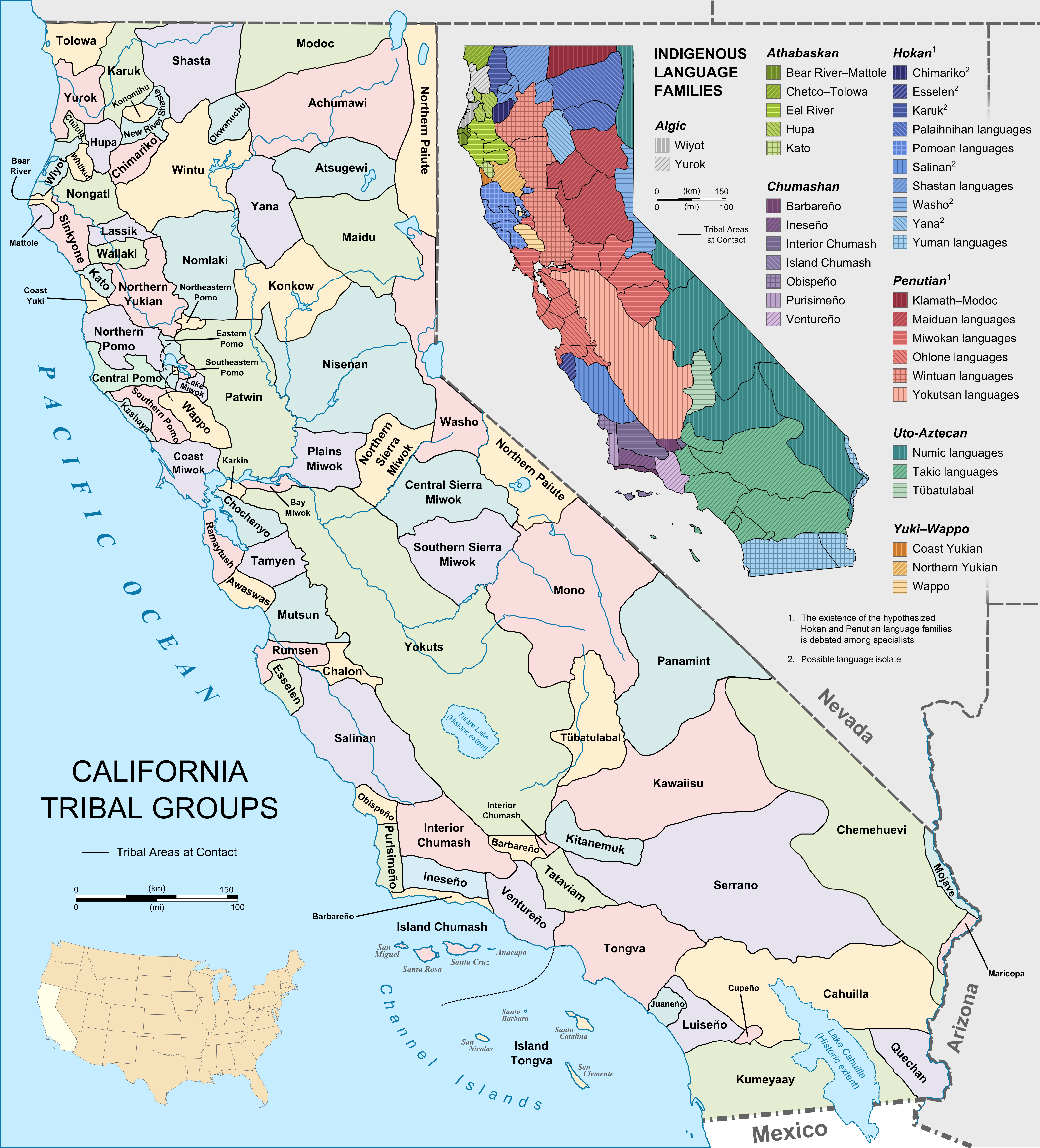
The answer to that might start by examining their choice of name- presumably chosen as a nod to the small government, state's rights' oriented Thomas Jefferson. Having lived and travelled in the State of Jefferson, I can't help but think of another resonance, one not intended by the secessionists: That of Thomas Jefferson as one of the initial architects of Indian Removal. The State of Jefferson is laid over a complex patchwork of pre-existing tribal nations that occupied the land. Although the Jeffersonians often claim to be "native Californians", indigenous tribes such as the Yurok, Hupa, Karuk, Wintu, and many others long predate the arrival of Europeans. I can't help but see the State of Jefferson as a continuation of a long history of erasure of indigenous political formations by those of white colonists.

The proponents of the State of Jefferson are the heirs to a tradition of aggressive resource extraction that began with the Gold Rush in the 1850s. After the discovery of gold at Sutter's Mill in Coloma, men hoping to find their fortune poured into previously sparsely populated areas of Northern California. The results were disastrous for the tribal peoples of the area. Small conflicts between white prospectors and natives regularly degenerated into wholesale massacres. Across what is now the heart of Jefferson, native people were slaughtered by militias composed of gold-hungry prospectors and settlers. See, for example, the murder of 153 Wintu Indians by white settlers in the Bridge Gulch Massacre near Hayfork. Or the murder of between 80-250 Wiyot people by the residents of Eureka in 1860.

While wholesale slaughter of indigenous peoples has thankfully stopped, conflicts over the resources of the area between the native tribes and others have been a constant. In the 1970s and 80s, the US Forest Service began to construct a road between the hamlets of Gasquet and Orleans in the southern Siskyou mountains in order to facilitate logging access. The road was to pass through an area considered sacred to the Yurok, Karuk, and Tolowa. The Yurok tribe petitioned for an injunction against the construction of the road on the theory that its construction was a violation of their First Amendment rights to practice their religion there. The 9th Circuit ruled that completion of the road was a violation of the Free Exercise clause, but the judgment was reversed at the Supreme Court in 1988. Luckily for the tribes, the completion of the road was stopped as part of the designation of the Smith River Wild and Scenic National Recreation Area.

Such conflicts over resource extraction continue to the present day. The Karuk intervened in a case on the side of the state over a moratorium on suction dredge gold mining (explained succinctly in this Legal Ruralism blog post) in 2008. The Karuk, who are based in Happy Camp on the Klamath River, are against suction dredge gold mining because it may injure fish populations in the river. One note of interest about Happy Camp: it was briefly named "Murderer's Bar" in reference to either violence surrounding claim jumping or clashes with native peoples.

None of this is to say that the grievances of the State of Jefferson are simply illegitimate; because one population suffers it does not lessen the suffering of others. In fact, many of the social ills that affect the tribal people of the North Country, such as extremely high rates of suicide, also afflict the libertarian dreamers of the State of Jefferson. Although the State of Jefferson advocates posit unfettered and unregulated resource extraction as the way to generate the capital to escape such despair, it seems clear to me that such a move would only reinforce patterns of oppression of native peoples that have existed since the 1850s. These counties need a way forward-- I hope they will find one that can bring along everyone.

Saturday, November 10, 2018

Big feature on (would-be) State of Jefferson in Sacramento's alternative newspaper

The Sacramento News and Review, my city's "alternative newspaper," recently published a big feature on the State of Jefferson secessionist movement.  Freelance journalist Steve Magagnini writes:
Almost anywhere you drive through Northern California, you’ll see green and gold signs, flags and banners heralding the arrival of the State of Jefferson, a separatist movement that nearly succeeded in 1941 and, more recently, has grown like a grass fire in the era of Trump. 
The signs feature “The Great Seal of the State of Jefferson,” a gold pan emblazoned with two X’s—Jeffersonians have long believed they’ve been double-crossed by big city politicians in Sacramento who take their money but ignore their concerns. 
Over the last two years, the signs have popped up on billboards, front yards, and haystacks, sometimes next to Confederate flags and anti-immigrant slogans. 
This blog has featured lots of posts about the State of Jefferson over the years, and a few of those posts (and other stories about the State of Jefferson) have speculated about the racist motives behind the Jefferson movement.   One thing I especially appreciated about Magagnini's story is that he calculates the racial/ethnic demography of the would-be State of Jefferson:
Here’s what Jefferson would look like based on census records from the 23 counties that have signed on and two others on the fence, either through referendum or a vote of their board of supervisors: 2.5 million people, 69 percent Caucasian, 21 percent Hispanic, 4 percent Asian, about 3 percent multi-racial, 1.6 percent American Indian and 1.6 percent African-American. Nineteen counties voted for Trump, four (Mendocino, Lake, Nevada and Stanislaus) went for Clinton.
Magagnini also quotes me regarding the spread of Jefferson ideology--or at least the geographic spread of its marketing effort:
Lisa Pruitt, a UC Davis law professor specializing in rural and urban differences, said she has seen Jefferson signs in El Dorado, Amador and Calaveras Counties. 
“I saw a Jefferson decal on a Prius in Fair Oaks, and on I-80 near Davis,” she said. “It’s all over rural California and creeping into urban California. I’ve seen their stickers on cars in Target parking lots.” 
The further north you go, the bigger the signs, Pruitt said. 
“There’s a lot of agitation on the part of rural Californians who feel their interests are not being heard or taken seriously in Sacramento,” Pruitt said. “The example is the state gas tax: people in rural areas who drive long distance don’t feel they get anything for their buck.” 
Mark Baird argues that there’s a historic precedent for Jefferson: Vermont left New York and New Hampshire in 1791, Kentucky left Virginia in 1792, Maine bolted from Massachusetts in 1820 and West Virginia—which argued that Virginia committed sedition by breaking away from the union to join the confederacy—got its independence in 1863.
Pruitt, however, disagrees. 
“It’s not a winning analogy,” she said, adding that West Virginia’s split happened more than 150 years ago. 
“People are intrigued by it, but peeling themselves into a separate state would not solve their economic woes, and might make them worse,” she said. “I’m not convinced they would be in a better situation if they got more representatives, rural interests would still be greatly outnumbered by urban interests in Jefferson. Legislators represent people, not cows and trees.”
That last bit of the quote is a reference to Reynolds v. Sims, a 1964 decision of the U.S. Supreme Court.  As for the part about rural interests still being outnumbered by urban interests "in Jefferson," I think he misquoted me.  I don't think we know how the rural-urban split would shake out within what would be Jefferson, but I do note that the largest city on the California side of the line is Redding, at about 90,000.  To say it's not a very urbanized region is perhaps an understatement.  (Of course, on the Oregon side of would-be Jefferson are the mid-sized cities of Medford, Roseburg and Klamath Falls).

As for those decals and signs around the region, I'm including some photos below.  (Sadly, I failed to capture, before it was removed, a photo of the Jefferson decal on the guardrail by the I-80 exit at UC Davis)

Birdcage Shopping Center, Citrus Heights, California, 2018
I'm guessing this Prius I photographed in the Birdcage Shopping Center in Citrus Heights California (suburban Sacramento) may belong to one of the women Magagnini interviewed for his story, Jean Colgrove, 64, of Citrus Heights.  He describes her as a libertarian who "confessed she lives in Sacramento County, behind enemy lines."  Colgrove says she sees support for Jefferson growing in her suburb and in neighboring Folsom and Orangevale. 

Birdcage Shopping Ctr. Citrus Heights,
Sacramento County,
California, 2018 

Pleasant Valley Road, El Dorado County, California, July 2018
Magagnini mentions Mark Baird, a rancher and reserve deputy sheriff for Siskiyou County who leads the State of Jefferson movement from his ranch in Scott Valley.  I happened to travel through Scott Valley this summer as I drove from Weaverville (Trinity County) to Yreka.  (Read more here)  I passed through Callahan, just north of the Trinity County-Siskiyou County line, at the south end of the Scott Valley.  I've never seen as much State of Jefferson swag as was on sale at the Callahan Emporium, with complementary signs in the surrounding area, including in Etna and Fort Jones, where several businesses (like the Cemetery Memorials below) are branded "Jefferson."

Callahan Emporium, Scott Valley,
Siskiyou County, California, July 2018

California Hwy 3, between Coffee Creek and Callahan
Map of the Oregon Trail and depictions of historical structures, Callahan Emporium 
Callahan Emporium, Scott Valley,
Siskiyou County, California, July 2018
Jefferson Flag at Callahan Emporium

Jefferson swag on sale at the Callahan Emporium, Scott Valley, July 2018
Jefferson Memorials, Fort Jones,
California, July 2018
Signs at the entrance to Weaverville, Trinity County, July 2018

Monday, July 3, 2017

Little acknowledged in the nation or even the state, far northern California gets a day in the NYT spotlight

Near Plymouth, California, Amador County, July, 2017
(c) Lisa R. Pruitt 2017
Thomas Fuller reports in today's New York Times about disgruntlement among folks in far northern California--and we're not talking the Bay Area here, folks--where a majority are white, conservative, and voted for Trump (see post about California's rural vote in the 2016 presidential election here).  The headline is "California's Far North Deplores the 'Tyranny' of the Urban Majority." Fuller doesn't lead with the State of Jefferson movement/phenomenon, but he ultimately gets there because secession is one possible "solution" to what ails many in this far flung region of the Golden State.  Read more State of Jefferson coverage here, here, here, here and here.

This key excerpt from Fuller's story provides critical background, especially for non-Californians who think that the greater "Bay Area" is "northern California" (Hint: It's actually central California):
California’s Great Red North is the opposite [of common images/stereotypes of the state], a vast, rural, mountainous tract of pine forests with a political ethos that bears more resemblance to Texas than to Los Angeles. Two-thirds of the north is white, the population is shrinking and the region struggles economically, with median household incomes at $45,000, less than half that of San Francisco.
Fuller acknowledges the "red' and partly rural Central Valley region, too, and then continues with his tale of this little known area:
But perhaps nowhere else in California is the alienation felt more keenly than in the far north, an arresting panorama of fields filled with wildflowers and depopulated one-street towns that have never recovered from the gold rush.
The story features some now-familiar (familiar post-election, that is) information about how rural folks don't feel seen, heard and appreciated.  Many are farmers, and many have been economically displaced by the decline of the timber industry, a phenomenon partly driven by environmentalist concerns.  Fuller quotes James Gallagher, the 3d District Assemblyman:
People up here for a very long time have felt a sense that we don’t matter.  We run this state like it’s one size fits all. You can’t do that.
* * *
In the rural parts of the state we drive more miles, we drive older cars, our economy is an agriculture- and resource-based economy that relies on tractors and trucks.  You can’t move an 80,000-pound load in an electric truck.
Accordingly, a recent rise in the state's gasoline tax will disproportionately hurt rural voters.  

Many point out that if these rural California counties seceded--along with counterparts in Oregon--to form the State of Jefferson, they would only be worse off, however. 
Because incomes are significantly lower than the state average and the region is so thinly populated, tax revenue from the far north is a fraction of what urban areas contribute. In 2014, the 13 northern counties had a combined state income tax assessment of $1 billion, compared with $4 billion from San Francisco County.
Spatial inequality as a function of uneven development is something I've written about here and here.   

Fuller also provides some really useful information I've not seen from another journalist:  he compares the number of folks represented by each Senator and Assemblyperson in the California legislature with the number represented by legislators in other states.  In California, each State Senator represents a million residents, while each North Dakota state senator represents just 16,105, each Wyoming State Senator represents just under 20,000.  Each California Assembly member represents nearly half a million residents, whereas in Vermont it's just 4,174, in New Hampshire, just 3,327.

One of the problems, at least from the perspective of agitators in northern California, is that the number of California legislators has been capped at 120 since 1862.  The legislature has not been able to grow as the state's population has boomed, which has led to a lawsuit by what Fuller calls a "loose coalition of northern activists and residents, including an Indian tribe and the small northern city of Fort Jones," which is asserting a constitutional claim.

A second possible solution is to amend California’s Constitution to change the way state Senate district are drawn.  Rather than base the Senate districts on population, as the current scheme does, "Senate seats would be tied to regions, giving a larger voice to rural areas in the same way the federal Senate does."

I am not very optimistic about the likelihood that either proposal will be adopted, either due to successful lawsuit or constitutional amendment.    

The story closes with some colorful quotes from U.S. Congressman Doug LaMalfa who represents California's 1st District.  LaMalfa is a "farmer/businessman" who lives in Richvale, in Butte County.  LaMalfa decries urban denizens' treatment of rural California as their "park," as well as their desire to save trophy "species."  
You have idealists from the cities who say, ‘Wouldn’t it be great to reintroduce wolves to rural California?’
He counters with a tongue in cheek proposal:
Let’s introduce some wolves into Golden Gate Park and the Santa Monica Pier.
As it happens, I passed the sign in the photo above as I drove through Amador County's wine country yesterday.  That's just about an hour southwest of Sacramento.  State of Jefferson flags and signs are not uncommon in Amador and neighboring El Dorado Counties--though these places are in central California, not the typical State of Jefferson territory.  Yet the State of Jefferson ethos is alive and well here, even amidst pockets of rural gentrification like the Shenandoah Valley wine loop.  Someone put a lot of work into this sign, so I stopped for a photo.  Especially glad now that I did because it's a terrific illustration of just the phenomenon that is the focus of Fuller's story:  the numbers game in relation to how Californians are represented in the state legislature.

Wednesday, January 24, 2018

Speaking of rural disgruntlement...High Country News goes inside State of Jefferson

The High Country News feature by Tay Wiles was published a few days ago.  It appears under the headline, "A Separatist State of Mind," with the sub-head "In the era of Trump, rural discontent settles in the State of Jefferson."  The story is Wiles' behind-the-scenes look at the State of Jefferson movement, and she focuses a great deal on 27-year-old Kayla Brown, a native of Redding, who has been involved off and on in the movement.  Wiles notes that Brown is one of very few young people involved in the movement and that this has led to some conflict between her and the movement's leadership.  Here's an excerpt that plays up race, regional identity, and attachment to place:
The region is largely rural and white (though the Latino population has risen in recent years and there are several Native American tribes), and its politics are mostly red (only four counties went for Hillary Clinton in 2016). But the Northstate is also an idea that encompasses a shared regional identity for people like Brown, who has lived here her whole life and never wants to leave. “You have a lot of rural folk, people who have been here for three, four, sometimes even five generations,” she told me at the [Civl War] re-enactment. “We’re literally tied to the land.”
Another interesting passage about Brown--and State of Jefferson politics--is here:
Brown and her compatriots feel trapped behind enemy lines — rural conservatives in a state led by liberal urban Democrats. The election of Donald Trump and the rise of the California progressive “resistance” have riled conservatives anew. Libertarian-tinged sentiments are deeply rooted here. Poor policy is squandering natural resources, such as agriculture, timber and minerals, Brown said, making rural life increasingly difficult. And now, more people from coastal, urban parts of the state are moving in, bringing liberal values that chafe local sensibilities.
This coastal v. inland divide is also a theme in the recently announced effort to divide the Golden State into California and New California, discussed here.

Another big theme of the article is economics--in particular the lack of economic opportunity in the State of Jefferson.  Wiles tells us that Brown and her husband were thinking of leaving the state about five years ago, when her husband was looking at job opportunities in Wyoming and Idaho.  She talked him into giving northern California another shot--five years based on her hope that, within that time frame, the State of Jefferson might have become a reality.  Now that five years is nearly up and the couple have two young children, complicating their circumstances.

In any event, don't miss this fascinating piece, a great read in its entirety (and, am I quoted regarding the relative political powerlessness of rural Californians and proposing the practice of rural proofing to elevate rural visibility in politics).

Saturday, May 22, 2021

State of Jefferson movement evolves into push for "Greater Idaho"

I've written a lot over the years about the would-be State of Jefferson--a proposed new state encompassing a chunk of rural northern California and southern Oregon." Now, news comes that many of the counties wishing to secede from California and Oregon to form a new state would now like to join Idaho. Here's an excerpt from the Washington Post report:
Five rural counties in Oregon voted this week to press forward with a plan to leave the state and merge with neighboring Idaho, the latest move in a long-shot campaign by conservatives who say they’re fed up with Oregon’s left-leaning politics.Voters in Baker, Grant, Lake, Malheur and Sherman counties — sparsely populated areas in the state’s eastern half — approved ballot measures Tuesday requiring local officials to consider redrawing the border to make them Idahoans.

Behind the push is a nonprofit called Citizens for Greater Idaho that argues the predominantly Republican parts of Oregon would be better served if Idaho incorporated them. The group’s president, Mike McCarter, says the expanded state he envisions would become the country’s third-largest in terms of landmass.
* * *
The idea for a “Greater Idaho” began more than a year ago when McCarter, a 74-year-old former firearms instructor from La Pine, Ore., became disgruntled with the state’s liberal leanings. Across the border, he saw more ideological kinship.

His proposal for Idaho to swallow parts of Oregon’s south and east shares DNA with a long-standing push to create a “State of Jefferson,” including Northern California and southwestern Oregon. But asking to join an existing state is a slightly less difficult task than forming an entirely new one. McCarter points to a 1961 land transfer between Minnesota and North Dakota as evidence that it can be done.  (emphasis added)

A mid-April story about this matter in The Oregonian is here.   

Earlier posts about the State of Jefferson movement are here, here, and here. Or just search "State of Jefferson" on this blog to read still more.

Tuesday, December 29, 2015

California and the rural way of life: Part IV - Solutions to the lack of rural representation in California

This is the last installment in the "California and the rural way of life" series.  In my previous three posts, I focused on some of the issues that rural Californians have with their state government and how many rural Californians (and rural people in general) distrust their own government and feel that they are not being represented by those in power (see here for Part I and links for other posts on this topic, here for Part II, and here for Part III).  This post will focus on several ways that California (and other states) can tackle the lack of rural representation in state policy decisions.  One idea comes from the proponents of Jefferson State, one is inspired from an Arizona law, and another from Australia, New Zealand, and the UK.

Jefferson State

The proponents of Jefferson State seek to have counties in Northern California and Southern Oregon secede from their respective states and join together to form a new 51st state.  Doing this would allow the new state, comprised of mostly rural counties, to elect their own governor, legislators, and judges.  Those elected to public positions would be from rural counties and theoretically be more sympathetic to issues that affect rural communities.  There has also been a push to split California into six different states (see post here) to solve the same issue of lack of representation.

Jefferson State would not be without its problems though.  The state would have a much smaller economy than the rest of California and Oregon.  The new state would relinquish the economic powerhouses of California's Bay Area, Silicon Valley, Los Angeles, and Portland while keeping two persistent poverty counties in Northern California (see post here).  Because of this, the new state might have difficulties maintaining essential infrastructure like roads and bridges and have difficulty funding public service programs like Medicare.

The chance that Jefferson State will become a reality seems very low.  Although in the last decade rural counties have seemingly become more vocal about seceding to form Jefferson State, this idea has been around over 70 years (since 1941) without any success.  Even if the end goal of these rural counties is to form a new state, there are things that can be done in the more short term to address the issue of rural representation in California and Oregon.  The next two ideas can be implemented in any state in the country.  

For more information on Jefferson State, see posts here and here.

Legislative distinctions between rural and urban in Arizona

In Arizona and other states, legislatures have made laws that apply to rural and urban communities differently.  In 1997, Arizona passed a statute that prohibited minors from possessing firearms in public places.  This law, however, only applied to counties with populations greater than 500,000.   The law essentially targeted Arizona's two urban counties and had no effect on Arizona's rural counties.  The law also exempted "those engaged in hunting, marksmanship, and ranching or production of agriculture."  For more discussion on this law and legislative distinctions between rural and urban generally, see part D of Rural Rhetoric (page 199 or page 41of 82 online).

This targeted approach to lawmaking could help alleviate some of the impact that broad "one size fits all" laws have on rural communities.  However, this would only work on a small percentage of laws passed by the state.  The only laws that could be targeted would be those in which the problem the law is trying to address only exists in either urban or rural communities.  Further, you would need a legislature that is willing to draft these type of targeted laws. 

The laws (and the moratorium) that I brought up in my previous posts would not be good candidates for this type of targeted legislative approach.  The laws that I discussed were about a ban on hunting mountain lions, a ban on using dogs to hunt bears, a statewide ban on lead hunting ammunition, and a moratorium on gold dredging.  These laws were enacted for the betterment of the public and addressed concerns over environmental and moral issues.  It would be difficult to enact a law that allowed gold dredging in rural counties while banning it in urban counties (or vice versa).  This would also make the law ineffective at stopping the remobilization of mercury or destruction of fish redds.  The same argument can be applied to the ban on lead hunting ammunition and the hunting of mountain lions.

The ban on bear hunting with dogs is a law based on modern morals (possibly more urban morals).  Although moral issues could possibly be candidates for a targeted legislative approach, this particular law probably wouldn't.  It would not make any sense to distinguish hunting bears with dogs in a rural area with hunting in an urban area because bears are typically not hunted in urban areas.  In addition, although this law is statewide, it can be argued that it is already a targeted law because it only effects rural areas. 

Certain laws banning activities that are deemed immoral could be targeted to urban areas.  For example, more and more urban households are raising backyard chickens.  For more about this phenomenon, see here, here, here, and here.  Imagine that lawmakers want to ban killing chickens by cutting off their heads if they can be seen by the public or neighbors.  Let's say the reason for the law is because seeing chickens run around with their heads cut off can be traumatizing to people who are unfamiliar with the practice.  The urban chicken farmers, if they didn't have a private concealed yard already, would then have to build fences high enough so that the public could not see the dispatching of the chickens or build special shacks to kill the chickens.  Now assume that rural people are more familiar and accepting with the practice of killing chickens by cutting their heads off and the activity is seen as acceptable because it is the fastest and most efficient way to kill a chicken (I understand that this plays to stereotypes of rural people but this specific stereotype is only used to illustrate my point).  Targeting the law to urban areas would allow the rural chicken farmers (not large scale farms of course) to continue their practice of killing chickens for food without the burden of building a fence or special shack to kill their chickens.  It would also stop urban morals being thrust upon the rural population.

Rural Proofing 

In Australia, New Zealand, and the UK, lawmakers engage in a practice called "rural proofing."  According to the 2009 Rural and Regional Committee, Final Report: Inquiry into Regional Centers of the Future, Parliament of Victoria, rural proofing is described as "a process for taking into account the circumstances and needs of the rural community (rural people and rural businesses) when developing and implementing policy."  When making laws, lawmakers consider issues such as rural spatiality, the rural population's access to services such as hospitals, schools, water, and social services, the cost of compliance with the new law, and whether the law disproportionally effects rural communities.  For an example of how rural proofing could be used to solve rural after-school program licensing issues, see blog post here.

Rural proofing could be used in California to address the impact that laws have on rural communities.  If the state was forced to consider the impacts that laws have on the rural population, the laws could have less of a negative impact (or a more positive impact) on rural communities.  In Addition, even if rural proofing did not alter laws in any significant way, the fact that rural communities would be considered when drafting new laws would go a long way to ease the rural population's distrust of their government.  Rural proofing would essentially give the rural people a voice in the capital.

If California adopted a rural proofing policy, the rural people of California would still have to be informed about the policy.  The people need to trust that their government is looking out for their best interests.  Informing and educating the rural population about the policy and how to get in touch with lawmakers is essential to resolve issues that rural populations face.  How else would lawmakers truly understand how laws effect the rural population if they did not hear from the rural people themselves?

Rural proofing is a good idea and should be implemented.  That being said, it is doubtful that rural proofing would completely solve any of the issues I talked about in previous posts (ban on hunting mountain lions, a ban on using dogs to hunt bears, a statewide ban on lead hunting ammunition, and a moratorium on gold dredging).  However, it would at least allow lawmakers to consider the impacts that the laws have on rural people.  If lawmakers understood the tradition of hunting bears with dogs or how some rural people supplement their income and remove mercury from streams by gold dredging, maybe the laws could be slightly different than they are today.  Maybe hunting bears with dogs could be slowly phased out instead of leaving bear dog owners with dogs they can no longer use (and still have to feed, house, exercise, etc.).  Maybe if lawmakers considered the impact of a moratorium on the dredging community, a moratorium would not be implemented until scientists had completed environmental impact studies (if the studies showed that dredging has a net negative impact).  Maybe the lawmakers would consider allowing smaller dredges to continue to operate while banning the largest dredges.

Conclusion

There is not one right answer to solve the issue of rural representation at the state level.  In order to allow the rural population's voice to be heard in the capital, rural communities should strive to implement both targeted legislation and rural proofing.  Rural proofing and targeted legislation could work hand in hand.  Forcing lawmakers to consider the impacts of legislation on rural communities would leave the door open to more targeted laws.  For example, if a new law disproportionally effects rural communities, the law could be tailored so that it only effects urban populations.   

Some may argue that Jefferson State is the best way to solve the representation issue.  Even if that is true, it would be much easier to implement policy changes at the capital than it would to secede.  Furthermore, even if the end goal is to form a new state, why not try to implement new beneficial policies in the meantime?

Monday, January 31, 2011

Rural activism: reflections on Egypt and some American anticedents

This weekend, the Tunisian Jasmine Revolution and the anti-government protests in Egypt seemed to hit a fever pitch. What had largely been neglected by American corporate media finally found an international stage. Egyptians in Cairo and Alexandria had bloody clashes with government police, armed with semi-automatic weapons.

This naturally led me to start searching for news articles regarding those Egyptians not located in large metropolitan areas. Unsurprisingly, there does not seem to be a lot of coverage, if any, of the current Egyptian uprising as experienced by rural Egyptians, despite the fact that numerous news reports still assert that over 50% of the Egyptian population remains in rural villages, rather than in the big cities.

Political commentator Adrei Fedyashin wrote an article today comparing the Tunisian and Egyptian uprisings. He speculated that the difference in the urban-rural population make-up between the two countries was one of the major differences that could explain why Tunisians were more successful in ousting former President Zine El Abidine Ben Ali than the Egyptians have in convincing President Mubarak to step aside. "[President Mubarak] is perfectly aware that the anti-government rallies in Cairo and Suez, however massive, are still short of a nation-wide revolt. Indeed, an instant revolution is hard to bring about in a country like Egypt, where rural dwellers form the bulk of the population. Most favor caution and moderation."

Today at 10:30 a.m., Joel Beinin, professor of history and professor of Middle East history at Stanford University, posted his own piece on the likelihood of success for the Egyptian protesters on foreignpolicy.com. In the article, Beinin discusses how youth have largely been a the driving force behind the protests, using social media like facebook to organize themselves on a larger scale. Internet as an organizing tool has its limitations, especially in Egypt, however, Beinin says. "[The movement's] presence on the Internet has been considerably greater than in urban neighborhoods and rural villages where computer access is limited and illiteracy rates are high."

Whatever the likelihood of success of the Egyptian protests, it seems clear that Egypt's rural population has largely been left out of the media spotlight, if it indeed has been participating in the protests.

Usually when I think of protests, what comes to mind are images similar to those I remember seeing during the Prop 8 aftermath in San Francisco. People gathered in a major metropolitan city-center, using large construction tubes with hand-sized holes drilled in them to create a barricade against traffic (the people put their hands inside the tube and then hand-cuffed themselves together), shutting down a center of commerce and drawing attention to one's cause. But what happens when rural people want to do the same? Are the rural people of the United States similar to those described in Egypt, favoring "caution and moderation" over action?

I have a few pieces of knowledge that came to mind upon pondering these questions. What first came to mind were the protests held in Northern California and Southern Oregon, sometimes referred to as the State of Jefferson, in the early 1940s.

Long complaining of a lack of resources provided by each state to the rural counties, the people of Curry, Josephine, Jackson, and Klamath Counties in Oregon, and of Del Norte, Siskiyou, and Modoc Counties in California proposed that they secede from their respective states to form a new, largely rural state, named after the third President of the United States, Thomas Jefferson. The people of the states of Oregon and California largely ignored the calls for secession from the rural counties. As relayed in an op-ed piece by Tim Hunt in the San Francisco Chronicle dated August 17, 2003, the secession movement was thought up largely to protest the lack of maintenance being done to the major roads and highways. According to jeffersonstate.com, a website in support of secession, after the people in the states decided to secede, they camped out on Highway 99, barricading traffic and distributing pamphlets to travelers declaring their secession.

News crews were there to document the movement, and jeffersonstate.com boasts that
"Hollywood newsreel companies were present to record the events, including the highway barricades. The State of Jefferson was off to a banner start. The newsreels were to air nationally the week of December 8, but tragically on December 7th Pearl Harbor was bombed and the State of Jefferson rebellion of 1941 came to an end. The people of the region went to work for the war effort and good roads were eventually built into the backcountry[(sic)] to access strategic minerals and timber."
Although the State of Jefferson still claims to have seceded in 1941, maps have not been redrawn and the secession has largely been forgotten by everyone except for those people living in the region.

Another fact largely overlooked by those people studying the Civil Rights Movement of the 1950s and 1960s is that much of the organizing that occurred of people of color in the South happened in rural schools founded to serve as inspiration to grassroots organizing for equal rights.

Rosa Parks, the infamous African American woman who refused to move to the back of the bus or give her seat up to a White patron, was one of the most famous students of the Highlander Center, located in New Market, Tennessee. A long time veteran of grassroots organizing, Parks spent years learning how to protest and organize from schools and organization which were largely located in the rural south. According to Paul Roget Loeb, who wrote a piece on "The Real Rosa Parks" on commondreams.org,

"Before refusing to give up her bus seat, Parks had been active for twelve years in the local NAACP chapter, serving as its secretary. The summer before her arrest, she'd had attended a ten-day training session at Tennessee's labor and civil rights organizing school, the Highlander Center, where she'd met an older generation of civil rights activists, like South Carolina teacher Septima Clark, and discussed the recent Supreme Court decision banning "separate-but-equal" schools. During this period of involvement and education, Parks had become familiar with previous challenges to segregation: Another Montgomery bus boycott, fifty years earlier, successfully eased some restrictions; a bus boycott in Baton Rouge won limited gains two years before Parks was arrested; and the previous spring, a young Montgomery woman had also refused to move to the back of the bus, causing the NAACP to consider a legal challenge until it turned out that she was unmarried and pregnant, and therefore a poor symbol for a campaign."
My knowledge of rural activism is largely limited to these two facts, but I am sure that there are many more examples of rural activism which has led to political change.

Monday, August 28, 2017

California's most rural Assembly member becomes minority leader

Brian Dahle, the assemblyman represented California's most rural district, Assembly District No. 1, became the chamber's minority leader last week.  Dahle is a third-term Republican from tiny Bieber, population 312, in the northern reaches of Lassen County.  Prior to his election to the California State Assembly in 2012, Dahle served for 16 years on the Lassen County Board of Supervisors. 

I know a bit about Dahle--or feel like I do--because he was generous enough to come speak to my Law and Rural Livelihoods class this past spring.  I found him to be a straight talker, middle-of-the road, Republican.  He has strong feelings about issues you would expect:  how public lands/forests are managed by the federal government, mostly in relation to fire (Smokey Bear is a culprit) and rural broadband.  He also talked quite the Republican talk on job creation, suggesting that public sector jobs don't count.  Dahle's bias is toward private sector jobs, not least because he and his wife own a small business--they have a seed farm.  As for those public lands and forestry management, Dahle said that as Lassen County Supervisor, he had more experience lobbying in Washington than in Sacramento because of the presence of so much public land in far northern California. 

One striking fact I learned about the district, which spans all or part of nine counties (all of Lassen, Modoc, Nevada, Plumas, Shasta, Sierra, and Siskiyou counties, and portions of Butte and Placer) is that it takes eight hours to drive from one end of it to the other.  The southern most reaches are on the north shore of Lake Tahoe, and it stretches through the northern Sierra Nevada Mountains into the Cascades and all the way to the Oregon state line.  It's got to be hard to keep up with constituents under those spatial circumstances. 

Dahle's district includes the bulk of what would be the State of Jefferson (read some earlier posts on the topic here, here and here).  When our Law and Rural Livelihoods class asked Dahle about the State of Jefferson issue, he said that he was happy to talk about it but that it would "never happen."  That is, the State of Jefferson will never secede from California--and if it tried, it would not be permitted to do so.   He also suggested that many who support the State of Jefferson movement are economically disaffected, perhaps because they own a home and/or land in the district, but struggle to make a living there. 

The leadership position for the Republican Caucus came open when Chad Mayes was forced out of the role over his support of the gasoline tax that passed this summer.  Interestingly, Mayes also represents a rural-ish area, Yucca Valley, in southern San Bernardino County.  According to the Los Angeles Times, Dahle is also considered more conservative than Mayes, though he came across as quite centrist when he visited my class.  Here's a quote from the Los Angeles Times story about the leadership transition:
Other Republicans said Dahle has the leadership and bridge-building skills to heal the rift in the party, and a willingness to sit at the table with the majority party without surrendering on conservative principles.

“He’s a gifted leader,” said Shawn Steel, a Mayes critic and one of California’s two representatives to the Republican National Committee. “He’s an effective unifier of the caucus, and we really needed that. I’m so glad the drama is over. Chad was just not the right leader at the right time.” 
Mayes also praised his successor. 
“I’m actually very excited about Brian taking over as Republican leader,” Mayes said, standing next to Dahle in a state Capitol hallway. “He has proven himself to be a very strong leader, somebody who is of great character, who has a heart for California and a heart for the people of his district.”
As for me, I'm interested to see if Dahle's leadership position permits him to get more rural issues on the Assembly agenda--and to get those issues, e.g., rural broadband, acted on in a way that benefits rural communities and residents.  Prioritizing--or even equalizing--rural is a tough sell in a state where just 6-7% of the population live in rural places. 

Thursday, March 24, 2022

Harper's Magazine on California's would-be State of Jefferson

James Pogue writes "Notes from the State of Jefferson," from Shasta County, California.  The following passage address the rurality of the would-be secessionist state:  
I asked Jones [member of Shasta County board of supervisors who supported the recent recall of Leonard Moty] whether he thought things would calm down after the pandemic, or if something larger had snapped. “This is going back to the 1850s,” he said. “You have this tension, those two different groups.” I assumed he was talking specifically about California, and the regional differences that helped build the Jefferson movement. But he was referring to a national gulf between the centers of globalized cosmopolitanism and the rest of the country. “The people in the rural areas—we’re different from the city areas. Because we want our freedoms and they want more controls,” he said. “You know, if I were living back in the 1850s, I’d think that this was probably what led up to the Civil War.”
 
I was still a bit hazy about what Jones wanted to accomplish in office. Everyone seemed to be talking about issues far bigger than anything that could get sorted out by a county board. And he didn’t have a majority to support his plan to pull out of the state’s COVID protocols. I asked whether he was involved in the movement to recall the governor, Gavin Newsom, which was then gaining momentum. Jones gave me a mischievous look and leaned over the counter. “You might want to check back on that here soon,” he said. “We haven’t announced it yet, but there’s going to be a recall here too.” I found the idea hard to take seriously—a sitting board member leading a recall against his fellow members in a fight that was more a clash of values than policy—but Jones looked serious. “Check back,” he said. “It’s going to get interesting.”

That local recall did happen, of course, earlier this year.  The next passage in the Harper's story refers to two men, Clendenen and Zapata, members of the so-called Cottonwood militia, who loomed large in that recall.  You can learn more about them and that recall of a Republican county supervisor here. 

The next day, I dropped by Woody Clendenen’s barbershop for a haircut. I had been having trouble contacting some of the key figures in the crusade to take over the county—Terry Rapoza, one of the Jefferson movement’s highest-profile leaders, had flatly declined to meet with me, and I couldn’t get Zapata to return my calls—so I figured I’d just show up as a paying customer. “You must be the one Terry told me about,” Clendenen said as I walked in. “I’d been thinking you might come by.” He was a graying, fit fifty-five-year-old, wearing a polo shirt over a slight paunch and chatting jovially with a row of customers. I asked how he knew who I was. “You don’t look like you’re from Cottonwood,” he said. A chorus of guffaws rose up. “You don’t smell like horseshit,” someone called out.

The shop was packed, its walls covered in the trappings of defiant rural patriotism: Jefferson flags, framed photos of young men in uniform, Confederate insignia, flyers advertising horse trailers for sale. Clendenen exuded an air of avuncular authority. He was a barber in the way that Tony Soprano was the owner of Satriale’s Pork Store. As he cut hair, he was constantly interrupted by calls from Zapata or Jones, and by people wandering in to ask favors or talk militia business. Just after I sat down, a hefty trucker in a black hoodie walked in. “Well, the FBI just came by,” he announced. Clendenen invited him to go on. “I just told them that I am a legally armed American in my home, I’m happy to talk to them, but they can’t come in the house. They weren’t too bad or nothing.” Clendenen barely looked up from the haircut he was giving to a boy who looked to be about eight years old. “You did good,” he said.

You can find more on the would-be State of Jefferson in the series of posts here.  

Tuesday, July 18, 2023

New (sub)-California secession movement rises in exurban Sacramento

Eric Ting reports for the San Francisco Chronicle under the headline,  'This state is under tyranny': Scenes from California's latest secession movement.  Some excerpts follow:  
Sharon Durst, leader of the secessionist El Dorado state movement, knows people don't take attempts like hers seriously. Past efforts to split rural California counties off from the rest of the state have accomplished little beyond inspiring ridicule — which the former rancher, now in her 80s, experienced directly as an early supporter of the infamous state of Jefferson.

But Durst also knows that something has to change, if rural counties like El Dorado are going to have a fair say in how they’re governed. On July 10, she and former county Supervisor Ray Nutting co-hosted a town hall to explain to their neighbors why the solution is peeling the county off from California and forming a new state.

It’s true that California has a unique problem of representation in state government. No state in the country has fewer state legislators per capita; the problem is especially stark in rural areas like El Dorado County, population 192,000. In the state Senate, El Dorado is represented by a legislator who also represents voters in 12 other counties; in the state Assembly, the county is split between two legislators, each responsible for voters across several counties, with widely diverging industries and demographics. Not one of the three legislators responsible for representing El Dorado County actually lives there.

The story features a long quote from Professor Isaac Hale of Occidental College, who teaches politics: 

This has long been an ongoing problem in California politics.  There are nearly 500,000 Californians per assemblymember and a million Californians per state senator, and that’s pretty out of whack.

You could double the size of the Assembly, and we’d still have the highest number of people represented by district.  And there are serious consequences to this.

Ting explains the consequences for rural folks in the Golden State:  they feel disenfranched--disenfranchised enough to show up at long town halls to talk about secession.  That said, Ting reports that 25 people showed up for a July 10 gathering held by Durst and Nutting.  And that doesn't sound like a very robust group in the context of a county with nearly 200K residents.  Also, interestingly, the meeting was held at a Raley's Supermarket in El Dorado Hills--the posh planned community at the western edge of the county, just over the Sacramento County line.  In other words, El Dorado Hills is the part of the county one would expect to be least amenable to a secession movement.  (Here is a prior post about El Dorado Hills as magnet for Bay Area migrants during the pandemic.)  Still, here is Ting's description of the crowd: 

The political leanings of those in attendance were on full display. One attendee wore a shirt that helpfully defined the word “patriot.” Another wore a shirt reading “Save the Children” on the front and “WE RIDE AT DAWN” in all caps on the back. Durst’s introduction was punctuated by audience member comments, including “California is red, we all know it,” and “Trump won.” When she mentioned that a reporter was in the audience, the room broke out into groans, like someone had just offered the restive crowd Bud Light from the supermarket outside the meeting room.

Here's what Ting has to say about the current movement's approach to change, including its legal theory: 

Durst and Nutting concede California lawmakers would never go along with it, so Durst is gambling on what she described as a “backdoor” maneuver to go to Congress directly.
In a 7,000-word Substack post published in May, Durst argues that El Dorado County is technically not a legitimate piece of California and is instead “other property” of Congress (though she cites no legal scholars or historians who have promulgated this view). Therefore, she wrote, Congress alone could vote to turn El Dorado County into El Dorado state, without California’s approval.
Durst refused to discuss procedural steps at the meeting. Ting quotes her:
To try to speculate, ‘What if this? What if that? Blah blah blah?’ No. You know what? We’re going to just move forward, do our thing, hope for the best and see where the people take it.

Durst was also uninterested in alternative paths to improve rural representation, including those that might garner bipartisan support because they also afflict metropolitan areas.  Professor Hale provided this illustration as an urban counterpart to what is annoying this small band of folks in El Dorado County: 

Consider Mia Bonta’s East Bay Assembly district.  Why are wealthy homeowners in Piedmont linked with renters in east and west Oakland? They have wildly different interests, and you could make the argument that they each should have their own form of representation. This is a systemic problem.

The story closes with this quote from Durst:  

I’m not going to petition anyone in California. I’m going to absolutely ignore California, as if there’s a barrier between our border and California.

Don't miss this entire, deeply reported San Francisco Chronicle story, not least for its rich descriptions of some other El Dorado County residents who attended the meeting, as well as a bit of backstory on Nutting. (Read more here from a 2014 court adjudication against him).  

Prior posts about secession from California are here, here, here (featuring many photos, including one taken in El Dorado County), here, here (speaking specifically to representation issues, from 2015), here (based on a story in Harper's Magazine), here (comparing the State of Jefferson movement to the Jasmine Revolution in Tunisia), and here (reporting on a 2018 decision by the U.S. Supreme Court that rejected a legal theory that Californians are underrepresented because of the too-small size of the late legislative body).  Another post regarding frustration over lack of representation, this one out of Siskiyou County in the traditional State of Jefferson territory, is here.

Other posts featuring El Dorado County more generally are here (coronavirus pandemic), here (a food sovereignty movement post from 2012), here (suburban sprawl), and here (resisting the siting of a Dollar General Store).   This is about a Tea Party Meeting in the county in 2012.  This, also from 2012, features a campaign sign for a member of the El Dorado County Board of Supervisors that uses the slogan "Protecting Rural Values."). Another 2012 photo from El Dorado County is here--this one of a sign advertising a Gold Prospecting Summit at the county fairgrounds. 

Posts about other proposals to divide California are here and here.  

Saturday, December 27, 2025

NYT feature on the consequences of California redistricting on rural northstate

Kellen Browning reports for the New York Times under the headline, "They Wanted a Conservative State. They Might Get a Democratic Representative Instead."  The story is a richly textured look at how the residents of far northern California feel about the November passage of Proposition 50, which adopted new congressional districts that will temporarily override the decisions of the state's independent redistricting.  As I've written about previously here, here, here and here, this means residents of the current District 1, an inland district stretching from Butte County, about 80 miles north of Sacramento, all the way to the Oregon state line, are likely to be represented by a Democrat after the 2026 midterm elections.  This is because parts of current District 1 will be combined with a strip of coastal wine country stretching down into Marin County, just north of San Francisco.   The current 1st District is shown in lavender in the map below.  Much of it will be subsumed into a new 2d District, outlined by the dotted orange line. 

Source: We Draw the Lines California, California Legislature
Credits: Jeremia Kimelman, CalMatters

Excerpts from Browning's story follow.  Some highlight rural-urban difference and others highlight the feelings of rural voters in California' north state.  

For decades, residents in the rural north have longed for a political earthquake that would cleave their region out of California and allow them to create their own fabled “State of Jefferson” with conservatives in Southern Oregon. They have increasingly felt underappreciated and misunderstood by the liberal Democrats who run California and dominate the congressional delegation — who, in their telling, siphon away their water and prioritize environmental regulations that undercut farmers’ livelihoods.

Now, they not only lack a conservative State of Jefferson, but their entire region is also likely to lose its Republican congressman and have him replaced by a Democrat after next year’s midterm elections. 

“People in the cities don’t have a clue what it takes to survive out here,” said Terry Williams, a 75-year-old rice and walnut farmer who moved to Richvale in 1974. “I don’t think people that were born and raised in the cities can represent us to the same extent.”
Here's a quote from Gene Lifur, a 52-year-old from Orland, population 8,2998, which claims to be the "Queen Bee Capital" of North America for its role in raising the pollinators:  
There was definitely a feeling of throwing up your hands.  You’re going to lose a lot of the interest for voting in the North State.

Another resident, DaNell Millerburg, 62, who manages the Richvale Cafe, "said the idea of her small town being represented by someone from the Bay Area was 'scary.' ...'They want to save the opossums and the beavers and the snakes.  But it’s not good for the farmers, because those animals dig holes in their ditches.'"

Browning meet many of those he interviewed at the cafe, "a nonprofit kept afloat by locals, who wanted to ensure that the area’s solitary farmers had a place to meet."  Richvale, population 234, is the home of current District 1 Congressperson Doug LaMalfa who asserted, "I understand people here far better than a Bay Area interloper."
Rural residents, Mr. LaMalfa said, grew crops enjoyed by California’s cities but were scorned by those living in cities. He said that Democrats were passing expensive pollution regulations, tearing down crucial dams in the name of protecting salmon populations and introducing wolf packs that attacked their herds. Proposition 50 was the latest affront.

“Their voice is being silenced on how they feel about the issues here, because Newsom and the three-to-one ratio of Democrats wanted to see if they could steal five seats,” Mr. LaMalfa said of the governor and state lawmakers.
* * *
“I’m furious,” [LaMalfa] added, “because I’ve had my people kidnapped from me.”
* * *
The Democrats running against Mr. LaMalfa agreed that rural Californians have been neglected by many in their party. But they also argued that Republicans like Mr. LaMalfa have hurt farmers and agrarian communities with their policies.

Those Democrats include Mike McGuire of Geyserville, in Sonoma County, who until recently was president pro tem of the California Senate, and Audrey Denney, who grew up on a coastal cattle farm but has lived and worked for 20 years in Chico, a college town in the same county (Butte) as Richvale.  Denney has already run twice, unsuccessfully, against LaMalfa.  McGuire's California Senate district stretches from Sonoma County all the way to the Oregon state line, but hugs the coast, a more progressive region.  I have observed over the years that he takes the needs of his region's very rural reaches very seriously.  Read about that here and here.  Denney will presumably vie to represent the new 1st District, and McGuire will seek to represent the new 2d District.  

I'll close with this quote from another resident, Chris Culp, 62, a retired Navy officer, who Browning found at the Last Stand Bar and Grill:  
Somebody from Santa Rosa, Oakland, they’re not going to understand, and honestly I don’t think they’re going to take the time to get educated about what’s going on up here.  We’ve got different needs than the people in the dense cities and the coast.

Other posts highlighting the different needs of rural and urban California and long-standing agitation related to the would-be State of Jefferson are here.   

Monday, October 15, 2018

Supreme Court agrees with federal judge in Sacramento regarding State of Jefferson suit on underrepresentation of rural Californians

The Record-Searchlight of Redding, California reported a few days ago that Citizens for Fair Representation, "a group of rural residents mostly from the North State," have been rebuffed by the U.S. Supreme Court in their effort to convene a panel of three federal judges to consider their claim that California is too populous to be governed by the current number of State Senators and Assemblymen currently serving in Sacramento.  The lede for Alayna Shulman's story  follows:
Originally just upset with the state political system they say is unfair to rural residents, now "State of Jefferson" proponents are mad at the judge handling their lawsuit on the issue, part of which has made its way to the U.S. Supreme Court.
* * * 
On top of their disillusionment with the state overall, the U.S. Supreme Court on Oct. 1 shot down a petition the group filed because it was upset U.S. District Judge Kimberly Mueller didn't convene a three-judge panel to hear their suit.
Shulman explains that three-judge panels can be used to speed up cases that question the size or composition of congressional districts.
In court fillings, Mueller says the case doesn't yet meet legal requirement for a three-judge panel. She wrote that two things are holding up the panel: The Jeffersonians' lawsuit is not suitable for federal court based on its current complaints, and the state filed a motion to dismiss the suit, which needs to be considered before the panel would convene.
Interestingly, the State of California declined to comment for the journalist, and it did so through both the Secretary of State's office and the State's Press Information Officer.   Both punted, referring Shulman to the other.  Maybe they see what they consider to be a frivolous suit to be beneath them in terms of offering commentary.   

A lawyer for the movement, Scott Stafne, remains hopeful, however, stating:
The Supreme Court didn’t say, 'No.' They didn't say, 'Yes.' They just decided not to hear the petition.
Read more about the State of Jefferson here (with many embedded links to other posts). 

Saturday, October 4, 2014

What if California were six states?

California does it big. Our population is over 38 million, the largest in the nation. If California were its own country, its Gross Domestic Product (GDP) would parallel Russia, a country with about 3.7 times the population of California. If you look at America’s map, you would see that California is physically huge—only Alaska and Texas are bigger than California.
 
So maybe that’s part of the reason why there has been a movement to break California into six pieces. This past year, the Six Californias initiative has been collecting signatures to put the issue on the November 2016 ballot, which would essentially be a vote on an amendment to the state constitution. Six Californias is an initiative headed by Tim Draper, a venture capitalist from Silicon Valley. Draper is a founding partner of Draper Associates, which has funded various successful projects, such as Hotmail, Skype, and Tesla. While critics have claimed that the initiative is to allow for greater Republican control, Draper has characterized his effort as one that brings fresh innovation to the state. 
Think of it as Sacramento being sort of… rusted. We need to do something structural, something fresh. … If we don’t try, we’re failing in our complacency. 
Unfortunately, for Draper, a few weeks ago the initiative failed to gather the requisite number of signatures to put the issue on the general ballot. The initiative came pretty close to being on the ballot, though: 752,685 out of 807,615 required signatures were collected. Californians will thus not be voting on whether to split the state into six pieces come 2016.
  
Suppose the movement had garnered enough signatures, Californians voted to divide its state, and Congress approved. The six proposed states would be Jefferson, North California, Silicon Valley, Central California, West California, and South California.
  
The two “rural” states, Jefferson and Central California, would be among the last in terms population. Jefferson would have a population of about 1.1 million, and Central California would have about 4 million. Contrast that to West California’s 11.5 million and South California’s 10.5 million. 
 
As a result, Six Californias would have been very good news—politically—to people living in rural areas. Since each new state could elect its own governor, legislators, and judges, the states would no longer be controlled by one single government in Sacramento. That means Jefferson and Central California would get to make their own laws without having to bargain with more populous areas, such as the Bay Area and Greater Los Angeles. It is worthy to note that there are more Republican than Democrat voters in Jefferson and Central California. The only other proposed state with more Republicans than Democrats is South California. All other proposed states have more Democrats than Republicans.
 
But leaving Jefferson and Central California out on their own would bring those states various economic challenges. Jefferson’s primary industries include logging, fishing, and ranching. Central California’s major industries include agriculture and food processing. Combining these industries with the lower populations of these two states, Jefferson and Central California would have a much lower GDP than the more populous states, such as Silicon Valley with its tech industry and West California with its entertainment industry. The rural states’ economies would strain to support essential, but expensive public services, such as state universities, MediCal, and state highways.
 
Furthermore, income disparities are already clear. Annual incomes in Central California would be a little under $40,000, and Jefferson would have the lowest at about $35,000. Compare that to Silicon Valley, which would have the highest annual per capita income of more than $80,000. West California would come in at a modest second place at about $55,000. North California and South California would have roughly similar incomes of about $50,000.
 
For now, Californians can rest assured that their state will not be split up into smaller pieces. Those living in present-day Jefferson and Central California will have to put up with Sacramento, but they won't be on the hook for the expensive public services that the state currently provides.  For Draper and his Silicon Valley executives, maybe next time they'll collect enough signatures to put the issue on the ballot -- California isn't breaking up anytime soon.