Showing posts with label ecotourism. Show all posts

Thursday, January 22, 2026

Rural tourism: a double-edged sword

Summer Hike 2025 - KÄ«holo Bay, Big Island, HI 
Where tourists vacation, money often flows: lodging bookings increase, more jobs are created, and the beauties of rural communities are discovered. The reality, however, is that the people and places making money aren't always the ones paying the price for over-tourism. Within this context, people like environmentalist Hanan Kouli are part of a movement supporting rural tourism. 

Kouli explained the significance of tourism to rural economies in places like Hawaii, and the need for a more sustainable approach, stating:

...[M]any residents rely on [tourism]...The problem isn't tourism, it's too much tourism without enough care. 

As someone from a rural island community, it's encouraging that tourists and locals alike recognize the harms of mass tourism, even though it can also be a double-edged sword. Without increased community control, rural tourism can reproduce the same harms as mass tourism - displacement and cultural commodification - albeit with better branding than mass tourism. 

What is rural tourism? 

Rural tourism occurs in non-urban areas and is considered a sustainable alternative to mass tourism. A 2015 blog post put it even more simply, defining rural tourism as: 

...[T]he country experience [with] opportunities for visitors to directly experience agricultural and/or natural environments. 

I felt the appeal of that "country experience" while staying on a farm in New Zealand. Even then, it was clear that rural areas were still recovering from COVID-19's impact on the tourism industry. Indeed, especially after COVID-19, one benefit of rural tourism is attracting more tourists like me, who seek rural destinations to avoid large crowds and experience a different way of life.

Farm Stay 2024 - New Zealand
What are the benefits of rural tourism?
At its best, rural tourism can broaden the local economy by keeping income streams rooted in rural communities instead of flowing from (or towards) urban centers. The promise is simple: jobs and demand for local businesses in rural areas. According to a 2023 article from the journal for Humanities & Social Sciences Communications, rural tourism:
...[Promotes] rural community development and...could counteract the negative impacts of urbanization.

Hawaii offers an illustration of how that can play out. Tourism is the state's largest economic driver, but the benefits are most visible when tourism dollars circulate through rural communities, rather than resorts. This is particularly true in rural areas that offer  "authentic" island experiences, like the Polynesian Cultural Center (PCC), Hawaii's top-paid tourist attraction. 

Mariott Resort 2024 - Ko'olina, Oahu

However one views it culturally, PCC channels visitor spending into the rural community where it operates - supporting jobs, and for many workers, substantial college scholarships. 

Sadie's Inn 2025 - Utulei, American Samoa

Similar dynamics show up in my home country of American Samoa. Tourism helps offset the country's financial reliance on its tuna processing plant - Starkist - which makes up about one-third of its workforce. Rural attractions like the National Park and Ofu Beach draw tourists whose spending supports lodging, food service, and cultural education.

My criticisms of rural tourism

My gripe with rural tourism is rooted in concern about what happens to "authenticity" once it becomes the selling point. What was once authentic is often changed to meet consumer expectations rather than community needs. That was the dynamic Professor Lisa Pruitt described as "faux rural" in her 2013 blog post. 

Sapphire Princess 2023 - Pago Pago, American Samoa

The trade-off of living in a highly marketable rural "paradise" is that it can make you feel like you're always on display. When tourists arrive expecting a specific version of island life, the pressure to look the part increases. A 2023 study on the Socio-Cultural Effects of Rural Tourism observed that 

...[T]he development of tourism in rural communities has the potential to produce unwanted socio-cultural consequences.

I felt that dynamic early. As a child, I remember giving staged performances for tourists. Those dances weren't fake, but over time, the performance mindset skewed my perception of "authenticity."  

So, what now?

I can't deny the economic benefit that rural tourism has brought to rural communities, mine included. I still see it as a bridge between the "urban-rural" divide discussed in Professor Pruitt's 2024 blog post. The goal isn't to eliminate tourism; it's to shape it on community terms. 

What does this look like? Perhaps restrictions on short-term rentals, visitor caps, or local hiring requirements. In any case, increased community control is essential to stop rural tourism from reproducing the same harms as mass tourism.

Saturday, July 12, 2025

That which sets rural search-and-rescue apart from the urban counterpart

The New York Times reports today from Kerrville, Texas, more than a week after last week's tragic flood.  This story pays attention to how the search and rescue along the Guadalupe River in the "hill country" is different from these processes when they occur in urban areas.  Christopher Maag and Edgar Sandoval write: 
The search for human remains is focused on an area of Texas that is unlike many of the places where recovery professionals are accustomed to looking, several experts said. Most major search operations in recent years have happened in large urban areas hit by hurricanes, said Mr. Koester and Scott Hammond, a professor in the Department of Management at Utah State University who studies search-and-rescue teams.

In the flood plain of Central Texas, by comparison, searchers are dealing with a relatively high number of people who are missing and presumed dead, spread across an expanse of mostly narrow, rural territory, spanning more than a hundred miles of shallow valleys along the river.
* * *
The destructive power arrived with little notice, in a relatively constrained river valley where there are few homes or other buildings to serve as likely search targets. The recovery efforts are therefore focused on the massive piles of debris.

That will continue to make the search especially slow, dangerous, painstaking and long.

Also reflecting this theme, NPR's report this morning observed that the "search area has an enormous footprint." 

Here is a quote in the NYT story from 38-year-old Kerrville resident, Amy Vanlandingham, who has been helping with the search.  Her comment suggests the nature of rural community and lack of anonymity, which fosters a certain solidarity:

It’s overwhelming to see so many people come and help in the search. This is our town. I do it so I can sleep.

Other posts about the Guadalupe River floods are here and here.   

Wednesday, July 9, 2025

My Rural Travelogue (Part XLII): Promoting local food, including wild edibles, in Japan

Ad for ice cream at a Teshikaga (Hokkaido) ramen house
features a photo of the farm family (4 children!) who produce the milk--
and, of course, one of the cows.

During my recent trip to Japan, I noticed a lot of promotion and advertising that played up the origin of food--usually its local origin. In this photo-dense post, I'm going to feature some of what I saw.  (All photos are (c) Lisa R. Pruitt 2025) 

I first noticed the attention to local food in Kanazawa, on the west coast of Honshu, where the breakfast place mats at our Hyatt Centric hotel noted local milk products and featured the label, "Kanazawa Local Style" (lower left quadrant).  It mentioned local eggs and some other local produce.  

Breakfast placemat Hyatt Centric Kanazawa

Then, in Osaka, which is known as the food capital of the country, the cafe in a private library touted dairy products from Hokkaido, the northernmost island.  When I asked why an establishment in the southern part of the main island, Honshu, was promoting products from the north, I was told that Hokkaido has more space than Honshu--it's less crowded--and thus most of the nation's milk and dairy products are produced there.  Hokkaido seems to be associated with farm-fresh food, especially dairy.

Live chickens outside a restaurant in Osaka; 
now that's local food

The next week, I visited northern Hokkaido and saw for myself many dairy farms.  Near Kushiro and the surrounding marshlands, which are habitat for the iconic Japanese Cranes as well as dairy cows, the two species often share space.  I also saw in that region greenhouses where strawberries were grown.

To the northwest of the Kushiro area, closer to Shire and en route to Shiretoko National Park, I was driven past fields of yams and sugar beets.  My driver pointed out a sugar beet processing facility.  

Crops near Memanbetsu airport, northeastern Hokkaido. 

Then, between Shiretoko and Memanbetsu, I saw apple and cherry orchards.  A wild fox crossed my taxi's path very near there, just a few miles from the Memanbetsu airport.  This seems noteworthy because I'd not seen a fox in the far more wild and remote Shiretoko National Park. 

Fried sweet potato balls are associated with Bihoro Pass, above Lake Kussharo, and are sold at the roadside station there.  I can attest to their deliciousness, but also their greasiness.  

Raised beds for student gardening at a primary school in Wakato, on the shores of Lake Kussharo.

This woman is preparing bracken, a wild, fern-like plant, outside a restaurant at Lake Akan. I noticed a significant focus on wild edibles, including fiddle-head fern, at restaurants in Japan, especially when outside major cities. I had wild edibles as part of tempura meals in Takayama and on Hokkaido. My Hokkaido guide and drivers also pointed out to me places (some at relatively high elevation) where wild edibles were growing. Collecting these foods seemed almost a hobby, especially among older residents, as my Hokkaido guide and drivers were.

Below is a Japanese Crane across the road from the cattle pictured in the lower photo.  These were taken  near Tsurui village, in northeastern Hokkaido.  I found that the iconic cranes frequently occupied the same habitat as cattle in the region's marshes.  In fact, a barely visible crane is behind the cattle in the lower photo.  The third photo below is of a Sapporo Co-op delivery truck in the small town of Utoro, at the entrance to Shiretoko National Park. Sapporo is the largest city and seat of Hokkaido Prefecture, which is co-terminus with the Island of Hokkaido.  The co-op sells food and daily essentials, e.g., detergent, toiletries.


I enjoyed a lovely lunch at Heart 'n Tree guest house and restaurant in Tsurui Village, Hokkaido, where I was served this varied and colorful appetizer plate (above).  I also had a delicious soup curry with shrimp.  Pizza and a pork stew were among the other entrees on offer.  Among the items you can get for breakfast is "fresh squeezed milk."  

I also took a cheese-making class at Heart 'n Tree, where I made string cheese with the owner, Sachiko.  
Photos above from Heart 'n Tree, Tsurui, Hokkaido, Japan. 

The Heart 'n Tree website says it is "a supporter of dairy farmers" and that its "menu lets you enjoy fully the deliciousness of milk and vegetables."  

Here is a placard promoting local dairy products, with Holstein cow stylized art, at a hotel buffet in Utoro, near entrance to Shiretoko National Park.


These Okhotsk Bean Factory products were for sale in Utoro, near Shiretoko National Park, Hokkaido.  (This area is adjacent to the Sea of Okhotsk). I saw the storage tower for this company near the Memanbetsu Airport when I was leaving the region. 

My prior post about my May 2025 trip to Japan is here.

Wednesday, March 12, 2025

Wolves in Colorado

In the 1940s the Grey Wolf was hunted to local extinction in Colorado by locals who were fearful of the dangers wolves poised to livestock, and for the overhunting of Elk populations by the wolves. 

80 years later, in 2020, Colorado voters in a close election voted to reintroduce wolves. Proposition 114, which aimed to reintroduce wolves was passed by a split of 50.91/49.09. It was not the first attempt to reintroduce the apex predator to the centennial state. Previous measures to bring wolves back to Colorado had failed in the years prior, crucially in 2016 when the Colorado Parks and Wildlife commission had voted against reintroducing wolves (citing the impact it might have on big game hunting and ranching in the state). The election was crucial and historical- it was the first time a state, not the federal government, had taken steps to reintroduce wolves into their natural habitat. 

Wolves had already been in Colorado when Proposition 114 was passed. In 2021, a few months after the measure, but well before the first reintroduction took place, Colorado reported that the first grey wolf pups were born in the state since the 1940s (the pack had migrated from Wyoming). In the winter of 2020/2021, the state also had its first confirmed killing of a livestock by a wolf since the 1940s, due to the pack that migrated from Wyoming.

The 2020 vote on reintroducing the wolves, in a presidential election year, was the closest statewide vote of the night. Other results from the night showed big partisan swings that made it clear Colorado was now a strong blue state-the presidential election went 55.40/41.90% in favor of President Biden and the senate race went 53.5/44.2 in favor of Democrat John Hickenlooper. 

But the wolf measure did not follow the general trends of partisanship. Instead, it followed geography. On the mostly rural Western Slope (population around 590,000), the only counties that had a majority of votes in favor of the wolves reintroduction were Pitkin, Summit, San Miguel, San Juan, and La Plata. This is in stark contrast to the presidential race where 15 counties went for Biden.  Further, across the 5 counties that voted for Biden and the wolves on the Western Slope, the wolves measure on average lost around 10 points of support compared to the President. There were no counties on the rural Eastern Plains (population around 160,000) that voted in favor of the wolves.

This degree of separation between urban and rural carried clear implications in this vote. The rural areas are where the wolves will be reintroduced. 

Colorado immediately set to work on how to devise a plan to reintroduce the wolves. It involved the recommendations of two groups-a stakeholder group (comprised of ranchers, outfitters, and others speaking for communities in Colorado affected) and a technical working group (composed of wildlife experts and professionals). Colorado state officials took rural concerns seriously when it came to reintroducing the wolves, not just relying on experts but also those in communities affected. Adam Gall, a member of the stakeholder group, gave high praise to Colorado’s work, saying that Colorado Parks and Wildlife had done their due diligence in gathering diverse opinions for the stakeholder group and was respectful when it came to hearing how the stakeholders wanted reintroduction to take place. 

On Dec. 18th, 2023, three years after voting for the measure, Colorado Parks and Wildlife released the first five wolves into Colorado on the Western Slope. Colorado then released five more wolves four days later, again on the Western Slope. The state plans to release ten to fifteen wolves each year for the next three to five years, having just released the second set in January 2025.

The wolves in Colorado raise major questions about the role of rural areas, and the burdens placed on them. As one rancher put it, “Colorado livestock producers are now carrying the burden for America’s interest in wolves.” Wolves however provide many benefits to ecosystems in rural areas. Reintroducing wolves, as an apex predator, means that local prey populations are likely to not reach overcapacity, allowing fauna to flourish, and will allow other species to return to areas. 

As we go into this new era of climate change, destruction from wildfires, efforts to conserve nature, and declining wildlife populations-it seems more and more likely that conservation efforts will involve urban areas voting to pass measures that will need to be enforced in rural ones. It seems crucial to follow in Colorado’s footsteps here. State’s must make sure that rural communities' voices are heard, since they are unlikely to hold as much sway at the ballot box; yet are likely to hold up the hard end of the bargain, such as living with wolves at the doorstep. 

Sunday, March 9, 2025

Land annexation by Solano County cities may jeopardize the future of local farmers

The fate of the controversial California Forever project has rested in the hands of Solano County's rural electorate, until recently. Now, it appears that this may no longer be true.

Last January, the Suisun City Council voted to allow its city manager "to consider annexation of more territory into the city -- land that is largely owned by . . . California Forever[,]" reports indicate. The annexation, if approved, would shift control of a significant portion of California Forever owned land from Solano County to Suisun City (one of the County’s smallest municipalities).

As a result, California Forever could “circumvent [Solano County's] Orderly Growth Initiative, which requires major developments on unincorporated county land to be approved by county voters[,]” Jack Rogers, of GlobeSt.com, reports. In other words, annexation by Suisun City may remove one of California Forever’s most challenging obstacles – rural opposition.

Moreover, the move by Suisun City is showing signs of having a snowball effect, as other Solano County municipalities seek to reap the potential benefits of the California Forever project. Last week, the Rio Vista City Council met to “consider exploring annexation in relation to lands currently owned by . . . California Forever[,]” Robin Miller, of The Reporter, said.

This news of annexation may be indicative of a strategic shift on behalf of California Forever and its billionaire backers. 

For the last two years, California Forever has maintained a community oriented position that has placed Solano County's rural voices at (or near) the center of its decision making. But, in light of a recent political setback, California Forever may be changing course. 

Last July, California Forever decided to withdraw its land rezoning measure. The Measure, had it been approved, would have rezoned nearly 18,000 acres of unincorporated Solano County land, thereby permitting new commercial and residential developments. The decision to withdraw was made just one day before the Solano County Board of Supervisors was set to decide on whether to adopt the Measure or place it before the county’s voters for approval, the Board's meeting minutes show.

Jan Sramek, CEO of California Forever, said that the decision was the result of recent polling data. Specifically, Sramek, in a joint statement with Solano County, cited polling data indicating that most of the County's voters would like to see an environmental impact report completed, before deciding on the Measure. According to Sramek, pulling the Measure would provide California Forever with ample time to create an environmental impact report.

However, other reports have cited opposition from “residents, ranchers, and farmers” as being a primary factor behind the California Forever's decision to pull the Measure. On this point, Solano Together, a community organization formed to oppose the California Forever, stated the following:
Faced with the anticipation of overwhelming rejection by Solano County voters on the ballot, California Forever has pulled the plug on the East Solano Plan Initiative. The people have spoken and California Forever has been forced to withdraw their hastily drawn, poorly designed initiative, given a surefire loss in November.
All of this begs the question: has the California Forever Coalition sought to influence the Suisun City Council's decision to annex new territory in a concerted effort to sidestep opposition from Solano County's rural electorate?

“California Forever would neither confirm nor deny that it plans to use Suisun as a backdoor for the project[,]” Brittany Maldonado, of California City News reports. However, according to ABC10, a California Forever representative had this to say about the issue: “If we receive an invitation to explore annexation by Suisun City, we would be open to a conversation.”

Annexation by Suisun, Rio Vista, or any other Solano County city, may jeopardize the future of the County's rural farmers.

To date, a number of Solano County farmers have resisted California Forever's efforts to compel sale of their farms. If a city (supportive of California Forever) were to annex formerly unincorporated land owned by County farmers, then said city could forcibly dispossess any holdout farmers of their land, through an eminent domain proceeding. At that point, the city could rezone the land to facilitate private development and deed the land to California Forever. If that were to happen, any development proposed by California Forever would only have to be approved by the city and this planning commission. 

This is in contrast to the current state of affairs. As noted above, so long as the land that California Forever seeks to develop remains under Country control, then any proposed project remains subject to voter approval, under Solano County's Orderly Growth Initiative. So, even if the County's Board of Supervisors were to suddenly become sympathetic to California Forever's vision, the voter approval requirement would still operate to deter an eminent domain forced land transfer. In other words, there would be no (or, at least significantly less of an) incentive to force a land transfer, if any new development could still be shot down by the voters.

In sum, recent moves by two Solano County cities may pave the way for California Forever to achieve its goals, with, or without, the support of the County's rural electorate. Annexation would allow California Forever to sidestep County regulations that subject new developments to voter approval. This, in turn, creates the possibility that local farmers will be forcibly dispossessed of their land, so as to facilitate California Forever's proposed developments. 

For more on the arguments for and against the California Forever project, check out this article, by Diana Lind. For other insights into California Forever and its battle with local farmers, see this blog post by UC Davis Law Professor Lisa Pruitt.

Friday, March 7, 2025

What are we trying to build: affordable housing and high-density bonus laws in California's Eastern Sierras

Mono county is dominated by the rugged beauty of the Eastern Sierras. The 4th-least-populated county in California, it has only one incorporated community: Mammoth Lakes. Home to scenic views, hiking trails, fine dining, and two ski resorts, the town has seen a boom in popularity over the past 20 years. This has caused a fierce affordable housing shortage, with real estate skyrocketing as wealthy investors seek to capitalize on the region's dynamic tourism economy.

According to realtor.com, the median listing for a home in Mammoth Lakes is $865,50. Scroll through the website's 122 entries, and you will see only a handful condominiums and studio apartments approach that figure; most houses exceed $1 million in value. A quick search on Airbnb.com, however, reveals well over 1,000 options—a ratio of more than 10 rental properties for every home on the market.

The overwhelming mismatch between rental properties and permanent residences is just one major factor driving the affordable housing crisis in California's rural eastern counties. In Mammoth Lakes, it has forced members of the local workforce to live out of their cars; Emily Markstein, a local ski instructor, tree-trimmer, yoga instructor, and waiter estimates the percentage of her colleagues embracing "van life" is greater than 20%. Speaking to the LA Times, she describes the struggle for access to basic amenities this lifestyle presents, and how it has become the most viable option for working people in Mammoth Lakes.

In nearby Inyo county, the city of Bishop grapples with similar issues. Its proximity to the wilderness has made it a long-time hub for activities like hiking, fishing, climbing, and skiing. But the mayor, Jose Garcia, says that the town "hasn't grown at all" in his tenure. This frustration stems from another key factor driving the lack of affordable housing in the Eastern Sierras: there's often nowhere to build. 

Much of the land around Bishop and Mammoth Lakes is ineligible for development. Approximately 90% of land in Mono county and 92% of land in Inyo county is federally owned, and the Los Angeles Department of Water (LADW) owns and manages an additional 250,000 acres in Inyo County and 60,000 acres in Mono County. Purchased in the 1930's, these landholdings secure water rights to Eastern Sierra snowmelts for the city of Los Angeles. This hems in communities, preventing affordable housing developments from cropping up on the outskirts of established towns and driving up the price of privately-owned land that is available for development

One proposed solution is to increase housing density within established communities. Doing so could  mean more affordable housing in the Eastern Sierras, and prevent towns like Bishop and Mammoth Lakes from having to engage in complex, multi-party land-swaps with federal agencies and LADW when they want to implement a new development project. 

There are strong legislative incentives for increasing housing density. California's density bonus laws, recently expanded under AB 1287, require cities and counties to grant zoning incentives to housing projects that reserve a certain number of units for low-income residents. This allows developers to build more market rate units than would ordinarily be allowed under the city/county's zoning laws, in exchange for guaranteeing the availability of affordable housing the developer otherwise might not build.

Although proponents of the density bonus schema praise it as necessary in a state where high costs often render affordable housing projects financially impractical, it is not without its flaws. In the Northeastern Sierra community of Truckee—a community struggling with its own housing crisis—homeowners John Kedzie and Jim Frances have criticized high-density bonus programs, arguing that by mandating approval of projects that meet arbitrary thresholds, legitimate local concerns such as snow storage and traffic infrastructure are bypassed. 

Several places in the Sierras have implemented their own initiatives to combat the lack of affordable housing. Nevada, Amador, Calaveras, and Mariposa counties have partnered to launch the Mother Lode ADU program. Its goal is to streamline the construction and approval process for accessory dwelling units (ADUS)—self-contained residences constructed on private properties that already have homes, usually by the homeowner.  The focus is on working directly with community members, instead of development companies, to increase housing density on a small scale.

Back in Mammoth Lakes, the Mono County housing program offers down-payment assistance loans, support for some development projects, and a revolving loan fund that supports the preservation of deed restricted units (among other things). The program's goals are explicit: it's designed to solve "the market failure that has caused the large housing shortage locally, especially for local workforce households."

These programs' long-term effects on affordable housing remains unclear. However, any truly comprehensive solution will have to address the region's relationship with ecotourism directly. The proliferation of expensive rental properties in places like Bishop and Mammoth Lakes, coupled with their proximity to pristine wilderness, make them ripe for rural gentrification—simply increasing housing density won't solve the deeper problems.

Saturday, February 22, 2025

Amid mass layoffs in the National Park Service, rural communities could be some of the first to suffer.

 On February 14th, 2025, the Trump administration fired 1,000 National Park Service (NPS) employees and several times that number of U.S. Forest Service employees. These terminations came in the wake of a federal hiring freeze for full and part-time positions with the NPS.

While the Department of the Interior recently exempted 5,000 seasonal workers from the hiring freeze, this represents only a portion of the estimated 7,500 part-time employees NPS hires to help manage the hectic spring and summer. It is unclear if these 5,000 positions will have to be re-advertised and whether early applicants will have to re-apply; if they do, it could result in substantial hiring delays, stretching the NPS' already thin resources even further during peak season. 

The NPS has funding for "about 13,000 full-time employees nationwide," according to their website, and some of these jobs are already unfilled. The full-time layoffs thus represent the elimination of nearly 1/10th of NPS positions. Additionally, the full-time hiring freeze also affects incoming NPS rangers, with those about to begin training having job offers rescinded as of January 27th. This contradicted previous statements from the Trump Administration that law enforcement personnel would not be affected by federal layoffs.

Theresa Pierno, President and CEO for the National Parks Conservation Association (NPCA) said in a Feb. 14th press release that the administration's actions will have "devastating consequences for parks and communities," warning that larger parks could lose key staff and smaller parks risk closing their doors altogether. Former NPS director Jonathan Jarvis said in a statement to the National Parks Traveler that the layoffs would cause "chaos," leaving visitors unsatisfied and at potentially serious risk. Search-and-rescue crews, firefighters, and emergency medical service positions are often filled by seasonal workers.

As both Pierno and Jarvis noted, however, it is not just visitors and employees who will be affected by these policies. A 2019 study from headwaterseconomics.org shows 224 rural counties (16.8% of all counties defined as rural by the census bureau) have recreation-dependent economies. Many of these counties are contiguous with national parks or forests and rely heavily on visitors to stimulate local businesses. (You can read more about rural recreation economies and ecotourism on the blog here).

Although rural recreation economies are often linked with gentrification, there may be some advantages to this model. Rural recreation counties saw more post-pandemic job growth than other rural counties, although this varied slightly from region to region. Rural recreation counties were identified as significantly less likely to experience population loss than non-recreation counties. They were also found to have more food-away-from-home (FAFH) outlets per 1,000 people than metropolitan counties, according to a 2019 study by the USDA, Economic Research Service and the University of Arkansas. 

To help support these recreation economies, the EPA formed the Recreation Economy for Rural Communities (RERC) in 2019. This program establishes 'steering committees' designed to work closely with rural communities, providing locally tailored workshops and guidance and helping to ensure "equitable access to the outdoors for residents and visitors alike." Partner communities have been established in 16 states, primarily in counties adjacent to or contiguous with a national park, forest, or monument. 

 The federal hiring freeze is very likely to negatively impact rural recreation economies. It is unclear whether programs like the RERC will survive, and as parks become more difficult to operate, tourists are likely to be less satisfied. They may withdraw from or lash out at surrounding communities. A 2023 National Park Visitor Spending Effects survey found that 325.5 million visitors spent $26.4 billion in communities near national parks, providing 415,400 jobs, $19.4 billion in labor income, and $55.6 billion in economic output overall. 

Ms. Pierno emphasized that slashing staff would have a devastating ripple effect on businesses and communities that depend on parks for their survival. With the summer rush mere months away, many of these communities will have already invested in new infrastructure to support the influx of tourists. If that influx doesn't materialize, they face unprecedented revenue loss. 

UPDATE 5/4/2025: Federal District Judge William Alsup ordered federal agencies to rehire tens of thousands of probationary employees, including NPS workers. The NPS initially reinstated probationary employees fired by the Trump administration, but a Supreme Court order issued in April temporarily paused Alsup's order, suggesting the probationary workers should not be reinstated and that the firings are legal. 

Thursday, January 23, 2025

Arkansas newspaper columnist's 2025 wish list implicates ecotourism, local autonomy, and the future of my home town

Arkansas Democrat-Gazette columnist Rex Nelson published a wish list last week of things he'd like to see happen in Arkansas this year.  Among them, he this wrote this about Newton County, where I grew up (and about which I've often written on the blog):

I would like to see brothers Tom and Steuart Walton, along with Bass Pro Shops founder Johnny Morris, continue their environmentally sensitive efforts to transform Newton County into a nationally known outdoor recreational hub. Rather than sawing down trees, mining gravel from streams, raising hogs and raising chickens, hardworking people in this part of the Ozarks will be able to make a good living in ways that don't harm the environment. The massive investments being made by the Waltons and Morris will lead to new shops and restaurants. Entrepreneurs already are starting to discover formerly sleepy places like Jasper.

This sort of thinking is not new to Nelson (formerly a senior advisor to Governor Mike Huckabee in the late 1990s), as you can see from reading prior blog posts here, here, and here.

What is especially striking about this most recent Nelson column is how condescending Nelson is to long-time Newton County residents--perhaps I should call them legacy residents--whose vision differs from his.  Theirs is often the vision passed down from their parents, one that has them making money off the land in whatever way they can, including from industrial agriculture and timber harvesting.   As I have written previously, it would be interesting to know the extent to which the county's legacy families benefit from development like that which Nelson promotes--and the extent to which they have a say in how--and how fast--it happens.  

Monday, November 25, 2024

On America's deadliest occupation: logging

The New York Times reported a few days ago from southwestern Oregon, with a fair bit of attention to the fact that places where timber jobs are most important are also typically rural.  Here are some excerpts from the story by Kurtis Lee:
About 100 of every 100,000 logging workers die from work injuries, compared with four per 100,000 for all workers, according to the Bureau of Labor Statistics.

“There is a mix of physical factors — heavy equipment and, of course, the massive trees,” said Marissa Baker, a professor of occupational health at the University of Washington who has researched the logging industry. “Couple that with steep terrain and unforgiving weather and the rural aspect of the work, and it leads to great danger.”

I wonder if Baker is suggesting that the "rural aspect" of the work contributes to its deadliness because of the distance from health care.  

Here's another quote that notes the rural context: 

In the most rural stretches of Oregon, where swaths have been scarred by the clear-cutting of trees, many workers decide the risk is worth it. Most loggers here earn around $29 an hour. And average timber industry wages are 17 percent higher than local private-sector wages, according to a recent report from the Oregon Department of Administrative Services.

In 1990, 11,000 Oregonians worked in the logging industry, including those who take down trees and drive trucks--a figure that had dropped to 4,400 by 2024, according to federal data.  

Now, the local economy of Coos Bay, for example, relies mainly on tourism.

Wednesday, June 12, 2024

How summer brings rural and urban together, and the opportunity that presents

Karen Tolkkinen, a columnist for the Minneapolis Star-Tribune, wrote a few days ago about an aspect of rural-urban difference.  Specifically, she writes about how summer, when tourists from cities flock to "greater Minnesota" (meaning everything that's not the Twin Cities, but especially rural places), provides an opportunity for bridging the rural-urban divide. 

They talk about an urban-rural divide — economic, political — and maybe patience is another. We here in rural America are accustomed to waiting for plants to grow, for livestock to mature, for the fish to bite. A place steeped in farming culture places less importance on instant gratification, on rushing and rushing, unless the corn is ready to combine and there's snow in the forecast. Waiting provides a chance to think about things, to observe the world around you, to breathe.

* * *  

Now that summer is well underway in greater Minnesota, tourists are flooding into all regions of the state. From Memorial Day to Labor Day, they will fill the restaurants and hotels, line the streets of small towns for parades and swell the audiences of community theater. The dollars they bring help pay for rent or tuition or groceries. These dollars are meaningful, and this column is not intended to diminish the importance of tourism or tourists in greater Minnesota. For every sourpuss, there are a dozen happy campers.

I just ask that kindness prevail.

Summer tourism brings urban and rural together like no other time of the year. It's a chance to get to know each other, to listen to each other's perspective, to absorb new ideas and build respect for the places we are from. It can be used to heal our divides, to realize that we're all Minnesotans and we're all in this together.

Greater Minnesota is more than spectacular waterfalls or wake surfing or tubing. Greater Minnesota is also the people who live here year-round and who are often scraping by financially or are working toward big dreams of our own or are worried about a loved one who has been depressed and has to wait a month to see a therapist.

* * *  

[N]obody is a social underling. You realize that when you live in a rural area.

Are rural folks more patient?  I don't know, but a 2022 Washington Post essay on rural reticence, which may be related, stuck with me.  

Friday, May 31, 2024

My Rural Travelogue (Part XXXIX): Hvar Island, Croatia

Island of Hvar, Croatia
all photos (c) Lisa R. Pruitt 2024

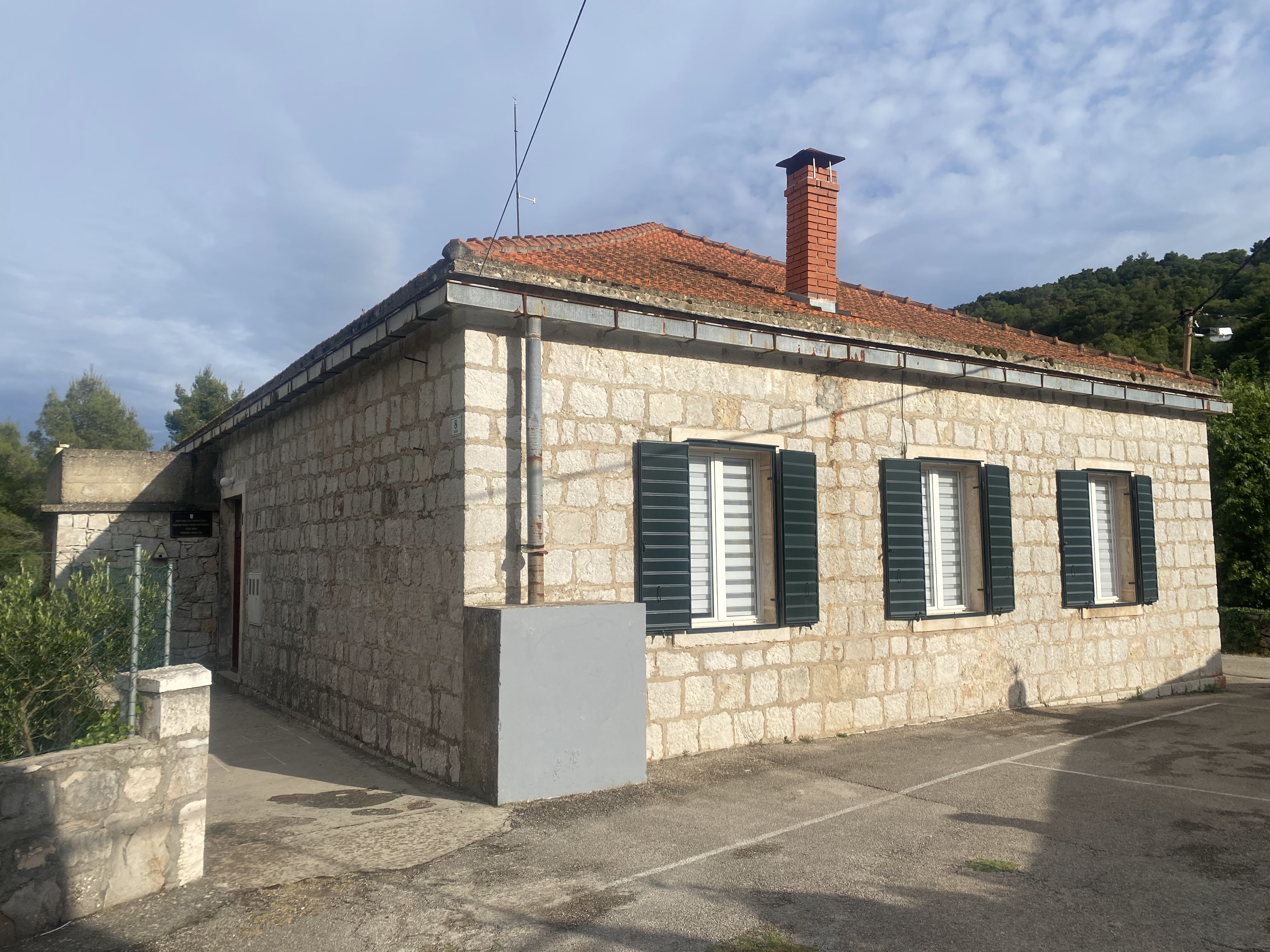
I've been traveling in Slovenia and Croatia the last week or so and, not surprisingly, paying particular attention to rural places.  A few days ago, I visited the Island of Hvar (population 10,678 on an island 42 kilometers long).  Our guide--because it was raining and she was delaying the start of our bicycle tour--drove us over the mountain between Hvar town and Stari Grad (population 2,772), and through the village of Velo Grablje, which featured this sign about the "entity" being protected cultural heritage.  (Going over the mountain as we did was a longer-distance alternative to going through a tunnel).  We saw what appeared to be the only restaurant in the village overflowing with families following first communion at the nearby church.  (We also stopped in the "ghost town" of Malo Grablje, a few kilometers below, along the same "back road").  Among the things we have learned here is that not only music and art, but also recipes and--as we see here--entire villages can be deemed protected cultural heritage.  

As we have found to be the case elsewhere in Croatia--including on Hvar and other islands in Dalmatia, small-scale agriculture is widespread.  Many folks have small garden plots in their front or back yards, and on Hvar many also have plots in the Stari Grad Plain, prime agricultural land that made Stari Grad such a desirable location for settlement.  Many also have small vineyards and/or olive groves, which are also on terraces that stretch up the mountainsides.   

Vineyard near Stari Grad, Hvar Island
Stone wall along ancient Roman road on Stari Grad Plain

Potato plants are as common as vineyards and olive groves on the island.

Little free library in Stari Grad

Our guide, who is viola player as well as a cyclist and librarian, told us about a recent benefit concert she played to raise funds to buy food for donkeys kept by a local woman.  The yield from the event raised a few thousand Euros for the care of the donkeys.  That outdoor concert was held near the restaurant featured in this advertisement, adjacent to the village of Dol, which rises above the Stari Grad Plain.
Public library, Stari Grad.  It is above a coffee shop,
right on the waterfront, next to the city hall.

K-4 school in the village of Dol; older children go to school in Stari Grad 

Artichoke plant next to a stone wall on road between Dol and Vrbnj

Hvar is known for its lavender, which was in early season.

Sunday, May 26, 2024

On rural gentrification, and the ensuing housing shortage, in coastal California

Hailey Branson-Potts reported for the Los Angeles Times a few days ago from Marin County, the famously wealthy county that lies just north of San Francisco, on the north end of the Golden Gate Bridge.  The headline is "Looking to vacation on the California coast?  Marin County just made it harder."  Here are some excerpts particularly relevant to the issue of rural gentrification. 

In Marin County, the explosive growth in short-term rentals has been particularly divisive in smaller towns. There, the number of full-time residents is dwindling while millionaires’ second — and third — homes, many of which are used as seasonal rentals, sit empty much of the year.

That’s a cruel paradox when there are not enough affordable homes for people who work in those communities, proponents of the cap say.

In unincorporated Marin County, the median sales price of a single-family home rose 98% from 2013 to 2021, to $1.91 million, according to a countywide housing plan adopted last year.

The story quotes Sarah Jones, who directs the Marin County Community Development Agency: 

Housing affordability and housing supply were really the driving factor in why we’re addressing short-term rentals right now.  There’s not housing being built. And the housing that’s available, people are just seeing that it’s more profitable and easier to use it as a short-term rental than to rent it out long term.

Branson-Potts' story continues: 

Although Marin County has much open space, it has little room to expand housing. Roughly 85% of its land, including the Point Reyes National Seashore and the Golden Gate National Recreation Area, is public space or agricultural land protected from development.
Marin County Supervisor Dennis Rodoni, who represents the scenic West Marin towns where vacation rentals are most heavily concentrated, said they have transformed “tiny communities where even losing a few homes is a big deal.”  
Rodoni continues: 
Our volunteer fire departments are losing volunteers.  Our schoolteachers, we’re having a hard time locating them in the community; they have to commute long distances.

Read more about this region of California in several posts here.  Posts about Sonoma County, just to the north of Marin, are here, here, and here.  

Monday, May 6, 2024

Developers of proposed new Bay Area city gather enough signatures to get re-zoning on November ballot

Solano County, California (April, 2024)
(c) Lisa R. Pruitt 2024
The Associated Press reported last week that California Forever, the group associated with secretly buying up farm land in southeastern Solano County, California (population 453,000), on the periphery of the San Francisco Bay Area, has garnered sufficient signatures to have placed on the November ballot whether the land can be re-zoned urban to permit its development.  Read more of the background on this matter here, here, and here.  A short excerpt from the AP story follows:  

Rio Vista Youth and Community Hall
(c) Lisa R. Pruitt 2024
A wealthy Silicon Valley-backed campaign to build a green city for up to 400,000 people in the San Francisco Bay Area has submitted what it says are enough signatures to qualify the initiative for the November election.
The campaign submitted more than 20,000 signatures but would need only about 13,000 valid ones to qualify for the ballot. If verified by Solano County’s elections office, voters will decide in the fall whether to allow urban development on land currently zoned for agriculture. The land-use change would be necessary for the development to be built.
Child visitors to the sales office express
their desires for the new community 
(c) Lisa R. Pruitt 2024
Jan Sramek, a former Goldman Sachs trader who heads the company behind the campaign, California Forever, said at a news conference Tuesday that he heard from thousands of people who want careers and homes in the county where they grew up but can no longer afford because of high housing costs and a lack of nearby work.

I had the opportunity in early April to travel to the parts of Solano County that will be most affected if this new development moves forward.  Those areas include the town of Rio Vista (population 7,360), on the Sacramento River Delta, and along the Montezuma Hills.  I found Rio Vista to be a charming town with one of the most appealing (and highly utilized) small public libraries I've ever visited, among other amenities.  The town also has a pharmacy that isn't part of a national chain, which I thought was pretty cool.  Plus, there are small eateries and an auto body shop with a prime location on the waterfront.  

Poster in California Forever sales office, 
also featured in brochures
(c) Lisa R. Pruitt 2024

Though it was not well publicized and not on my car's GPS, I did find the California Forever office in downtown Rio Vista--having taken up residence in the city's old Vista Cinema on Main Street.  Two California Forever employees were there, one who self-identified as a salesman.   They are collecting wish lists for community amenities, and I took a few photos of those lists--including one from what visiting children wanted.  (I list some of these at the bottom of the post).  

The salesman chatted me up about the project, noting that many residents of Rio Vista support it because, currently, there is "nothing" for their grandkids job-wise and in terms of activities.   If the city is built, it will provide not only jobs, but also many amenities for Rio Vista residents.  The salesman said some amenities are currently available to residents of Liberty and Trilogy, two nearby planned communities, but that the new city will make facilities and amenities available to those living in nearby Rio Vista. 

I raised with the salesman the issue of the lawsuit California Forever brought against some area landowners who had refused to sell and been accused of price-fixing.  He said those sued by California Forever were not family farmers but instead were large corporate farms--basically "BigAg."  I disputed that based on my personal acquaintance with one of those land-owning families.

California Forever Sales Office in Rio vista
in former Vista Theatre
(c) Lisa R. Pruitt 2024

At the end of my visit, the salesman asked me if I was on board with the project, and I told him I was still undecided, but generally skeptical.  I'd already explained to him that I didn't live in Solano County and so could not vote on the anticipated ballot initiative.  

Here are some bullet points/highlights from the brochure I picked up at the California Forever sales office.  

Windborn Church,
Main Street
(c) Lisa R. Pruitt

The farmland in "East Solano County today" is "Rated among the worst for agriculture in all of Solano County." (I wonder about the quality of that farm land generally, in comparison to 

Auto Repair in Rio Vista
(c) Lisa R. Pruitt 2024
  • The community California Forever wishes to build is a "new future for East Solano County, a new community for all of us." 
  • "Middle-class neighborhoods.  Safe, walkable, and affordable.  $400 million in downpayment assistance for Solano County residents."
  • "Good local new jobs.  15,000 new local jobs in manufacturing, services and technology paying $88,000 a year or more"
  • "Parks and green space.  4,000 acres of park, trails and habitats.  The project affects less than 2% of Solano County's current agricultural production." 
  • "Rio Vista Parkland.  A new 712-acre park between the new community and Rio Vista." 
  • "Downtowns.  Major offices, entertainment, arts, shops, cafes, locally owned restaurants, apartment buildings and more"
  • New Employers Zone.  New Manufacturing jobs and technology research labs in defense and other important industries.  A way to bring new employers and the good jobs of the future to Solan County."
Entrance to Marina
(c) L.R. Pruitt 2024
  • Maker zones.  Workshops, art studios, and ohter light industrial spaces.  Also restaurants and entertainment, and loft-style homes."
  • Open Space.  The plan requires at least 4,000 acres of parks and open spaces aligned with natural features, distributed across the new community, programmed with a variety of playgrounds, parks, and shared spaces for all ages and activities.
  • Solar sheep are happy sheep.  Solar panels and grazing sheep make for great friends. The sheep happily eat the grass, greatly reducing wildfire hazards and  keeping weeks off the solar panels, as well as creating income for sheep farmers so they to rely less on meat sales.  The shade from the panels help the sheep stay cooler, rest more and experience less heat stress.  (This one incudes a reference:  New Scientist Magazine 2/1/2023)
  • Solano Jobs Guarantee.  All new community growth beyond 50K residents is frozen, unless the new community creates at least 15K new jobs.  And each new job must be a good job, paying at least 125% of the average wage in Solano County (about $88K a year today).
Sign at Montezuma Hills area
along Highway 12
(c) Lisa R. Pruitt 2024

  • Solano Homes for All.  We will provide $400 million to help Solano residents buy home sin the new community, and to build more affordable homes.  If $300 million is allocated to down payment assistance, that's enough to help 6K Solano families buy homes with a $50K each down payment grant.
  • Solano Scholarships.  The new community will bring good new jobs.  To prepare, we will provide $70 million in funing to help Solano residents pay for vocational training, college, or to start or expand a small business.  
    Riverview Middle School
    Rio Vista, California
    Lisa R. Pruitt 2024

  • Green Solano.  We are providing $80 million in community-benefits funding for public parks and trails, open space and natural habitats.  This funding will also help support Solano's agriculture economy, including family farms and workers.  We are exciting to work with the Solano community to help identify priorities for this funding, to nurture our county's strong connections to its lands.  
  • Solano Downtowns.  We believe in investing in all areas of Solano--both in the new community in East Solano and in Solano's existing cities.  Why not just invest in existing cities?  We need more room for homes families can afford and for new industries.  We will provide $200 million in new investment in building and renovating homes, offices,  shops, and other mixed use projects in the downtown areas of Benicia, Dixon, Fairfield, Rio Vista, Suisun City, Vacaville, and Vallejo.  
  • Smart Growth Guarantee.  Our initial commitments are to provide $500 million in community-benefits funding and $200 million for investments in Solano Downtowns over the build-out towards $50,000 residents.  But our commitment to Solano does not end there.  If our community grow beyond 50,000 residents, all of these financial commitments will continue to scale up in proportion to the growth of our community.  We are excited to grow with Solano, and be a good neighbor for generations to come. 
Downtown Rio Vista
(c) Lisa R. Pruitt 2024
Water Guarantee. Before a brick is laid, we guarantee to provide our water supplies through the highly regulated and state-mandated Water Supply Assessment and Water Supply Verification process.  Regulated closely by the State of California, this process requires us to prove we can deliver water to the new community for many decades going forward, including through drought periods. 
  • Transportation Guarantee.  We will provide right of way for upgrades for Highway 12 and 113, including the Rio Vista and Dixon bypass, and we will pay above our proportionate share to fund these upgrades.  
  • Schools Guarantee.  We are required to ensure that new schools are ready in our new community when first residents move in. That way parens and teachers an be sure that existing schools are not overly burdened with new students.  Our schools remain in the existing school districts, but we will ensure that new schools are ready by the time the first children move in. We want the new community to be a big win for public education in Solano County.
  • Solano Taxpayer Guarantee.  We will pay our own way through the significant tax revenue we will generate as the new city gains residents.  The initiative guarantees no new cost to Solano taxpayers, except to those new residents who live in the new community. 
Wind turbines and gravel road running 
South from Highway 12 between I-80 & Rio Vista
area known as Montezuma Hills
(c) Lisa R. Pruitt 2024
A significant part of one 12-page brochure addresses nearby Travis Air Force Base and a buffer zone that will lie between it and the new community. 

Til this weekend, the only billboard I'd seen promoting California Forever was on eastbound I-80 in Solano County, and it touted the 15K jobs paying more than $88K.  Then, on May 5, traveling westbound on I-80 , I saw one touting the $400 million in downpayment assistance for Solano County residents.  

Among the items on the crowd-sourced list of amenities folks had written on giant note pads in the sales office   

  • Music events, dining destinations, emphasis on nature in the community
  • Affordable housing--not market rate
  • Smart growth
  • Movie theatres (good for teens)
  • Let's re-create our normal!
  • Medical Center
  • Big Box retailers
  • Preserve wetlands
  • Widen Highway 12 from Suisun
  • Satellite junior college campus
  • Archeological recognition (Native Americans)
  • Nightclub!!!
  • Chain Hotel (Nice!)
  • Elderly/Alzheimers dementia care facility (home) with 24/7 nurse on site
  • Quality restaurants on the water front
On the kids list, one wrote, "If I had my own city, I would want a dirt bike track, a Walmart, and lots of houses."  The child included a drawing of this place, complete with a dirt bike track and a church, along with a Walmart and several houses. 

Crowd-sourced list of desired amenities
(c) Lisa R. Pruitt 2024
California Forever has three sales offices in addition to the one in Rio Vista; the others are in Vacaville, Vallejo, and Fairfield.